

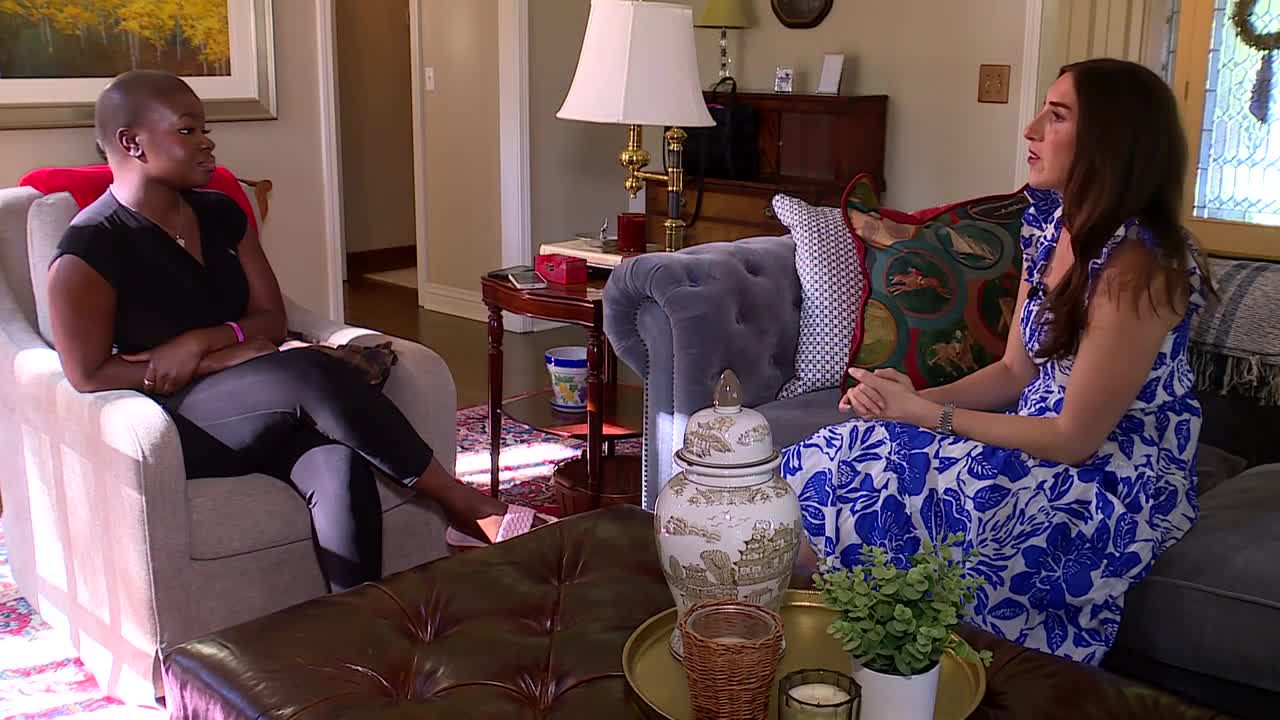


KANSAS CITY, Mo. — KSHB 41 reporter Alyssa Jackson is sharing a month-long series, titled Under the Ribbon, for Breast Cancer Awareness Month. She was diagnosed last year at 26 years old. Share your story idea with Alyssa.
—
One in 10 women diagnosed with breast cancer is younger than 45, according to the National Breast Cancer Foundation.
Many of them will tell you they never expected cancer before turning 40.
But cancer doesn't know name or age.
At 33, it showed up for Alex Owens.
"It's probably nothing," Owens thought.
I asked, "Why do you feel you had to tell yourself that?"
"Otherwise, what’s the alternative?" she said. "You completely spiral. I had a job. Two kids — a 1-year-old and 3-year-old."

Owens remembers when she accidentally caught a lump in her breast.
"I just happened to have my hand underneath my armpit. I was brushing my teeth and was just feeling around, and I felt a lump," she recalled.
She went to her appointment alone — hopeful that it wasn't cancer.
"The doctor's like, ‘I’m so sorry. You have cancer,'" Owens said. "I remember looking at her ... lying down. 'I think you walked into the wrong room.'"
Her age meant planning for baby number three — not breast cancer.
"I feel like if I decide to go through with having a third child, I have to basically decide if the cancer comes back or a new cancer pops up that I'm okay with that decision either way," Owens said.
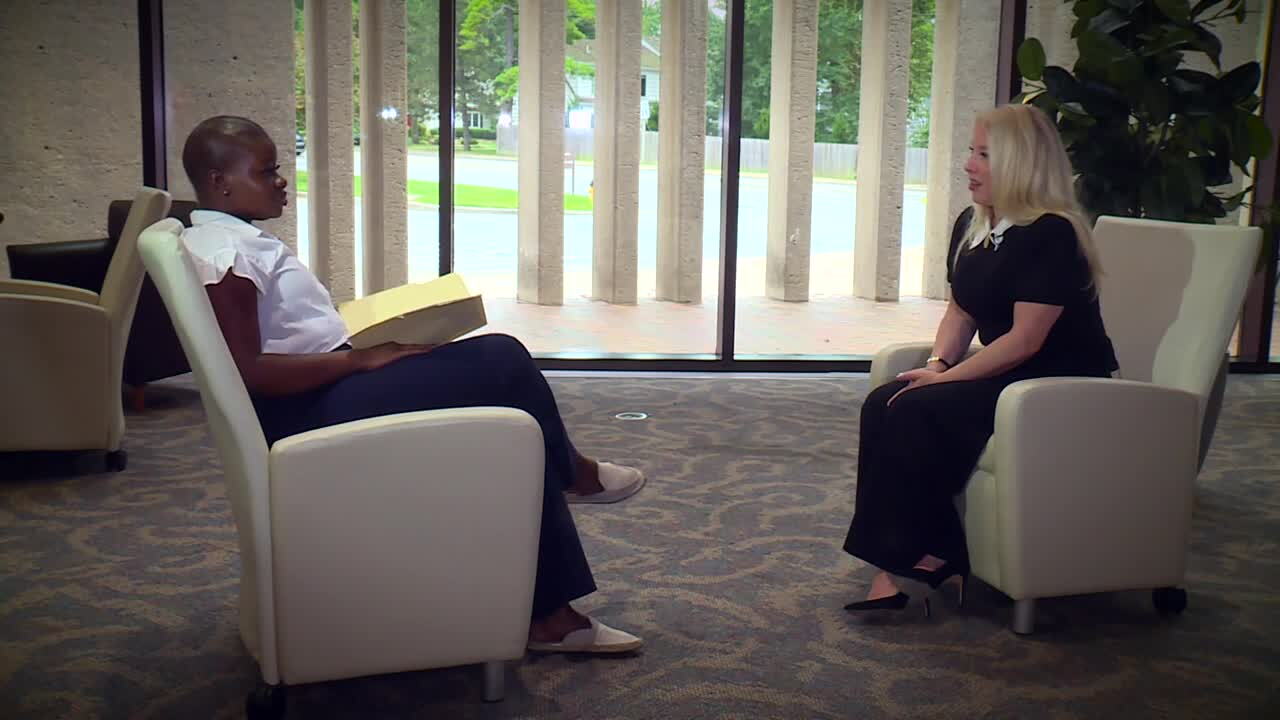
That's a topic University of Kansas Medical Oncologist Dr. Anne O'Dea wanted to address.
"As we have younger and younger women affected by breast cancer, I want to make sure people feel this message that you don't have to sacrifice your goals and dreams of being a mom or having a family because of a cancer diagnosis," O'Dea said.
Owens said she is noticing more young women getting diagnosed with breast cancer.
"We've all kind of talked about why is this happening?" she said.
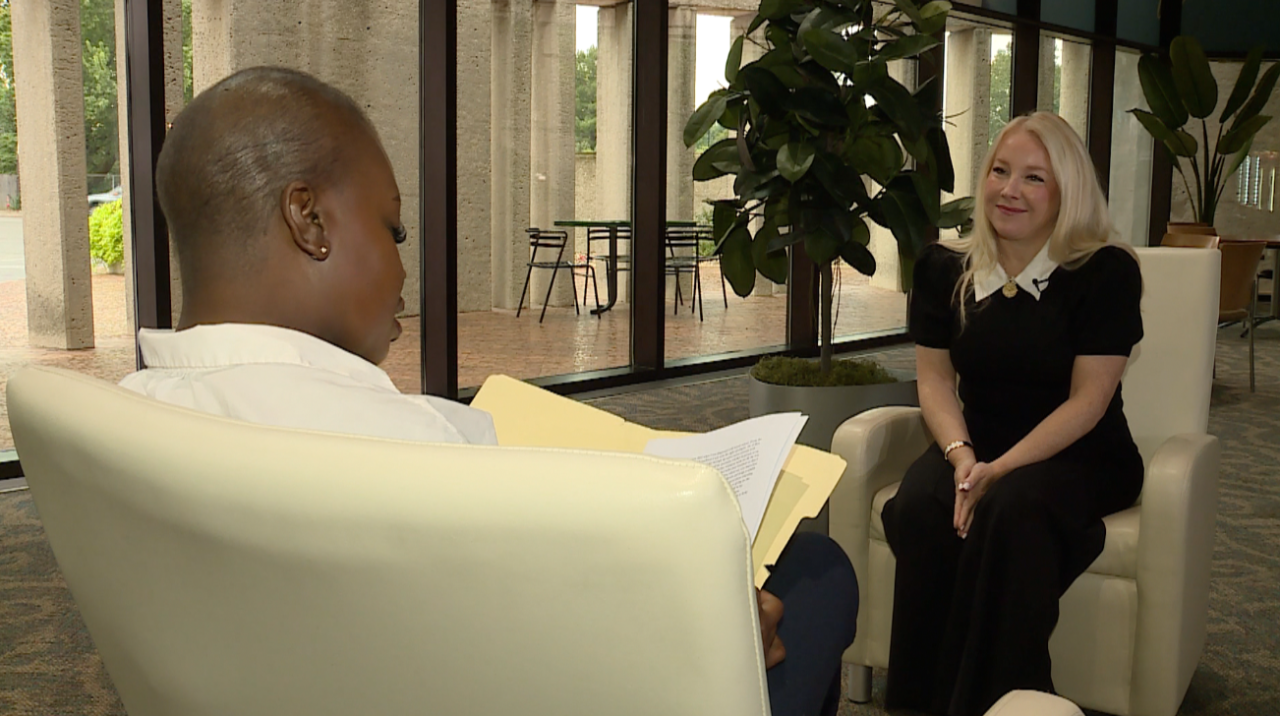
O'Dea said she is seeing more and more patients in their 20s and 30s.
I asked, "Why are we seeing patients getting younger and younger?"
"We don’t know. What I think we all feel — it isn’t one thing. It isn’t one chemical or one pesticide or one thing or someone drinking Diet Coke. It is probably an interaction of factors," O'Dea said. "It has to do with [how] increasingly women are exposed to different chemicals or hormones, maybe starting at a younger age because of things in our environment ... our food supply.
"Maybe there’s things within our own genetics, not a breast cancer gene but something about the way women in our family metabolize estrogen. That’s why it’s so hard to study because you almost have to go back and trace that woman since birth and look at all the things she’s been exposed to, environments she’s lived ... genetics. Sometimes there’s no answers there."
Breast cancer is still a rare diagnosis for a young adult.
According to the National Cancer Institute, there's a 99% survival rate if breast cancer hasn’t spread outside of the breast tissue.
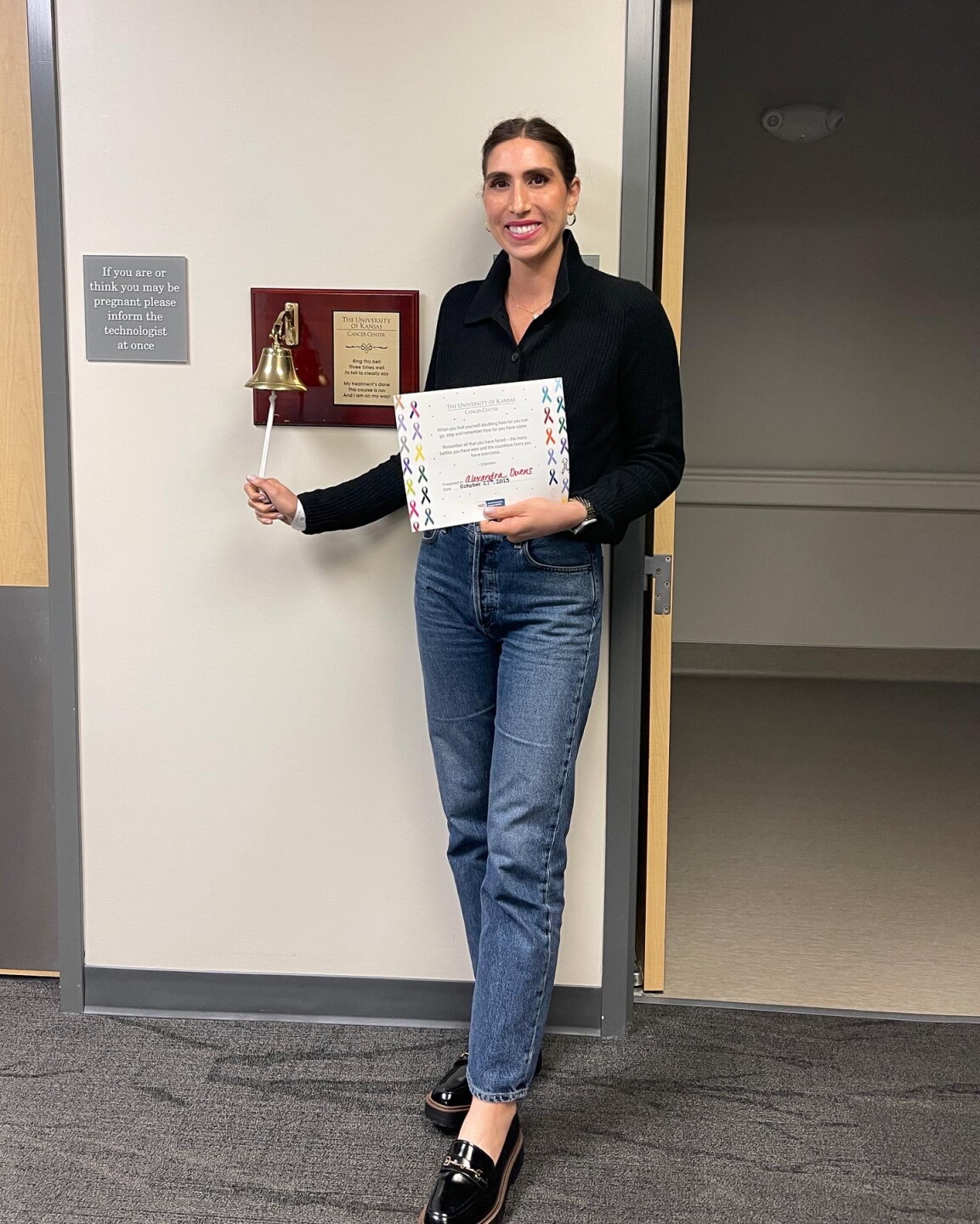
Owens beat breast cancer in 2023.
I asked, "What can you say about Alex today compared to Alex when you were diagnosed?"
“Night and day. It put life in perspective for me," Owens said.
Her advice to people affected by breast cancer is to "give yourself some time, give yourself some grace, and then put on your armor and go to battle."
—
![092126_KSHB_WX_480x360[61].jpg](https://ewscripps.brightspotcdn.com/dims4/default/79e7fad/2147483647/strip/true/crop/480x360+0+0/resize/960x720!/format/webp/quality/90/?url=http%3A%2F%2Fewscripps-brightspot.s3.amazonaws.com%2F6f%2F6d%2Fa3758caf4c0984b0ecf100f620d1%2F092126-kshb-wx-480x36061.jpg)