



KANSAS CITY, Mo — KSHB 41 reporter Alyssa Jackson is covering a month-long series for Breast Cancer Awareness Month, "Under the Ribbon." She was diagnosed last year at 26 years old. Share your story idea with Alyssa.
Read more coverage at Under the Ribbon.
—
In 2025, I went for a routine check-up at the Women's Clinic of Johnson County, and my doctor found a lump.
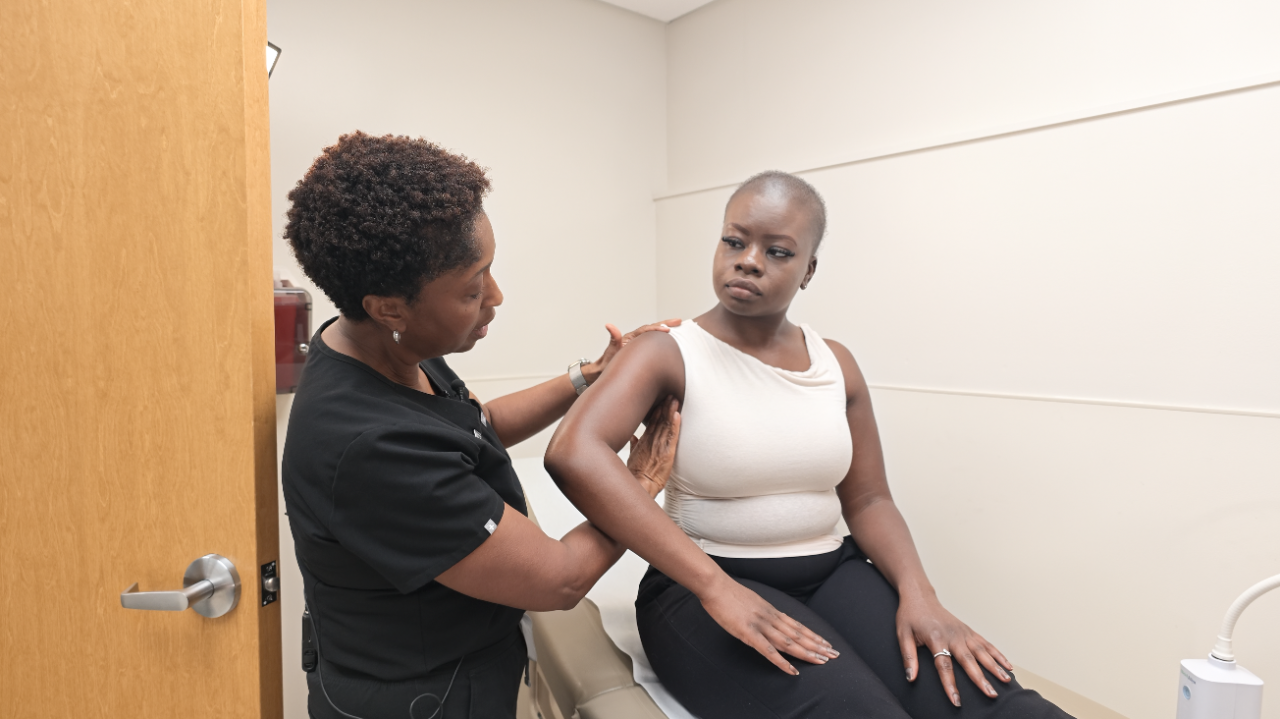
Eventually, tests confirmed it was breast cancer. I credit OBGYN Dr. Phaedra Lombard's thorough and clinical breast exam for saving my life.
While the standard insurance-covered age for a mammogram is 40 years old, there's a strong chance my cancer would have been difficult to treat if I had waited.
Dr. Lombard shows how you can do a self-breast exam at home in the video below.
However, it's important to know that breast cancer doesn’t always show up as a detectable lump, and not all lumps are cancer.
"Your situation was definitely a blessing that you came in, and we were doing clinical breast exams because technically, you don't have to do a clinical breast exam," Lombard told me. "Gynecologists typically do in women 25 and older."
In fact, she doesn't tell her patients that self-breast exams are always necessary.
"Doing our exams – we feel lumps," Lombard said. "We always associate every lump with something that could be bad. What's most important to know about your breasts is to know your lumps. Know that the lumpy texture of your breasts, the fatty texture, is normal breast tissue. "You know what your arm feels like. you know what your leg feels like, why do we ignore our breasts?”
There's often anxiety associated with breast exams and sometimes that can lead to assuming a lump is cancer.
Lombard has helped catch breast cancer many times. She said sometimes women notice abnormal changes in their breasts, but they're afraid to get it examined.
"A lot of times it’s denial. When you have something, and it’s been persistent, a comment I'll get is, 'Yeah, it was there. I didn't think it was a big deal,'" Lombard says. "A lot of times it’s because they don't want it to be a big deal. Then, I've seen obvious skin changes — a large mass, and it's just denial or hoping that it goes away."
Regardless of your age and health, Lombard wants people to think about the whole body.
"From head to toe, it’s important to take care of your mental health...reduce stress in your life," she says. "It is so important to eat well, exercise."
Watch Jackson discuss her health with Lombard in the video player below.
While her breast exam likely changed the trajectory of my journey, it's important to remember that early detection can be the difference between stage 0 and stage 4.
"One take-home message I'd like to share with patients is, please know your family history," Lombard said.
Your family history and genetics will tell your doctor important information about your risk and how they can monitor certain aspects of your care.
—
![092126_KSHB_WX_480x360[61].jpg](https://ewscripps.brightspotcdn.com/dims4/default/79e7fad/2147483647/strip/true/crop/480x360+0+0/resize/960x720!/format/webp/quality/90/?url=http%3A%2F%2Fewscripps-brightspot.s3.amazonaws.com%2F6f%2F6d%2Fa3758caf4c0984b0ecf100f620d1%2F092126-kshb-wx-480x36061.jpg)