

KANSAS CITY, Mo. — KSHB 41 reporter Isabella Ledonne reports on stories in Overland Park, Johnson County and topics about government accountability. This story is a follow on the ongoing series, Strong High Weak Laws, exploring the impacts of 7-OH in the Kansas City metro. Share your story idea with Isabella.
—
City leaders in Kansas City, Missouri, are pushing forward a ban on what lawmakers and medical experts have called 'gas station heroin'.
A city council committee unanimously approved a recommendation Tuesday to ban synthetic 7-OH and regulating natural kratom within city limits.
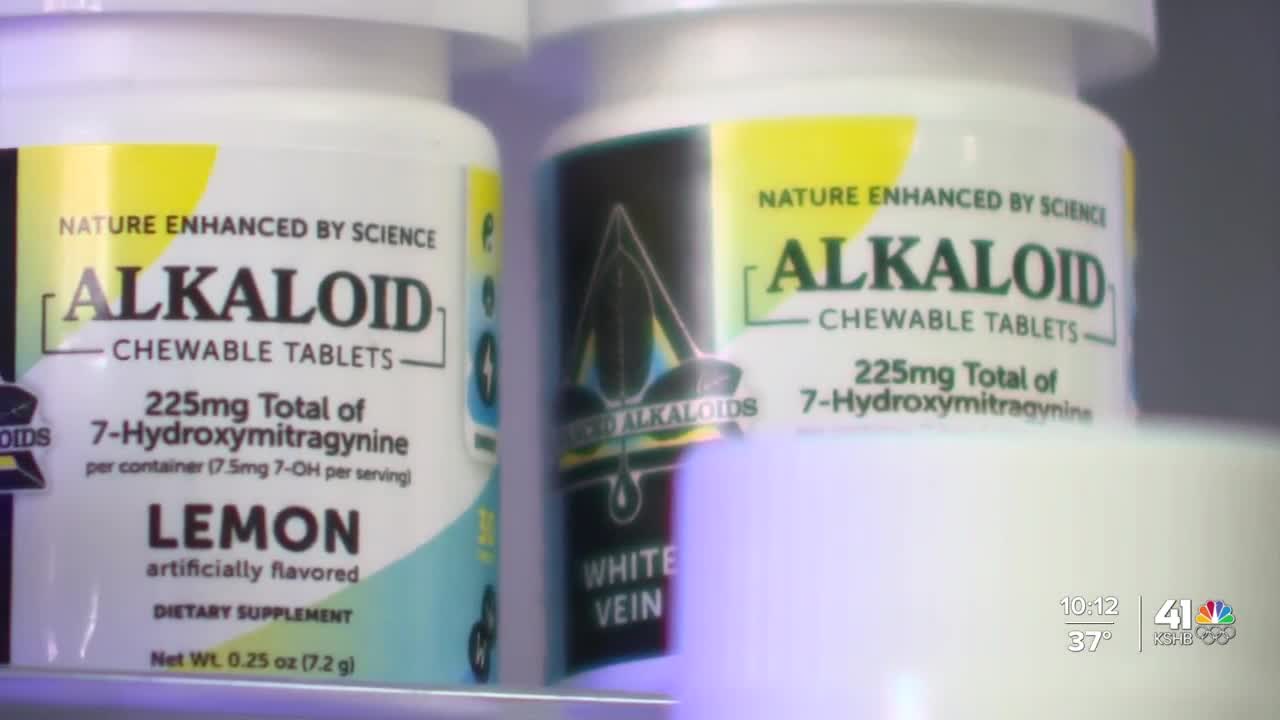
In KSHB 41's series, Strong High Weak Laws, we've covered the impact of 7-OH extensively. It's a synthetic derivative from the plant kratom, which contains small amounts of the alkaloid 7-OH.
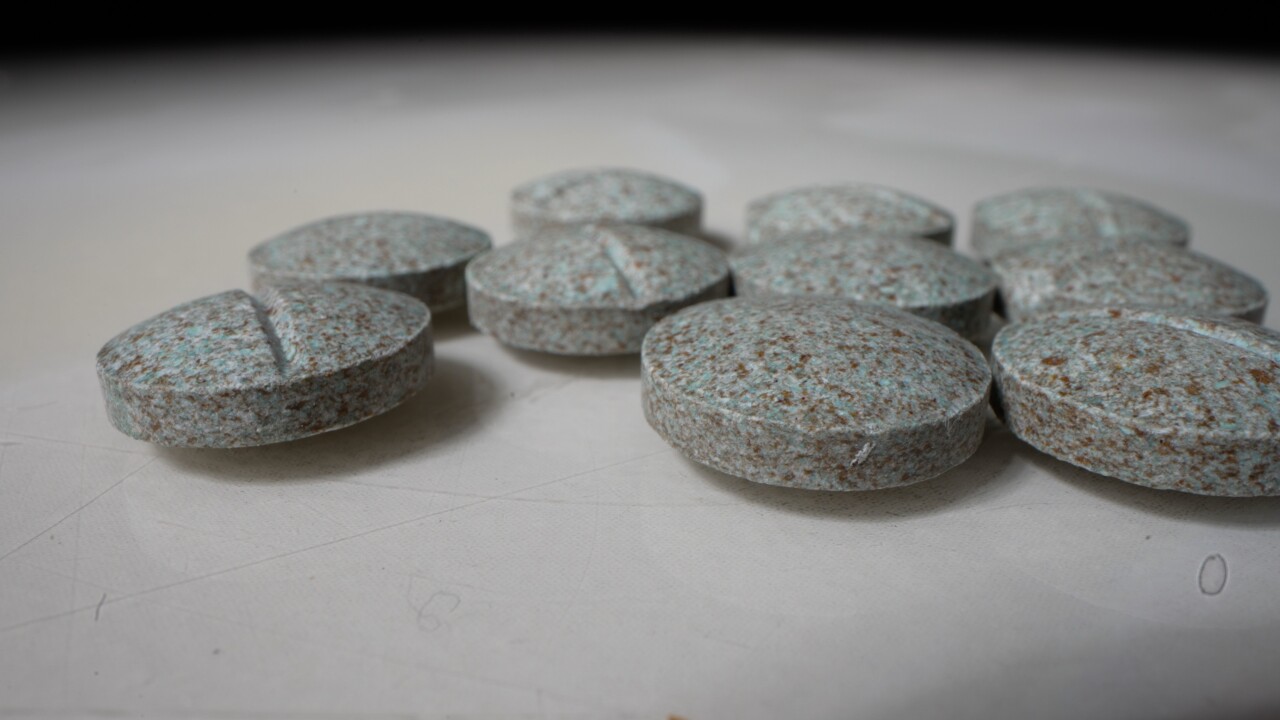
What KCMO wants to ban is a lab-made product that's reportedly 13 times stronger than morphine and highly addictive. It's sold in gas stations, convenience stores and smoke shops for as little as $10 a tablet.
Kansas City isn't the only metro community taking steps to get the product off the shelves.
7-OH isn't FDA approved or federally regulated. But it's also not officially considered a controlled substance at the federal level. That puts the substance in a gray area where it's up to individual states and cities to determine its legality, while waiting for the FDA to complete steps scheduling it as a Schedule I substance.
Alabama, Arizona, Arkansas, California, Florida, Georgia, Indiana, Kentucky, Louisiana, Oklahoma, Rhode Island, South Dakota, Texas, Utah, Vermont and Wisconsin have outright banned the sale of synthetic 7-OH or regulated kratom at a level where synthetic 7-OH is not allowed. Missouri could be the next state on the list.
Bills in the Missouri House and Senate propose to ban 7-OH by labeling it as a Schedule I substance and regulate sales of kratom.
Blue Springs, Independence and Kansas City, Missouri, are all moving forward with getting synthetic products out of gas stations.

"[At gas stations] some people may get cigarettes, some people may get a little bit of beer," Kansas City Mayor Quinton Lucas said. "What you're not supposed to be able to get legally is something that is more potent than heroin."
Other states in the U.S. regulate 7-OH's parent product, kratom. That can prevent high concentrations of 7-OH from being sold. Missouri and Kansas are not among those states.

"You have an entire population of well-intended people that are becoming addicted to a plant that is entirely legal and without regulation," one Kansas City resident said at Tuesday morning's public hearing before a city council committee.
While many in the metro support a proposed ban, many others say they rely on the product for pain relief.

"Before I started taking them, I was in so much pain I had to be pushed in a wheelchair at the airport," one Kansas City resident said at the Tuesday meeting.
7-OH is widely available across the metro, except in Gladstone. The city passed a dangerous drugs ban in October.
"Anything that could be considered an alkaloid or a derivative of those drugs is illegal in the City of Gladstone," Gladstone Police Chief Fred Farris said. "Since [the ordinance was passed], we haven't seen any resurgence of [7OH] on the shelves."
But law enforcement still sees problems where it's available south of the river.
"Not too long ago, [a man who claimed he had taken 7-OH] was so out of his mind that he was walking around with a knife and wanting officers to shoot him," Chief Farris said. "Thankfully, we didn't have to do that. But this is the stuff that officers across the metro are seeing on a fairly regular basis."
According to records from KCMO and Johnson County, Kansas, 7-OH or mitragynine has been a factor in at least nine metro deaths.
That prompted Independence Mayor Rory Rowland to introduce a ban on 7-OH and regulation of kratom.

"We as a city council should take action to keep our community safe," Mayor Rowland said. "We could threaten their business license by continuing to sell it. We do have a $500 fine associated with selling at that point."
Kansas City's proposed ban outlines similar consequences for businesses who continue to sell the product. Those include facing license suspensions and fines up to $1,000. KCMO's proposed ordinance does not criminalize or penalize individual use.
At Tuesday's public hearing, there was a significant presence of people advocating for kratom. It's a supplement used for a variety of ailments and is different than synthetic 7-OH products.
One woman told KSHB 41 News she uses kratom for pain associated with her Lyme's Disease.

"It gives you incredible pain, some people go unconscious several times a day from the pain," Eve Wolf said. "The kratom really helps me."
Under the Kansas City ordinance, kratom would not be banned. It would be regulated as a 21-and-up product.
The Kansas City council is expected to take up the ordinance for a possible vote at Thursday's council meeting.
Independence's proposed ban is expected to go before the city council in March. Blue Spring's potential ban is expected to make its way back before the city council in late February.
More extensive coverage on Strong High Weak Laws and 7-OH can be found here.
—