



KANSAS CITY, Mo. — KSHB 41 reporter Isabella Ledonne covers issues in Overland Park and Johnson County and around government accountability. This story is a continuation of the series, Strong High Weak Laws, investigating the impact of synthetic 7-OH in the metro. Share your story with Isabella.
On Thursday, the Kansas City, Missouri, City Council adopted new regulations on what leaders have called 'gas station drugs'.
They hope it helps limit the negative health outcomes experienced by users.
Councilmembers passed the ordinance unanimously, 12-0, establishing a ban on synthetic 7-OH and alkaloid sales and restricting how natural kratom is sold.
LINK | Read more about the ordinance
The ban and regulation approval comes after the KSHB 41 News I-Team investigation, Strong High Weak Laws, has been digging into the impacts of 7-OH. Medical experts have reported it is 14 times stronger than morphine and highly addictive.
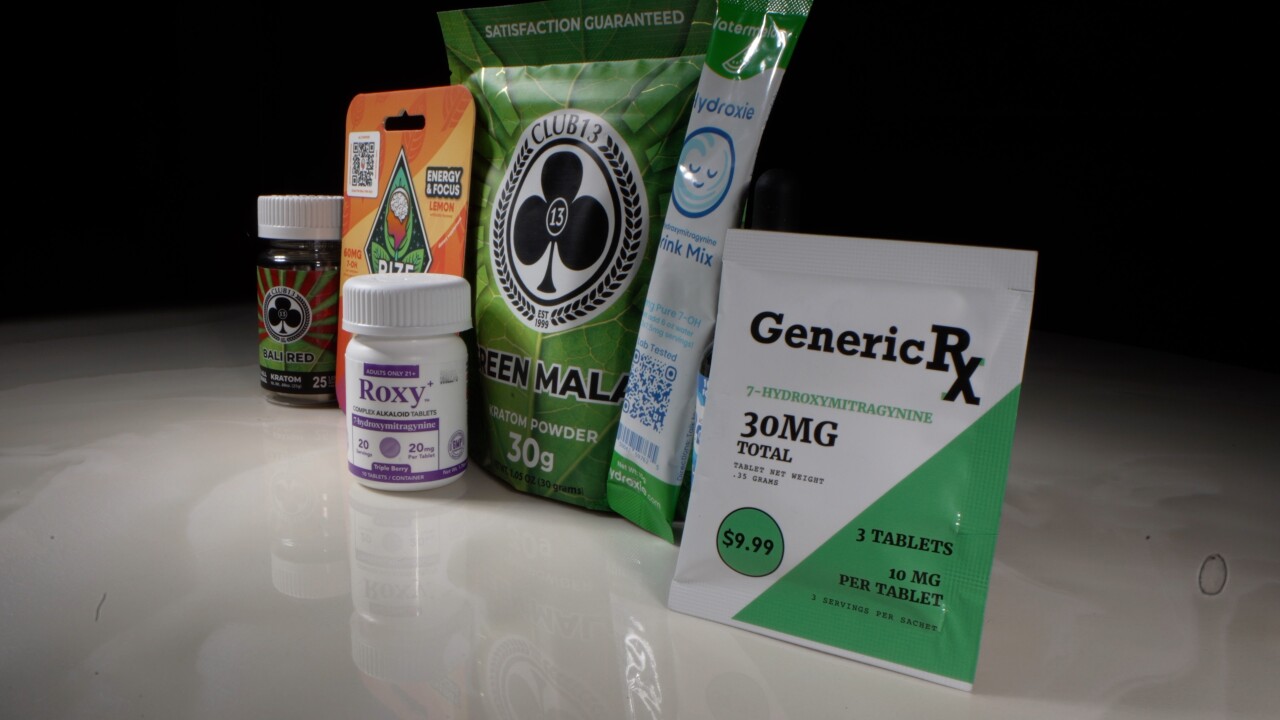
7-OH is naturally found in small amounts in the plant kratom, but what lawmakers and experts are concerned about is the product made in a lab.
The initial version of the proposal was introduced by Mayor Lucas in December 2025, and the new version of the ordinance was finalized after the city listened to community feedback.
The City Council's Finance, Governance and Public Safety Committee took public comment on the proposed ordinance on Tuesday before it voted to send the measure to the council for its review.
Many urged the committee not to implement an outright ban, while others urged city leaders to include a total ban of both 7-OH and kratom.
"You have an entire population of well-intended people that are becoming addicted to a plant that is entirely legal and without regulation," one speaker, who is in favor of the ordinance, said Tuesday.
Another speaker, who is against the ordinance, suggested banning gas stations and convenience stores from selling the products.
"We don't think a blanket ban is appropriate; we think it goes way too far because there are many consumers who will be hurt by this," another speaker said Tuesday.
The now approved ordinance places a total ban on synthetic 7-OH and certain kratom products, including kratom "that can be smoked, vaped or products that look like candy," according to a press release from the city.
Natural kratom will still be allowed for purchase in city limits, but it will be regulated as a 21-and-up item. Stores will be responsible for keeping these products out of reach for those under 21.
Dangerous chemical inhalants, as described by the ordinance, would also be banned within city limits. Products that contain butyl nitrite, nitrous oxide, and amyl nitrite in any form, such as whippets, will no longer be allowed to be sold in Kansas City, Missouri.
Stores in Kansas City, Missouri, that sell synthetic 7-OH and dangerous chemical inhalants have 60 days to get the product off the shelves. Businesses also have two months to get a Kratom Retail License from the city of Kansas City, Missouri, if they want to keep selling the natural plant. If they don't, they could face fines from the city.
Kansas City, Missouri is the largest municipality on both sides of the state line to make the so called 'gas station drugs' illegal.

"We don't need 7-OH on the streets of Kansas City," Mayor Quinton Lucas said. "We don't need synthetic drugs."
Those recovering from a 7-OH addiction are optimistic with the new citywide rules.
"This stuff grabs you so fast," Dwayne Whitmore said. "Which is why it's so scary it's being sold over the counter."
Whitmore reached out to KSHB 41 News Reporter Isabella Ledonne while he was receiving rehab treatment for 7-OH, and explained the toll the substance has had on his life.

"I needed to tell somebody the perspective of the person that's taking it, spending their money on it, going to rehab for it and losing a job over it," Whitmore said.
Under KCMO's adopted ban, any products that have a concentration of 7-OH that's higher than what is naturally found in kratom will be illegal. Individual users won't face penalties, but businesses selling the banned products could face up to a $1,000 fine or lose their license.
"Banning synthetic drugs is going to make us vastly healthier," Mayor Lucas said. "It's going to make our city safer."
After Kansas City, Missouri introduced its ban back in December, lawmakers in Missouri and Kansas filed bills that would ban synthetic 7-OH statewide.

"This is something that's new and a lot of people are looking to what other municipalities or institutions are doing on this," Councilman Nathan Willett said. "I'm glad Kansas City is leading on this."
Stores can still sell kratom, but only if they have a license from the city and the buyer is over 21.
"I think that there's still a way for people who need it to be able to get it on the leaf side," Councilman Willett said. "The synthetic, highly concentrated, dangerous portion of the drug, I'm glad to see that's off the shelves here in Kansas City."
According to records obtained by KSHB 41 News, 7-OH or the active ingredient in 7-OH, mitragynine, has been a factor in at least nine metro deaths over the last two years.
KSHB 41 News received records from Johnson County, Kansas, where kratom, 7-OH or mitragynine were listed as a contributing factor or cause of death going back to 2023. Out of the 22 records sent by the county, eight of them listed 7-OH or mitragynine toxicity in the death report either as a cause or contributing factor.

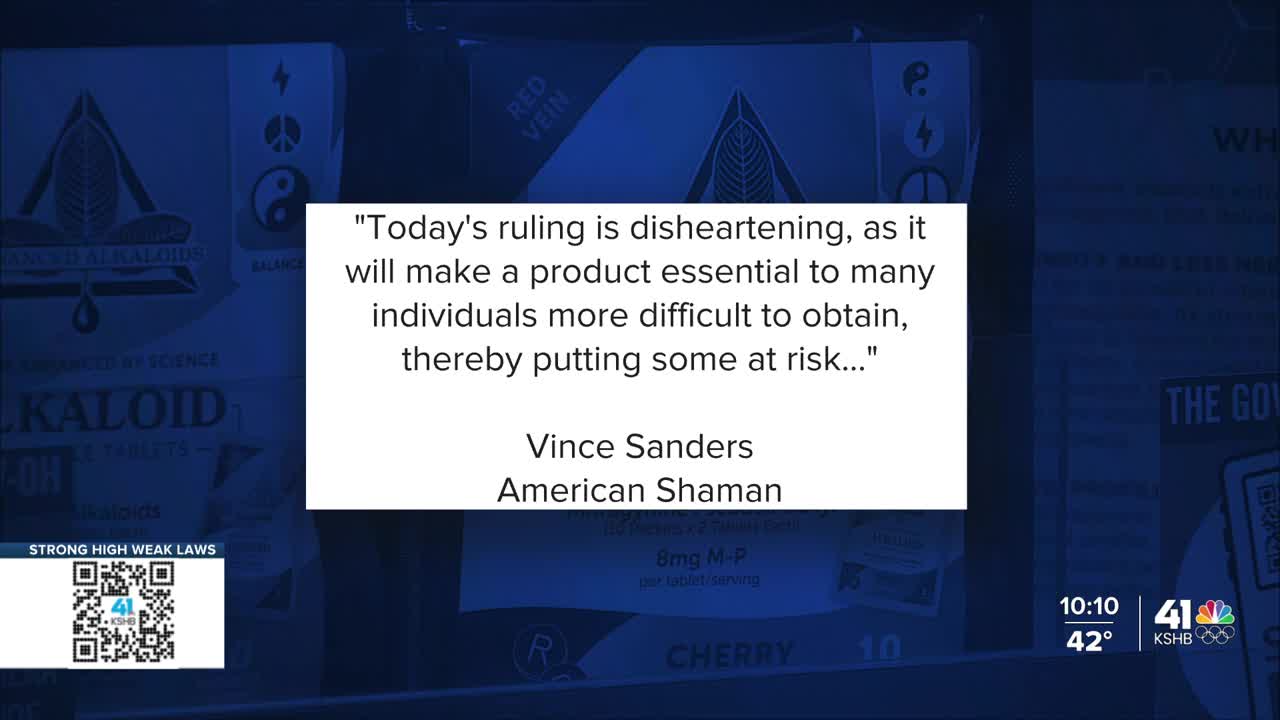
The Kansas City creator of 7-OH was present at Thursday's council meeting ahead of the vote. Following the ban, American Shaman founder Vince Sanders spoke with KSHB 41's Isabella Ledonne on the phone and sent a statement.
"Today's ruling is disheartening, as it will make a product essential to many individuals more difficult to obtain, thereby putting some at risk," Sanders wrote. "However, this ruling does not impact Shaman's business operations or revenues. We will continue to educate lawmakers at the national level to prevent uninformed decisions that could ultimately harm their constituents."
More coverage on 7-OH in the Kansas City metro can be found here.

