


OVERLAND PARK, Kan. — KSHB 41 News anchor/I-Team reporter Sarah Plake covers a wide range of topics in the Kansas City Metro. Send Sarah an email.
—
Brian Cleary says his family's $9.5 million dream house turned into a nightmare.
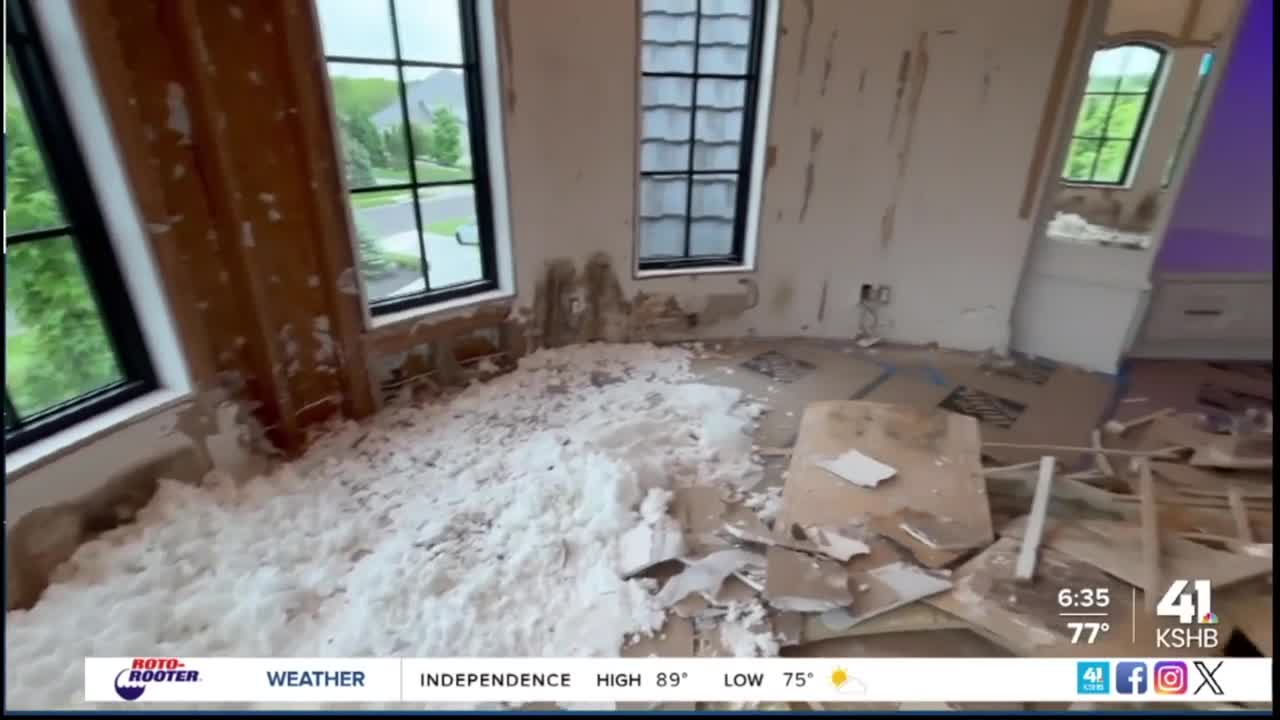
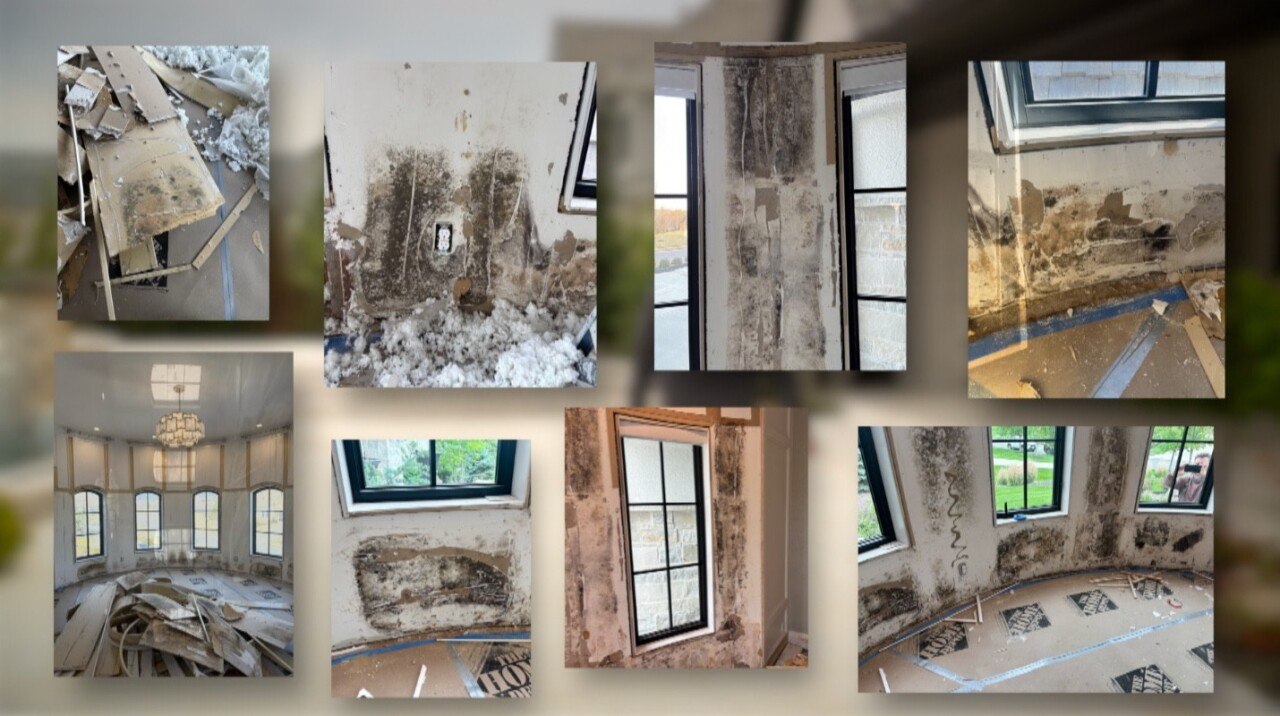
"They pulled back all the walls, and it was shocking to see that in the house," Cleary said.
He's talking about mold.
"A crazy amount of mold in there," Cleary said.
Issues in new house
Cleary said the issues began not long after his family moved into their custom-built south Overland Park home in April 2024.
Within the first few months, he said there were four incidents of water leaking and flooding in different parts of the house.
KSHB 41 did not go inside the house when we went to interview Cleary. However, we were able to see inside the windows and doors.
Cleary took us around to the back of the home, where a patio door opened up into the kitchen.
"This was kind of ground zero right here above the kitchen ceiling," Cleary said, pointing inside the kitchen. "As we speak today, it is still dripping water from the ceiling."
Cleary said their general contractor, Willis Custom Homes, was quick to respond and made repairs after each incident. But he claims in a lawsuit they didn’t do any mold remediation.
"It always seemed like a Band-Aid solution," Cleary said.
The next spring and summer, the issues started stacking up, Cleary said.
According to the lawsuit the Clearys filed in May against Willis Custom Homes, Cleary says raw sewage backed up in a basement bathroom, and another water leak happened in a first-floor bedroom.
"That's when I said we've got to move," Cleary said.
But Patrick Willis and Zach Willis, second- and third-generation leaders of Willis Custom Homes, say Cleary’s accusations are not true.
"Anytime they brought any issue to us, we were there immediately to offer any kind of resolution," Patrick Willis said. "But it hasn't been accepted, and we don't understand that part of it."
Patrick Willis told KSHB 41 that when the leak issues first came up, there was no mention of mold.
"We brought out multiple engineers and professionals and came up with some solutions that would take care of the situation," Patrick Willis said. "And at that time, there was no mold detected anywhere."
Testing on home begins
In August 2025, Cleary ordered a moisture test.
"When they put the moisture readers on it, he was seeing 100% moisture," Cleary said.
Around that time, Cleary said the family was tested for mycotoxins, which are toxic chemical substances produced by molds.
Cleary’s test, which has not been approved by the FDA, showed the presence of several types of mycotoxins.
The family packed up and moved to a different house in September 2025.
"With it being this widespread, some kids' health issues involved, I feel like it's a different level," Cleary said.
A mold inspection test by Cromwell Environmental in February 2026 showed elevated mold levels throughout the 11,000-square-foot house.
According to court records, both Cleary and Willis agreed to the Cromwell inspection, and they split the cost.
Read through the mold inspection report here.
The inspection also found Stachybotrys, otherwise known as black mold, in the basement exercise room.
After the mold inspection, as well as several other inspections, Cleary says the situation came to a head.
"There's a lot of problems here for a house that's a year-and-a-half old," Cleary said.
The Cleary family's lawsuit alleges the home is uninhabitable and construction was performed “in a defective manner." Therefore, “Willis breached its obligations.”
Willis strongly disputes that.
"The home is very sound, structurally," Patrick Willis said.
The lawsuit notes issues with the home's HVAC, sewer line and structural issues.
"We are open to third-party inspections, but the ones we see to date on the structural, HVAC, things of that nature, we very much disagree with the findings," Patrick Willis said.
According to the lawsuit, since moving into the house, the Clearys had “many mold-related symptoms, including but not limited to ... headaches and migraines, anemia, insomnia, stuffy noses, weakened immune systems, and low energy and lethargy.”
"We do take those allegations seriously, and they've provided us very limited information on the medical allegations," Patrick Willis said.
He says Willis is ordering inspections of its own now. We haven't seen the results yet.
Court battle begins
The endgame for the Clearys is a long list, including:
- Recoup hundreds of thousands, which they say they’ve spent on medical bills.
- They want all their money back — $9,490,000.00 million, specifically.
- Rescission, which basically means canceling the contract.
- They want Willis to take the house.
"The only thing that's acceptable to us is not to end up with the home because we're not going to live in it," Cleary said.
Willis’ stance is also reflected in court documents.
Four days before the Clearys filed their lawsuit, Willis Custom Homes filed its own lawsuit asking the court to define what legal remedies the Clearys could take. The lawsuit argues rescission is legally impossible.
"It should be pointed out that we never owned that lot. We never owned that house," Patrick Willis said. "They purchased the lot. They contracted with us to build it."
Willis argues the construction contract states the company isn’t responsible for several issues, including mold.
Additionally, Willis argues the contract states the company isn't responsible for any damages "caused by the buyer's negligence, improper maintenance, abuse or failure to: maintain humidity levels, keep exterior caulking, [and] maintain soil drainage conditions..."
KSHB 41's Sarah Plake asked Patrick Willis if he and his company are responsible for what happened at the Cleary house.
Patrick Willis responded: "We are doing testing at this moment. What I will say is that we can build a quality home that passes all inspections, that exceeds the building codes and standards, but once it's occupied by a homeowner, we lose some control over a lot of environmental factors."
Cleary insists his family couldn’t have caused the mold themselves.
"I'm sure in the contract we signed there are bits and pieces that are favorable to them," Cleary said. "Well, there are other issues filed in our lawsuit that I think negates some of that: personal injury, negligence."
Targeted public campaign
In the meantime, the Clearys are going all-out on a public campaign against Willis.
"We’re going to do that in a big and mighty way, and whatever happens from that, happens from that," Cleary said.
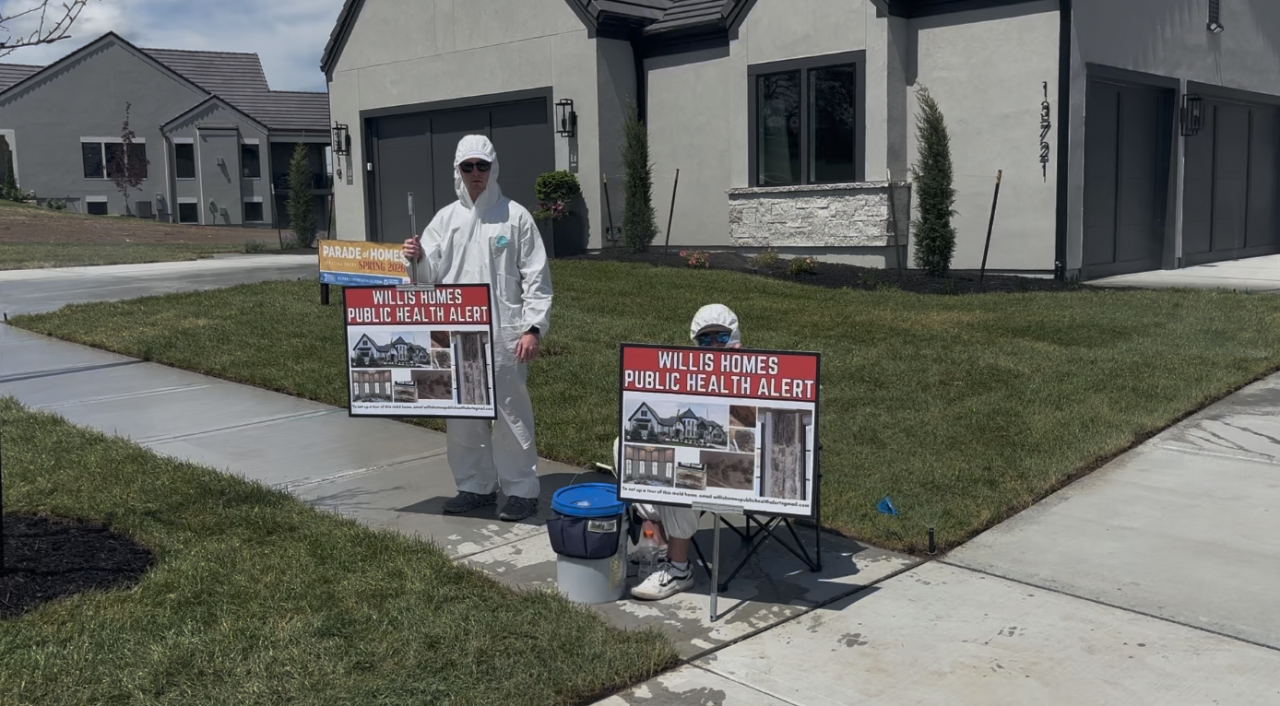
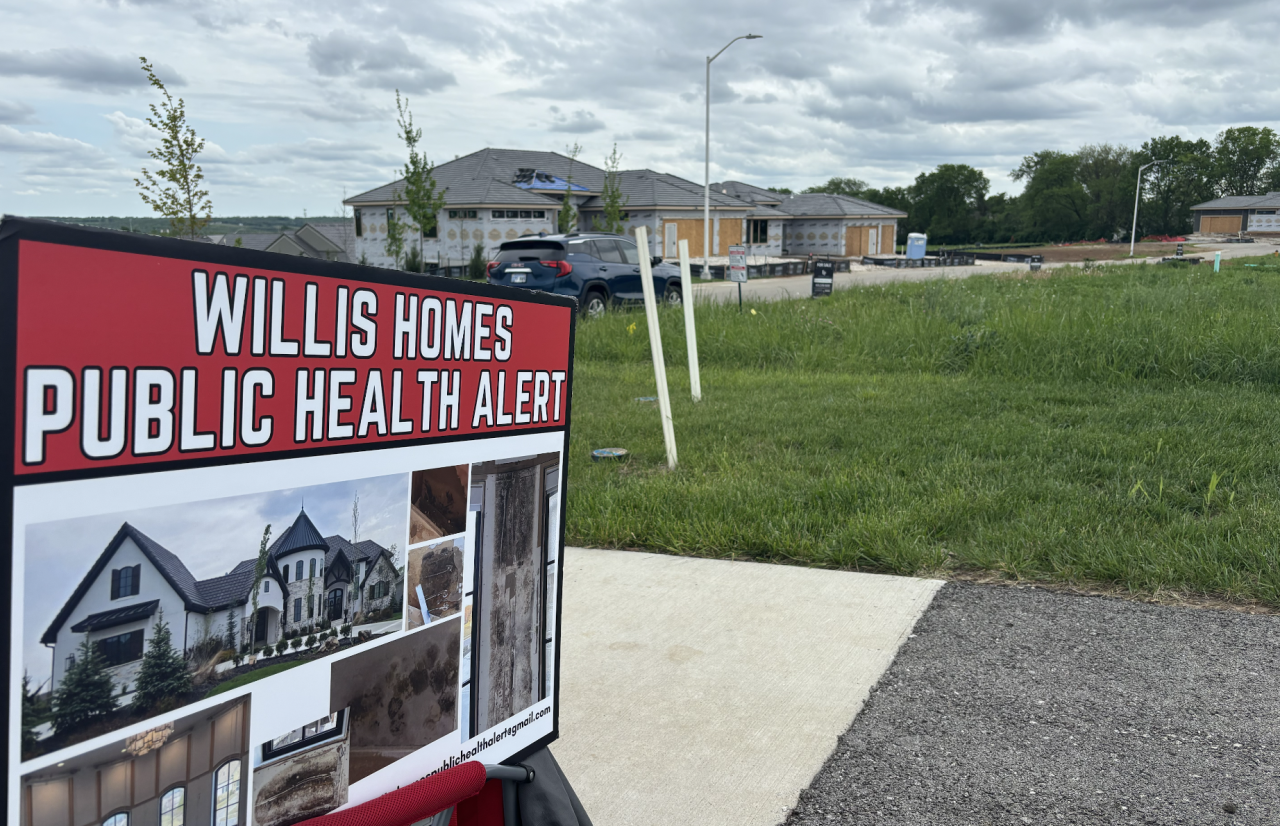
Cleary said he hired people dressed in hazmat suits to stand outside Willis houses on display during the Parade of Homes this spring.
His team put up dozens of signs, flew airplane banners, put up billboards, sent out a billboard truck on the road, launched a website and started a YouTube page. He also sent out mass texts to phone numbers promoting his YouTube series called "MoldFlix."
"You just want somebody to go, 'We missed on this one. We're going to do the right thing,'" Cleary said.
Willis responds with counterclaim
Willis responded to Cleary's campaign with their own website.
And, more recently, Willis filed a counterclaim against the Clearys for defamation, asking the court to ban the family from continuing its campaign.
Court records say the Clearys "intentionally carried through on their threat to embark on a 'public health awareness' campaign to harm Willis to achieve concessions and performance from Willis contrary to the parties’ contract."
Willis also filed third-party claims against numerous subcontractors who worked on the house.
Those claims say Willis is not liable, but if the Cleary family's allegations are proven to be true, "then third-party defendants are legally obligated to pay Willis for any damages..."
Willis also alleges some of the mold issues were caused by subcontractors the Clearys hired themselves.
"We have been in this town for 60 years as a three-generation-owned family business," Patrick Willis said. "We could not have survived in this town if we weren't making our customers satisfied. "
This is just the beginning of the court battle.
Attorneys for the Clearys are asking a judge to strike the Willis counterclaim. They're arguing the counterclaim goes against Kansas' anti-SLAPP law, which was enacted in 2016 to prevent lawsuits aimed at chilling free speech.
A motion hearing for that is scheduled on Aug. 3.
KSHB 41 will continue to follow this story.
—