

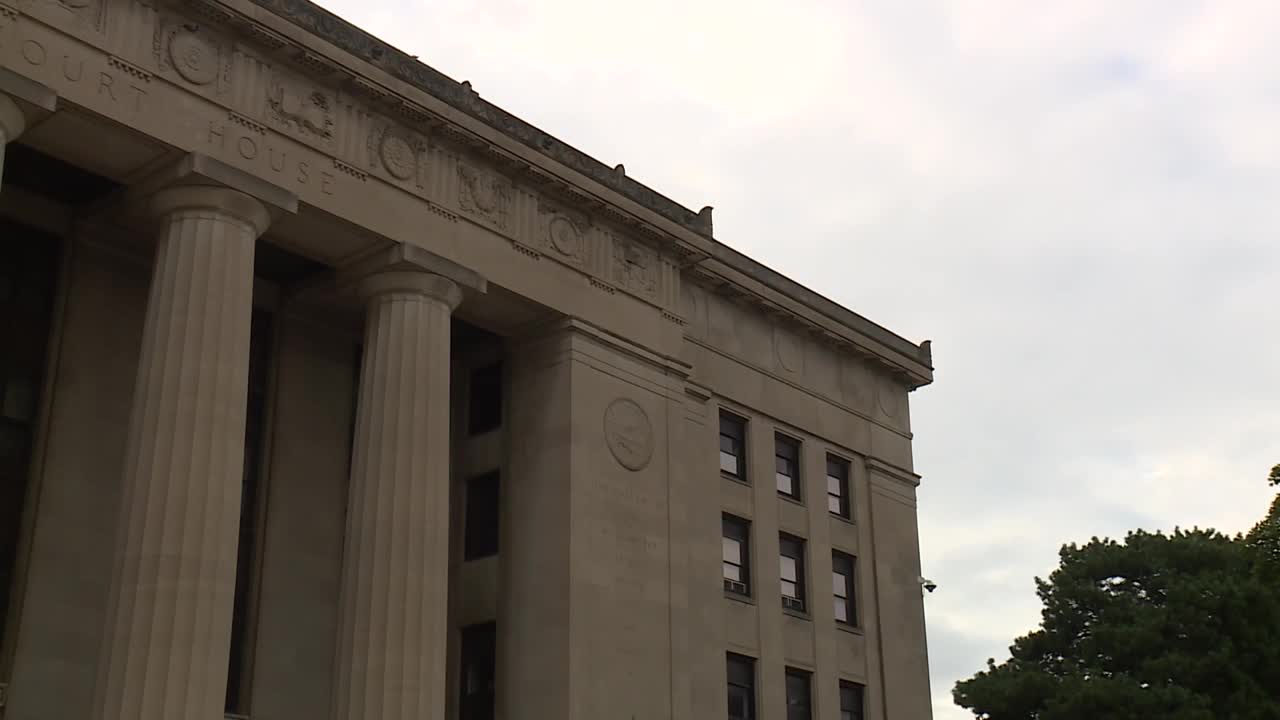


KANSAS CITY, Mo. — A Kansas City, Kansas, man found guilty in connection with a 2008 murder has been freed after a review of his case found prosecutors committed a Brady violation.
On Friday, Wyandotte County District Attorney Mark Dupree’s office announced that his office’s Community Integrity Unit had recently completed a review of the case of defendant Ronnell Burnett.
In 2011, a Wyandotte County jury found Burnett guilty of first-degree murder in 2008, criminal discharge of a firearm at an occupied dwelling, and possession of a firearm by a convicted felon. The judge sentenced Burnett to life in prison.
According to a press release, the Community Integrity Unit found that a Brady violation occurred during the prosecution of Burnett.
A Brady violation occurs when prosecutors fail to disclose evidence.
“While this violation predates the current administration, our CIU attorneys immediately contacted Burnett and his legal representative,” a press release from Dupree’s office said Friday. “But for the diligence of the CIU, the violation by the previous administration would have gone undiscovered.”
Dupree said his office filed a motion to vacate Burnett’s conviction. A Wyandotte County District Court judge ruled in favor of the motion “after finding the previous administration failed to disclose exculpatory evidence.” The judge ordered Burnett to be immediately released.
What is a Brady violation and what does it mean?
Don Haider-Markel, a criminal justice policy researcher and professor at the University of Kansas, explained what a Brady violation is.
“It basically means that the prosecution has withheld evidence that would either help the defendant or hurt the prosecutor's case," Haider-Markel said.

According to UMKC School of Law's Sean O'Brien, the evidence doesn't necessarily have to prove a defendant is not guilty.
"It could also prove that he should have received a lighter sentence or been convicted of a lesser charge or that, you know, a jury might have had a reasonable doubt about his guilt," O'Brien said.
That specific evidence from Ronnell Burnett's defense has not been disclosed publicly.
"It’s very likely that we'll never actually know what that evidence is, but given the fact that they overturned the conviction and released him, one would think that that's probably some pretty powerful evidence," Haider-Markel said.
A Wyandotte County District Court judge vacated Burnett's conviction after finding the previous administration failed to disclose exculpatory evidence.
"It means that the conviction is set aside. It was reversed. So he's no longer a convicted person," O'Brien said.

Experts say vacating a conviction does not necessarily end the legal process.
"It normally means he's free to go unless the prosecution wants to retry him for the case," O'Brien said.
Experts say a retrial is possible.
"It's entirely possible that a new case could be brought against him," Haider-Markel said.
O'Brien noted that Burnett's release may itself signal something about how the prosecution views the case.
"If a judge or the prosecutor thought he was guilty, he probably wouldn't be hitting the streets," O'Brien said.
I asked the Wyandotte County District Attorney's Office whether it intends to retry the case, but it did not respond to that question.
This is a developing story and may be updated.
—
![020626_KSHB_Image_NXA_Web_Standard Cube[88].jpg](https://ewscripps.brightspotcdn.com/dims4/default/0ead409/2147483647/strip/true/crop/300x225+0+13/resize/960x720!/format/webp/quality/90/?url=http%3A%2F%2Fewscripps-brightspot.s3.amazonaws.com%2F8f%2F6c%2Ffad8bd2346c5a4d4ead793017d4a%2F020626-kshb-image-nxa-web-standard-cube88.jpg)