

KANSAS CITY, Mo. — KSHB 41 reporter Fernanda Silva covers stories in the Northland. She started working on this story after KSHB received a tip from a concerned parent who learned her child's charter school must repay $1.7 million to the state. Fernanda also focuses on issues surrounding immigration. Share your story idea with her.
—
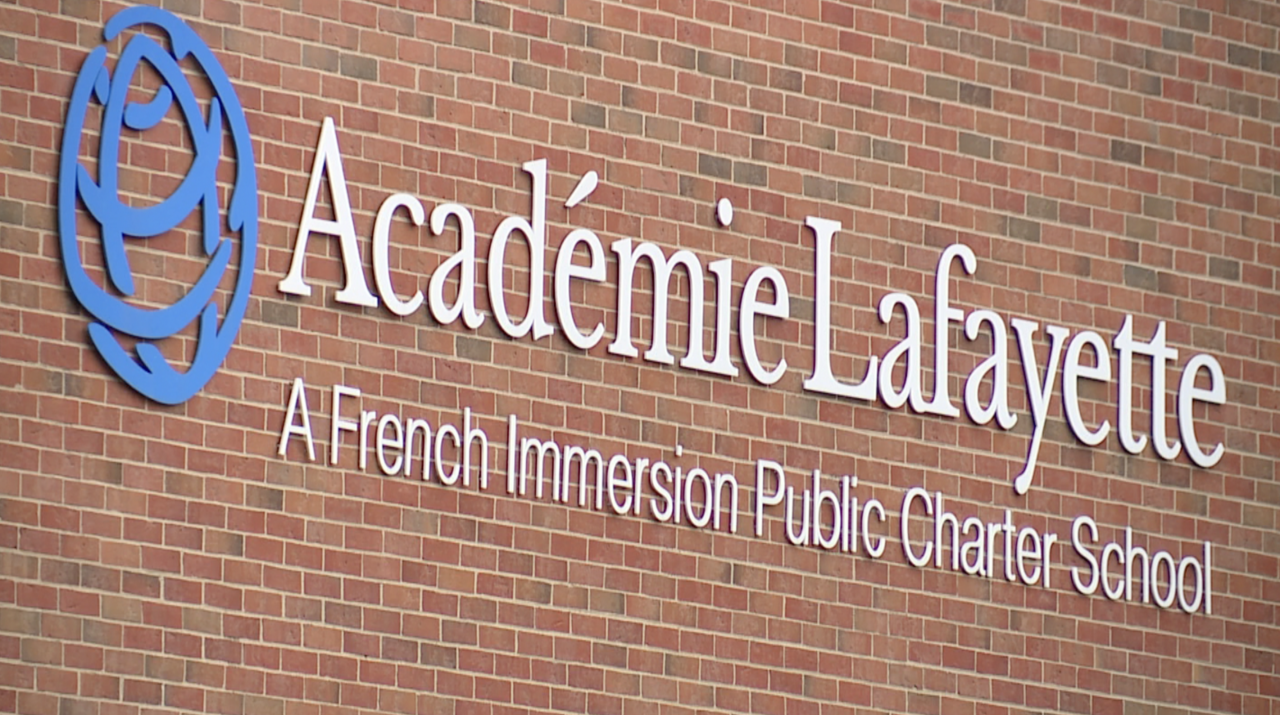
A concerned Kansas City mother reached out to KSHB 41 after learning her child's charter school must repay $1.7 million to the state. But Académie Lafayette isn’t alone — charter schools across Kansas City owe a combined $11.8 million.
“Are we going to have, you know, a school to come back to in January?” That’s the question Samantha Mallett asked after she received an email from Académie Lafayette, where her son is a student.
The email says that in early December, the Missouri Department of Elementary and Secondary Education (DESE) notified all Kansas City charter schools of an “unexpected state funding adjustment.”
For Académie Lafayette, this means $1.7 million must be repaid over the next four months.
“It tightens an operating budget that is already carefully aligned with classrooms, staffing, and student support, at a time when stability matters most for our students and teachers,” the email reads.

According to the Missouri Charter Public School Association, charter schools across Kansas City learned they must pay back a combined $11.8 million to the state. You can read their full statement at the end of this story.
“It’s very, very unnerving,” Mallett said.
It’s not an easy equation.
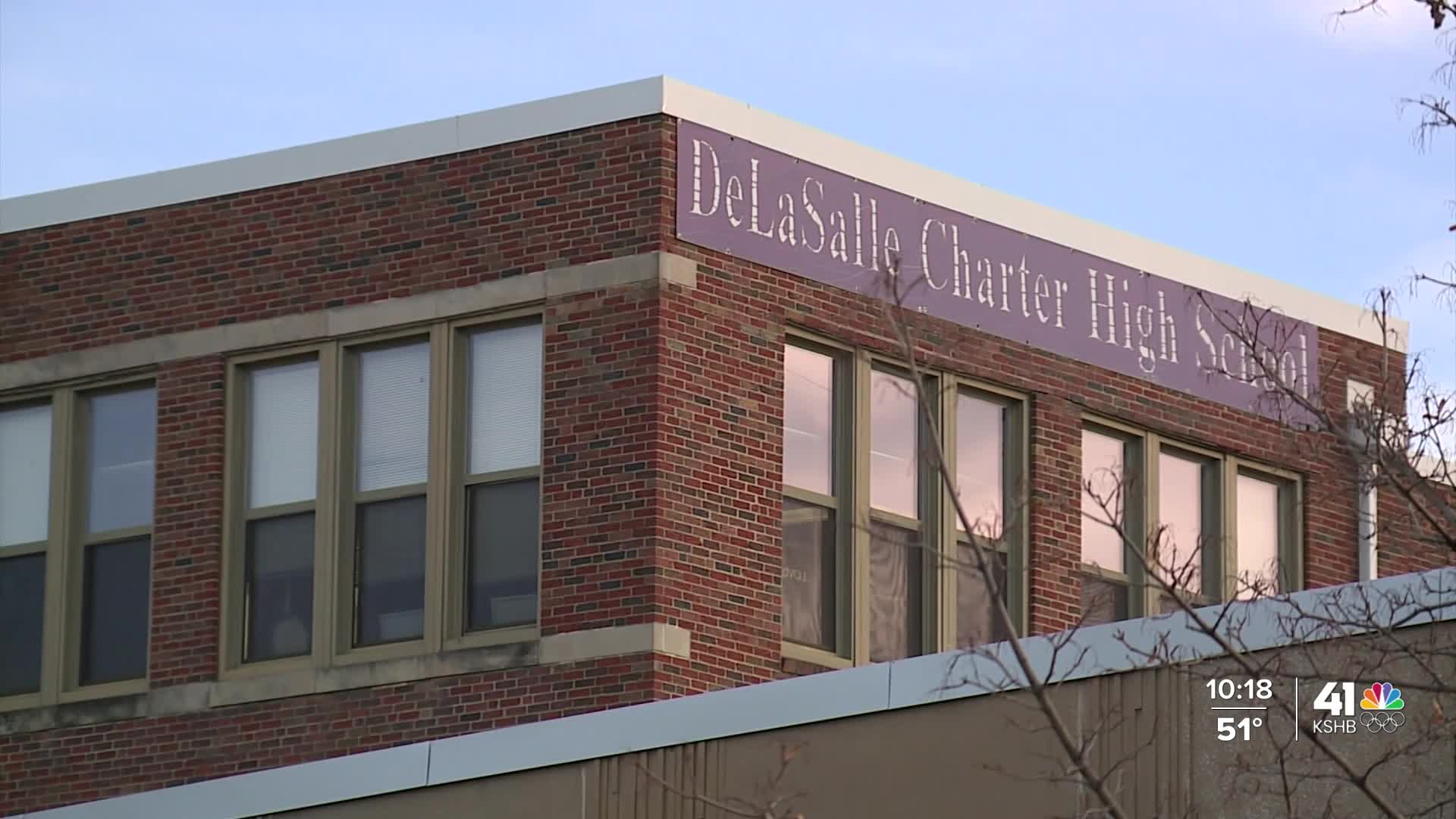
Phillip Adam, who handles compliance with the Missouri Department of Elementary and Secondary Education for DeLaSalle High School — which was also affected — says it comes down to a math problem.

“What happens is there is a certain amount of money," Adam said. "And a great thing is we’ve increased the number of students here. “But when you have a certain amount of money — let’s say it’s a pie — more students in that pie means there’s less per student. So it really boiled down to about $1,000 less for each student this year.”
At the start of the school year, charter schools received funding based on projected enrollment and attendance.
“To come back now and take that money back does make it a little bit hard,” Adam said, referring to funding schools received earlier in the year.

Adam says total state funding for Kansas City stayed the same. When actual enrollment came in higher than projected, that same amount of money had to be divided among more students — meaning each student’s share decreased by about $1,000.
“We were expecting a little," Adam said. "Every year, a prior-year adjustment happens. To this degree, we were not expecting it.”
According to DESE, changes to Kansas City Public Schools data triggered the adjustment.
Charter schools are paid the same Local Aid per student as KCPS. When KCPS data increased, it lowered the per-student amount for everyone.
They say charter schools had already been paid at the higher rate and must now repay the difference. However, DESE didn't specify what data changed or why. You can read their full statement below.
Different charter schools will have to pay back different amounts. At DeLaSalle Education Center that amount is $258,000.

The school’s savings will help cover that cost.
“We don’t want to dip into that if we don’t have to, but that’s what it’s there for,” Adam said.
They also are asking for community donations and looking for areas to cut costs.
“We’re also reducing some of the costs we have here," Adam said. "We’re tightening our belts in certain areas where we can — trying to save $100 here, $1,000 there, as much as we possibly can."
Charter schools serve nearly half of all public school students in the Kansas City area, according to Adam.

School leaders say they are working to make sure students don’t feel the effects and hope to see changes moving forward.
“I do wonder if there isn’t a better way, if there isn’t a better avenue we could take instead of, I don’t know, stressing out the parents,” said Mallett.
Adam said they were trying to work with DESE so they can avoid monetary emergencies.
The Missouri Department of Elementary and Secondary Education also sent a statement addressing the situation:
Law (160.415 RSMo) dictates that charter schools are paid the same amount of “Local Aid” per Weighted Average Daily Attendance (WADA) as their resident district. As the resident district, Kansas City 33 School District, data changes then that causes the “Local Aid” per WADA to rise or fall accordingly. Kansas City 33 School District’s School Year 2025 data has increased over their prior years for multiple reason and that resulting number lowered the “Local Aid” per WADA amount owed to the charters.
Law also dictates that DESE shall perform a prior year correction to ensure accuracy of prior year payment. The change in the 2025 resulted in a correction to the 2024-2025 fiscal payment as well.
On Thursday, KSHB received an updated statement from DESE, addressing follow-up questions. You can read it below:
Missouri charter schools receive state aid as well as funding that represents local tax dollars on a per student basis. Under state law, state aid for students and an amount intended to represent local tax funding is diverted from Kansas City Public Schools (KCPS) and St. Louis Public Schools (SLPS) and instead is allocated to charter schools.
Due to a provision in state statute that referenced a pandemic, both KCPS and SLPS were paid on attendance from the 2019-2020 school year for four years. For the 2024-2025 school year, that provision was no longer in effect, meaning KCPS and SLPS were paid on current attendance.
State law requires that prior year corrections, both under and overpayments, are conducted on a yearly basis. The prior year correction currently taking place is larger than in previous years because of the increase in attendance for both KCPS and SLPS.
The Missouri Charter Public School Association (MCPSA) and the Missouri Department of Elementary and Secondary Education (DESE) are working together to implement a plan that allows charter schools to evaluate and incorporate any necessary changes. DESE is committed to ensure that all Missouri students receive a high-quality education.
This is the Missouri Charter Public School Association's explanation for the changes in funding:
"Each and every year, the Department of Elementary and Secondary Education (DESE) works with all public schools - districts and charter schools - to true-up their funding from the prior year. That process generally occurs in the late fall or early winter and is a reflection of the fact that enrollment fluctuates, naturally. This winter (December 2025), charter public schools were notified of a significant and more material true-up than normal, in total about $11.8M, which works out to a little more than $1000 per student, from last year. The cause of this true-up was an increase in the total number of students and attendance in the Kansas City Public Schools boundary (district and charter), which is a reflection of the amazing things that are happening in the city. This is a case where nobody did anything wrong and, in fact, a rare case when something good is happening there ends up being a challenging output due to how schools are funded and true-ups naturally occur. We are grateful to the DESE and DESE leadership and staff for working with us to address this matter in a way that minimizes the impact to students, families, and schools. We are actively working with DESE to determine process improvements for the future."
—