



KANSAS CITY, Mo. — KSHB 41 reporter Lily O’Shea Becker covers Franklin and Douglas counties in Kansas. Share your story idea with Lily.
—
Local economists told KSHB 41 News that increasing gas prices could lead to higher grocery prices, which would impact nearly everything Harvesters does, according to its chief resource officer.
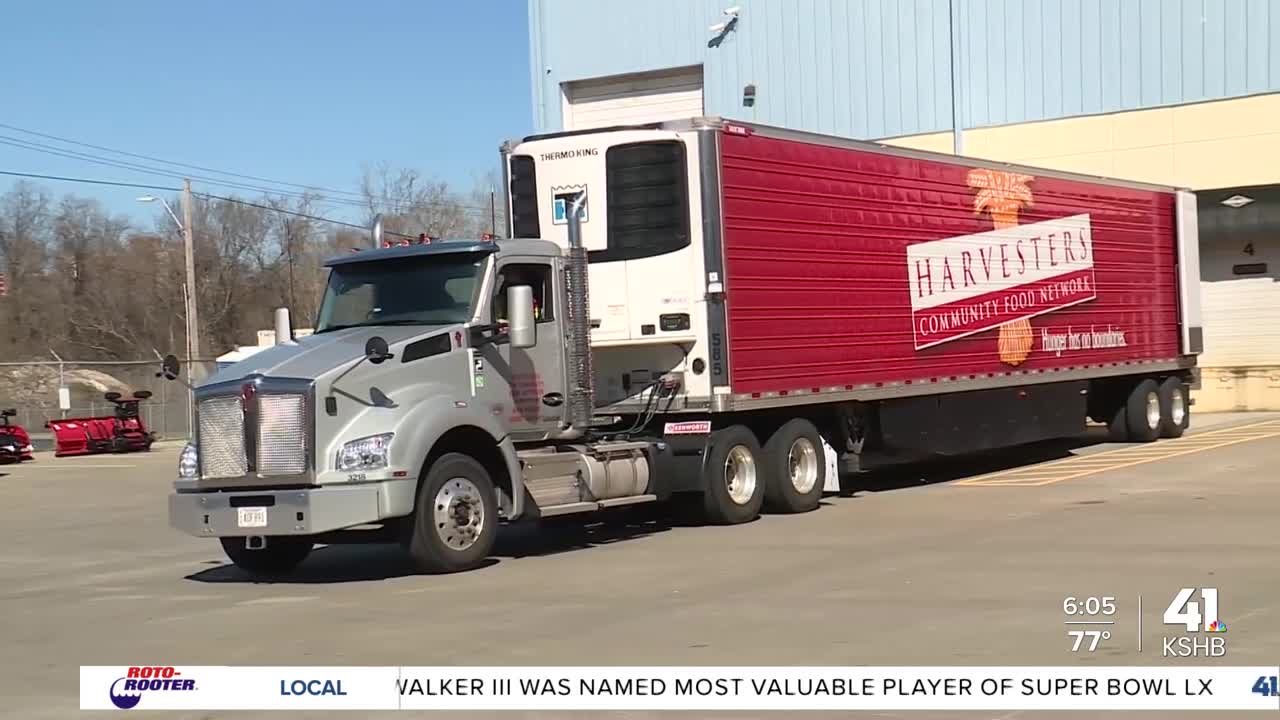
“Every single year, we are driving upwards to 640,000 miles to reach the 27-county service area that we have," said Elizabeth Keever, Harvesters' chief resource officer.
Over the past week, the average price of diesel jumped 60 cents per gallon in Missouri and 56 cents in Kansas, according to AAA.
Harvesters' fleet is on the road every day, according to Keever.
“Every single day we’re purchasing food, and a part of that purchased food is the cost of freight," Keever said. "Really, the cost of fuel impacts nearly every single thing we do, from the cost it takes to purchase that food as much as it is the cost to deliver it."

Harvesters works with 600 agencies and food pantries across its service area. The food bank either delivers to its partner agencies or picks up its share of donations from Harvesters' distribution centers.
University of Missouri-Kansas City supply chain economist Larry Wigger told KSHB 41 News last week that with higher gas prices, the movement of goods could become more costly.
“Food supply, and the packaging involved and the logistics of it," Wigger said. "It takes longer for that inflationary pressure to get into the lower tiers of the supply chain, but gasoline, it’s pretty immediate; we see it happen in real time.”

Keever said the challenge Harvesters is facing is multifaceted.
“We saw a 30% reduction in some of our federal programs last year, and we’ve seen people who have already started falling off the SNAP program as a result of H.R.1," Keever said. "So right now, we’re experiencing a challenge that is so multifaceted when it comes to rising cost of food, rising cost of fuel and the increase in the number of people who need food assistance."
According to Harvesters' annual report in 2025, the number of people facing hunger in the food bank's 27-county region is the highest in a decade.
“Every additional dollar that we put in the tank is one less can on the shelf," Keever said.
—

![020626_KSHB_Image_NXA_Web_Standard Cube[88].jpg](https://ewscripps.brightspotcdn.com/dims4/default/0ead409/2147483647/strip/true/crop/300x225+0+13/resize/960x720!/format/webp/quality/90/?url=http%3A%2F%2Fewscripps-brightspot.s3.amazonaws.com%2F8f%2F6c%2Ffad8bd2346c5a4d4ead793017d4a%2F020626-kshb-image-nxa-web-standard-cube88.jpg)