



LAWRENCE, Kan. — KSHB 41 reporter Lily O’Shea Becker covers Franklin and Douglas counties in Kansas. Share your story idea with Lily.
—
One hundred forty-four years after three Black men were lynched in Lawrence, the community gathered Wednesday to give them a proper memorial with headstones at Potter's Field in Oak Hill Cemetery.
Isaac King, George Robertson and Peter Vinegar were lynched from the Kansas River Bridge on June 10, 1882, according to the Lawrence NAACP. Their three deaths are the only documented racially-motivated lynchings in Douglas County, according to the Equal Justice Initiative.
With backing from KU Endowment, the Lawrence NAACP project also placed headstones for 27 others buried in Potter's Field. The NAACP history committee says there's 1,100 people buried in the field, most without headstones.
The community read their names, gathered in prayer, and placed flowers at the 30 headstones.

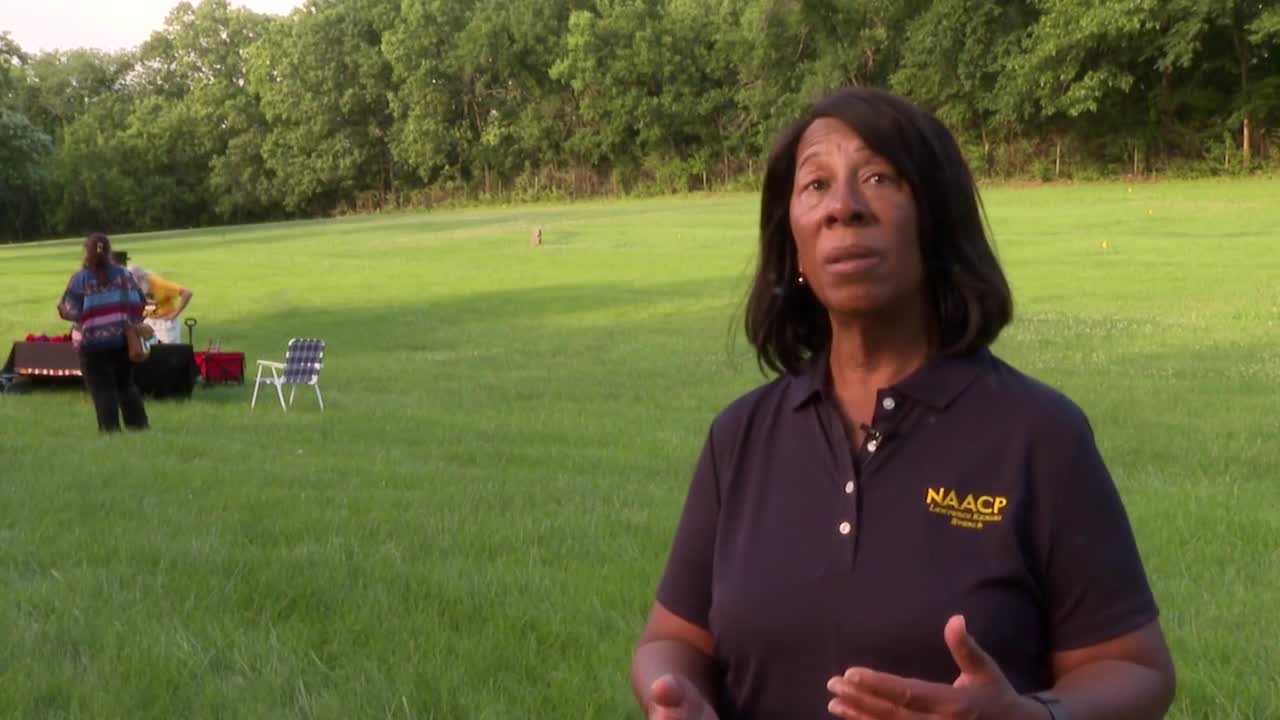
“We are promising these ancestors that their struggles were not in vain, that their lives mattered and their legacy is safe in our hands,” Lawrence NAACP president Ursula Minor said
The Lawrence NAACP history committee says cemetery records documented the plot number of everyone buried at Oak Hill, but the locations of those plots in Potter's Field were unknown. With assistance from the city, Lawrence historian Jeanne Klein was able to survey Potter's Field and locate 30 plots.
Klein also researched the history of those 30 people. From sick infants to a teenage boy who drowned in the Kansas River, Klein says their stories are stuck in her head, adding, "They're memorable people."

“The whole point is to raise awareness, to make more people know and remember that there are people buried here," she said.
The NAACP chapter placed a headstone for Vinegar's daughter, Margaret, next to him, even though her body was never found.
According to nonprofit Equal Justice Initiative, King and Robertson were living with the Vinegar family when they protected Margaret, who was 14, from a white man who was sexually assaulting her.

Vinegar, Robertson and King were arrested after the white man's body was found in the Kansas River, and a mob of about 100 white men dragged the three men to the middle of the Kansas River Bridge and hanged them, according to the nonprofit.
Margaret Vinegar was later sentenced to death and died from tuberculosis while imprisoned, per the Equal Justice Initiative.
“Just to be buried somewhere and not have a headstone or a story or anything about them, it’s like they didn’t exist," Minor said.
Minor is a lifelong Lawrence resident, and says her family first moved to the Kansas city in the 1800s. Her father, James Barnes, was a historian of North Lawrence, documenting the Black families who lived there and their occupations.
"My family was in Lawrence since the 1800s, and they’ve been through a lot — racism, all kinds of things happened," she said. "Hearing their stories made me really want to keep up with that history.”
Minor says she's not stopping here. She wants to push for a sign to mark Potter's Field from the road that runs alongside it.
“A history cannot be buried forever, and it cannot be erased when we chose to speak their names," she said.
—

![020626_KSHB_Image_NXA_Web_Standard Cube[88].jpg](https://ewscripps.brightspotcdn.com/dims4/default/0ead409/2147483647/strip/true/crop/300x225+0+13/resize/960x720!/format/webp/quality/90/?url=http%3A%2F%2Fewscripps-brightspot.s3.amazonaws.com%2F8f%2F6c%2Ffad8bd2346c5a4d4ead793017d4a%2F020626-kshb-image-nxa-web-standard-cube88.jpg)