

LAWRENCE, Kan. — KSHB 41 reporter Lily O’Shea Becker covers Franklin and Douglas counties in Kansas. Share your story idea with Lily.
—
There are thousands of stories buried at Oak Hill Cemetery in Lawrence, and the Lawrence NAACP chapter is working to bring some of those stories back to life.
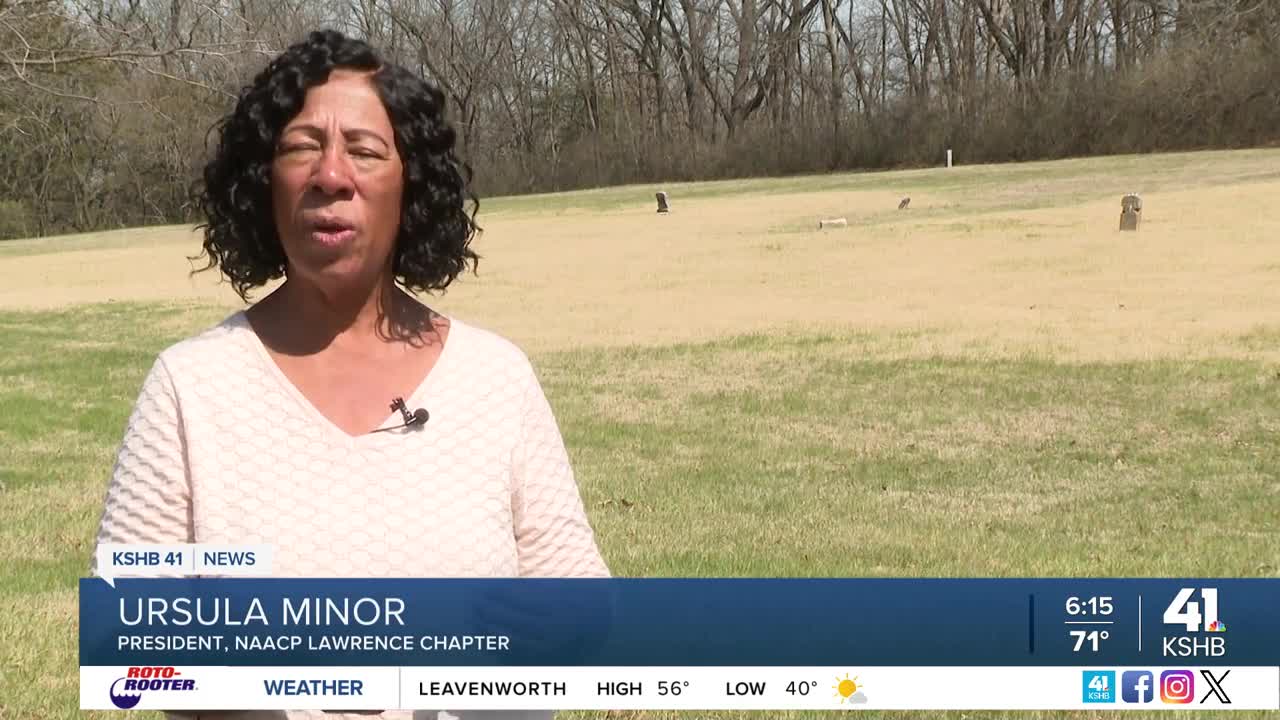
"The spots are not going to be exact, exact, but we do have the proximity of where they will be," Ursula Minor, the president of the NAACP chapter, said of headstones.
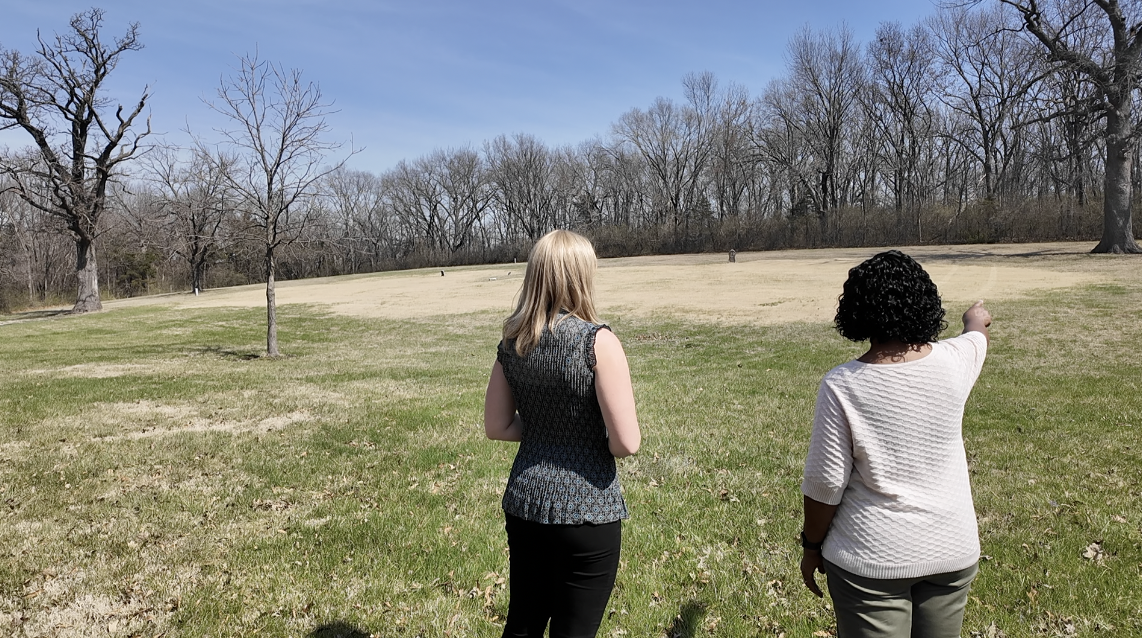
The civil rights organization has spent six years uncovering the stories buried in Potter's Field at the cemetery.
Of the over 1,000 people buried there, the NAACP chapter, with help from the University of Kansas, have identified 30 Black families and discovered their stories dating back to the 1800s.
Minor says 30 headstones have been purchased and the chapter hopes to place them by June 10, which marks 144 years since three men — Isaac King, George Robertson and Peter Vinegar — were lynched on the Kansas River Bridge in Lawrence, according to the Lawrence NAACP and the Equal Justice Initiative.
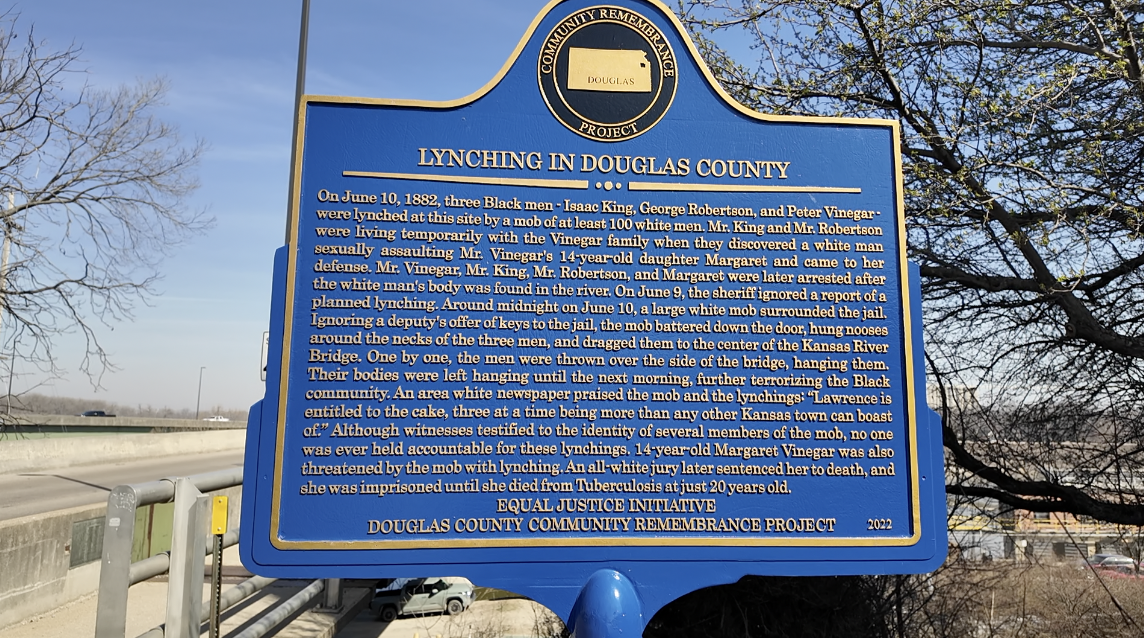
Between 1865 and 1950, there were 23 documented racially-motivated lynchings in Kansas, and three of them — King's, Robertson's and Vinegar's — took place in Douglas County, according to the Equal Justice Initiative.
“Sometimes people assume Lawrence was this perfect place, but it wasn’t always perfect," Minor said.
Those three men and their stories were the catalyst for this project. Historian Jeanne Klein, along with the Lawrence NAACP's history committee, combed through city records and worked with a KU surveyor to discover King, Robertson and Vinegar are buried in Potter's Field, according to Minor.

“It’s important to me because my dad was actually a historian, and that’s actually how I got into civil rights and wanting to help the community, especially minorities," Minor said.
Minor said her family has been in Lawrence since the 1800s, and that not only did her aunts, uncles, parents and their friends experience racism, but she has, too.
"It affected us as kids a little bit, because we didn’t have our first integrated pool until I was in the sixth grade," she said.
Minor said she grew up across the street from Lawrence's segregated pool, which featured a "whites only" sign.
“Actually, when my dad and them were young, it was the same pool that was there, it was the same for them," she said. "So, I heard him talk about it and say, 'It was a shame the same thing happened to my kids.'”
She said her father, James Barnes, documented every Black family that lived in North Lawrence and their occupations.
"He wrote everything," she said.
While Barnes believed in keeping history, Minor said there were a few things he seldom talked about.
“He told me about when he was sitting on his porch (in Lawrence) and the Klan came by and looked at him, like you know, you can’t say anything," Minor said. "He knew who those people were, but he would never say who they were. Some of them, I believe, were still living.”
Minor inherited all those documents her father created. Telling history is in her blood, and in her beadwork.
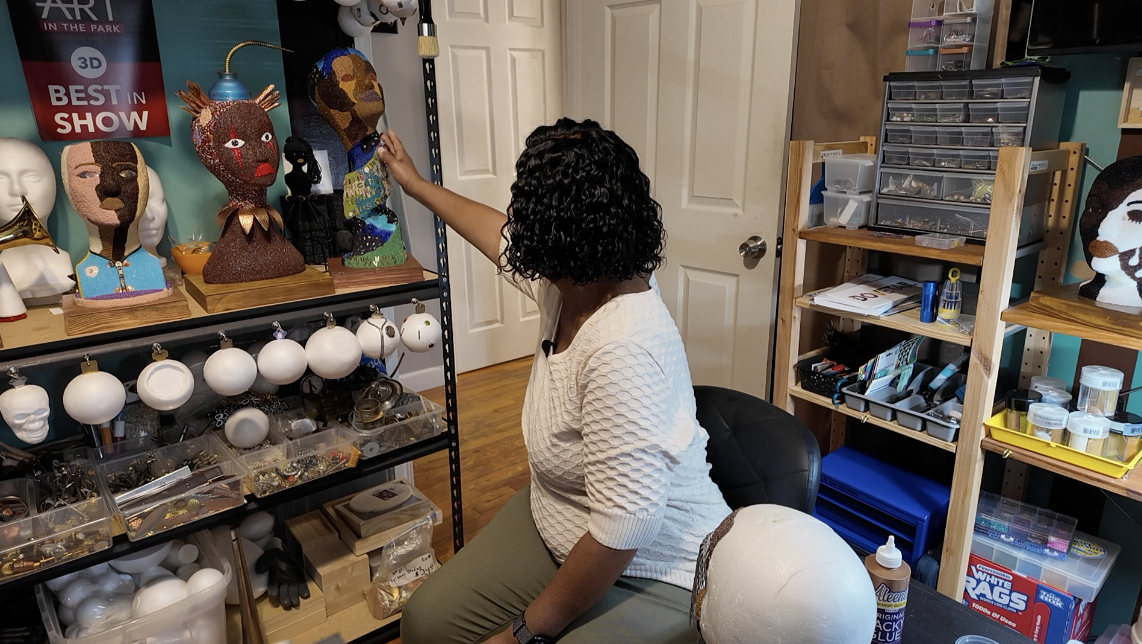
“This one, actually, is representing the Underground Railroad," Minor said while pointing to one of her pieces.
The curves of the neck represent slaves traveling through the night toward freedom, Minor said.

“All the words in here, like segregation, discrimination, voter’s rights, equality, policing," she said.
Minor says she's experienced racism in the art world, too, but she doesn't let it impact her.
“Sometimes I don’t put my tag on, they don’t know I’m the artist, but I’ll stand there and listen to them talk," she said of art shows. "After awhile, I’ll say, ‘I’m the artist,’ and this lady turns around and says, ‘Well, you’re Black,’ and I say, ‘Well, yes I am.’”
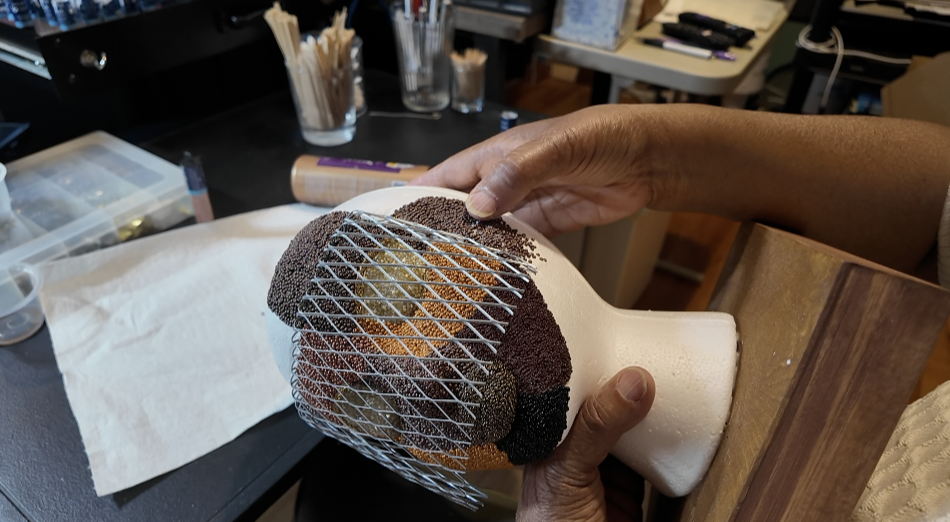
Whether it's telling history through the NAACP or her artwork, Minor says sharing Lawrence's history will help move the community forward.
“To me, a community can’t move forward if they don't find out their past," she said.
Minor puts in the work to make sure that happens. In addition to over 20 years with the NAACP, she's served with the Lawrence Public Library Board, Lawrence Memorial All Inclusion Board, ECKAN in Lawrence, volunteers at multiple schools across the city, and has been part of multiple art communities in Lawrence. She also helps lead walking tours in Lawrence with the local heritage society, she said.
“That’s what makes it work is just working together, and that’s what it means to me, is we’re able to come together and face things like that and understand that this was our history," she said.
—