



BLUE SPRINGS, Mo. — KSHB 41 reporter Isabella Ledonne reports on stories in Overland Park, Johnson County and topics about government accountability. Share your story idea with Isabella.
—
Communities in the Kansas City metro continue to call for transparency on automatic license plate readers (ALPRs), commonly referred to as Flock cameras.
On Monday night, some residents took their concerns to the Blue Springs City Council even though ALPRs weren't on the agenda.
The AI cameras have been the talk of several towns in the metro. As they continue to go up on street corners, so do the public's concerns about privacy.

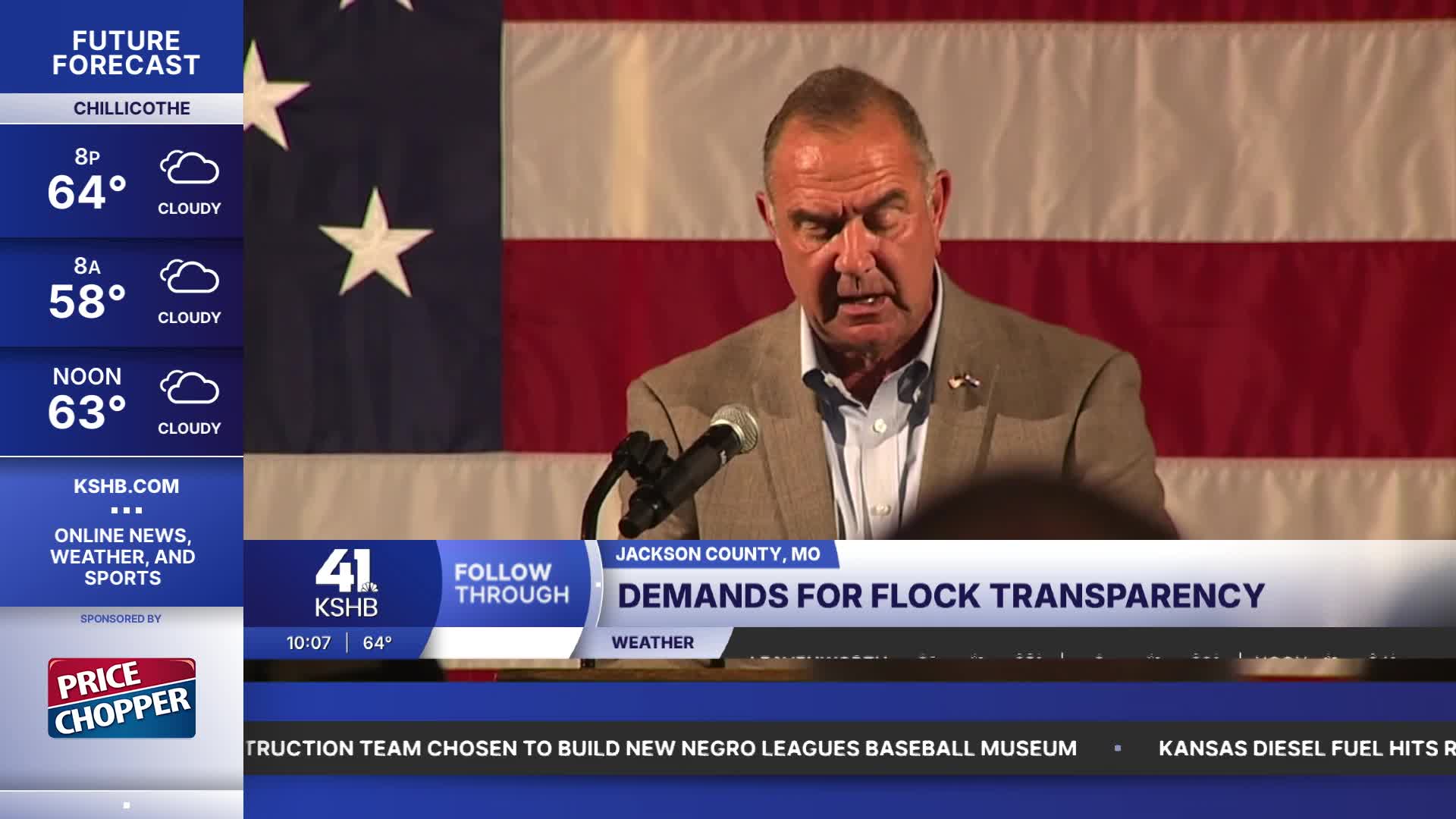
"They capture more data than the police even use," Blue Springs neighbor Rob Jestus said.
Blue Springs dedicated nearly $5 million to put up more than 150 Flock cameras in a city of about 60,000 people. Jestus isn't calling for the full removal of the cameras, but rather wants to see the city set some guidelines to show the public how the cameras are working.
"What I want is the city to put together guidelines for what success looks like for the program, and then if we don't meet those metrics of success, then to terminate the program because it's not delivering the public safety that the city has outlined what it should be accomplishing," Jestus said. "I would like to have an independent entity from the police be able to audit how the police are using the system."
Jestus shared his voice at Monday night's city council meeting just one week after Missouri Gov. Mike Kehoe signed an executive order placing more regulations on police departments using ALPRs.
"I would like to see us be a lot more proactive, especially if we're modeling ourselves at Missouri's first Flock safe city," Jestus said.
The Blue Springs Police Department did not respond to KSHB 41's request for comment or an interview.
Organizations like the National Police Accountability Project are navigating the new era of technology too and tracking the growing cases of police misuse with Flock cameras.

"That's really why the [Missouri] governor's executive order is key and any additional legislation that local governments impose is key," executive director Lauren Bonds said. "Transparency and making sure that there's publicly available information about how the technology is being used."
As of now, there's no uniform regulation on the use of AI cameras nationwide. That's why Bonds explained transparency is critical in this new surveillance age.
"I think it's a really critical piece to making sure that the policies are enacted and the limitations that have been imposed are being followed," Bonds said.
As more cities across the country continue to cut their contracts with Flock or even face legal action over privacy violations, legal experts like Bonds see the legality of AI eventually making its way to the courts.
"There's good and bad to everything," Bonds said. "I think the important part of that is regulation and what limitations we can put on it."
Missouri Sen. Josh Hawley invited the CEO's of Flock and other major surveillance companies to testify in a Senate Subcommittee hearing on Wednesday.
Flock did not respond to KSHB 41's request for comment.
—

![020626_KSHB_Image_NXA_Web_Standard Cube[88].jpg](https://ewscripps.brightspotcdn.com/dims4/default/0ead409/2147483647/strip/true/crop/300x225+0+13/resize/960x720!/format/webp/quality/90/?url=http%3A%2F%2Fewscripps-brightspot.s3.amazonaws.com%2F8f%2F6c%2Ffad8bd2346c5a4d4ead793017d4a%2F020626-kshb-image-nxa-web-standard-cube88.jpg)