



JOHNSON COUNTY, Kan. — KSHB 41 reporter Isabella Ledonne reports on stories in Overland Park, Johnson County and topics about government accountability. Share your story idea with Isabella.
—
The FDA gave accelerated approval for a groundbreaking drug that helps treat Hunter syndrome, a rare disease that affects fewer than 500 people in the United States. It's mainly diagnosed among boys.
Hunter syndrome has not had an FDA-approved treatment in 20 years, until now.
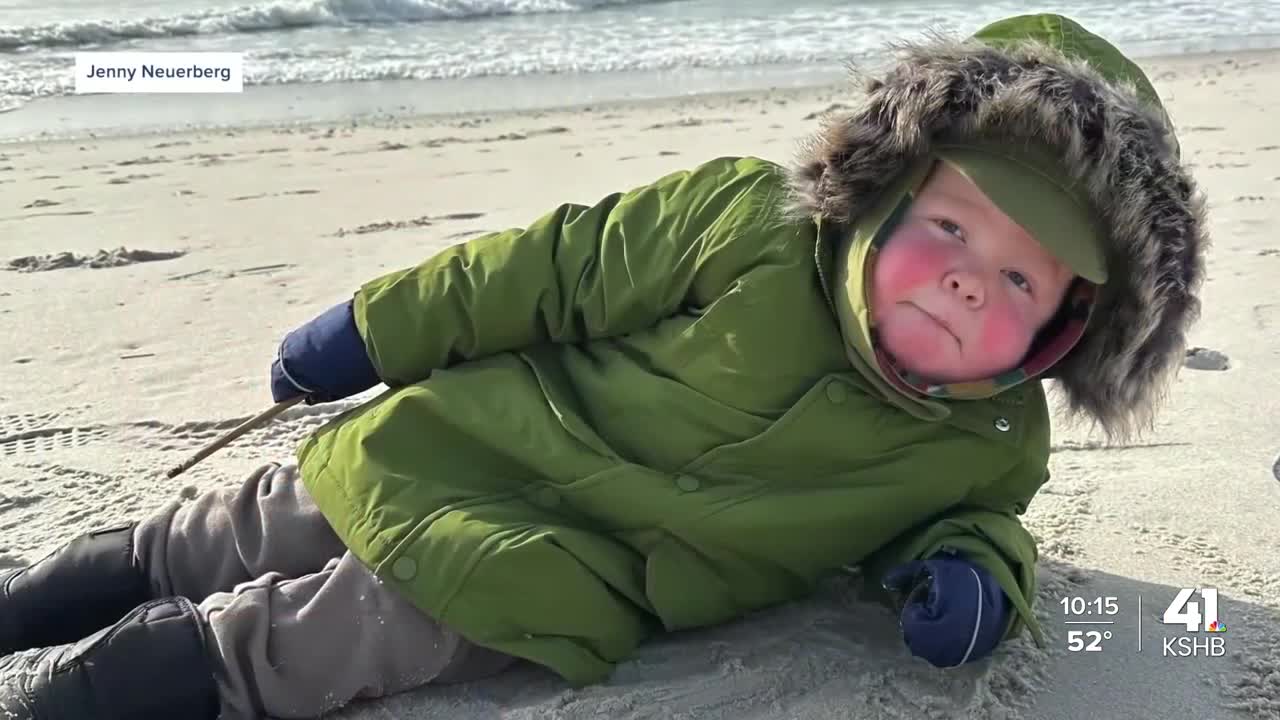
Overland Park parents Jenny and Nick Neuerburg used their voices to advocate for treatment approval and to call on federal lawmakers to help bring awareness to the rare, degenerative disease. Their four-year-old son, Atlas, was diagnosed when he was 18 months old.

"Basically, his body does not produce an enzyme that gets rid of junk and bad stuff," Jenny Neuerburg said. "There was nobody else in Kansas with it that was being treated or any doctors that did treat it."
Hunter syndrome can cause the loss of most basic functions and has a life expectancy between 10 and 20 years.
"It was a complete shock, and it's the worst news that I think you could probably ever hear as a parent," Neuerburg said.
The Overland Park family is currently in North Carolina for clinical treatments of AVLAYAH, an enzyme drug therapy that's helped prevent the disease from taking over in Atlas' body.

"It's the changes we have not seen [that are significant]," Nick Neuerburg said. "He has just continued to progress normally, where a lot of kids right around that 18-month or two-year-old mark will stop speaking completely."
During the interview with KSHB 41's Isabella Ledonne, four-year-old Atlas explained how he liked the trains in North Carolina and was getting ready for his birthday party.
"That's when I turn number four!" Atlas said. "Nice to meet you!"
Dr. Joseph Muenzer of the Muenzer MPS Research and Treatment Center at the University of North Carolina at Chapel Hill explained in an interview with NBC News that the new treatment will not reverse regressions that have already occurred.
However, the drug could extend children's lives and prevent new symptoms from showing up for those who receive it early.
“If we take a child, very young, and can treat them prior to damage, now the potential is almost unlimited,” Dr. Muenzer said. “We don’t know how well they’ll do in the future, but they’ll do dramatically different than they would have otherwise."
Because Atlas was receiving the treatment while waiting for FDA approval, his parents didn't know how long he could keep receiving the enzymes or be in the trial.
"Even a six-month delay, if the [FDA] wanted to ask for more information, in that amount of time these kids will lose their ability to speak, to walk, to feed themselves," Neuerburg said. "A normal, clinical trial and approval process doesn't work if you want to be able to save a generation of kids with a rare disease."
The Neuerburgs have been writing to and working with U.S. Rep. Sharice Davids' office since May 2025, asking the federal representative for Johnson County to help get accelerated FDA action for Atlas' treatment.
Jenny Neuerburg emailed Davids' office on March 20, and she sent a letter to the FDA on March 23.

"We followed up with the FDA to flag that this was an issue, that it could have a significant and serious impact on kids like Atlas and to make sure that they really took the approval of this as seriously and urgently as necessary," Davids said. "Sometimes things can work in government."
The FDA gave its accelerated approval a few days after Davids' letter.
"If anybody ever wonders if their advocacy pays off, this is such a great example," Davids said. "I do wish that more people knew that this was an avenue that they could take to reach out to their member of Congress."
For a disease as uncertain as Hunter syndrome, the FDA's decision gives the Neuerburgs some hope.
"It was a big win for our community, and we really needed it after some of the delays and bad news we had gotten," Jenny Neuerburg said. "It gives us the certainty that [Atlas] is going to be able to continue to get the care and treatment that he needs. It really changes his whole life. It's literally saving his life."
—

![092126_KSHB_WX_480x360[61].jpg](https://ewscripps.brightspotcdn.com/dims4/default/79e7fad/2147483647/strip/true/crop/480x360+0+0/resize/960x720!/format/webp/quality/90/?url=http%3A%2F%2Fewscripps-brightspot.s3.amazonaws.com%2F6f%2F6d%2Fa3758caf4c0984b0ecf100f620d1%2F092126-kshb-wx-480x36061.jpg)