



KANSAS CITY, Mo. — KSHB 41 reporter Fernanda Silva covers stories in the Northland, including Liberty. She also focuses on issues surrounding immigration. Share your story idea with Fernanda.
—
Port KC is considering expanding prevailing wage requirements for construction companies that partner with the Port Authority on projects in Kansas City
It's a policy shift that has drawn both support and concerns.
Prevailing wage sets a minimum pay and benefits standard for construction workers on projects that are at least partially funded by taxpayer dollars. The rates can vary by city, county, trade, and agency.
Under the new proposal, Port KC would contractually require prevailing wage on certain projects, including data centers, industrial and manufacturing facilities, logistics facilities, and office facilities.
Projects valued at $3 million or more would also qualify under the prevailing wage rate. A final decision hasn't been made yet.

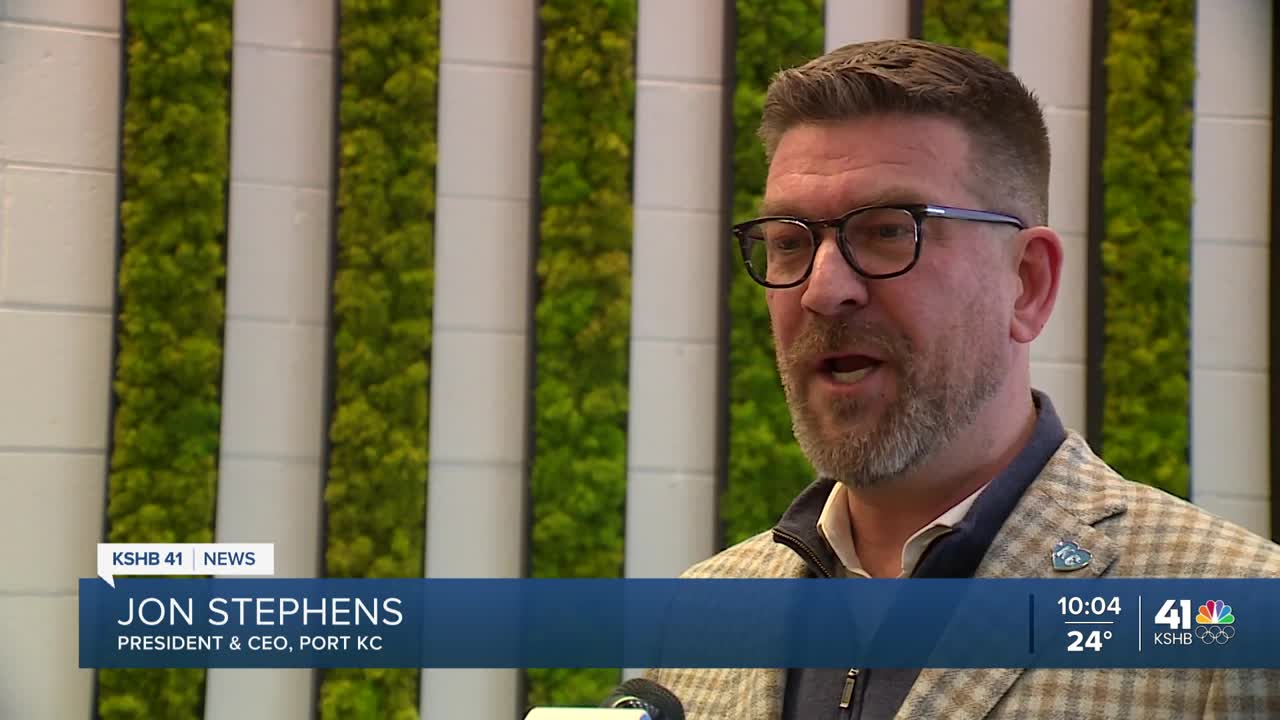
Jon Stephens, president and CEO of Port KC, said the authority has supported the policy.
"I would say that Port KC all along has said we want a proactive policy on enforcement of prevailing wage," Stephens said.
Stephens said the goal is to align Port KC's policies with those of the city and to ensure workers are compensated fairly.
"Everything is a balance, right? Of course, we want people, the people who are building our city and working hard every day. We want them to be paid. We want them to be paid fairly. We want them to be treated fairly," Stephens said.
We reached out for comment from the City of Kansas City, Missouri, but they were not available on Monday.
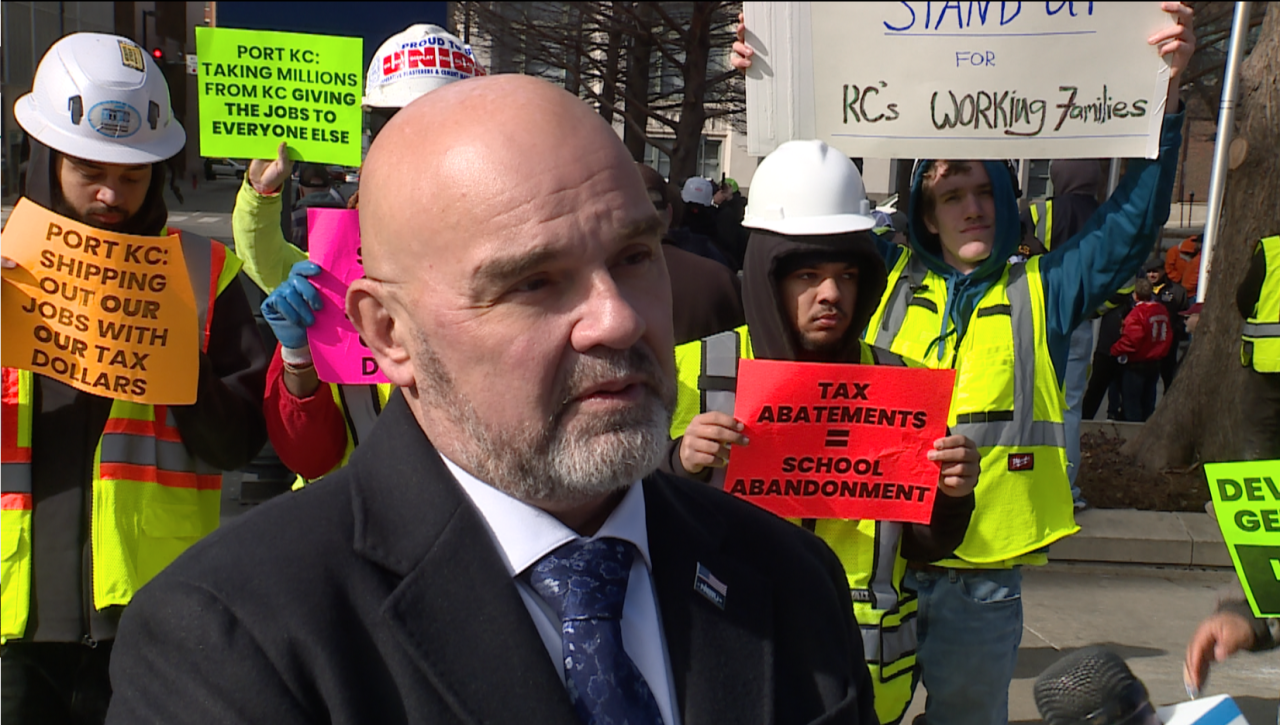
Labor groups have been pushing for the change for weeks, staging protests in support of prevailing wage requirements.
Ralph Orpeza, business manager for the Greater Kansas City Building Trades, said the effort is about more than union interests.
"What we're trying to do is protect the workers," Orpeza said in an interview with KSHB's Charlie Keegan on February 11. "This is not a union versus non-union argument. This is just protecting our area standards."

Bo Moreno, a local labor leader with the IBEW and Vice President of the Building Trades, said the absence of prevailing wage requirements opens the door to problems.
"It means lower wages, and I think also lower standard on the jobs as well, too," Moreno said. "It ends up being able to, we get bad actors that come in that pay lower than area standard wages and therefore prevailing wage helps alleviate that and makes it even playing field for our local contractors."
Moreno said third-party compliance is a key component of the proposal, describing it as a mechanism to ensure workers are correctly classified and paid according to their trade.

"Third party compliance is basically making sure that there's no bad actors out there, that actually people are getting the correct wage and also are being classified in the correct classifications versus whatever their vocation is," Moreno said.
Moreno said the fight has been a long time coming.
"It has gone on way too long," Moreno said. "We just want a fair, livable wage and an even playing field for our local contractors and our local workforce. It's not necessarily about making more money, it's about making a livable wage, but there's a big difference."

Not everyone is on board with the expansion.
Michele Roberts-Bauer, president of the Associated Builders and Contractors Heart of America Chapter, attended Monday's Port KC meeting and has sent emails to the authority expressing opposition to expanding prevailing wage requirements.
Roberts-Bauer said her organization appreciates the thoughtful approach Port KC is taking, but has significant concerns about the details.
"We are concerned about some of the discussions around prevailing wage, but we are glad of the thoughtful approach that Port KC is taking to try to manage all of the concerns," Roberts-Bauer said.
She said her group does support consistency in policy so contractors understand the rules. But she said the compliance demands of prevailing wage can create real challenges, particularly for smaller contractors.
"Prevailing wage can provide challenges for a business who is looking to make sure they are doing everything correctly," Roberts-Bauer said. "It can be an additional challenge for compliance, for the documentation, the paperwork."
She said her concern is that the expansion could drive up construction costs and potentially exclude smaller businesses and their workers from participating in these projects.
"The devil is in the details. And we have to make sure that whatever language is adopted won't disenfranchise certain segments," Roberts-Bauer said.
She said her organization supports fair pay for workers, but wants the specifics of any expansion to be carefully considered.
"We're in favor of craft professionals being paid well, and that we have concerns over the compliance specifics of expanding prevailing wage," Roberts-Bauer said.
Moreno said the current proposal is a step in the right direction, but acknowledged work remains.
He said said the next priorities in upcoming negotiations will be defining mixed-use projects and securing apprenticeship language in the policy.
This story was reported on-air by a journalist and has been converted to this platform with the assistance of AI. Our editorial team verifies all reporting on all platforms for fairness and accuracy.
—

![092126_KSHB_WX_480x360[61].jpg](https://ewscripps.brightspotcdn.com/dims4/default/79e7fad/2147483647/strip/true/crop/480x360+0+0/resize/960x720!/format/webp/quality/90/?url=http%3A%2F%2Fewscripps-brightspot.s3.amazonaws.com%2F6f%2F6d%2Fa3758caf4c0984b0ecf100f620d1%2F092126-kshb-wx-480x36061.jpg)