

KANSAS CITY, Mo. — KSHB 41 anchor/reporter Daniela Leon covers transportation-related issues in Kansas City. Share your story idea with Daniela.
—
Can artificial intelligence match the experience and expertise of a chef?
Led by James Beard Award‑winning Chef Celina Tio, The Belfry Collective is known for pairing award‑level dining with craft cocktails. But at the start of the new year, that very question was served up to diners.
“The idea for this dinner actually came from my chef, Steven. We do an inspired tasting menu every second Friday and Saturday in Ground Control — part of The Belfry Collective — and his idea was to do an AI dinner," said Tio, owner of The Belfry. "When he first presented it, my answer was a hard ‘no,’ because creative people aren’t usually fans of AI, right? But after giving it some thought, and talking to people who are into AI as well as regular guests, I decided to try it. What we wanted to prove was that AI can’t really take over what chefs do."
For Tio, a flavorful dish begins with a story rooted in her passion for food, culinary experience and tradition — a stark contrast to artificial intelligence, which relies on data points and can generate infinite recipe variations in seconds.
“To me, when I cook, there’s always some kind of story in the back of my head, or I’ve made it before,” Tio said. “You can use AI as a guide, but I definitely would not follow recipes to a T.”
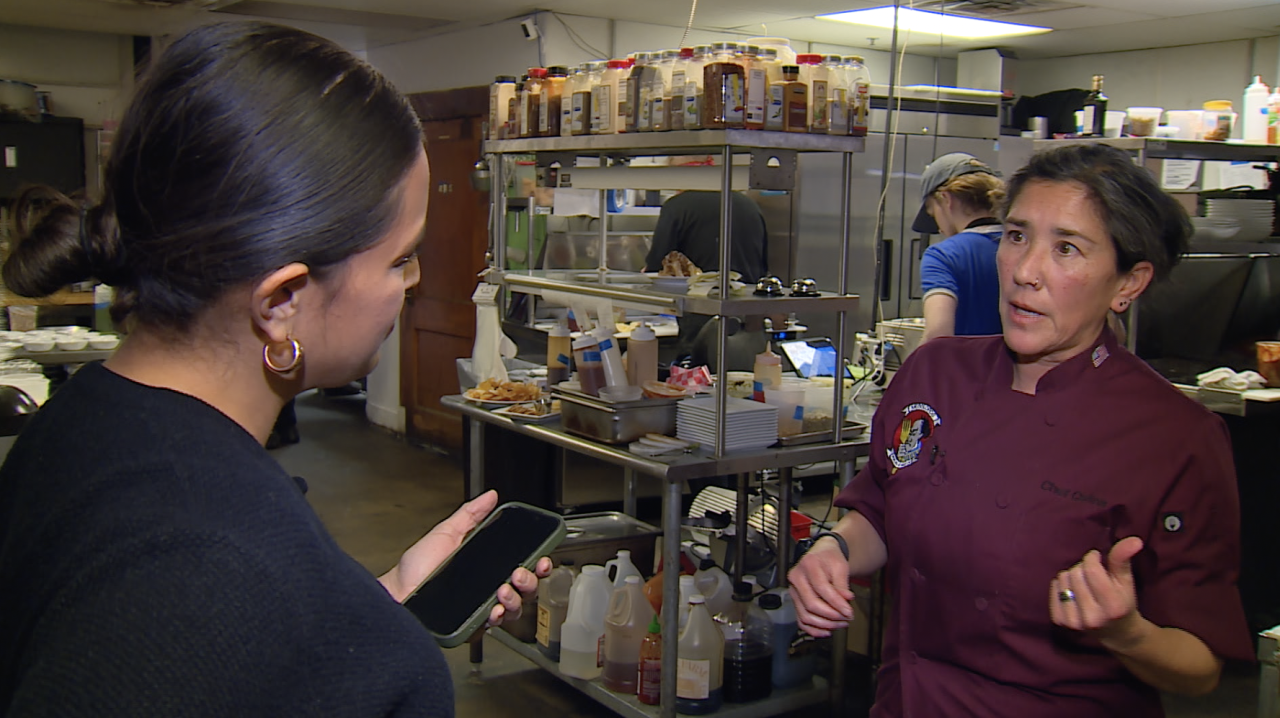
Determined to reach a conclusion, Tio and Chef Steven Branson created a different type of culinary challenge: they prompted AI to generate a five‑course menu they could serve at the restaurant in the middle of winter. Branson cooked on behalf of AI, following its cooking and plating instructions with precision.
“I don’t think I drew the lucky straw with having to do the AI,” Branson said. “I basically had my hands tied behind my back the whole time; I had to follow exactly what it told me to do.”
Adjustments were necessary when AI overlooked key ingredients.
“Some of the mistakes AI made were unforgivable,” Branson said. “One of the sauces we have is gremolata, a parsley and olive oil‑based sauce. And the first recipe AI gave me didn’t have olive oil in it. It was just a bowl of parsley, which I couldn’t sell to someone. The changes were minimal but necessary.”

Competing against Branson was Tio, who delivered the same menu. However, she relied on her culinary expertise as her guiding tool.
“I relied on my own expertise and life experiences — having made most of these dishes before, braised beef cheeks before, knowing how to cook millet properly," Tio said. "All of those things made my dishes different. Visually, some of them looked the same, but they all taste different."
The final decision came down to trusted regulars, who were intrigued by the challenge.
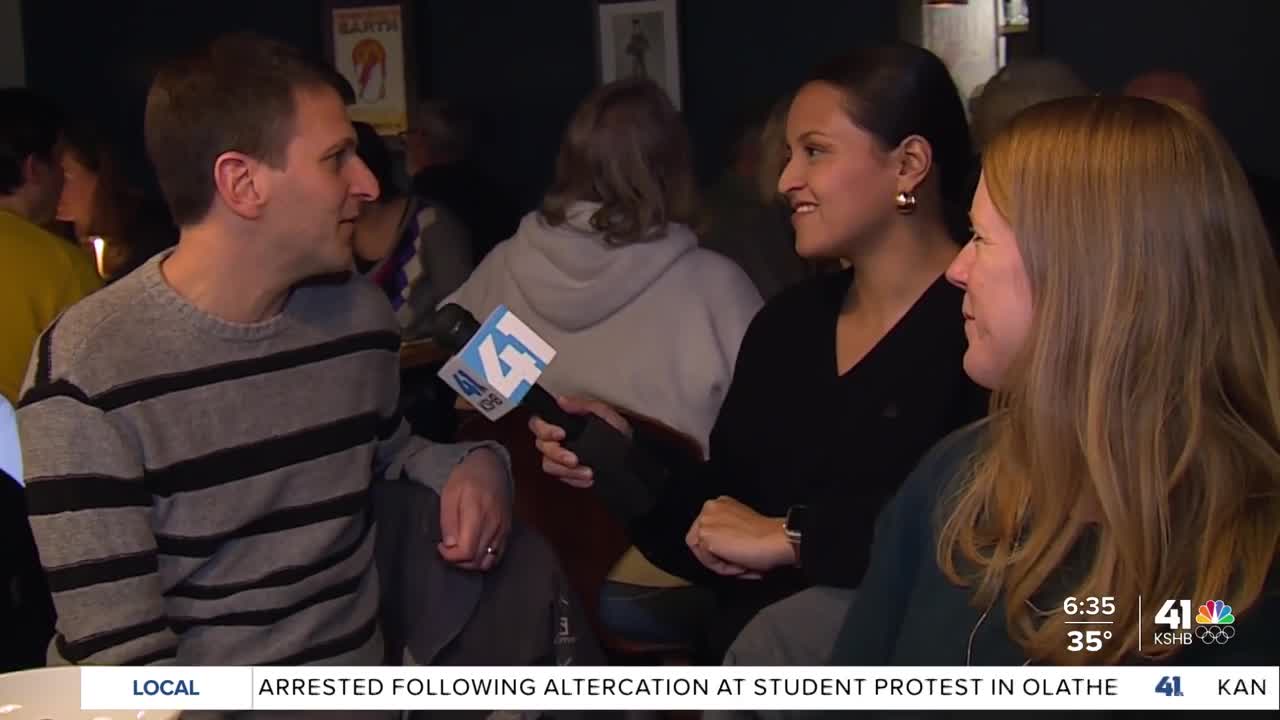
“Being a bit familiar with AI, I have a lot of trouble with it. So I wondered, how will they pull this off? I had to know,” said diner Ray Dick.

The sold‑out dinner also gave diners the chance to play food critic, determining who whipped up the better dish and guessing who was behind each creation.
“With AI being talked about all the time, it’s nice to experience it in a different way, not just looking at things ChatGPT generates,” said diner Steve Hengeli.

The five‑course tasting began with roasted celery root velouté, setting the tone for the evening. Both dishes were presented at the same time, with diners sampling each side‑by‑side.
The presentation threw some diners off, with some incorrectly guessing the AI plate had been created by Tio.
Momentum shifted with the next dish, charred brassica Caesar salad. Tio knew the secret was cutting the cabbage into quarters, then slicing it diagonally to remove the base after letting it char to perfection.

It was a small but crucial step, one the AI recipe completely missed. Diners spotted the difference right away.
“You can’t get that from a recipe,” remarked diner David Adler. “You just know how to handle cabbage on the grill.”

The third course — rye gnocchi with braised mushrooms — was followed by the main dish, beef cheek with millet, sparking another round of guesses. Diners agreed both plates were executed well, but differences in the millet’s texture and overall consistency led them to correctly identify which chef made each dish.
“Product changes happen, and you have to be adaptable,” Branson said. “We might get a different brand of polenta or rice, and those cook differently. AI doesn’t have the ability to tell you which grain or new ingredient you’ve got — it just says ‘cook rice.’ That experience of looking at something and making adjustments on the fly is not a strong suit for AI.”

Dessert, an olive oil polenta cake, closed out the meal, with the majority of diners coming to a clear verdict.
“AI is ones and zeros,” Dick said. “A chef has passion, food comes with passion and love, and that’s the difference.”
The chefs agreed that while nothing can replace human skill, advances in AI are sparking questions about what the future might hold.

“I think we proved AI isn’t trying, or able, to replace us anytime soon,” Branson said. “You can see growth in its recipes, but it’s still lacking heart.”
The Belfry now plans to host more AI‑inspired dinners this year — driven by the success of this event and the rapid changes happening in the world of artificial intelligence.
Diners can stay up to date via the restaurant’s social media.
This story was reported on-air by a journalist and has been converted to this platform with the assistance of AI. Our editorial team verifies all reporting on all platforms for fairness and accuracy.
—