



LIBERTY, Mo. — KSHB 41 reporter Charlie Keegan covers politics in Kansas, Missouri and at the local level. Share your story idea with Charlie.
—
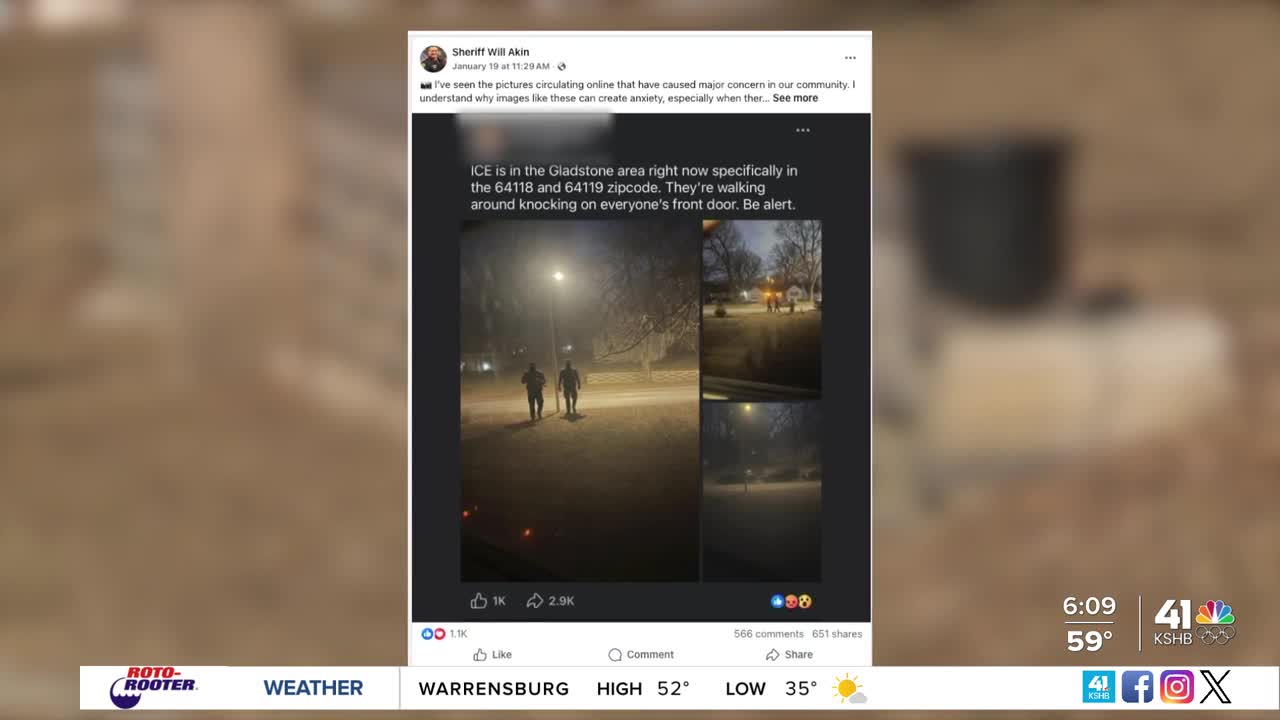
In mid-January, a social media post claiming Immigration and Customs Enforcement (ICE) officers were going door-to-door in Clay County, Missouri, went viral, getting thousands of shares in less than one day.
Sheriff Will Akin was surprised when he saw the post on Facebook himself. He called ICE and other law enforcement agencies, and confirmed ICE was not in the neighborhood as the post claimed.
“It’s so easy to get misinformation. Then you throw groupthink in there, confirmation bias,” Sheriff Akin said. “That can be dangerous.”

Akin said aspects of the photos stood out to him as odd, so he created a post on his own Facebook explaining how citizens could better examine photos.

“I also wanted to add maybe a little value,” Akin said.
He pointed out there was no snow on the ground in the photos, even though the original post claimed the photos were from a day where there should have been snow. He also said the “agents” in the photos were not wearing gloves while temperatures were in the single digits.
Akin said the vehicles in the photo didn’t have tinted windows, whereas most law enforcement windows do.
“People are afraid,” Akin explained. “Whether they should be or not, that is the moment in time I’m trying to address. There is a crisis. I didn’t want it to get further out of control than what it already had.”
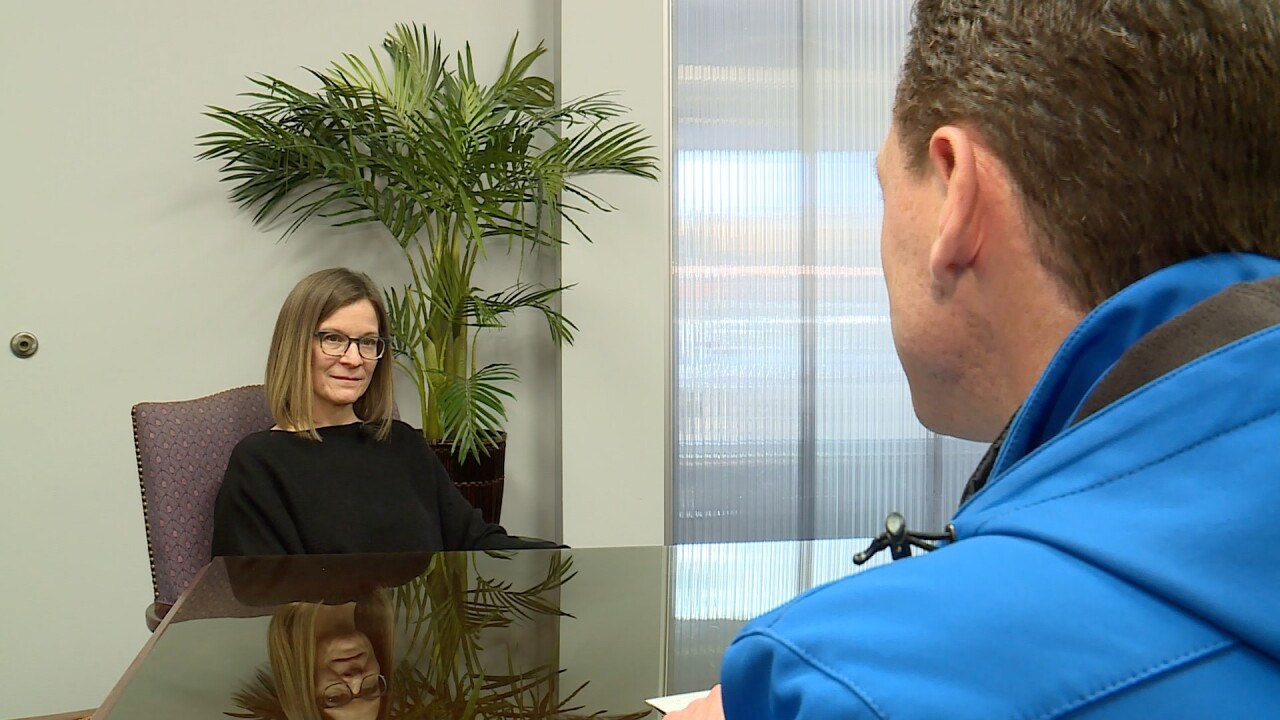
The original post and Akin’s rebuttal made their way to Becky Tolman’s feed. She is an attorney at Clay County-based McCrummen and McCullick Immigration Law.
“Having someone like the sheriff who can look at a photo and get the attention of the people, and be someone the community will listen to, that’s really helpful,” Tolman said of Akin’s post calming fears among her circle.
Every year, KSHB 41 News, its parent corporation, the E.W. Scripps Company, and USA Today partner with the News Literacy Project to recognize News Literacy Week. In 2026, the week runs from Feb. 2 to 6.
The organization provides resources for teachers to help students learn how to determine fact from fiction in the digital landscape.
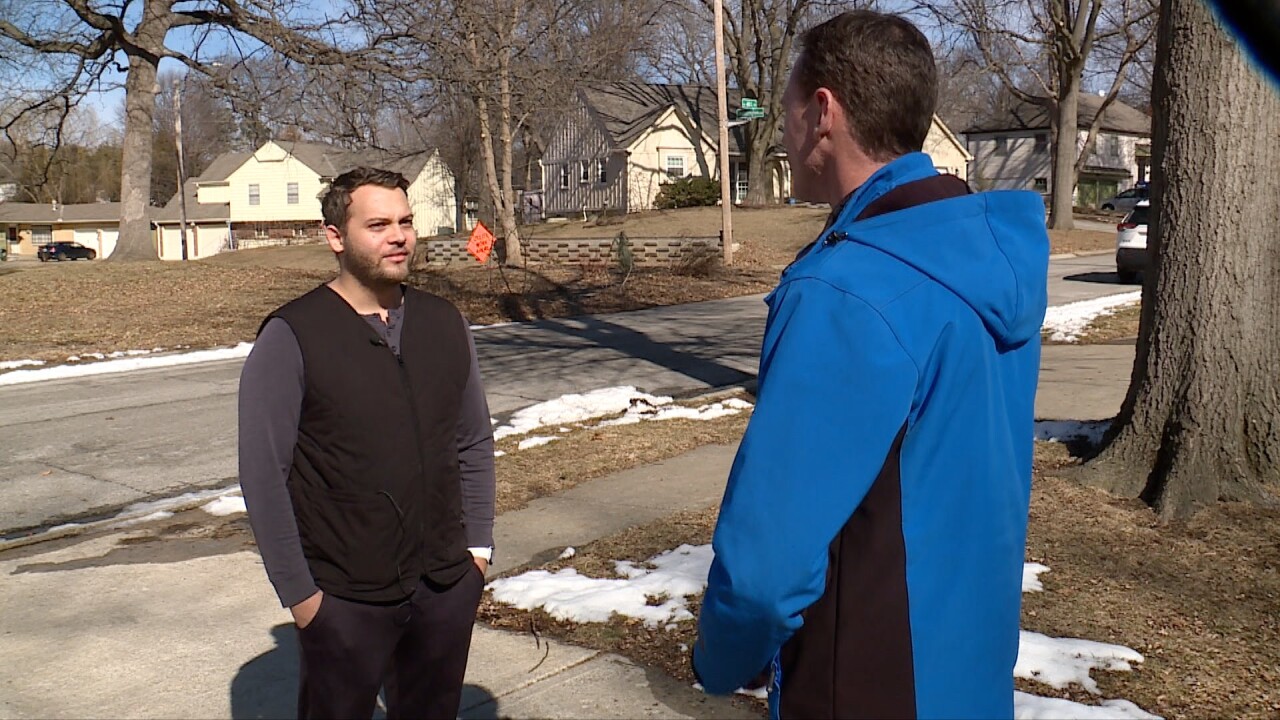
“Sometimes I’ve found the easiest thing to do is wait a day, wait 48 hours. By 72 hours, you’re going to know what’s real and what’s fake,” said Joe Carmona, whose neighborhood was featured in the viral post.
Sheriff Akin said he invited the person who made the original post to speak with him, but they have not connected at this time.
—

![092126_KSHB_WX_480x360[61].jpg](https://ewscripps.brightspotcdn.com/dims4/default/79e7fad/2147483647/strip/true/crop/480x360+0+0/resize/960x720!/format/webp/quality/90/?url=http%3A%2F%2Fewscripps-brightspot.s3.amazonaws.com%2F6f%2F6d%2Fa3758caf4c0984b0ecf100f620d1%2F092126-kshb-wx-480x36061.jpg)