


KANSAS CITY, Mo. — KSHB 41 reporter Grant Stephens covers downtown Kansas City, Missouri. He also focuses on stories of consumer interest. Share your story idea with Grant.
—
The University of Missouri-Kansas City is among 15 finalists competing for what could be the largest research grant in the school's history - a $160 million award from the National Science Foundation that would establish Kansas City as a national hub for critical materials research.
The proposal, called the Critical Materials Crossroads, aims to build domestic capability for extracting and refining critical metals and minerals essential for microchips, turbines and batteries. UMKC beat out 300 other proposals over three years to reach the finalist stage.
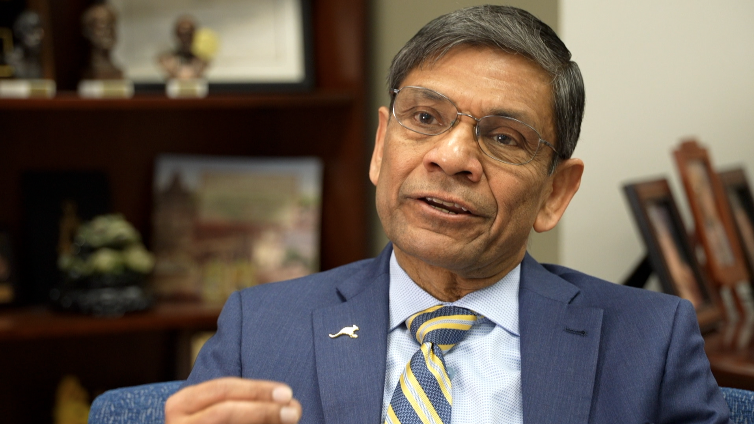
"Critical materials are available in the raw form in the United States, but what we do not have at this point in time is the modern technology to extract them and refine them and then use them," said Mauli Agrawal, chancellor at UMKC.
“These materials are actually available in the mines in the United States, but more specifically, in Kansas, in Missouri," he said.
”The other piece is the geographical location of Kansas City. We're right in the middle of the nation. We're number two in terms of railroad traffic in the nation. There are mines all around us which have the raw materials, and we have the universities in the consortium that we have built going from Manhattan, Kansas to Missouri, and so we have all the technological ability to build this technology right here.”
The initiative would create a 230-member consortium linking universities, companies and government agencies to rebuild an industry the U.S. largely abandoned more than 50 years ago.

"It's going to take an entire ecosystem worth of Kansas City to build up something that we stopped really doing more than 50 years ago," said Anthony Caruso, vice chancellor for strategic initiatives at UMKC.
The project represents a generational opportunity for Kansas City to establish itself as a leader in critical materials research and manufacturing.
"It will be a decade or more to build the whole thing up, but you need to start someplace," Agrawal said.
Agrawal praised Caruso's leadership on the initiative.
"He's one of the smartest people I've ever met," Agrawal said.
Caruso emphasized the collaborative nature of the project.
"No one person can do this work alone. It really takes all of the stakeholder groups," Caruso said.
The National Science Foundation recently conducted a site visit to UMKC's campus. Chancellor Agrawal is scheduled to update the University of Missouri Board of Curators on the proposal's progress during their meeting at 8 a.m. at the Student Union on UMKC's campus.
"It has been a long road to get to the point that we're at now, but it's starting to have a snowball effect," Caruso said.
This story was reported on-air by a journalist and has been converted to this platform with the assistance of AI. Our editorial team verifies all reporting on all platforms for fairness and accuracy.
—
![020626_KSHB_Image_NXA_Web_Standard Cube[88].jpg](https://ewscripps.brightspotcdn.com/dims4/default/0ead409/2147483647/strip/true/crop/300x225+0+13/resize/960x720!/format/webp/quality/90/?url=http%3A%2F%2Fewscripps-brightspot.s3.amazonaws.com%2F8f%2F6c%2Ffad8bd2346c5a4d4ead793017d4a%2F020626-kshb-image-nxa-web-standard-cube88.jpg)