

VANDALIA, Mo. — KSHB 41 reporter Megan Abundis covers Kansas City, Missouri, including neighborhoods in the southern part of the city. This nursery program caught her eye online, and she wanted to hear from those connected to the program. Share your story idea with Megan.
—
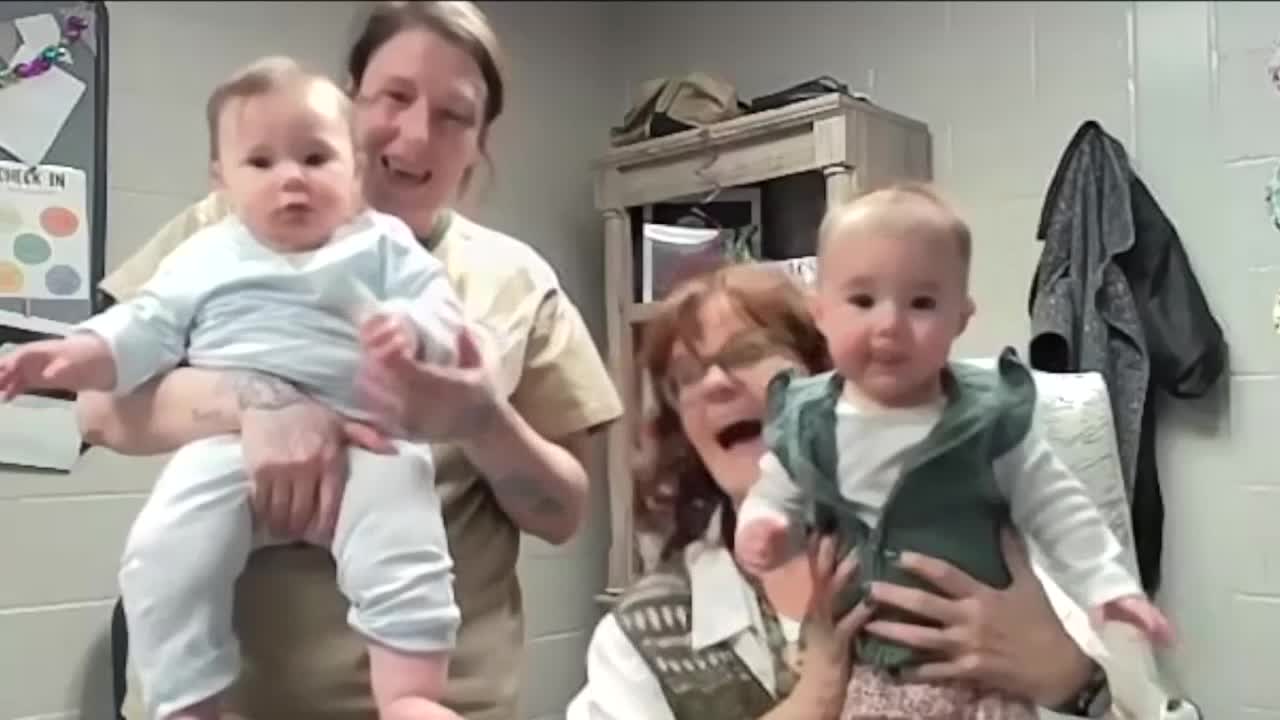
A baby boom at the Missouri Department of Corrections' women's prison in Vandalia, Missouri, has brought new hope to incarcerated mothers, with 16 babies born in 2025 to women who are now bonding with their children through the state's new prison nursery program.
The nursery opened in February 2025, marking the completion of a program mandated by Missouri legislators in 2022.
"Now they have a chance to fight for their families. We're teaching them how to rely on each other and help one another," said Kim Perkins, nursery program manager at the Women's Eastern Reception, Diagnostic and Correctional Center.

The program teaches essential life skills to incarcerated mothers.
"We teach life skills: how to cook, how to clean, how to manage money, basic parenting things," Perkins said.

For Perkins, working in the nursery provides daily fulfillment.
"I get to go to a job every day where I get to look at and hug babies and still do something meaningful," she said. "It changes lives. A lot of these ladies would not have been able to keep their babies."
Kathy Briggs, an inmate mother, was among those who may have lost her children without the program.
"I genuinely was ready to put my girls up for adoption," Briggs said.

The program changed everything for Briggs, who has twin daughters.
"I have two babies that are girls; their names are Lyric and Melody. They are almost 9 months old," she said. "I was 8 weeks pregnant when I turned myself in. I thought I was going to get a slap on the wrist and come out. The judge said, 'I'm going to send you to prison, and you're going to have your babies in prison.'"
Despite the challenging circumstances, Briggs said the outcome exceeded her expectations.
"There's not any way this could have gone more perfect," she said.
Briggs noted the program's impact extends beyond the mothers and babies.
"They changed the course of my life," she said. "The officers that come in and see it every day, it's changing their lives. It's changing their outlook on us as inmates vs. us as offenders."
Perkins emphasized the transformative nature of the program for women who arrive with significant trauma.

"I'm just so excited to be a part of this program," Perkins said. "It's amazing because you watch women come in with so much trauma and history."
Before the nursery program, separation between mothers and babies was immediate after birth. This represents a significant shift in Missouri's approach to incarcerated mothers.
"If moms could have had this opportunity to be with their children while incarcerated, they would have had that connection to their children," said Trish Mathes, executive director of Mission Gate Ministry.
The support continues after prison through Mathes' organization, which runs a nine-month program for mothers and their babies.
"That's what we do at Mission Gate, we try to help people be independent," Mathes said.
The post-prison program operates through an application and interview process, funded by private dollars and grants. Mothers work and contribute $130 per week.
Mission Gate Ministry has been operating since 1985.

"More parenting classes and hands-on interaction with raising their babies," Mathes said of the continued support. "The next step is continuing to help them, growing in a greater way. We provide stability."
Mathes emphasized the importance of early nurturing in preventing future problems.
"I counsel a lot of people, I have over the past 40 years," she said. "What I see is if they don't have nurturing when they are young, they turn the opposite way and go to drugs or alcohol."
For Briggs, who will enter the Mission Gate program this month, the transformation has been profound.

"The person I was when I walked through these doors almost a year ago was an angry, hateful and hopeless person," she said. "And today, I can sit here and say I am filled with hope for the future, and I believe in better days."
To participate in the Missouri DOC nursery program, inmate mothers and caregivers cannot be convicted of dangerous felonies, sex crimes or crimes against children. Mothers must also be scheduled for release within 18 months postpartum.
This story was reported on-air by a journalist and has been converted to this platform with the assistance of AI. Our editorial team verifies all reporting on all platforms for fairness and accuracy.
—