

KANSAS CITY, Mo. — KSHB 41 reporter Isabella Ledonne reports on stories in Overland Park, Johnson County and topics about government accountability. She has produced several in-depth reports for our series, Strong High Weak Laws, exploring the impact and concerns with kratom and its synthetic derivative, 7-OH.
Isabella talked with people who strongly support the legality of the products and others who want them to be illegal to sell. Share your story idea with Isabella.
—
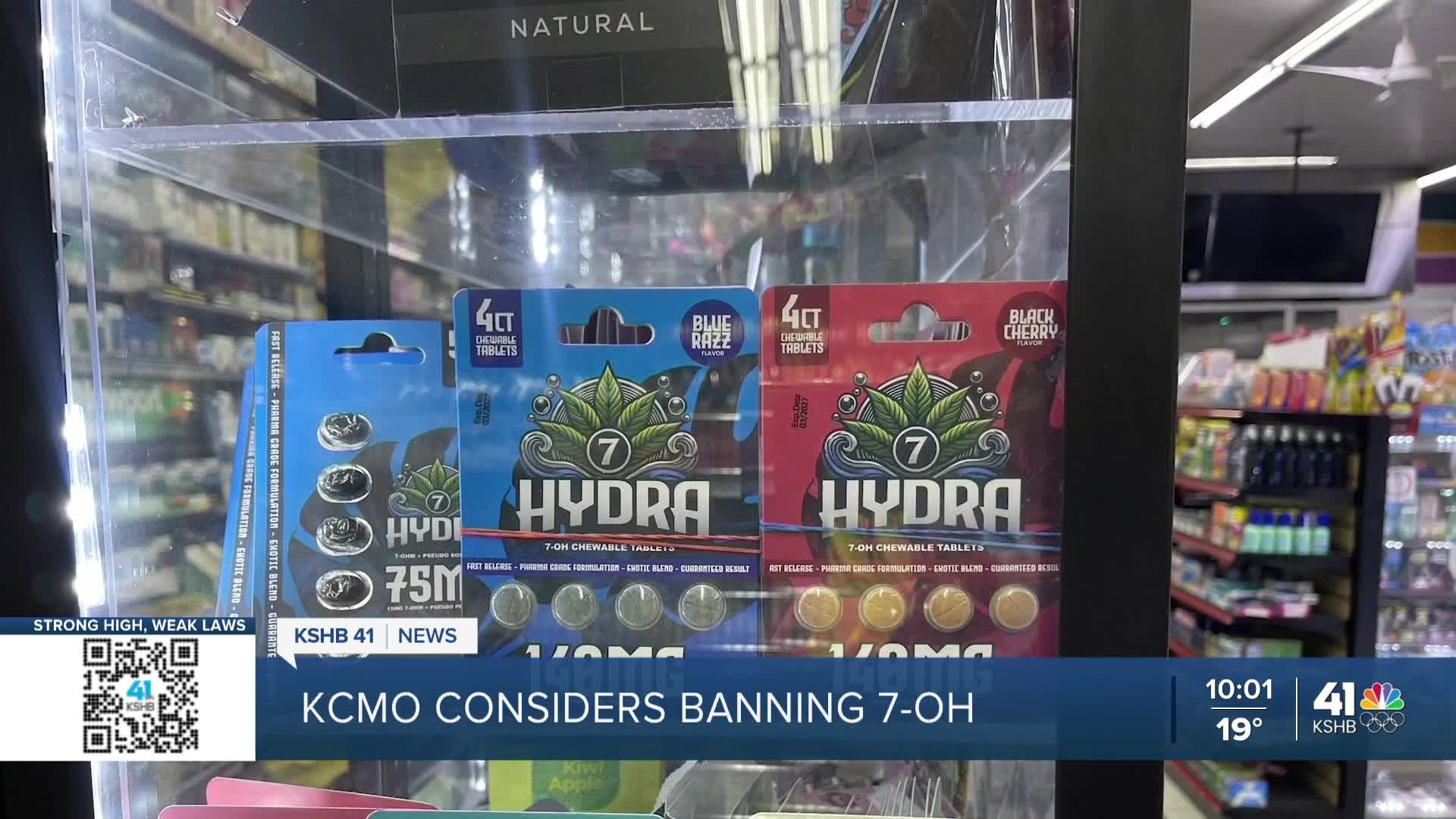
The Kansas City, Missouri City Council is considering an ordinance to ban the sale of what Mayor Quinton Lucas has called 'gas station drugs.'
It takes aim at products like nitrous oxide and Delta 8 THC gummies, but also a product that has gained popularity in recent months, synthetic 7-OH.
7-OH is a concentrated, synthetic derivative of the herbal plant, kratom. Both are sold without regulations across the Kansas City area. 7-OH is often referred to as 'gas station heroin' because of the opioid-like effects it can produce in users, including severe withdrawal symptoms.
It's produced by companies in the metro, including American Shaman and Relax Relief Rejuvante. The FDA recently seized 73,000 synthetic 7-OH products from the company's manufacturing facilities in Kansas City following warning letters sent to the owners.
KSHB 41's Isabella Ledonne has gone in depth on kratom, 7-OH and its impact in the Kansas City metro in her series, Strong High Weak Laws.
Addiction prevention advocates explained Kansas City's proposed ban is an encouraging first step.

"The closer we get to being able to get the stuff out of our gas stations, out of our grocery stores, the easier it's going to be to try to help people start recovering from these things," Joey Thomas at Healing House KC said.
Neon signs advertising kratom and 7-OH at corner stores light up the Kansas City metro. The executive director of the Midwest High Intensity Drug Trafficking Area (HIDTA) explained it's popularity has increased dramatically in the last year.

"This is being made right here in Kansas City," Daniel Neill said. "This is a health concern. This is a concern that impacts everyone."
Synthetic 7-OH has been reported to be more potent than morphine, and highly addictive to users. It's sold without regulations at the federal, state or local level in Missouri and Kansas.
Addiction prevention advocates like Thomas have been advocating for a ban.

"Having that type of thing removed is going to save lives," Thomas said. "When you're in recovery and trying to stay away from opioids, seeing something sitting there on the shelf basically advertising the same thing makes it so much harder to stay on that right path."
Thomas helps people recover from synthetic 7-OH abuse at Healing House KC, including his close friend.
"My buddy was doing really good. He was addicted to heroin most of his life, getting his life back together, doing really well with his grandma. His family was coming around, telling me how proud they were of him," Thomas said. "Then all of a sudden, he's right back at square one, ground zero."
The lack of any regulation for kratom and synthetic 7-OH makes it difficult for governments to address the issues that may come with it.
"It impacts all of us. These places are right within all of our communities and it needs to be addressed," Neill said. "It can cause a fatality, it can also cause crime to go up."
Both have already happened in Kansas City. The city's director of public safety with the mayor's office cites at least one overdose death linked to kratom and a rise in nuisance crime near stores that sell it.*

"We can't control where people go, but we can try to regulate the places that sell it so that we can create safer environments and neighborhoods," Lace Cline said. "We're trying to create a mechanism so that we can better address nuisance activity and quality of life issues, as well as the public health issues that we're now seeing from substances like kratom and 7-OH."
Under Kansas City's proposed ban, any store selling or distributing unregulated products, like kratom and 7-OH, could receive a daily fine up to $1,000, up to six months of jail time and risk losing their business license.
Cline explained if the ordinance passes at the upcoming council meeting on Thursday, unregulated products would be required to be off shelves before the end of the month.
"Assuming this passes council next week. the retailers have 10 days to get these products off the shelves," Cline said.
Since KSHB 41's Isabella Ledonne spoke with Thomas last month, the Missouri Attorney General's Office has launched an investigation into companies manufacturing synthetic 7-OH products, including American Shaman. A Clay County, Missouri state lawmaker has also filed a bill to schedule synthetic 7-OH as a Schedule I drug.
"I hope speaking out about it makes a difference because we're getting to a really good place right now," Thomas said. "I'll keep speaking out about it until it's fully banned. It's hurting the people that I love, it really is."
In previous reporting with Strong High Weak Laws, American Shaman owner and founder Vince Sanders explained his role in creating and selling 7-OH, including his response to the recent controversy and previously proposed regulation.
*KSHB 41 News has requested more information surrounding the circumstances of the reported death from the Kansas City Health Department, but has not heard back yet.
—