

KSHB 41 reporter Isabella Ledonne reports on stories in Overland Park, Johnson County and topics about government accountability. Share your story idea with Isabella.
—
The CDC is no longer recommending all 18 previously recommended vaccinations for children.
On Monday, the agency announced it recommends all children get vaccines for 11 diseases.
The new recommendations put the vaccines that were previously for all children into different categories, leaving physicians and parents with questions about what comes next.
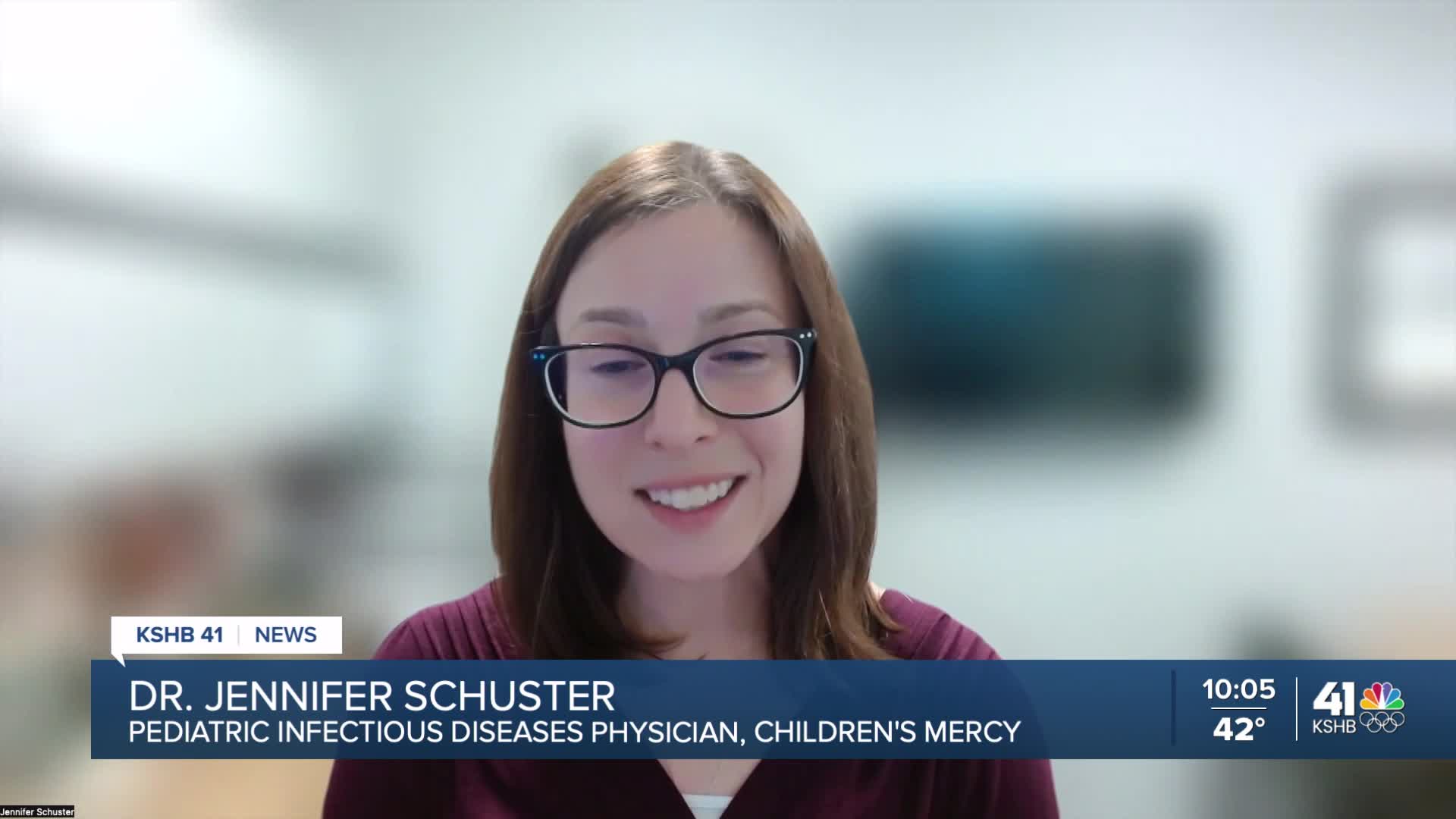
"We've seen a lot of changes from the CDC and Health and Human Services over the last year, but this one was a surprise," Dr. Jennifer Schuster, Children's Mercy Hospital, said. "It puts a lot more questions out there about where does my child fall? Is my child high risk? Who should I talk to about my child's vaccines?"
Johnson County mom Sarah McGinnity is keeping her toddler and older kids vaccinated, but it just got more complicated under the CDC's new schedule.

"I just want them to grow up and be healthy adults," McGinnity said. "It's hard to know what actions to take to protect your own kids when the national policy doesn't necessarily follow what your doctor's saying."
Shots that were for everyone, including RSV, hepatitis A, hepatitis B, dengue and two types of bacterial menigitis, are now only recommended for "high risk groups" or shared clinical decision making.
Flu shots and the rotavirus vaccine now fall under the shared clinical decision category, leaving it up to the parent and doctor.
But some parents questioned the reasons behind the sudden change.

"I feel it's really going to add a lot of confusion," Johnson County dad Dave Douglass said. "It's hard to know if this is coming from medical professionals or just some political take."
The new vaccine schedule was closely modeled after Denmark's recommendations
"We're a much larger country than they are," Dr. Schuster said. "Our health care system is entirely different."
Dr. Schuster specializes in pediatric infectious diseases at Children's Mercy Hospital in Kansas City, Missouri. She explained her concern about a spike in preventable diseases, not just for children, but all of the Kansas City area.

"By [being recommended] going to talk to your child's physician, waiting and delaying, having those conversations and potentially not being able to access the flu vaccine, I think it's a major problem," Dr. Schuster said. "We would love for children to not be in the hospital because of flu this respiratory season. This change is a real departure from what's been recommended for many years and a departure from what the American Academy of Pediatrics recommends."
The recommendation to confer with your child's physician on several more vaccines than what was previously accepted puts a bigger demand on doctors to answer questions, and also on parents.
"I think it makes parents who may already be hesitant even more hesitant to get any vaccine," McGinnity said. "Puts a lot of burden on parents to do the research, try to figure out medical studies and things like that. I mean, parents are too busy to do that and they're not going to."
A spokesperson for the U.S. Department of Health and Human Services said the changes are meant to restore trust in public health that spilled over from the COVID-19 pandemic.
"This does the opposite of that," Douglass said. "It just kind of throws the whole thing into chaos."
Children's Mercy Hospital will continue to follow all 18 vaccine recommendations and encourages parents to follow their pediatrician's advice.
"I think being a parent today, you go through so many different choices and you're getting information from social media and all these different places," McGinnity said. "There's no trusted source anymore. If no one agrees on the most important topics, then how do you make the right choice?"
The CDC said it will continue to recommend that all children get vaccines for measles, mumps, rubella, polio, pertussis, tetanus, diphtheria, Haemophilus influenzae type B (Hib), pneumococcal disease, HPV and chickenpox.
A senior HHS official told NBC News that all vaccines recommended as of the end of 2025, before this schedule change went into place, will remain available and covered by Affordable Care Act plans and federal insurance plans, including Medicaid, the Children’s Health Insurance Program and the Vaccines for Children program.
—