


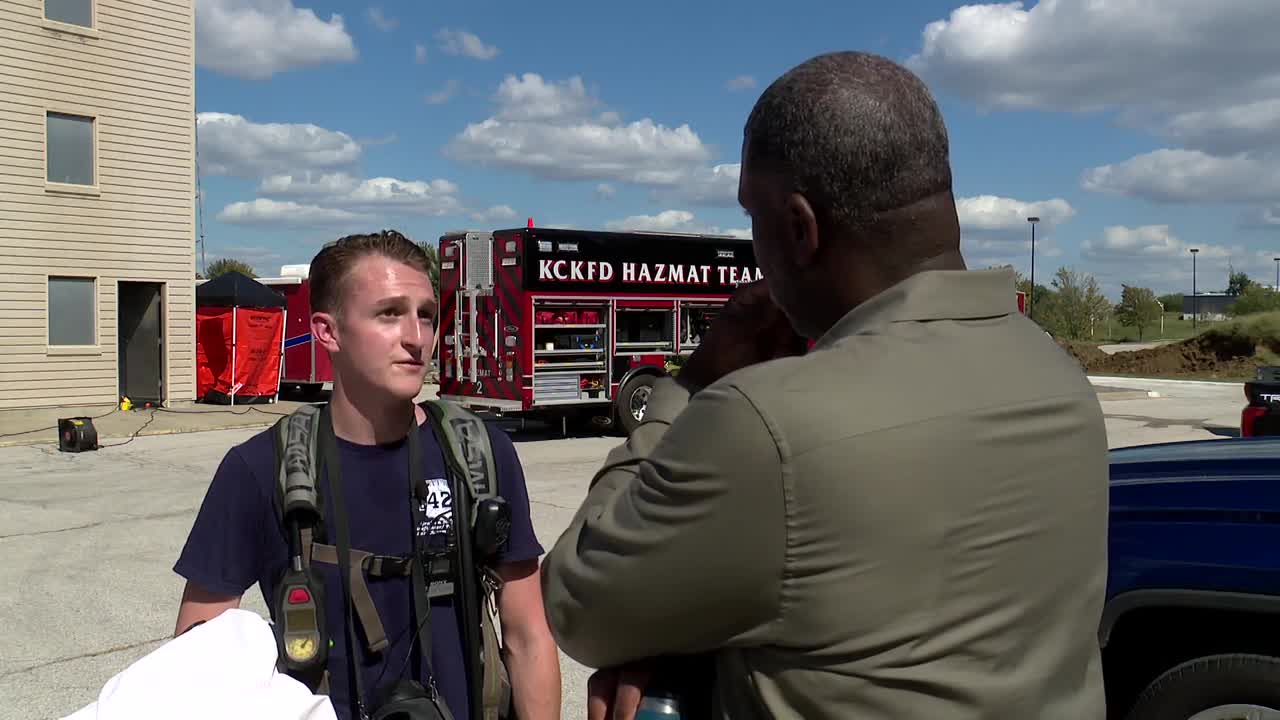


KANSAS CITY, Kan. — KSHB 41 News anchor Kevin Holmes loves to tell stories about Kansas City. Send Kevin your story idea.
—
James Littlefield always had a burning desire to serve.
“I grew up around it," Littlefield said. "I’ve always wanted to do it.”

His dad is a retired police detective.
His uncle is retired from the Kansas City, Kansas, Fire Department. His mother and four cousins are still with KCKFD.
Littlefield has been a firefighter for three years. KSHB 41 Anchor Kevin Holmes caught up with him as he got set to take on an even greater challenge.
“The scenario you just saw was similar to a chlorine leak, which is where we get into this," James told me. "A level, A protection suit. It’s fully encapsulated.”
James is one of nearly two dozen firefighters from across the Kansas City area enrolled in a hazmat training course.
These first responders will also be hazmat techs trained and equipped to use state-of-the-art Black Line Equipment that detects and neutralizes different deadly chemicals.
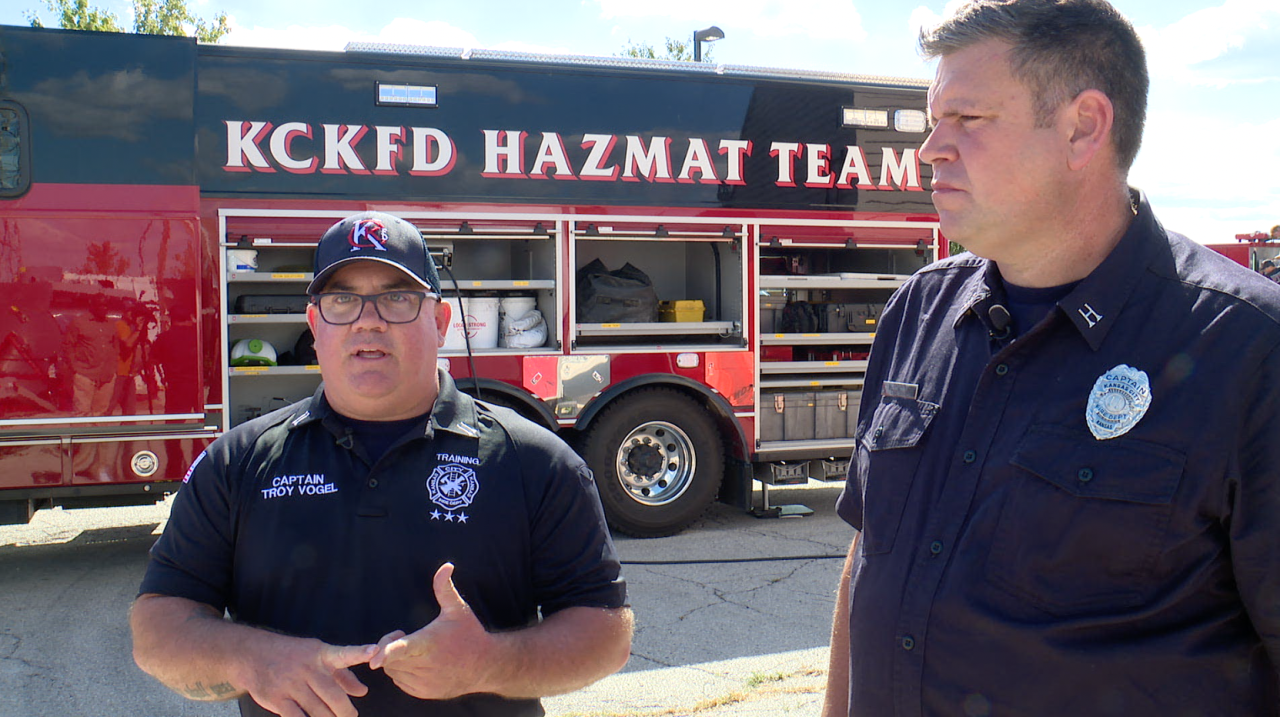
“We have one of the biggest railroad hubs in the country in our backyard,” KCKFD Captain Eric Bond told Holmes. “We have tons of chlorine and ammonia in our city. Plus, everything that comes down that we have no idea what’s coming in box trucks. So, there are threats day and night, in and out of our city.”
Captain Troy Vogel agreed with Bond.
“A hazmat call is unique," Vogel said. "It poses a threat to us as well as the public. It’s one of those things that yes, it's hurry up, but we have to slow down just a little bit so we can understand exactly what we’re dealing with.”

While you often see firefighters at motor vehicle crash sites and fires, it's the dangers you can’t see that often pose the biggest risk.
That's why Jimmy his fellow firefighters train like their lives depend on it.
Because one day it very well may.

—

—