



KANSAS CITY, Mo. — Kansas City will be hosting its final FIFA World Cup 2026 match this Saturday, but the excitement that has been brewing across the city over the past few weeks isn’t going anywhere.
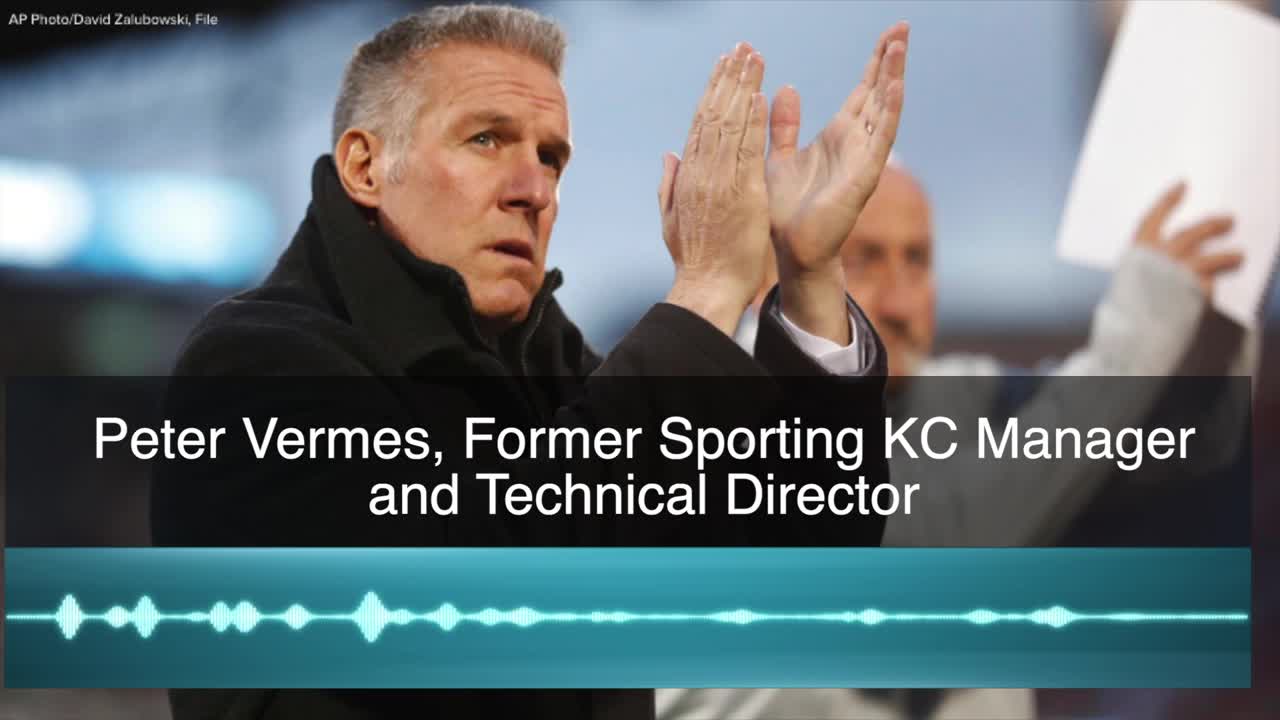
This is not just according to people living in the area, but also die-hard World Cup visitors and soccer legend Peter Vermes.
KSHB 41's Daniela Leon picked Vermes' brain about a variety of topics, including how Kansas City is handling World Cup traffic, Team USA's loss against Belgium in the Round of 16, and the future of soccer in America.
—
Daniela: Obviously, a very devastating loss for Team USA last night, a lot of people were very critical of the team, especially this morning on social media. What was your takeaway from last night's matchup against Belgium?
Peter: I think there are two ways to look at it. I think the first is that you have to go with the opponent who played well. There's a reason why we played poorly. They played against a team that's very good. They played against a team that had a very strong conviction in the game, and throughout the 90-plus minutes, they stayed very, very connected to their work ethic and intensity in the game, and they were very direct in their play. So you gotta give Belgium a tremendous amount of credit.
On the other side, I think, unfortunately, what happened in the game, and you can see it from the very beginning, when it started, we weren't ready for the intensity that Belgium brought, number one.
Number two is that we had brought the intensity in the first two games, and it was fantastic. But unfortunately, where we fell short is, I think, we played scared in the sense that we were more afraid to fail and not willing to risk it all to succeed, and unfortunately, that approach, I think, cost us the ability to go on to the next round.
Daniela: A lot of people were talking in terms of this team being one of the most talented teams the USA has ever seen. Would you agree with that statement?
Peter: I would, because what you have is you don't just have players that are playing around the world, but what you have is players that are playing in big clubs around the world, in the top competitions on a regular basis. That changes the perspective of the player when he comes in, just like to a tournament like this, he comes in with the idea that he's played against these players week in and week out over the course of not just this year but many years, and so that experience lends itself when you go into a competition like the World Cup.
But unfortunately, for some reason, the team, as I said, exited because I don't believe they went with the conviction to win. They were a little bit more afraid of failure.
Daniela: There was also a lot of politics involved, obviously, the overturning of that red card. Do you think that that was in Team USA's favor or not?
Peter: I think the correct thing happened there. Everybody can do whatever they want to do from a political perspective. That's just like people trying to take advantage of the situation.
The bottom line is that I think anybody who looks at right and wrong in the correct way always tries to get things right. They don't want them to be wrong, and I think in sports, it's the same way. And so, in this situation, it was a very poor call by the referee, and then for the VAR individual to also think that it needed to be looked at again, when really, at the end of the day, it's just incidental contact within a sport. I mean, I could name you so many different situations in so many other sports that occur all the time. It's just part of the sport, and you just understand that, and that's what that play was.
So, the fact that it was overturned was the correct call. It was correct for them to do that. That wasn't a favor for the United States by any means.
Daniela: Where does Team USA go from here, especially with this devastating loss to Belgium? This was supposed to be the tournament that really set the team above previous tournament appearances. So, where does the team go from here?
Peter: Well, look, I don't go into the game and then say, oh, well, everything was a disaster at the World Cup. I think that the team showed itself in quite a few games in the World Cup, in that they can play at a very high level. They can play with an intensity that becomes very difficult for teams to play against. That consistency of intensity, that consistency of going after the game and not sitting back and hoping that things are going to happen for you, has to be the way that we approach our style of play moving forward.
You can see that there's been a lot of big countries, and I say big countries from the point of view of soccer powers, that have fallen out of the World Cup, and they have, because other teams have come in with the idea that, hey, look, if we play with a level of intensity, if we push the game at a pace that is difficult, not only for us, but also difficult for our opponent, we might find some chances, and we might catch them on that day. I think you're seeing those upsets because of that.
On the other side of it, I think, for Team USA, the idea is going to be that, I'm sure, Mauricio Pochettino is going to leave if he hasn't already announced it, and it's going to be important to decide who that next coach is. It's also going to be given some time to not rebuild the team, but to build a team in a sense that it has a level of consistency, and understands that it has to take chances. Our country is built on that.
Look at all of our sports, look at things that we've done in and around the world in our history. It's always been, in a lot of respects, we've been the underdog, and somehow we found our way through. We always use our work ethic and our determination to be successful, and that's what has to be the DNA of the USA team. It has to be that consistently.
Daniela: What makes this World Cup moment in Kansas City different from other tournaments in the past? Especially in 1994, when the United States hosted its first World Cup tournament.
Peter: Well, first and foremost, there's no way that Kansas City would have, could have supported, I think, the World Cup in '94 in the way it does now. I think that the growth of soccer probably in the last 25 years in Kansas City has been fantastic. It's even hard to put into words what it started. It started at the grassroots and built its way up, and it's been exciting.
If there's one thing that I can share with you, it's that I've been traveling around, and I've been seeing different venues and watching games at different places. After I watched some games in Philly, also a giant stadium, I had to go up to Connecticut for a personal matter, but at any rate, I'm going to share this really quickly.
When I was a kid, I grew up on the East Coast in New Jersey, and my teams at that point were all Philadelphia teams. The Flyers had won the Stanley Cup, and I remember kids going out on the street and then, all of a sudden, trying to emulate what happened in the Stanley Cup Final. We had Dr. J, Julius Erving, and they won the NBA Championship. I saw kids playing basketball, and they were trying to emulate him.
At any rate, I was watching, running, working out, and I saw these two kids. They were brothers, one was probably 15, the other 12, and they were on the soccer field the day after the Argentina-Cape Verde game. When the second goal was scored by the Cape Verde player who came in from the left and put it in the upper right-hand corner, these two kids were on the field by themselves, trying to replicate that goal.
It really spoke to me about how much the game has grown in that when you have kids now going out on the field the day after a game trying to emulate what happened in a soccer game, and I've seen that in Kansas City. I see kids all the time playing the game at the grassroots, going to professional games, trying to emulate the professional players they see on the weekends. The sport has grown amazingly, and I think this World Cup has been an unbelievable opportunity to take another step on that and move to a higher level when it comes to not only participation but also the fandom of the game of soccer.
Daniela: You know you touched on Kansas City and I know you haven't been here during the World Cup, but I think you've seen it on television, with Arrowhead filled with fans. I remember seeing you during the Wizards, and being able to fill Arrowhead back then was unheard of, and now you see those stands filled with fans celebrating this beautiful game.
I just want to know, from your perspective, how does that feel? Starting from your time with the Wizards to now seeing this come full circle here in the City of Fountains.
Peter: Yeah, it's incredibly rewarding, because as you stated, look, I mean, I have played in Arrowhead in 2000, 2001, and I'm here to tell you that in 2002, we got 20,000 people in the stadium, if we were lucky, and that was a drop in the bucket. I mean, there were times I felt like I could talk to people in the stands, because there wasn't really anybody there. But what has happened over time as the team, the Kansas City Wizards, continued to grow, and then the team was purchased, and then all of a sudden the team started to build up. I don't think it's any secret, but obviously, Sporting Kansas City was incredibly vital to that growth.
At the same time, a groundswell on the youth side was growing. There are a lot of youth coaches and youth clubs that have done a tremendous amount of work developing kids who love the game. Their families become inspired by the game, and all of that just continues to grow, and now you see it explode here on the World Cup level.
You can also remember, I think it was like two years ago, we (Sporting KC) were in Arrowhead Stadium, and we played against Inter Miami, and I think we had, like, 58,000-60,000 people there, and that's an MLS game. That's something that also wasn't going to be achieved way back when. It's now happening because of the caliber of players that are also coming to the league, and that's happening because of the way that the growth of soccer has happened, and the growth of the league has happened. Getting an event like MLS or the World Cup here in Kansas City has been a tremendous opportunity to take advantage of, and obviously, the city is doing that.
Daniela: How much of this World Cup energy do you think is sustainable after the tournament leaves?
Peter: So that's a very good question. There's no doubt in my mind that there will be a transfer of excitement for new soccer. The soccer fan is still going to be there. It's about how many people have now become soccer fans who weren't before, and how do they transition into becoming Major League Soccer fans, and that's going to be the big question. Is it going to happen? Sure, what's the percentage? I'm not sure, but I also do think what's going to happen is that you're going to see an influx of players from this World Cup who are going to come over the next year and a half and are going to be coming to this league for a number of reasons. I think the tournament has shown that the United States has the ability to put on an event like no other. No other country can replicate what we're doing in this World Cup, from the infrastructure where they train, to where they play their games, the stadiums in which they play, to the cities that they're going to, just all of it. Nobody can replicate it.
That's the first piece, and then the second is that I think the players realize that the American fan, the American environment for soccer, has taken a huge step forward, and I think a lot of players want to play in that environment. I think you'll see, like I said, that transfer of players into our league over the next year and a half.
Daniela: There are relationships and international connections, I feel, that are currently being built right now because of the World Cup. Do you feel those connections are there, and maybe something that people here may not be fully seeing at the moment, but they will see here within the coming years?
Peter: I do for sure. I also think that a big part of the other aspect of it is that you've got to look at FIFA and the regime change that has happened there over the last so many years. I think there's a really good chance that we get this World Cup back in the United States at a much faster pace than we did the last time. So you're in 1994, and now you're in 2026. There's a good chance that we could get 2038. I believe that, because I think that when FIFA looks at it at the end of the day, you want to put on the tournament the best way you can, and, as I said earlier, there's no better country to put on this event than the United States, because of our infrastructure, and just the country. You can hear from the fans, they all tell you, what a great country, what a great environment, the people are so nice. It's a pleasure to be here. And so I think that we'll see this tournament here again soon.
—
![020626_KSHB_Image_NXA_Web_Standard Cube[88].jpg](https://ewscripps.brightspotcdn.com/dims4/default/0ead409/2147483647/strip/true/crop/300x225+0+13/resize/960x720!/format/webp/quality/90/?url=http%3A%2F%2Fewscripps-brightspot.s3.amazonaws.com%2F8f%2F6c%2Ffad8bd2346c5a4d4ead793017d4a%2F020626-kshb-image-nxa-web-standard-cube88.jpg)