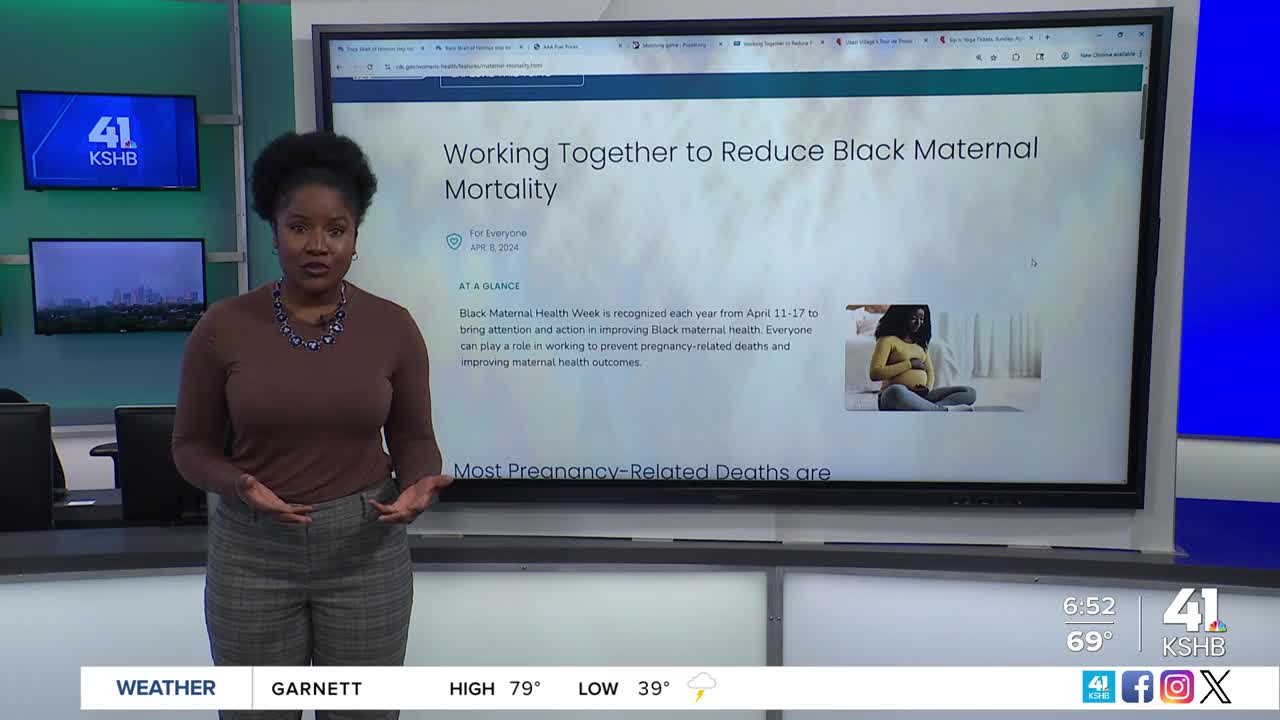



KANSAS CITY, Mo. — According to the CDC, each year in the United States, hundreds of women die during pregnancy or in the year after. More than 80% of pregnancy related deaths in the U.S. are preventable.
This week is Black Maternal Health week.
The CDC states Black women are three times more likely to die from a pregnancy-related cause than White women.
There are multiple factors that play into this, including variation in healthcare and underlying chronic conditions.
This is a topic that's continued to gain a lot of attention in Kansas City in recent years, after Krystal Anderson, a former Chiefs cheerleader and software engineer for Cerner died in March 2024 from childbirth complications.
Unfortunately, her story is one of many.
After her death, her husband, Clayton Anderson created the Shine with Joy Foundation, in honor of Krystal and her passions. Those include black women in STEM, equitable maternal healthcare, nurture and wellness and inspiring joy.
The foundation is hosting a Community Donation Based Yoga Class at Core Power Yoga KC on Sunday, April 19th at 11 a.m. There is currently a wait list.
Uzazi Village is continuing to host events to bring awareness to this topic.
On Saturday at 10 a.m., they're hosting Tour De Troost, a guided shuttle tour of black-owned businesses along Troost and a block party. The full Tour de Troost Experience is $20. If you're just interested in the block party, it is $5. You can purchase tickets here.
On Sunday, they'll close out the week with Sip N' Yoga at 8:45 a.m., where there will be a morning of yoga, curated tea and juices. This is a free event. To reserve a spot, click here.
The CDC states there are a few things pregnant women and their families can do to reduce factors that may contribute to pregnancy-related complications and death:
Talk to a healthcare provider if anything doesn't feel right or is concerning.
Know and see immediate care if experiencing any of the urgent maternal warning signs.
Share recent pregnancy history during each medical care visit for up to one year after delivery.
Here are other recommendations for families, providers and the community the CDC shared.
—