

KANSAS CITY, Mo. — KSHB 41 reporter Isabella Ledonne reports on stories in Overland Park, Johnson County and topics about government accountability. This story is a part of the ongoing coverage, Strong High Weak Laws, exploring the impact and concerns of a synthetic product flying off gas station and convenience store shelves. Share your story idea with Isabella.
—
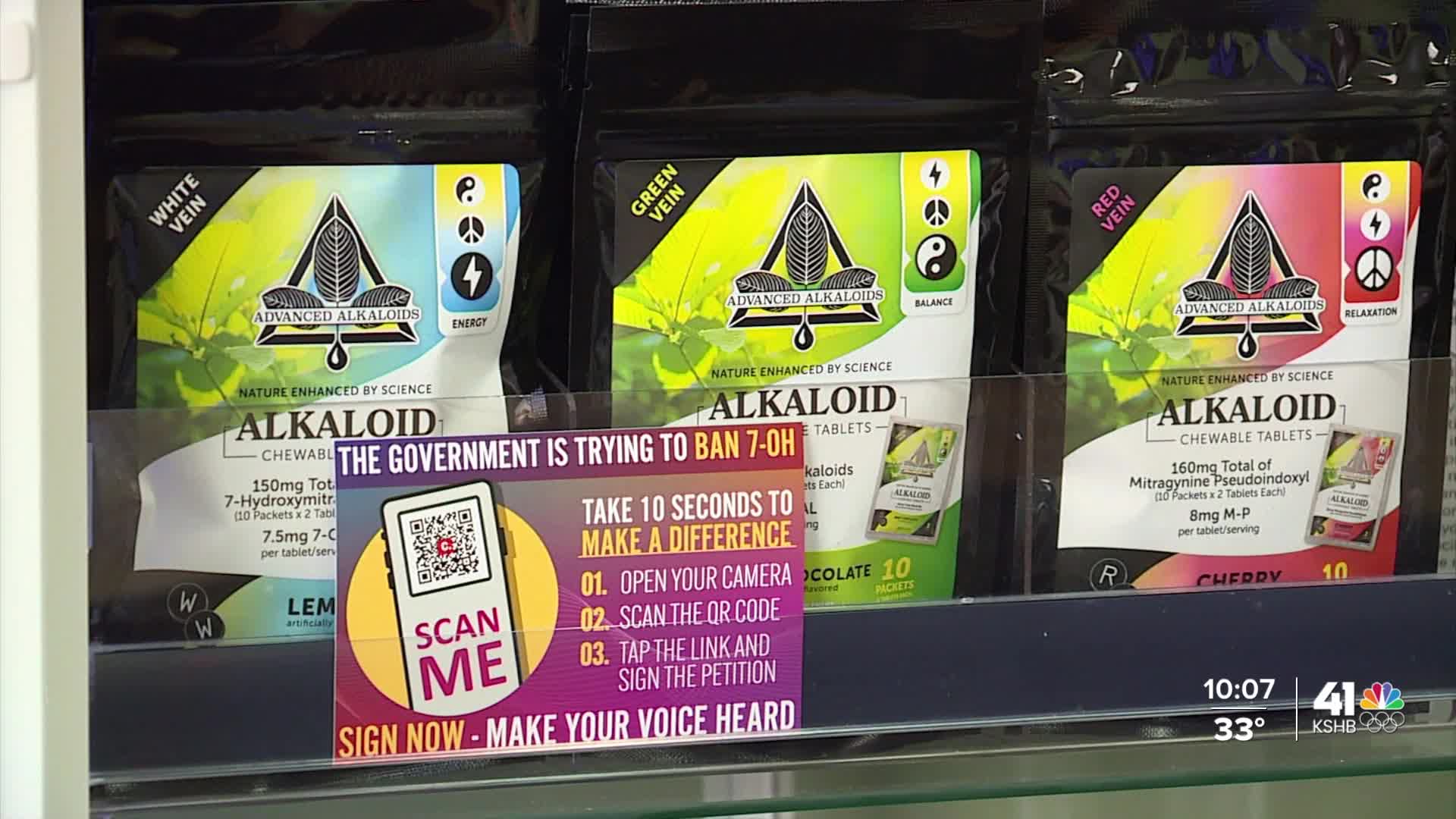
As local and federal agencies work to crack down on the concentrated, synthetic product known as 7-OH, it's biggest manufacturer and retailer in the Kansas City area continues to defend the product.
Synthetic 7-OH is a concentrated derivative of the herbal plant, kratom. Addiction specialists and local leaders have often referred to it as 'gas station heroin'.
Since KSHB 41's Isabella Ledonne has been reporting on 7-OH usage in the metro in the ongoing series, Strong High Weak Laws, Kansas City, Missouri, the state of Missouri and the FDA have proposed bans on distributing 7-OH.
FDA seizure of synthetic 7-OH products
American Shaman produces thousands of 7-OH products at its Riverside warehouses, supplying both local storefronts and sellers nationwide.

Founder and owner Vince Sanders told KSHB 41's Isabella Ledonne he has invested nearly $30 million into producing and marketing synthetic 7-OH. He claims he has already seen profits upwards of millions of dollars from storefront sales and bulk sales manufacturing it to other companies.
"For probably at least half of 7-OH brand in the country, probably roughly half of which we make," founder and owner Vince Sanders said. "Everything we [American Shaman] does is low dose. [Making the higher doses] is more of a market for something that is trying to have a safe exit ramp for opioid abuse."
The FDA recently seized more than 73,000 synthetic 7-OH products from American Shaman's warehouses, citing it as an illegal dietary supplement, following a warning letter sent to the Kansas City manufacturer regarding the sale of 7-OH products. Sanders claimed the FDA doesn't have grounds to detain his products and filed a motion for dismissal.

"The FDA never responded to our [warning response] letter," Sanders said. "To this day, we've never had a response to our letter from August."
In a document shared with KSHB 41 News, American Shaman stated to the FDA its products remain "safe and well studied."
Here's more from the document:
"Last year, FDA sent Shaman Botanicals a Warning Letter expressing concerns. We immediately provided a comprehensive scientific response - over 100 pages of data, expert analysis and safety information. FDA did not respond to that submission, request follow-up information, or engage in the normal administrative process. Instead, the agency moved directly to detain and seize finished products, leaving critical scientific evidence unaddressed."
Sanders believes the recent actions and media coverage have both increased demand and lawmakers efforts to try to ban the product.
"If the hope is that it slows it down, it does just the opposite," Sanders said.
Investigations and attempted bans in Missouri
Synthetic 7-OH and its parent plant, kratom, are currently sold unregulated on both sides of the state line.
Sanders is facing an investigation from the Missouri Attorney General's Office and an outright ban on the majority of his American Shaman products, including 7-OH, in Kansas City, Missouri.
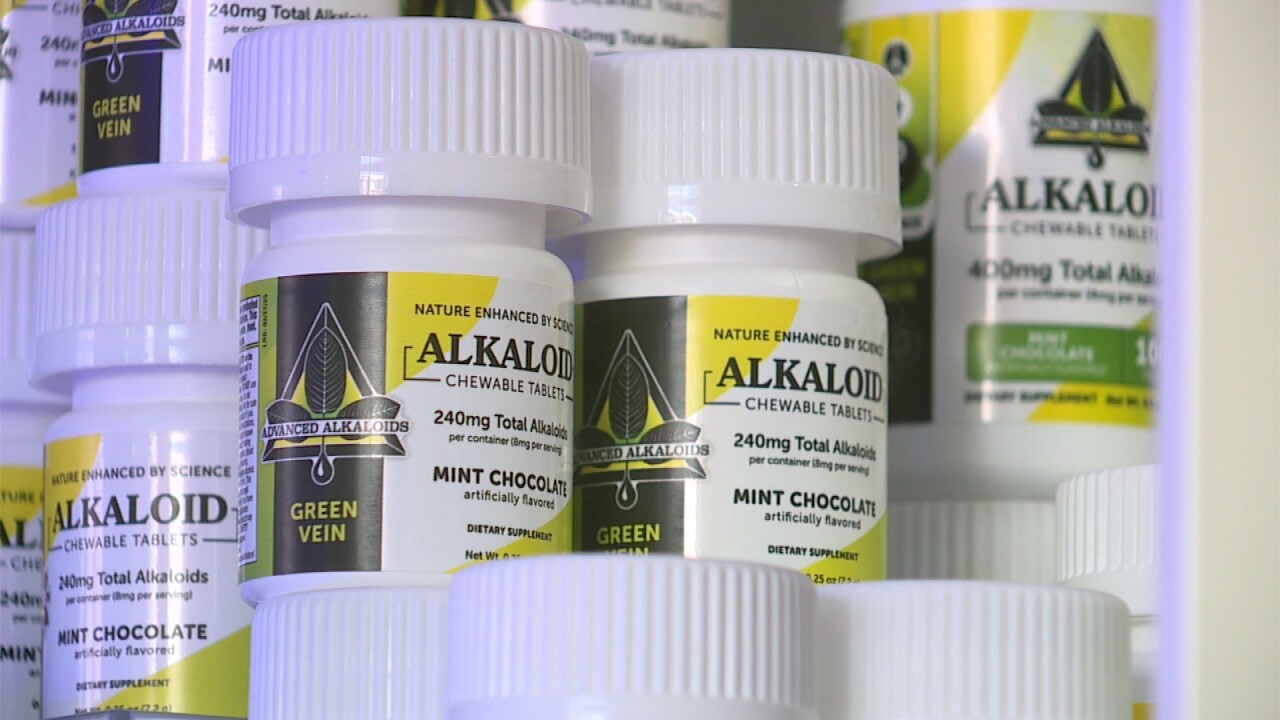
"That's really scary, we know prohibition doesn't work," Sanders said. "If it was taken away, it would proliferate the street. I hope if you choose to take an opioid-like substance, you take 7-OH."
The Attorney General's investigation comes after numerous reports emerged regarding the addiction properties of 7-OH and misuse among Missouri residents. Sanders defended synthetic 7-OH as a safer alternative to traditional opioids like heroin and fentanyl.
"You won't die no matter how much you take," Sanders said. "You've changed that addiction from fentanyl to something a lot safer, but easier to get off of when you choose."
However, addiction experts and specialists have denied claims that 7-OH is a safer alternative to traditional opioids, as 7-OH still binds to the opiate receptors.

"Some of [our] patients might have started [7-OH] to get off the opiates, but are struggling with a bigger addiction now," said Dr. Roopa Sethi, an addiction psychiatrist at the University of Kansas Health System. "The withdrawal will be very similar to an opiate. They will have hot and cold sweats, nausea, vomiting and diarrhea."
Since synthetic 7-OH hit the market approximately two years ago, Missouri Poison Control and Johnson County, Kan. emergency services have seen an increase in calls specifically for synthetic 7-OH and/or kratom overdose.
That's prompted city leaders to take action.

"KCMO has more than enough challenges," Mayor Quinton Lucas said. "It does not need more from folks that are addicted to zombie-like substances. I care about saving lives. I care about making sure we don't have people decline into a life of addiction."
Debate on federal, state and local regulation
Sanders continues to sell his products amid the addiction warnings from the Kansas and Missouri health departments and the FDA.
"If you've gotten clean, don't go back," Sanders said. "There's no difference between grabbing this and a traditional opioid. You're probably going to fall off the wagon."
Neither synthetic 7-OH nor kratom are regulated at the federal, state or local level in the Kansas City metro. Sanders explained he would welcome regulation as opposed to an outright ban.
"What we would love to do is regulation where it's 21+, child safety, 10 milligram maximum," Sanders said. "If you're using this for pain or moods, that type of thing, please just don't take so much. You don't need that much."
American Shaman stores sell what Sanders considers lower doses, at no more than 10 milligrams of synthetic 7-OH. However, his manufacturing company produces synthetic 7-OH tablets upwards of 60 milligrams per tablet.
"Given all of the recent investigations and warnings, how can you continue to defend this product and it's safety?" Ledonne asked Sanders.
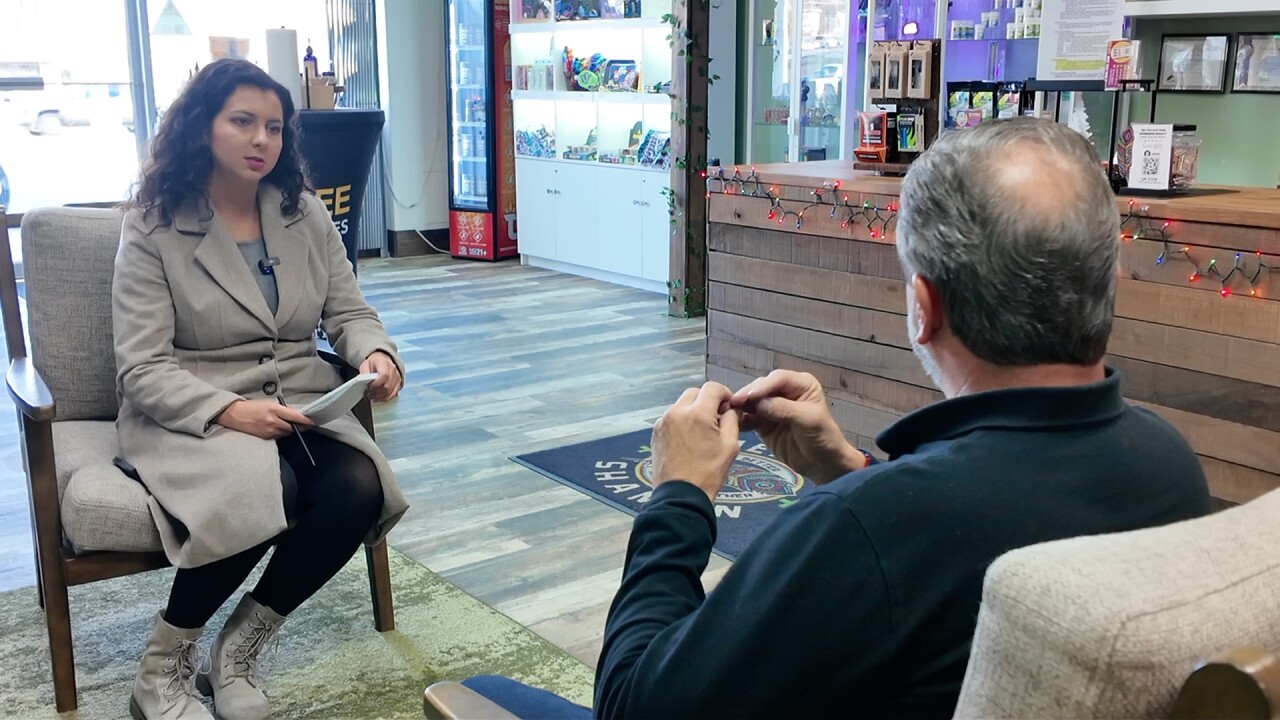
"Because I know the facts," Sanders responded. "If this wasn't safe, the morgues would be full of people."
Kansas City, Missouri, has reported one polysubstance death where 7-OH and/or kratom was involved.
The proposed ordinance to ban unregulated substance sales and distributions in KCMO was held in committee this week after dozens of people spoke out against the ban. It's set to be brought back up in the new year.
—