

OLATHE, Kan. — KSHB 41 reporter Elyse Schoenig covers Johnson County. She also focuses on issues surrounding the cost of healthcare, saving for retirement and personal debt. Share your story idea with Elyse.
KSHB 41 reporter Isabella Ledonne covers issues in Overland Park and Johnson County and around government accountability. Share your story with Isabella.
—
The Environmental Protection Agency (EPA) Region 7 confirmed chemical contamination beneath a decades-old Olathe cleanup site continues to threaten nearby homes.
Federal testing shows at least 22 homes near the site need special systems installed to keep chemical vapors out. The EPA said it is now expanding the number of vapor mitigation systems in homes.
A viewer tip first led KSHB 41 reporter Elyse Schoenig to look into the chemical contamination near Santa Fe Road and Interstate 35 in Olathe. KSHB 41 reporter Isabella Ledonne also took that tip to the EPA.
The agency confirmed the current remedy of the site is not protective of human health and the environment.
The chemical contamination cleanup that was expected to be done in 100 years could now take hundreds of years to get the neighborhood back to normal levels, according to the EPA's most recent report.
The site, known today as Pollinator Prairie, was formerly home to Chemical Commodities Inc., a chemical broker and recycler that operated in Olathe from 1951 to 1989.
The EPA confirmed the chemicals were not stored properly and leaked into the soil and groundwater. Chemical Commodities, Inc. had multiple chemical fires, spills and leaks while in operation.
That created hazardous levels of at least four cancer-causing substances in the soil and groundwater.
Removal of most of the contaminated soil from the Chemical Commodities site began in 1991. After the plant closed, it was added to the EPA's national priority list in 1994.
About 10 years later, the agency started tracking vapor intrusion — chemical contamination that gets into the air, including inside dozens of homes near the site.
Now, the EPA oversees the vapor intrusion mitigation systems in the residential neighborhood and is leading the cleanup efforts, still ongoing decades later.

The EPA's most recent five-year review shows the contaminated groundwater is now affecting a couple dozen homes. An EPA spokesperson told KSHB 41 last week that airborne chemical contamination continues to be a concern.
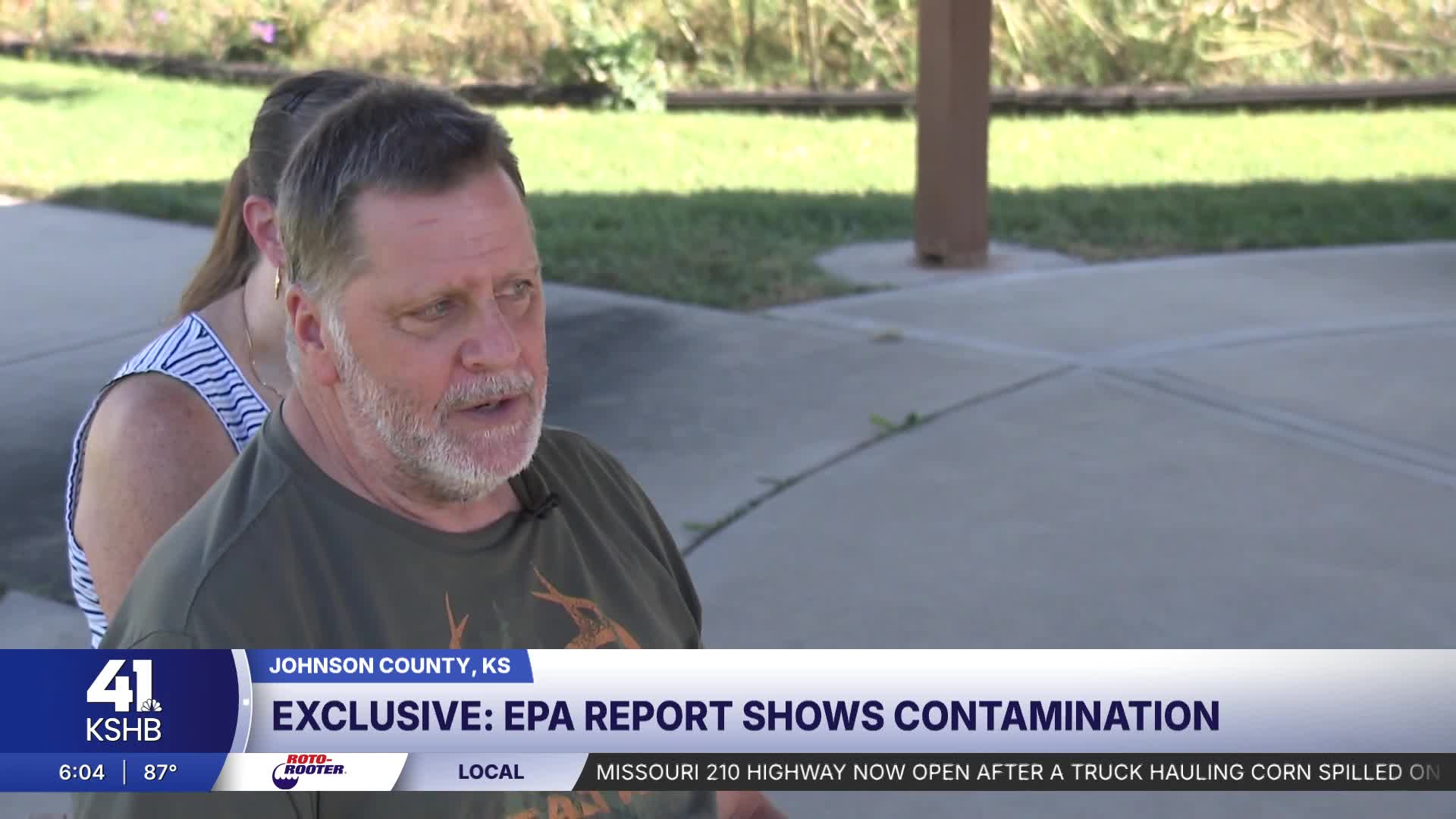
Greg Divine has lived in the neighborhood his entire life.
"I'm still concerned about it," he said. "I live here. I know what it was. I can't unsee what I saw."
He said he remembers signs of contamination growing up.
"When it would rain, it really got interesting," Divine said. "You got to look at pretty colors, and that would be purples and blues and greens running down the curb line because [of] the barrels over here on the other side of the fence. It's a whole lot better than what it was, but it makes you quite fearful of what's still down under the ground."

Divine said watching relatives and neighbors struggle with health issues leaves him with questions about whether the roots he and his wife have planted in the community can remain.
"It was a chemical plant for years and years and years. The whole place is a hot spot," Divine said. "I would like to see anybody and everybody that was involved with it held accountable."
Neighbor Julie Owens said the concern is not enough for her to leave.

"I've lived here since 1995. I was made aware of the Chemical Commodities spill or contamination shortly after I purchased this property," Owens said. "The EPA has always included me in the letters, wanting to come in like every year or every other year and test the air inside the home."
According to the EPA's report, the air contamination is getting bigger. There's testing evidence that the vapor intrusion is spreading west beyond the original site into people's homes.
The EPA said its next steps, beyond repairing and installing vapor mitigation systems, include requesting the responsible parties to complete a feasibility study and install more monitoring wells.
The federal agency confirmed the contamination is not affecting the City of Olathe's drinking water.
But neighbors are still worried about living so close to cancerous chemicals.
"What have we been hiding?" Divine said. "What are the potential risks to everybody?"
—
This story was reported on-air by a journalist and has been converted to this platform with the assistance of AI. Our editorial team verifies all reporting on all platforms for fairness and accuracy.
—