



JOHNSON COUNTY, Kan. — KSHB 41 reporter Olivia Acree covers portions of Johnson County, Kansas, including Olathe and Lenexa. Email olivia.acree@kshb.com your story idea.
—
Tuesday's primary ballot in Kansas includes a question about keeping or replacing the current system for selecting Supreme Court justices.
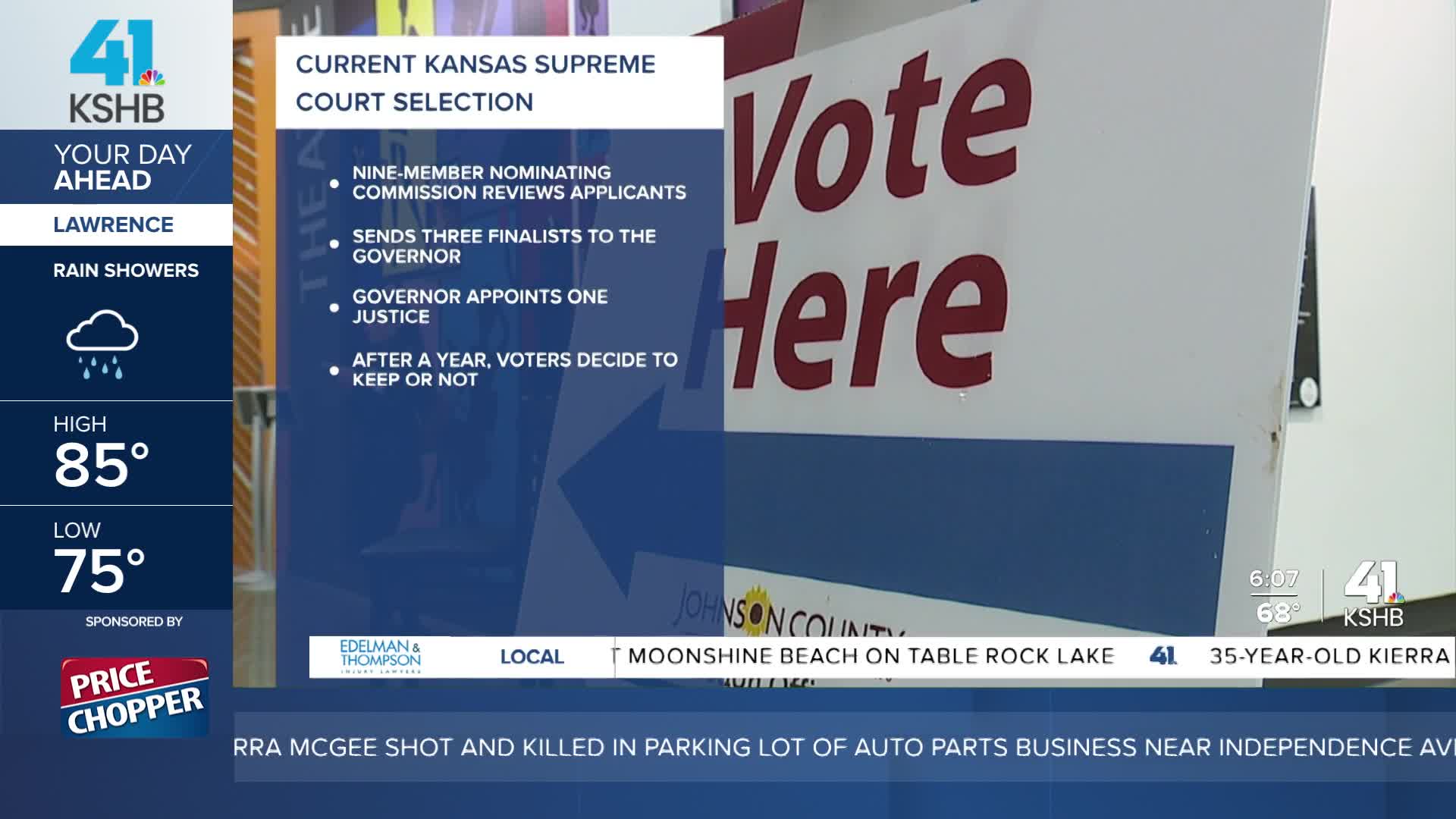
Right now, when there's an opening on the Kansas Supreme Court, a nine-member nominating commission reviews applicants and sends three finalists to the governor, who appoints one justice. After serving at least a year, voters decide only whether to keep that justice through a retention election.
Steve Leben, a law professor at the University of Missouri-Kansas City, told KSHB 41's Olivia Acree that in Kansas' history with the current process, not one justice has been removed because of a retention election.
"No Kansas Supreme Court justice has been removed through a retention election, and that I would say is a testament to the quality of the people who've been on the Kansas Supreme Court and the lack of controversy generally about their decisions," Leben said.

If the Aug. 4 constitutional amendment passes, that commission would be eliminated. Instead, it is likely Kansans would elect Supreme Court justices in statewide elections. Leben worries that could politicize the process.
"The legislature will decide how the elections take place," Leben said. "Given that the legislature currently has a supermajority of Republican members, even if it goes below a supermajority, you would expect that they would choose a partisan election."
He also worries about the ripple effects of bringing money and campaigns into the mix.
"It puts money into it. It also selects people who can both raise money and sloganize, as opposed to people who are thoughtful jurists," Leben said. "It's just not a system designed to get the most thoughtful people; it's designed to get people who can be political."
Leben fears that changing how justices are elected could impact future decisions about abortion rights. The constitutional amendment to change abortion rights failed in 2022, but an entirely new Supreme Court elected in a partisan election could mean a new vote down the line. AP News corroborated this concern in an article published Sunday.
If passed, the first three Kansas Supreme Court seats would be up for election in 2028, followed by two more in 2030 and two more in 2032.
—
![020626_KSHB_Image_NXA_Web_Standard Cube[88].jpg](https://ewscripps.brightspotcdn.com/dims4/default/0ead409/2147483647/strip/true/crop/300x225+0+13/resize/960x720!/format/webp/quality/90/?url=http%3A%2F%2Fewscripps-brightspot.s3.amazonaws.com%2F8f%2F6c%2Ffad8bd2346c5a4d4ead793017d4a%2F020626-kshb-image-nxa-web-standard-cube88.jpg)