


BUCYRUS, Kan. — KSHB 41 reporter Ryan Gamboa covers Miami County in Kansas and Cass County in Missouri. He also covers agricultural topics. Ryan has extensively covered agriculture topics across Kansas and Missouri, sharing the trends happening in farm country and how it impacts consumers. Share your story idea with Ryan.
—
Combines are rolling for harvest in Bucyrus, Kansas, but record-high diesel fuel prices are cutting into farmers' margins at one of the busiest times of year.
Diesel fuel hit a record-high average of $6.23 per gallon in Kansas on Monday, according to AAA, nearly $2.70 higher than the same time last year.
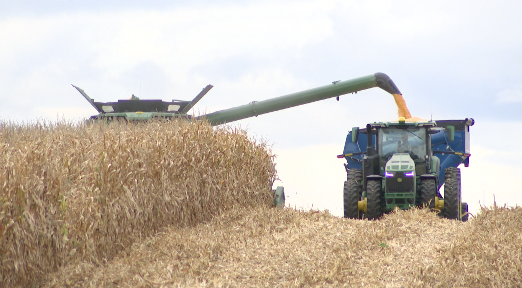
For Miami County farmer Hayden Guetterman, of Guetterman Brothers Family Farms, that cost adds up fast. A tractor pulling a grain cart on his generational family farm holds about 200 gallons of diesel. A full tank can run more than $1,200 at Monday's record-high price.
Guetterman says it can run through about 100 gallons of diesel per day. When KSHB 41 Miami County Reporter Ryan Gamboa visited his farm, they were operating two combines, two tractors, and cycling in multiple semi-trucks to haul product to their grain bin in just one field. All of those machines operate using diesel fuel.
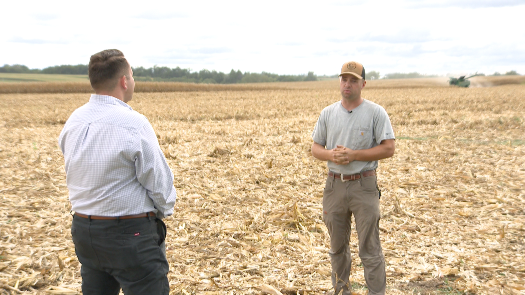
"It's unfortunate to see fuel prices this high, especially as harvest ramps up and it being one of our highest use times of our year," He said.
AAA spokesperson Nick Chabarria said the price increases are being driven largely by geopolitical tensions.

"A lot of these price increases that we're seeing locally are being driven by geopolitical events around the globe. Of course, the ongoing conflict in the Middle East and the ongoing conflict between Russia and Ukraine, all of which have huge implications for gas around the globe and right here at home," Chabarria explained.
Oil markets have shown some signs of easing. Prices dipped from more than $100 per barrel, and Chabarria said that could signal a slowdown in fuel price increases.
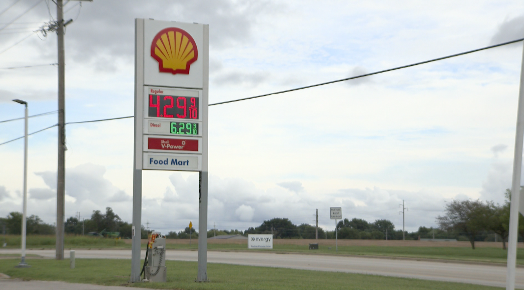
"We have seen a sort of a pause in the increase in gas overnight as oil prices have gone down, from over $100 a barrel. There is some promise that fuel prices may not be increasing the way that they were," he said.
Still, with diesel prices remaining above $6, industries that rely heavily on the fuel — including trucking and agriculture — are feeling the strain. Experts warn consumers could eventually feel it too.
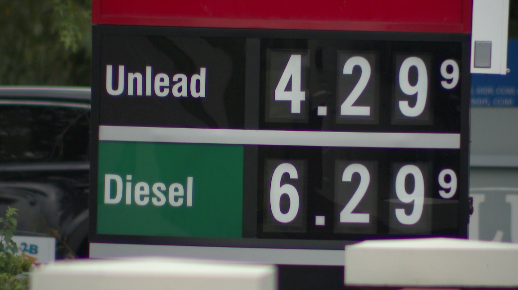
"When diesel prices start to increase, that could eventually trickle down to the consumer," Chabarria added.
Back on Guetterman's farm, demand for American agricultural products is strong, and commodity prices have risen, giving him some hope of turning a profit this harvest season. But fuel and freight costs are still cutting into his margins.

"The farmer buys everything at retail, sells everything at wholesale and pays for the freight both ways," Guetterman said.
Guetterman added that the ongoing conflict with Iran has added to the uncertainty for farmers this year.
"Of course, there's always another challenge," he said. "Right now, it's fuel and the war with Iran, and of course that was not expected with this administration, and hopefully we can get through this very soon."
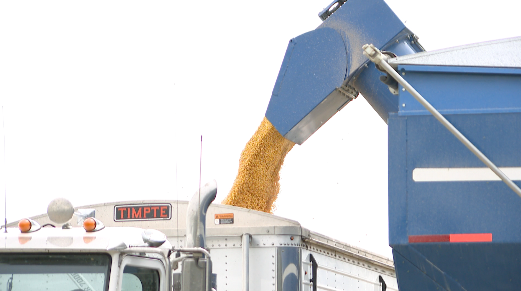
Despite the pressures, farmers keep pushing forward.
"We keep our faith, keep doing what we do," he added.
Guetterman also said that while diesel prices are an added expense, they are not the highest in his operation. Land costs and interest owed on that land remain high, with insurance costs being major input cost drivers. Fuel costs are just another layer to what's already on farmers' plates.
This story was reported on-air by a journalist and has been converted to this platform with the assistance of AI. Our editorial team verifies all reporting on all platforms for fairness and accuracy.
—

![020626_KSHB_Image_NXA_Web_Standard Cube[88].jpg](https://ewscripps.brightspotcdn.com/dims4/default/0ead409/2147483647/strip/true/crop/300x225+0+13/resize/960x720!/format/webp/quality/90/?url=http%3A%2F%2Fewscripps-brightspot.s3.amazonaws.com%2F8f%2F6c%2Ffad8bd2346c5a4d4ead793017d4a%2F020626-kshb-image-nxa-web-standard-cube88.jpg)