




LANSING, Kan. — KSHB 41 reporter Rachel Henderson covers neighborhoods in Wyandotte and Leavenworth counties. Share your story idea with Rachel.
—
Neighbors on opposite sides of the street — and opposite sides of the issue — are made their voices heard Tuesday as they voted on the Lansing Unified School District 469 bond issue aimed at addressing aging infrastructure.
The voters said no to both school bond issues on the ballot.
Question 1 went down to defeat with 1,579 no votes and 1,095 yes votes.
Approval of the bonds would have meant $30 million toward improvements, including HVAC systems, roofs, parking lots and tennis courts, with no mill levy increase.
Question 2 also failed at the polls with 1,779 no votes and only 890 yes votes.
Money from that bond would have put $5 million toward sports field improvements and would raise the mill levy by .746 mills, costing the owner of a $400,000 home around $34 a year — about $2.86 a month.
Superintendent Marty Kobza told KSHB 41's Leavenworth County reporter Rachel Henderson earlier in the day the district's infrastructure has reached a breaking point.
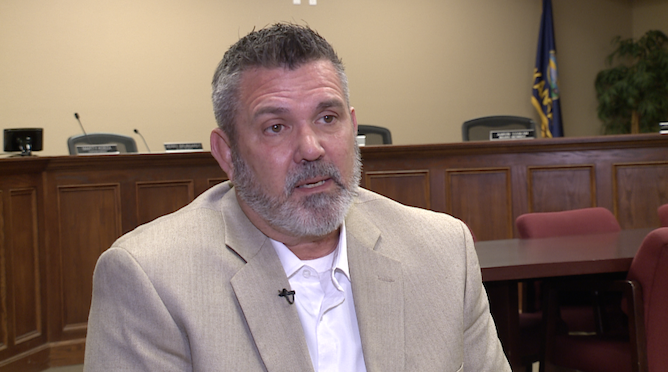
A facilities assessment conducted when Kobza was hired in 2023 found as much as $60 million in needed repairs across the district.
In the last 18 months alone, the district spent $433,000 on roofs and HVAC systems out of its operational budget.
Aging systems
Kobza said the district has been stretched thin trying to keep aging systems running.
"Our systems have aged out,” Kobza said. “Our roofs in many cases are over 20 years old, and we're spending a significant amount of money making repairs. Those systems just reached end of life, and we're limping them along until we can replace them."
Among the facilities the district told voters needed attention are HVAC systems and roofing at elementary schools, the middle school and the district office, as well as the early childhood center, which needs a new roof and electrical work.

The high school was built in 2015 following the district's last bond issue.
Kobza said delaying repairs only increases the cost and risk to the district.
"We continue to expose the district to additional risk if we don't get this done,” Kobza said. "Quite frankly, some of these roofs were at the 25, 30-year life span, so regardless of the maintenance that was done to them, they reached the end of life."
District funding
He said the district has been working to address lower-cost repairs through its annual budget while pursuing the bond for larger projects.
Kobza said the district surveyed around 300 community members in December 2024 before moving forward with the bond proposal.
"The district, from a financial position, has been operating on a very thin margin,” “Kobza said. “We've been working on getting our district in a financially healthy place."
Not all residents are on board.
Stephanie Pierce, who has lived in Lansing for four years, voted no.

Pierce said her property taxes have gone up $820 over the past four years and expressed frustration with how the bond was put together.
"It's the debt structure, how they planned it out and the projects in there that made me vote no,” Pierce said.
Question one includes projects beyond strictly HVAC and roofs like tennis courts and playground repairs Pierce said could be paid for through things like corporate sponsorships or grants.
“That to me is a little deceptive,” Pierce said.
Pierce said she would have supported a more targeted proposal.
"I would love to see a proposal come forward that just took care of the HVACs, the roofs and the parking lots…and the payment structure was better than the 13 years interest only, I would vote yes for that.”
She also raised concerns about the bond language and what it does — and does not — guarantee.
"Nowhere in the bond language does it guarantee that they will not turn around a year from now or five years from now and raise the mill levy."
Pierce said she believes the district should explore other funding options before asking residents for more money.
"I just think we need to look at alternative funding options than just saying, 'We want to do all these projects, please give us more money,’” Pierce said. “Every year, the valuations go up, the taxing entities collect more money, and yet, there's still a budget shortfall, and there's not enough money to maintain these buildings. It's pretty frustrating."
Pierce said her concern ultimately comes down to accountability.
"Where do their priorities lie? That's my biggest concern with handing someone $30 million,” Pierce said.
Mika Stilwell, who has four children in the district, voted yes.
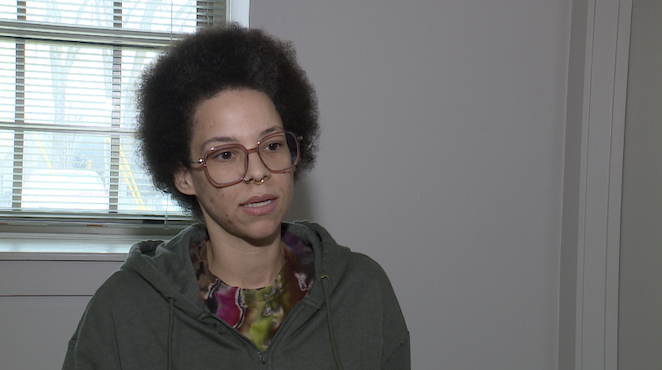
Stilwell recently experienced a house fire and said the district's support during that time influenced her decision.
"Our family recently experienced a house fire, and we've experienced a lot of rallying and support from the district,” Stilwell said. “I just feel that the district has given us so much, and it just seems really simple to vote yes to put back into that."
Stilwell said she also saw the bond as a way to have more certainty over her current tax burden.
"I would rather have a clear picture of my tax burden with that bond than it be completely out of my hands,” Stilwell said.
She said concerns about the added $3 per month cost don’t compare to what she pays monthly for things like groceries or subscriptions.
"I just don't feel like it's that big of a burden,” Stilwell said. “For what we are going to get back and the investments that are going to be made in our community, it's a no-brainer."
Kobza told Henderson if the bond fails, the district will analyze the vote, consider different formats and revenue sources, and evaluate whether repair costs are increasing heading into the fall.
"Do we need to go back and look at our mill rate, our taxes, and do we need to make more revenue that way?"

You can find the election results on the county's website.
This story was reported on-air by a journalist and has been converted to this platform with the assistance of AI. Our editorial team verifies all reporting on all platforms for fairness and accuracy.
—

![020626_KSHB_Image_NXA_Web_Standard Cube[88].jpg](https://ewscripps.brightspotcdn.com/dims4/default/0ead409/2147483647/strip/true/crop/300x225+0+13/resize/960x720!/format/webp/quality/90/?url=http%3A%2F%2Fewscripps-brightspot.s3.amazonaws.com%2F8f%2F6c%2Ffad8bd2346c5a4d4ead793017d4a%2F020626-kshb-image-nxa-web-standard-cube88.jpg)