

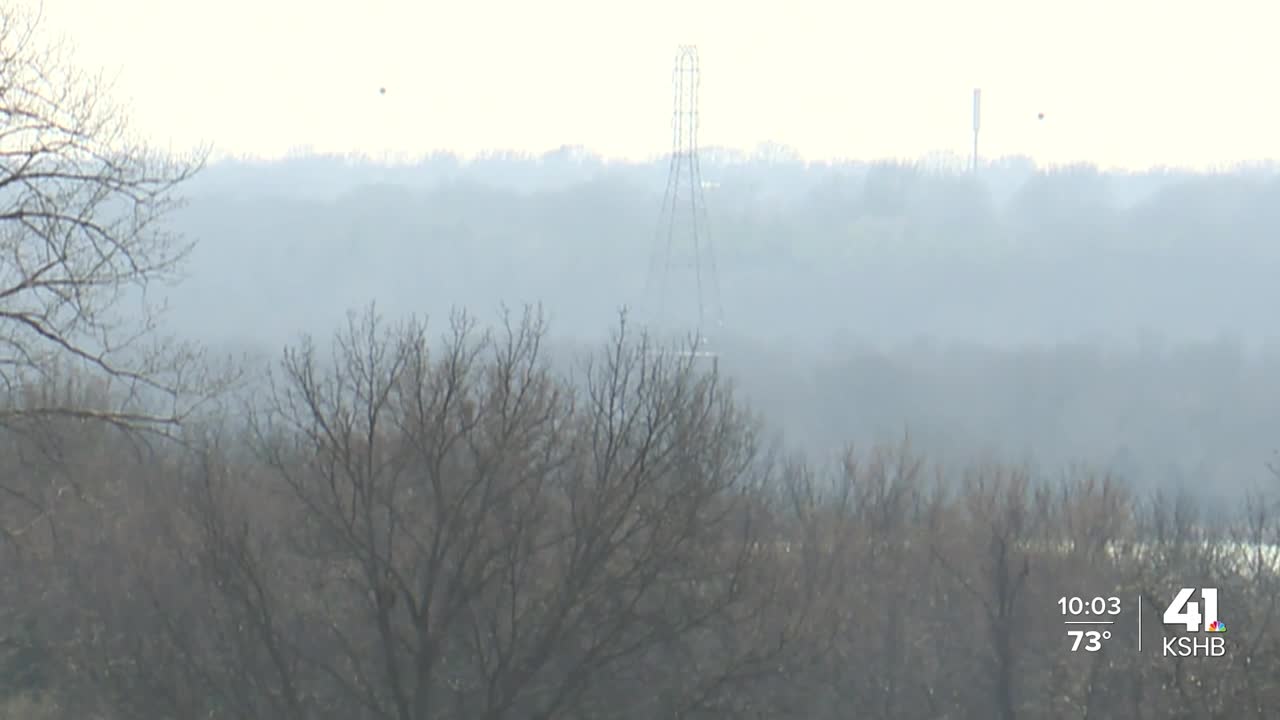


KANSAS CITY, Mo. — Kansas health officials have issued an air quality health advisory through Saturday afternoon for smoke generated from burning in the Flint Hills region.
The Kansas Department of Health and Environment issued the advisory Friday morning as air quality index readings from around the state rose into the moderate to unhealthy for sensitive groups range.
LINK | See air quality readings in your neighborhood
Several sensors across the Kansas City area showed AQI levels in the moderate zone, with one sensor near downtown Kansas City, Missouri, reporting an AQI of 105, putting it in the unhealthy for sensitive groups category.

The smoke is generated from a series of annual prescribed burns in the Flint Hills area southwest of Kansas City. The burns help preserve the tallgrass prairie, control invasive species, offer better forage for cattle, and are part of managing the risk for wildfires.
While there are benefits, KDHE says the fires release large amounts of particulate matter and substances that form ozone. Common health problems include burning eyes, a runny nose, coughing, and illnesses like bronchitis.
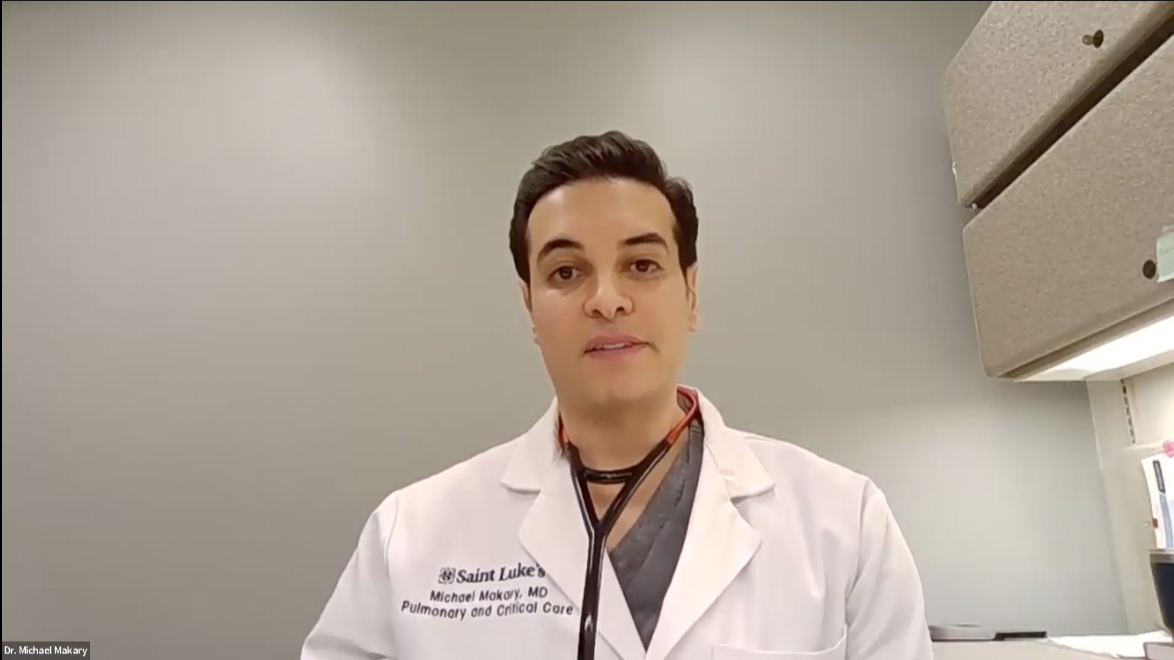
"We tend to see an increase in ER visits or urgent medical care visits for those vulnerable populations once exposed," said Dr. Michael Makary, the chairman of the department of Pulmonary Medicine at Saint Luke's Physicians Group.
March 20 broke a record for the earliest 90-degree day, and many people chose to go outside.
"I feel like, congested, like little tickles in my throat and more dust on the trail than normally," Stephanie Charles said.
She is an Ironman and was training for her next competition.
"I did 36 miles today," she said.
She biked from Lee's Summit to the Truman Sports Complex and back, all while the city was under an Air Quality Advisory.
She said she could tell the difference between the air under the advisory and on a clear, normal day.
"I know it definitely affects how I feel when I’m out on my bike, my heart rate going up and down, and you kind of get that dusty feeling. Everything feels really gritty, like when it feels like it’s smokey and dusty and the air’s not so great," Charles said.
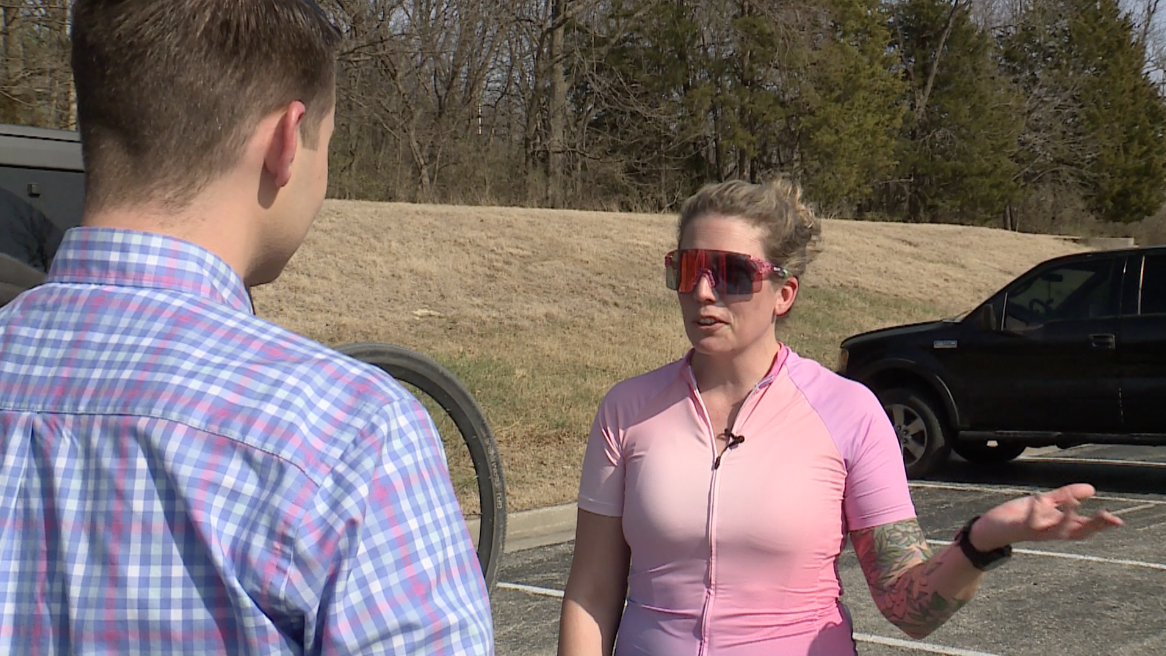
She said that while she's used to challenging conditions, others may not be accustomed to the poor air quality.
"Especially if you’re not conditioned to be out working out in general, like maybe you’re just starting your fitness journey, sometimes it can really make you feel deflated cause it’s a little harder to breathe these days, so that makes your training a little bit harder," Charles said.
Dr. Makary recommends that those who are more vulnerable to the impacts of poor air quality use an air purifier and, if they have to go outside, wear a mask.
"People should kind of keep track of the air quality index. You can do that by going to airnow.gov. or you're, you know, watching your local news station and weather report, find out what the air quality index is," Dr. Makary said.
KSHB 41 sent out this notification from our mobile app after Kansas officials issued the alert.
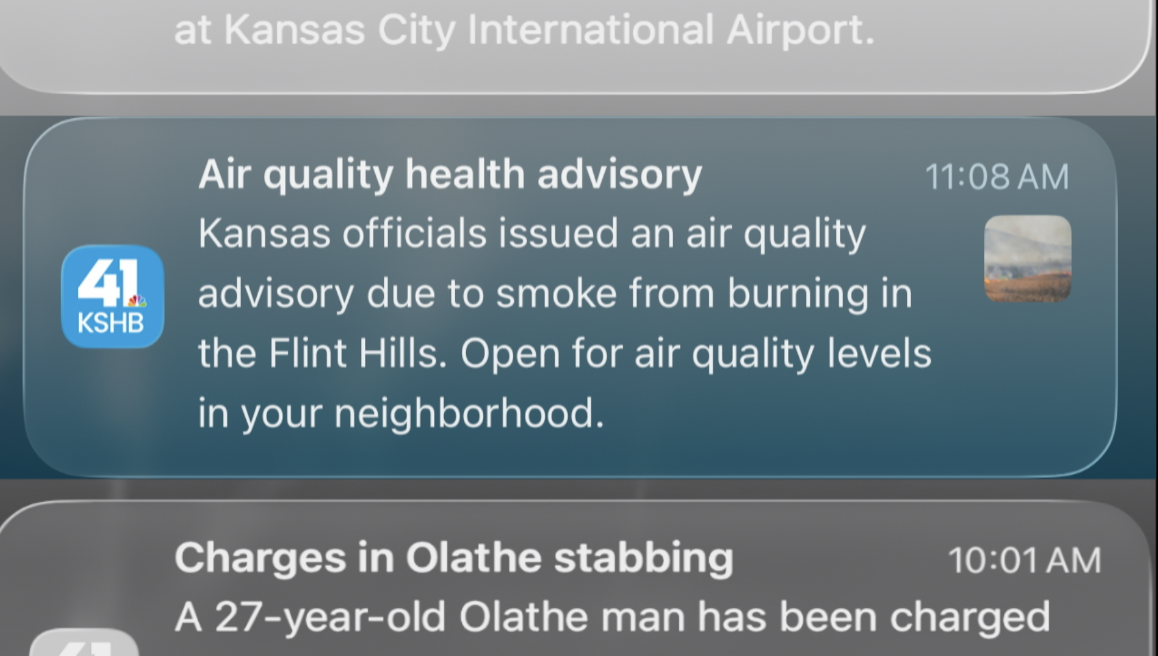
KDHE officials advise healthy populations to limit or avoid strenuous outdoor activities, while more vulnerable populations should remain inside.
More information about the fire burning season is available online.
—
![092126_KSHB_WX_480x360[61].jpg](https://ewscripps.brightspotcdn.com/dims4/default/79e7fad/2147483647/strip/true/crop/480x360+0+0/resize/960x720!/format/webp/quality/90/?url=http%3A%2F%2Fewscripps-brightspot.s3.amazonaws.com%2F6f%2F6d%2Fa3758caf4c0984b0ecf100f620d1%2F092126-kshb-wx-480x36061.jpg)