

KANSAS CITY, Mo. — KSHB 41 reporter Ryan Gamboa covers Cass County in Missouri. He also covers agricultural topics. Share your story idea with Ryan.
—
Kansas City taxpayers have questions about a bill in the Missouri Legislature that would eliminate the state income tax and increase the state sales tax.
The independent Missouri Budget Project estimates the bill would raise net taxes on 60% to 80% of Missouri residents and cut state funding by $5 billion.

The MBP also estimates a family making $65,000 should expect a net increase of $535 in taxes.
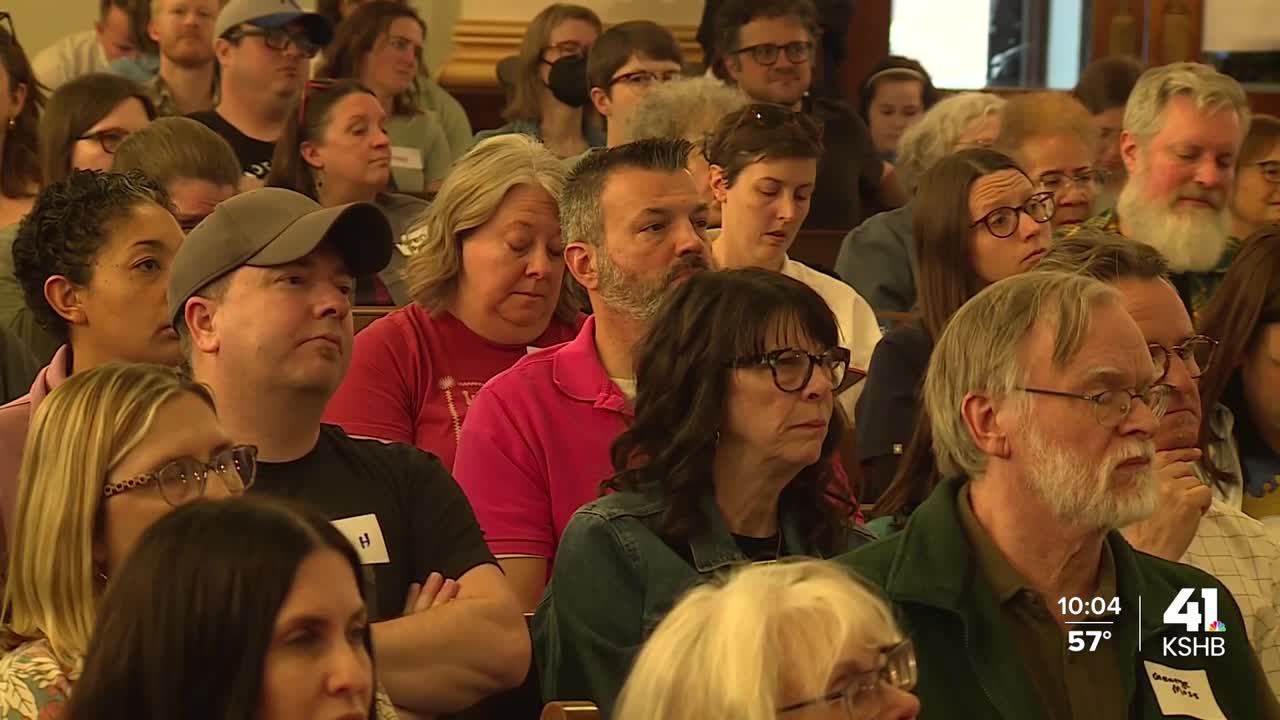
Taxpayers on the streets of Lee's Summit and at an emergency meeting Wednesday night in Kansas City have differing opinions about how the government spends money and how this legislation would impact them.
Kansas City Public Schools parent LaNee Bridewell said cutting the income tax and increasing the sales tax would impact her family.

"It's a scam," Bridewell said. "I think it will impact me the most in the places that I need it the most: in the education system, our hospital systems, our roads. I would say the most direct impact in my life is the money it would pull out of the public school systems."
College student Miles Parker said he would benefit from the legislation.
"I'd definitely be in favor of that," Parker said. "With a sales tax, if you are choosing to purchase something, that means you most likely have the means to contribute, and I think that's more fair to everybody."

State Rep. Bill Irwin (R-Lee's Summit) voted in favor of the bill.
Irwin said the legislation is designed to attract more business to Missouri, create jobs and increase residents' net income.
"Missourians are hurting, we're paying a lot of taxes, and they're going to things that we want, amenities, and some things we don't," Irwin said. "We need to lighten the load on our people. So, when we look at how we do that, if we want to grow Missouri and want people to come to Missouri, rather than us, the government, spending their money, we need to look at alternative ways."

Irwin says legislation would give Missourians more choice in how to save and spend their money.
If the legislation passes, it would be put on a ballot in November for Missouri voter approval or denial.
"We're looking to put your money in your pocket, to let you decide how it's spent rather than giving it to the government and we decide how it's spent," Irwin said.

When asked if the bill makes Missouri more desirable for future business and residents, Irwin agreed.
"Yes. 100%," he said.
Irwin added he's already having conversations with businesses interested in investing in his district with this legislation, to create jobs and raise Missourians' income.
"If we can do this, I think a lot of people will want to come to Missouri," Irwin said. "The idea is there should not be a net increase for any if we can get the people here."

Bridewell expressed concerns about the current economic climate for taxpayers, claiming this legislation would impact the state's most vulnerable populations.
"The thing about being more conscientious about our spending is that people are already in an economic crisis," Bridewell said. "Gas prices are already through the roof, food prices are already at record highs, so I don't know how much more conscientious we can be."

Taxpayers at Wednesday night's emergency meeting were there to get educated and develop a plan to fight back.
They don't see this plan as a way to put more money back in their pockets, but rather take money out of it and give it to wealthy Missourians.
Parker, who was interested in this topic while KSHB 41 interviewed Irwin in Lee's Summit, said the choice in where his money goes is important to him, as well as fairness among his neighbors.

"It would be encouraging if I knew straight up this is how much money I was making," Parker said.
House Joint Resolution 173 passed the Missouri House earlier this month and will head to the Senate later this month following the legislature's spring break this week.

If the bill passes the Senate and is signed into law by Gov. Mike Kehoe, and voters approve the measure in November, Irwin says the legislature would work on the financial implications of the bill next session.
Irwin told KSHB 41 that a plan is already being drafted for the legislation and how to phase it in. He anticipates it could be up to six years for it to take full effect.
This story was reported on-air by a journalist and has been converted to this platform with the assistance of AI. Our editorial team verifies all reporting on all platforms for fairness and accuracy.
—