



KANSAS CITY, Mo. — Editor's Note: This story discusses suicide and may be triggering for some readers. If you or someone you know is struggling with their mental health, call or text the national 988 Suicide and Crisis Lifeline. If there is immediate danger, call 911.
KSHB 41 reporter Tod Palmer covers sports business and eastern Jackson County, including Independence. Share your story idea with Tod.
—
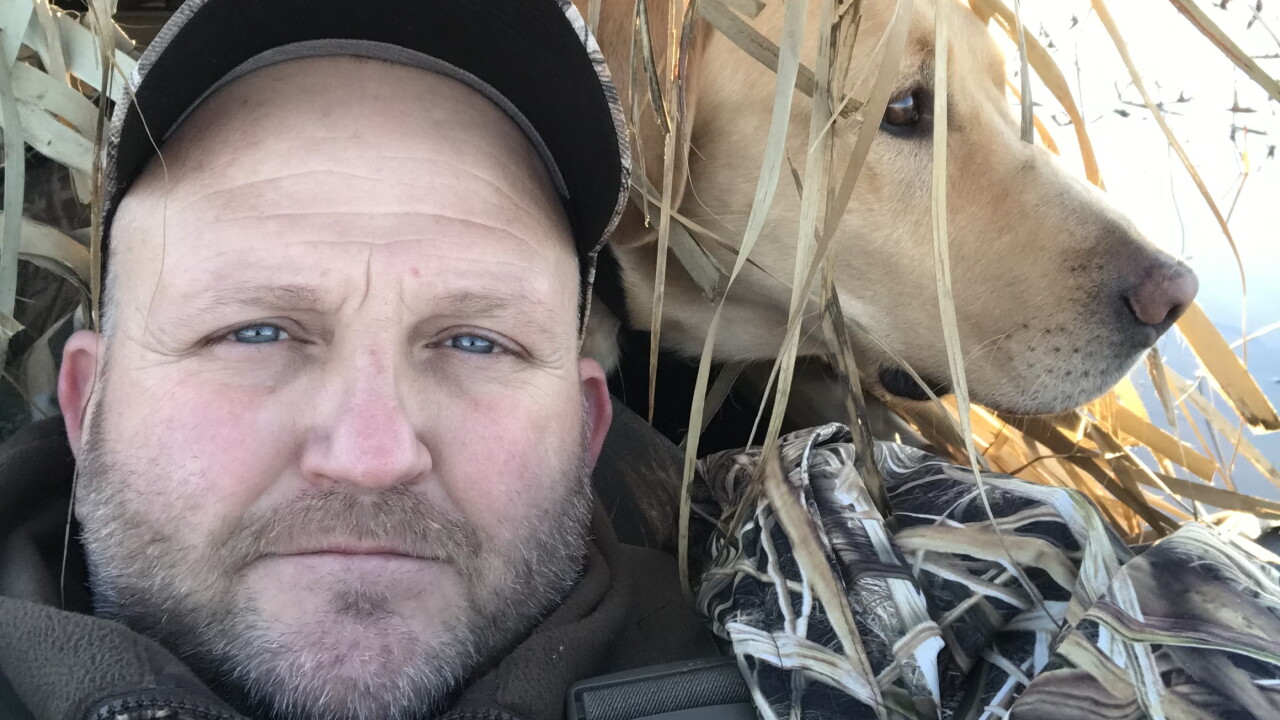
David Coleman was considered one of the toughest people his friends, family and colleagues knew. The former Iron Workers Local No. 10 business manager also had a soft spot for introducing kids to the outdoors, especially fishing.
"He had a way of making everyone feel like you were his best friend in the world," Lance Claiborne, president of The Builders, a chapter of the AGC, said.
When Claiborne, who represents companies in construction trades, moved to Kansas City three years ago from Philadelphia, he quickly developed a bond with Coleman.
“Straight shooter, and that's what I loved most about him,” said Claiborne, who found a far less contentious culture in the Heartland between labor unions and construction employers than out East.
But this isn't a straightforward story about what a great person Coleman was.
"If you ask anybody in our industry, he was always seen as a titan — one that could bridge gaps between old and new, bridge gaps between left and right,” Claiborne said. “Wherever there was some kind of conflict, somewhere someone was talking to Dave Coleman.”
That made Coleman's decision to take his own life a little more than a year ago so shocking.
"The hardest part for me is that if someone that genuine, that loved, that surrounded, that respected and revered, and that strong of a character, of a work ethic, of a just core person could find themselves in that situation, everybody's susceptible to it," Claiborne said.
Construction workers are particularly vulnerable to suicide, according to Angela Crawford, executive director of Kansas City-based Construction Suicide Prevention Inc., a role she has held since 2020.
This week is Construction Suicide Prevention Week, part of a wider National Suicide Prevention Month.
"Construction workers make up about 7% of the total workforce, but 18% of suicides, of all suicides with an industry known,” Crawford said. “About 5,000 construction workers die by suicide annually. ...The scale of the problem surprises a lot of people, particularly for the industry. It's not one that I think you hear about as much.”
A culture of toughness, a high injury rate — which contributes to higher substance abuse rates — and the seasonal nature of the work and pay are among the factors that make construction workers vulnerable, but Crawford said her organization is working to change that.
"We want to be the spark that then connects employers, workers, whoever it is, to the next step to start making that shift," Crawford said.
Part of that effort involves equipping people with practical tools and knowledge — including a toolbox for the language people use around suicide, information about how to get help, wallet cards on guidance for starting a conversation, and information about coping with loss.
"We're trying to teach people one, how do you look for those warning signs, then two, what do you do if you see them,” Crawford said. “That's where things like this wallet card help break down those barriers. It's got five simple steps.”
The good news is that suicide prevention efforts may be working. There was a 1.3% drop from 2023 to 2024, the most recent year data is available on, according to Crawford.
"Sometimes, it can feel overwhelming when you hear those stats and those numbers, and I know 1.3% doesn't sound like a lot, but that percentage represents lives," she said.
Suicide prevention means acknowledging when we're not OK, and that it’s OK not to be OK. It also means being willing to have uncomfortable conversations.
Claiborne said Coleman's death carries a message.
"If Dave Coleman were here, he would want people to understand that outside isn't everything," Claiborne said. "... It's on us to be mindful of those markers and be willing to lovingly, and in a way that values both the person and the relationship, actually try to address that, or help them to address it, or connect them with resources if you don't feel confident," Claiborne said.
It may save a life.
This story was reported on-air by a journalist and has been converted to this platform with the assistance of AI. Our editorial team verifies all reporting on all platforms for fairness and accuracy.
—
![020626_KSHB_Image_NXA_Web_Standard Cube[88].jpg](https://ewscripps.brightspotcdn.com/dims4/default/0ead409/2147483647/strip/true/crop/300x225+0+13/resize/960x720!/format/webp/quality/90/?url=http%3A%2F%2Fewscripps-brightspot.s3.amazonaws.com%2F8f%2F6c%2Ffad8bd2346c5a4d4ead793017d4a%2F020626-kshb-image-nxa-web-standard-cube88.jpg)