

INDEPENDENCE, Mo. — KSHB 41 reporter Tod Palmer covers sports business and eastern Jackson County, including Independence. Share your story idea with Tod.
—
The laundry list of concerns Independence residents have about a proposed 400-acre data center in the Little Blue Valley is long, but city leaders are confident they’ve built in sufficient protection to insulate Independence Power and Light (IPL) customers from possible rate increases.
Many concerns expressed by residents — about air pollution, light pollution, noise pollution, the project being a sprawling eyesore, and possible impacts on wildlife — are specific to the neighborhoods in and around the proposed eastern Independence development. Still, everyone in the city would be impacted if the data center affects IPL rates.
In December, a Dutch AI company, Nebius, bought property east of Little Blue Parkway along Missouri 78 for the project.
IPL Director Joe Hegendeffer said he’s confident the data center won’t raise residential utility rates, because he was intentional in making it a priority when hashing out agreements for the project.
“I entered the whole conversation with the data center of, ‘How are we going to isolate and protect the residents?” Hegendeffer said. “Every single conversation we had, that was the top priority: that this is not going to be borne by the residents.”
Nebius has applied for Chapter 100 bonds, a type of tax-abated Industrial Revenue Bond allowed under Missouri law for a variety of projects, to build the data center.
The Independence City Council held a public hearing Feb. 16 regarding the Nebius project and is expected to vote on whether to approve the bond application during the next council meeting on Monday, March 2.
At full buildout, which isn’t projected until 2029 at the earliest, the Nebius data center will require 800 megawatts to operate — roughly triple what the city currently generates — but the city isn't building a new power plant.
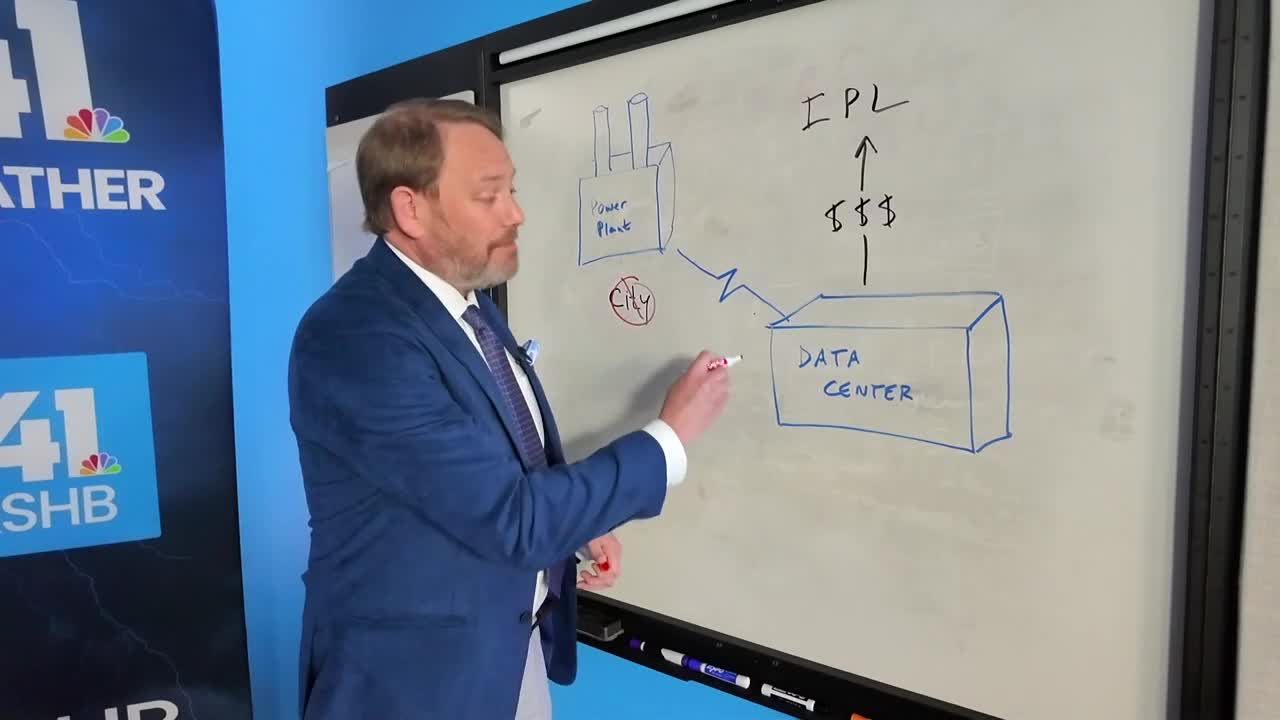
Instead, a private equity firm — Delaware-based Independence Power Partners (IPP) — will fund the new power generation.
“They'll finance it, engineer it, procure all the equipment, construct it, own it and operate it,” Hegendeffer said.
IPL already has power purchase agreements in place with IPP to buy the power and sell it to Nebius, which, in turn, will pay fees that help fund IPL operations and generate millions in new tax revenue for the city’s general fund.
“All of those costs associated with that are passed straight through to the data center through the energy service agreement,” Hegendeffer said.
Neither the city nor IPL will pay for or back the bonds for IPP’s power plant, which will be built at the former Blue Valley Power Plant just west of the proposed data center.
Independence also required Nebius to purchase performance bonds, which provide additional protection if the company attempts to break its lease (assuming the council approves the Chapter 100 bonds).
“It's like an insurance policy,” Hegendeffer said. “If you wreck your car, you have to cover the value of your car if you had a loan. So, this is kind of the business term that does the same thing. If they were to up and leave the city, this guarantees that dollars would still be there to help pay for the power plant that was constructed.”
With the risk to the city and its residents mitigated, Hegendeffer said, adding a large-load industrial user could actually save residents money in the long run because more of IPL’s revenue will come from industrial sources.
Currently, 90% of IPL customers are residential, and they use 50% of the citywide electrical load. That means that anytime IPL must raise rates — due to higher personnel, materials, or fuel costs, for instance — residents shoulder 50% of the cost via their monthly bills.
If Nebius’ data center is approved, it would shift the commercial/industrial load to 75%.
“With additional revenues that we will see through this project, I will be able to help stave off rate increases in the future,” Hegendeffer said. “... If you think about buying a gallon of milk, if you go to your local QuikTrip or a local store, the gallon of milk is higher because they buy on a smaller scale. But if you go to a big warehouse store, a Sam's Club or a Costco, it's cheaper because they buy it in such bulk.”
Amid a push from states and the federal government to require data centers to pay for their own power generation, IPL and Nebius already agreed to do just that, putting Independence ahead of the curve on curbing data-center costs.
“This really allows a data center to bring its own power but sleeve the cost through the city, so that we’re able to actually draw some benefits from it,” Hegendeffer said.
Residents near the proposed data center have organized fierce opposition to the project, but Hegendeffer hopes the way IPL structured its deals with IPP and Nebius will ease fears about future rate hikes.
“I’m confident it will be one of the best things Independence has done, to be honest with you,” he said. “Nothing else can bring these kinds of revenues in one shot and help our community as much as this project.”
[Editor's note: An earlier version of the story had Joe Hegendeffer's name spelled incorrectly.]
—