

KANSAS CITY, Mo. — KSHB 41 reporter Tod Palmer covers sports business and eastern Jackson County, including Independence. Share your story idea with Tod.
—
The Missouri legislature's push to eliminate the state income tax might seem laudable on the surface, but many Missouri seniors are worried about the fine print.
Missouri Gov. Mike Kehoe’s plan — scrap income tax in favor of a significant increase in the statewide sales tax — threatens to shift substantially more of the state’s tax burden onto seniors and other vulnerable populations, according to analysis from the Missouri Budget Proect..
“The income tax, sales tax plan — because it's really both — if it gets through, it will absolutely hurt most of our seniors,” State Rep. Kemp Strickler, a Democrat from Lee’s Summit, said. “It will mean a lot of dollars out of their pocket.”
The Missouri House passed House Joint Resolution 173, which would phase out the state income tax, on Thursday. It now goes to the Missouri Senate later this month when the legislature reconvenes.
Republican legislators who support the proposal haven’t said exactly how much the state sales tax would expand, but the language is designed to circumvent the Hancock Amendment and hand future legislatures broad power to impose new sales and use taxes on any good and services in Missouri — as long as it’s intended to reduce or phase out the income tax — without needing voter approval.
“Sales taxes are regressive taxes, meaning that lower income folks tend to pay a higher percentage of their incomes on those taxes than do upper-income folks,” Strickler said. “On the other side of the equation, income taxes, they really are a more progressive tax from the standpoint of: If you make more money, you pay more money; if you make less money, you pay less money.”
Missouri, which already has one of the highest sales-tax rate in the U.S., currently exempts social security, military income, public pensions, and a portion of private pensions, IRA and 401K income from the state income tax.
That means most seniors pay little or no state income tax, but they wouldn’t be able to avoid future sales-tax increases.
“I'm a senior, so I'm on a fixed income, yes — very fixed,” Phyllis Deason said.
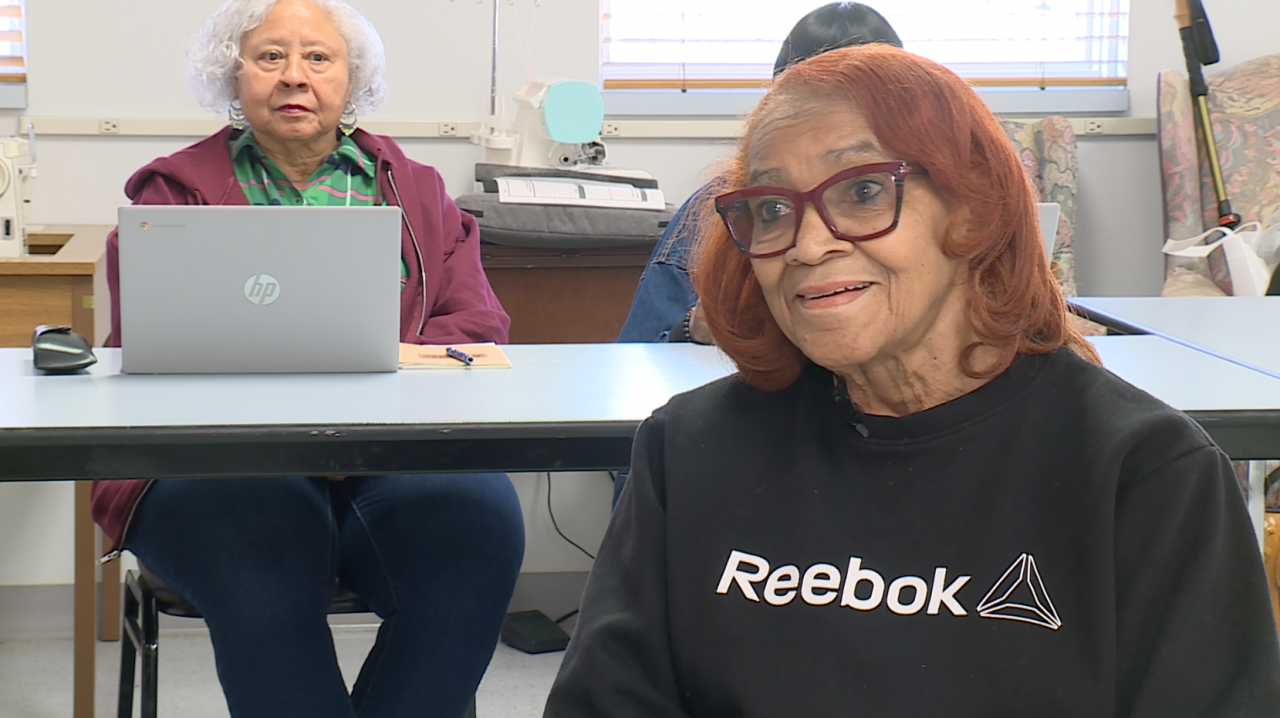
Deason and her friends, including Shelia Grimmett, stay fit, eat meals, laugh and learn at LINC's Palestine Senior Citizens Activity Center in Kansas City, Missouri.
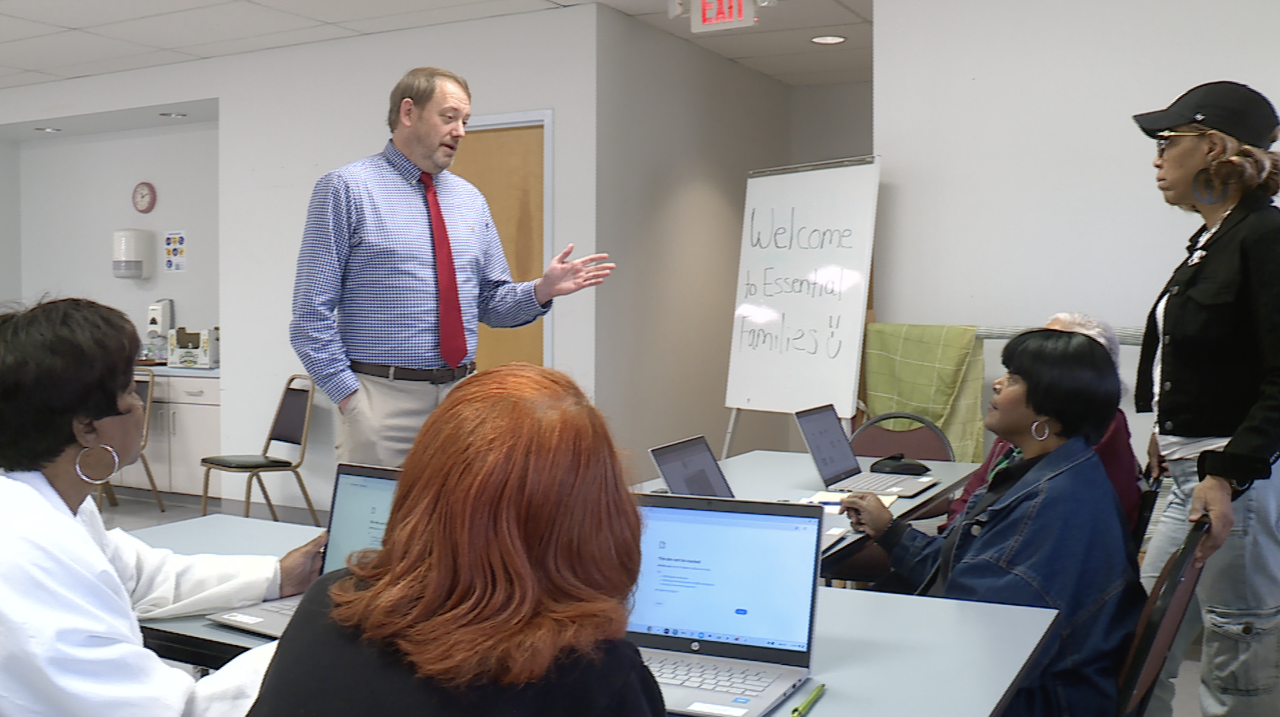
There was a calisthenics class and a computer class, put on in collaboration with Essential Familes, Thursday morning.
“We're learning how to do emails and Zoom meetings,” Deason said.
They also learned Thursday about Kehoe’s proposal.
“For those of us that are on social security, it's going to hurt because we don't have any extra money coming in from anywhere else,” Grimmett said.
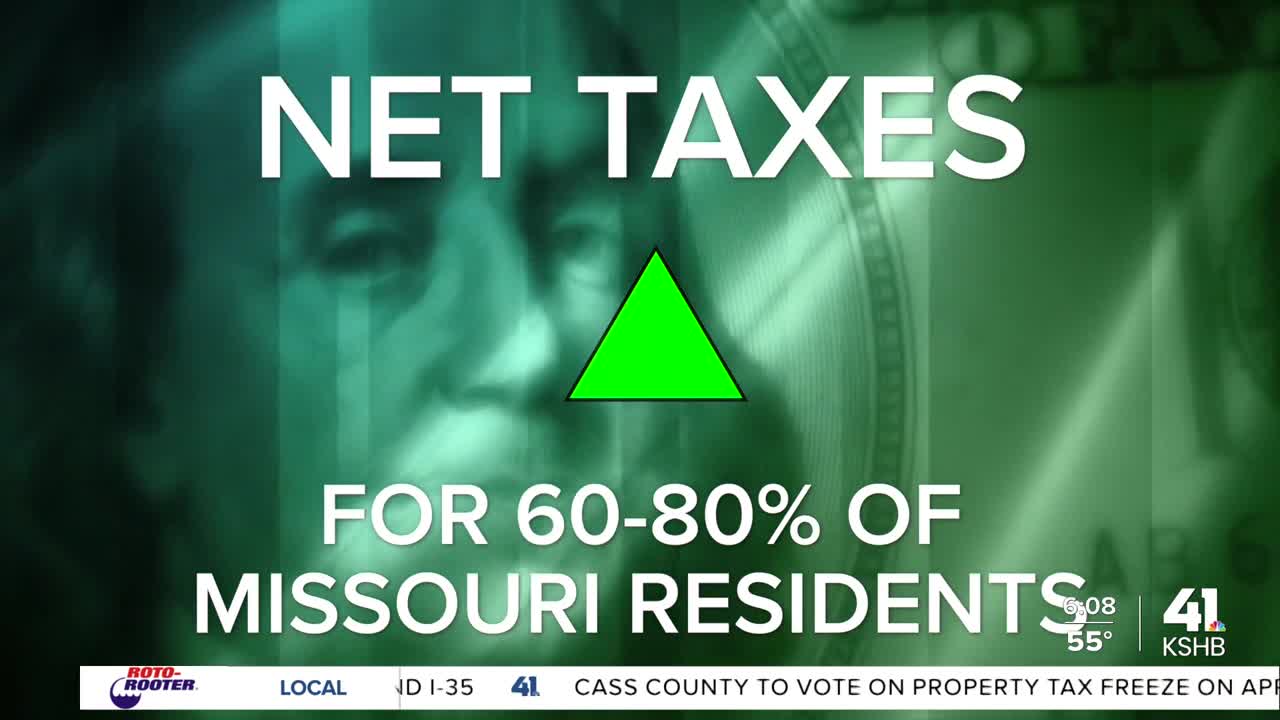
The independent Missouri Budget Project, or MBP, analysis estimates that the proposal would raise net taxes on 60 to 80 percent of the state’s residents, while also defunding the state by as much as $5 billion.
“It will have an impact on a majority, more than a majority of people in this state,” Strickler said. “... The problem is poor people, middle-class people, working people, seniors — they're spending the money they have,” Strickler said. “They don't have extra to just invest. They don't have that, so a consumption tax, a sales tax, really hurts them the most.”
The 20% of residents who make roughly $300,000 or more per year would see their tax decrease, in some cases massively, but seniors, military families and families making less than $300,000 likely would pay more.
A family making $65,000 should expect a net tax increase of $535, according to the MBP estimates.
The budget shortfalls the tax policy changes would create almost certainly would force additional deep cuts to services the state offers.
“It sucks,” Grimmett said. “That's all I can say. It just sucks. ... They've already cut enough programs, if you ask me.”
If the Missouri Senate signs off on the proposal, Kehoe almost certainly would sign it, which would put the issue on the November 2026 ballot.
“No one was asking for this,” Strickler said. “But there's no question, I've had way more people concerned about it and concerned about their overall tax burden going up than I have people who are looking forward to that. ... It has been the governor. It has been Speaker (Jon) Patterson, and it has been some of their big donors. They are the ones who want it.”
Strickler said residents in his district have been worried about property taxes, “but income tax was not the issue, so it really is something that is driven by a relatively few number of people, and it will benefit a relatively few number of people.”
—