



INDEPENDENCE, Mo. — KSHB 41 reporter Tod Palmer covers sports business and eastern Jackson County, including Independence. Share your story idea with Tod.
—
For months, I've covered the Independence City Council’s decision to approve a hyperscale AI data factory in the Little Blue Valley.
As KSHB 41’s Independence reporter, I've been to community forums and contentious council meetings, and I've spoken with opposition leaders and those who believe the project can transform the city.
I also recently had the chance to take some of the community’s concerns directly to Nebius Vice President of Public Affairs John Sutter when he was in Kansas City for an inspection and a series of meetings.
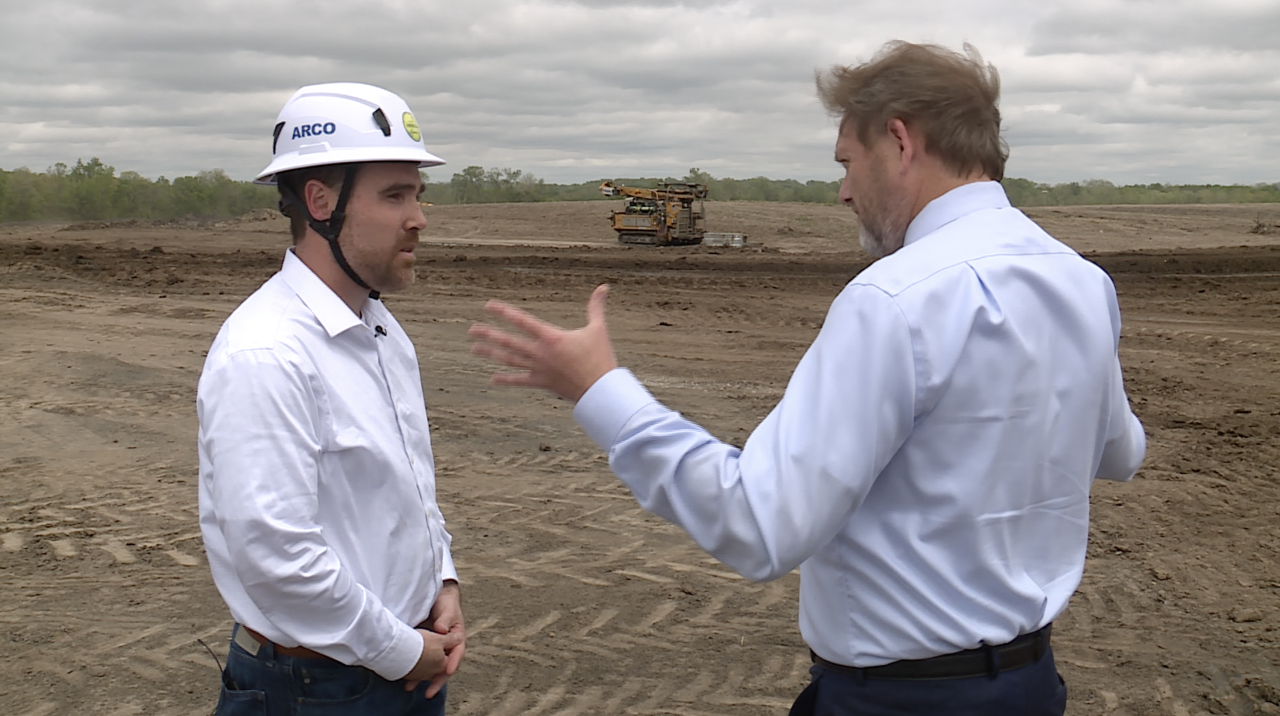
Our conversation — which was split between an office for the general contractor, Arco, and the site, northeast of the intersection of Missouri 78 and Little Blue Parkway — has been gently edited for clarity.
Why did Nebius choose Independence?
Sutter: Independence is an ideal location. This city has a site planned and zoned appropriately for a development like ours.
I look at this city, and we see a community that has a strong workforce, particularly with the building and trades unions here locally and here in Kansas City.
You have a site that has power, that is flat, that is ready to be built for a facility like us. I think the important thing is that city leaders saw, years ago, they wanted this part of town to be for industrial and commercial development. We're coming in, and I think we're helping to realize what that vision was from a few decades ago.
As construction gets underway, can you take me through plans for the 400-acre site?
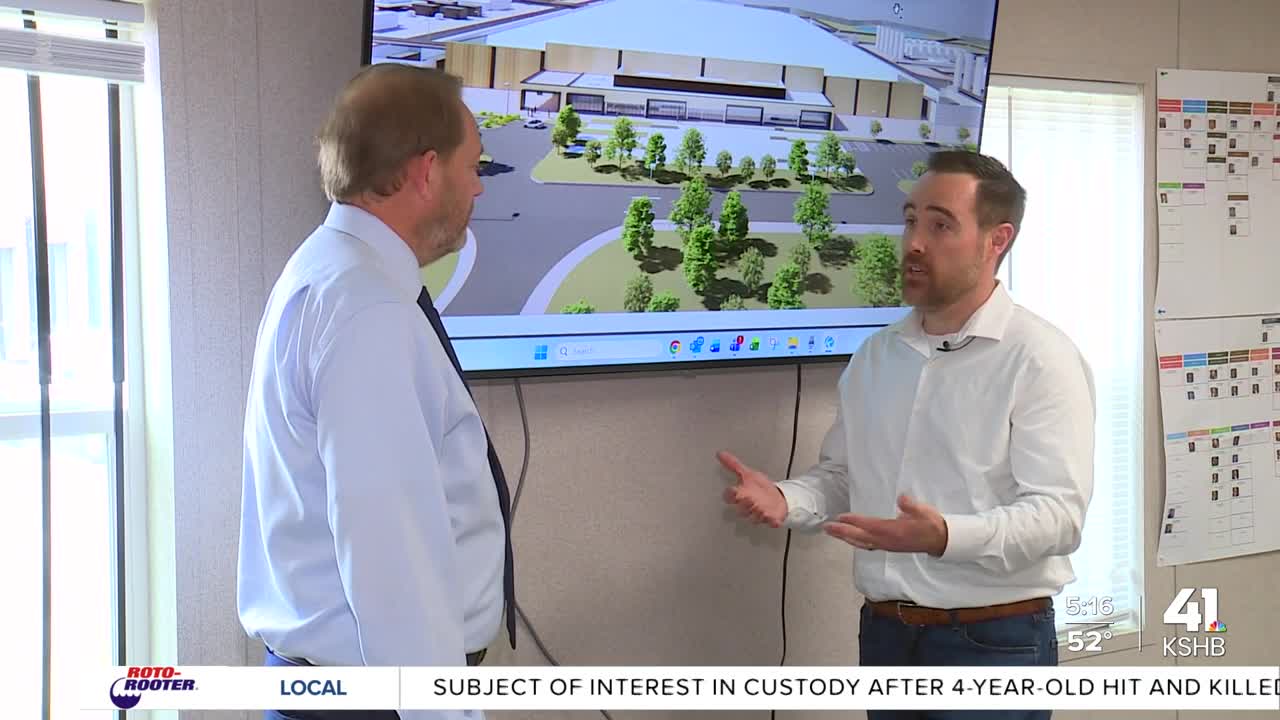
Sutter: So, what we're looking at here is 1.2 gigawatts total at full build-out. We're right now focusing just on phase one, which is here in the yellow.
Phase one would be a single-story AI factory. This would house the GPUs and house the chips.
Just so folks understand what we do: the easiest way to think about it is we make AI happen. When your viewers use an AI chatbot or use ChatGPT, it's Nebius that's making that happen. We provide the hardware, the infrastructure, the software solutions on top of all that, in order to enable that to take place.
So, when we look at the [construction] site, we have phase one here, up on the north side of the site. We'll have our electrical substation and switch yard, then around it is our equipment yard. This would be where the cooling systems are to help cool the facility and help cool the chips.
Then, as we continue to build, we'll add three other buildings to the site, so phases two, three and four will be further west along the site, closer to Little Blue and 78.
It's going to be built in phases over probably the next five to seven years. Part of that is as the power becomes available for the site, which is part of the reason why we're building out in a phased approach.
What is the timeline for phase one, and when can Independence expect to begin receiving tax revenue?
Sutter: It's a great question. Actually, the site was turned over to our general contractor this week (the interview took place April 22), so construction activity on the site is going to begin right away. In April and May, we're looking at primarily foundation work taking place. Then, as the summer goes on, the slabs would be laid for building one.
By August, give or take, end of the summer, you're looking at going vertical in the site where we actually will have steel being put up and the building erected.
By the end of the year, we expect the building to be built, roof on, then all the work is being done on the inside. So, I think we can estimate about Q3 2027, the end of summer 2027, that phase one would be online, producing compute capacity for our customers.
So, equipping the building will take almost as long as constructing the building?
Sutter: That’s probably about right. But think about [it], you're building rows and rows of server racks. There's a lot of electrical equipment in there. We'll probably have 400 electricians on site at peak — working inside the building, running wire, running cable to bring those servers online.
The project faced heavy and vocal opposition. How do you guys process that now that you’re moving forward with construction? Some council members got voted out, and there are a lot of people who aren’t happy about the project.
Sutter: You know, we believe in — we believe in doing things differently. Our goal as Nebius is we design for the community, we transparently engage with the community and we partner with the community.
When I look at Independence, and what I've heard from people here and conversations we've had, I think this community has high expectations of companies coming in. We have high expectations, too.
I want folks to look at us, look at our actions, and see that we're a company — that we're good company to be here, that we're a good partner, and that we're a company that is doing things the right way and helping Independence move forward and one that this community can trust.
Are there any examples of ways you incorporated some community feedback, whether it was from the city council or that you heard from the public, that altered the building’s design to address some of those concerns?
Sutter: Actually, the exterior of the building. We have a community engagement panel with about 20 or so people from the community. We received feedback from one of the members on the early designs. He shared and said that we need to look at some different color schemes, tones and skins for the outside of the building.
We did, so what we see here is this updated design of the facility that reflects that and fits in more with the other infrastructure and the other warehousing and buildings [that] are out here. But this was because of the feedback that we got from a community member.
Other council members suggested that we do natural native tree plantings, native plantings. We're going to incorporate that into the site.
It was strongly encouraged, and from the council, that we work with the Union Building Trades. This site and our project is going to be about 85%, at least 85% union, union labor. In fact, of the nine contracts we've awarded so far, all nine have gone to local union shops.
Was the closed-loop cooling system for water part of that feedback as well?
Sutter: This is a closed-loop system. When we met with the council in the early days, we were so early in the design phase that decisions weren't made. But it is a closed-loop system, so what that means is that it dramatically reduces the amount of water that we need to cool this facility.
The water for our entire site, it's really for flushing toilets and just typical office use, because the [cooling] system, you charge it once with water and then it just circulates the water in a loop throughout. You never have to charge it again.
You say you want to be good community stewards and to engage the community. How have you engaged with the opposition groups? Or will you try to engage with them, to set their mind at ease?
Sutter: We're here to talk, to talk with anyone. I want folks to know who we are. I want to hear feedback from people in the community. Let's have a conversation.
It's part of the reason why we sat down and engaged with council members early.
This was in November/December 2025. We didn't have all the answers then. We didn't know exactly what this would look like then, but we, as a company, prioritize early, transparent engagement.
We held open houses; we have our project website. We've done interviews. We went before the City Council.
The whole point of that is, let's go and engage and talk with folks and help them see why we're different, right?
There's a lot of data centers that have been built in Kansas City. There's a lot of data centers that have been built in the U.S. Not every company has always done it the best way.
When we look at that, we say, ‘There's a better way to do it, and we want to build differently. We want to do it in a way that this community can be really proud of.' And that's what we're trying to do.
So, let's have the conversation, right? I'd welcome it.
[Sutter said he and other representatives from Nebius met with neighbors from nearby Bly Road and hosted a Community Engagement Panel meeting while in town in late April.]
What does being a good steward as an AI factory mean? Because you're right — whether it's Google, whether it's Meta, whether it's Patmos — some of these other data-center projects have come in, and cities didn't get a good deal from them.
Sutter: It's the right way to do business. There's no other way. There's no other way to do business in our view.
When we enter a community, we want the community to be proud that, ‘Oh, Nebius is here. They're a good one,’ and we get there by focusing on community benefits.
So, we see it as two pillars — education and community well-being.
As a company, Nebius has education curriculum platforms, so we're going to take that curriculum, and we're going to partner with the schools and enable the schools to have that curriculum and put it to good use.
We're going to work through our community engagement panel for direct investment with grants in nonprofits and needs around this community.
But that all starts with our process. We need to listen, assess [and] then engage.
As a guy who lives in Pittsburgh and as a company that is headquartered in Amsterdam, we can't sit here and come in and say, ‘Here you go. This is what we're going to give you. This is what we're going to do.’
We have to listen, understand what do people in Independence need? Where are those needs, and where can we bring our skills? Where can we bring our resources? Where can we invest as a company to have the greatest impact along those lines?
If that’s the case, why do you need a 90% tax abatement?
Sutter: Yeah, sure. You know, the financing and the incentives that were available were a large part about why we chose this site, and why we chose here and came to Missouri and came to Independence. That factors into our decision in terms of site selection when we look at sites.
But when I look at the taxes that we will pay, we're talking $650 million over the 20-year period — about $30 million on average for the schools, libraries and MCC. That's significant revenue just from our project, and that's in addition to the city tax revenue we’ll generate from the power plant that's being built to support us and support the grid.
There will be four buildings in the end?
Sutter: Yeah. I mean, it’s 1.2 gigawatts. It’s a gigawatt-size facility spread over four buildings.
Initially, we had more buildings than four planned. But because we design efficiently and really think about how can we get the most out of the space and design the facilities the most efficiently, we were able to take that down to four buildings.
We'll have one single-story building — our first one, phase one. Then, two, three and four are planned right now to be two-story facilities as we expand throughout the rest of the site.
So, we’ll start on that northeast side and work our way down. The electrical substation and switching station to receive power from the grid will be up on that north side, then we'll have additional cooling equipment around phase one of the building. Then, we'll keep building down as the site allows.
Speaking of building, I look around and see neighbors in the Little Blue Valley here. How do you build trust with them through this process? And is that important to you?
Sutter: It's really important to us. When we think about earning the trust of the community and being a good community partner, that's really important to us. We earn that by having conversations, by sitting down and meeting people where they are, listening and hearing what are their concerns?
One of the concerns we heard about most recently was dust coming up off the site. So, we talked with NorthPoint, and we're working with our general contractor on having additional water trucks out here to spray and try and keep the dust down.
We know noise — and noise at the site certainly is of concern to people. There is going to be construction-related noise. There will be construction-related inconveniences.
We appreciate folks kind of understanding and having patience through that process. But when we're up and running, we have designed the site to have acoustical sound walls around the equipment that makes noise.
The point of those acoustical sound walls is to contain and keep the noise to the site, so that way anything that would come off the site is within the background levels and consistent to what is already experienced living out here.
Do you anticipate a lot of traffic at the site after construction is complete?
Sutter: No, we're looking at about 200 employees at full operation.
You'll see more construction-related traffic.
On the construction side, we're going to stagger the crews. So, for example, if we have 400 electricians coming into the site, they're not all going to come in at 7 a.m. when school buses are running and when everyone is trying to get to work.
They're going to come in at 5, 6, 7, right? Then, we'll stagger them in the back end, too, to help minimize those traffic disruptions.
KSHB 41 News anchor Caitlin Knute is getting into more of the specific environmental impacts, but that’s also a major concern opponents have stressed.
Sutter: Well, sustainability is central to our business. We're about a 2-year-old company, and we're designed to have sustainability at our core, efficiency at the core of what we do.
What I mean by that is — even down to the rack design, we design that. We don't work with some third-party vendor, so that enables us to be more efficient and more energy efficient.
We use closed-loop cooling systems at our sites, so that means far less water, the water equivalent of what an office building would use, right? You're not having the water impacts that many people are concerned about.
At this site, we'll pull power from the grid, and we've ensured that we're going to pay our full cost of that — and we do that in all the states, all the cities and all the sites that we operate in.
A good example on the sustainability side is actually in Finland.
At our facility, we capture the heat from that site, and it's actually piped to the homes. And 75% of the homes in Mäntsälä are heated for free from heat that's captured from our facility.
When we think about sustainability and how can we be a good neighbor? That was something that was unique to that site and unique there.
But again, it gives you a sense of the mindset we take when it comes to, 'All right, what can we do as a company to try to invest and be a partner in communities?'
—

![092126_KSHB_WX_480x360[61].jpg](https://ewscripps.brightspotcdn.com/dims4/default/79e7fad/2147483647/strip/true/crop/480x360+0+0/resize/960x720!/format/webp/quality/90/?url=http%3A%2F%2Fewscripps-brightspot.s3.amazonaws.com%2F6f%2F6d%2Fa3758caf4c0984b0ecf100f620d1%2F092126-kshb-wx-480x36061.jpg)