



LEE’S SUMMIT, Mo. — KSHB 41 reporter Tod Palmer covers sports business and eastern Jackson County, including Independence. Share your story idea with Tod.
—
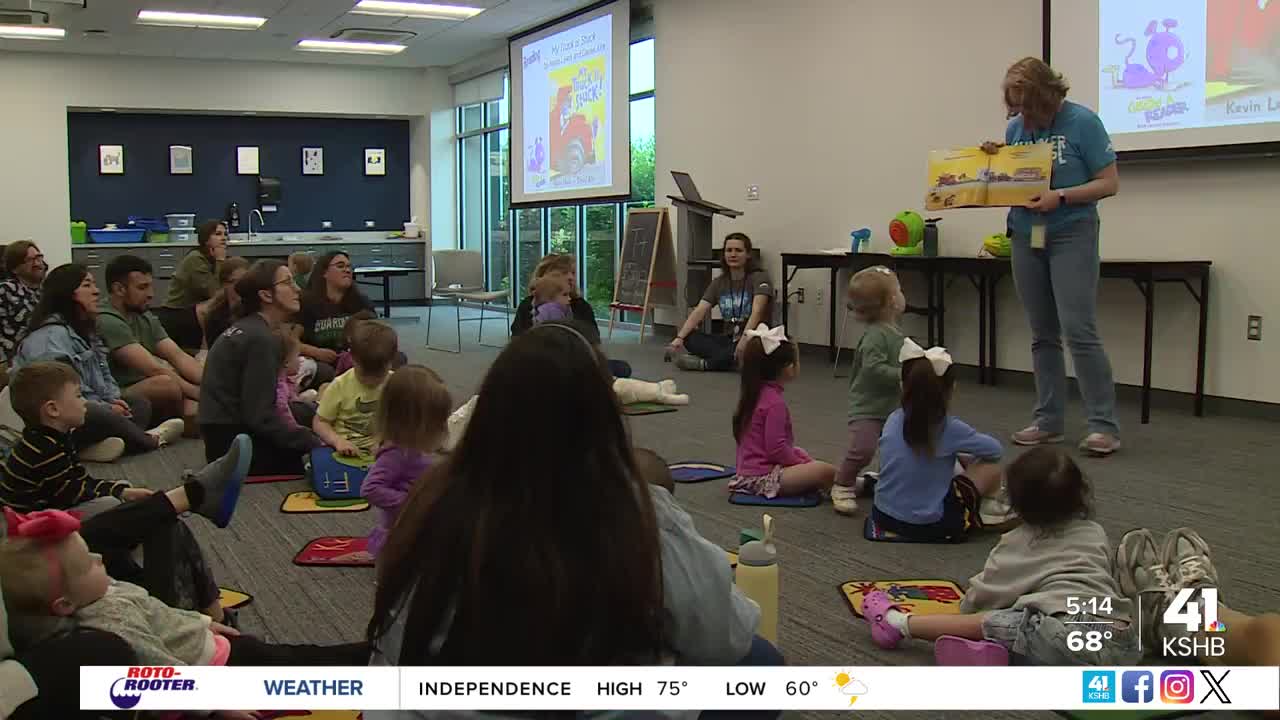
Summer break is here and research shows daily reading is the most effective way to keep children's skills sharp until school resumes in the fall, according to education experts.
The concept of "summer slide" — the loss of academic skills during the three-month break from school — is a well-documented concern for parents and educators.
Librarians at Mid-Continent Public Library said the solution is straightforward.
"The industry standard really is (reading for) 20 minutes a day throughout the summer," Dale Angles, an early literary associate at Mid-Continent Public Library, said.
REGISTER | MCPL’s “Read, Score, Roar” kicks off June 1
Reading, Angles said, sets the foundation for school success.
“Studies indicate that when you have a certain threshold of words when you start kindergarten, it sets you up for more success in school and later on in life,” Angles said. “It lowers incarceration rates and lowers poverty rates — it has an effect on all that sort of stuff. So, the earlier you get started, the better foundation you set for school, the better off kids will be later on in life when they're an adult.”
But it is never too late to start.
Scott Rader, a reader engagement librarian at Mid-Continent Public Library, said building consistency is the goal.

"We are really trying to create a daily habit of reading, and so we want people to kind of get in that groove that they kind of lose during the summer," Rader said. “Because during the school year, they're going to school using those skills five days a week, and during the summer they're not.”
Rader said staying engaged doesn't have to mean staying home with a book.
"Just keep those habits going — visiting the library, visiting museums, just all those things that kind of keep you engaged over the summer," Rader said.
Emilee Suddarth, a Lee's Summit eighth grader, said the benefits carry into the classroom.
"Reading in the summertime helps when the school year starts, because it's in my brain and I feel like it's just easier for a lot of stuff," Suddarth said.
Angles shared reading doesn't have to be limited to a bedtime routine. There are lots of ways to foster literacy.
"Pointing out text wherever you see it, just reading things all around, practicing singing and music, because rhythm is a part of language," Angles said.
Suddarth explained her family turns everyday activities into reading opportunities.
"One of the things we do as a family is we play the ‘ABC game' in the car,” she said. “It's a lot of reading signs, and it's awesome to be honest — I read so much on accident.”
Rader continued that even cooking can be a chance to connect words to the real world.
"One of my favorite things to do is using a recipe while cooking, show your kid that these things have meaning and actual connections to the real world," Rader said. “It's also a good way to start with early math, but you can also do the same thing at the grocery store. Have the shopping list with you, or just read as you're driving down the street, all the signs you see.”
This story was reported on-air by a journalist and has been converted to this platform with the assistance of AI before being supplemented and edited. Our editorial team verifies all reporting on all platforms for fairness and accuracy.
—

![092126_KSHB_WX_480x360[61].jpg](https://ewscripps.brightspotcdn.com/dims4/default/79e7fad/2147483647/strip/true/crop/480x360+0+0/resize/960x720!/format/webp/quality/90/?url=http%3A%2F%2Fewscripps-brightspot.s3.amazonaws.com%2F6f%2F6d%2Fa3758caf4c0984b0ecf100f620d1%2F092126-kshb-wx-480x36061.jpg)