




KANSAS CITY, Mo. — KSHB 41 reporter La’Nita Brooks covers stories in Kansas City, Missouri, and stories offering solutions on crime. Share your story idea with La’Nita.
—
Five years ago, Lori Anderson was facing a future she never imagined. Diagnosed with triple-negative breast cancer (TNBC), an aggressive form of breast cancer, she was told she might have just two to five years to live.
Today, at 57, Anderson is celebrating a remarkable milestone — her latest scan showed no evidence of metastatic disease.
Anderson's journey reflects the promise of innovative cancer treatment, the importance of personalized care and the power of support throughout the most challenging moments of life.

“I get emotional now just thinking about it, just because thinking you won’t have time with your family and your friends,” Anderson said. “And so, I had to make peace with, 'OK, what if I really only have two to five years? How do I want my life to look like?"'
That question became a guiding force as she navigated years of treatment, uncertainty and ultimately — renewed hope.
Anderson’s cancer journey began in August 2021, when she discovered a lump in her breast. She was diagnosed with Stage 2B triple-negative breast cancer and began treatment at Saint Luke’s Cancer Institute.
Her treatment included chemotherapy, surgery, radiation and immunotherapy.
Despite an encouraging initial response to her treatments, the cancer returned and spread.
“Fast forward to the end of January 2023, we discovered that my triple-negative breast cancer had metastasized to my skin,” Anderson recalled.
By June, her treatment was no longer controlling the disease. With TNBC’s aggressive nature presenting a significant challenge, Anderson and her medical team faced difficult decisions about what to try next.
At Saint Luke’s Hospital Koontz Center for Advanced Breast Cancer, Anderson worked with a multidisciplinary team led by Dr. Timothy Pluard, the center’s medical director. Together, they explored a treatment strategy that offered a new possibility.
The team elected to combine pembrolizumab, commonly known by its brand name, Keytruda, with sacituzumab govitecan-hziy, marketed as Trodelvy. At the time, published evidence establishing the safety and effectiveness of this particular combination in patients with TNBC was lacking.
Anderson became one of the early patients to receive the regimen. She pursued the approach in hopes of controlling her cancer.
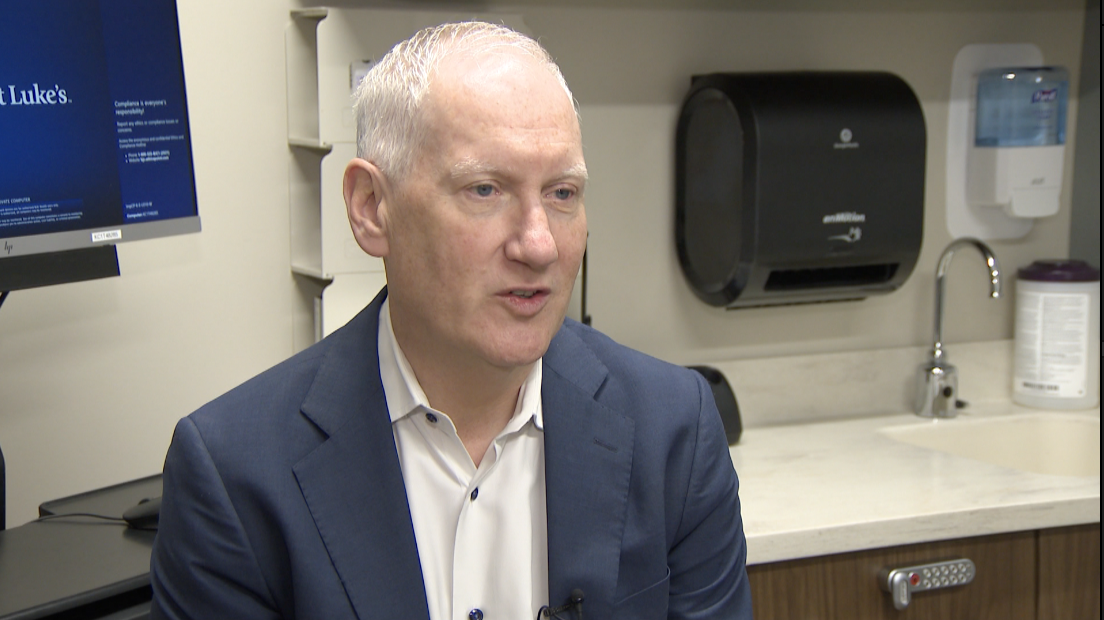
“It’s a combination of an immunotherapy drug, commonly known as Keytruda, combined with a new type of drug called an antibody-drug conjugate,” Pluard said, referring to sacituzumab govitecan.
Antibody-drug conjugates are designed to deliver cancer-killing medication to cells expressing a particular target, helping direct treatment toward cancer cells.
“We could tell very quickly, within a matter of weeks, that the treatment was working,” Pluard said.
Within four months, Anderson’s tumor markers showed a significant response. Over time, the results became even more encouraging, with her markers becoming undetectable.
The treatment combination was subsequently investigated in clinical studies and became an FDA-approved option for certain patients with metastatic triple-negative breast cancer. Its development underscores how clinical research can expand treatment options for people facing an aggressive disease.
For Anderson, the progress is life-changing.
Recent personalized tumor-informed circulating tumor DNA testing, known as Signatera, has shown no detectable molecular evidence of disease. This type of blood test looks for cancer-associated DNA fragments in the bloodstream and can help clinicians monitor treatment response or signs of recurrence in appropriate patients.
Then came another milestone: a positron emission tomography (PET) scan showing no evidence of metastatic disease.
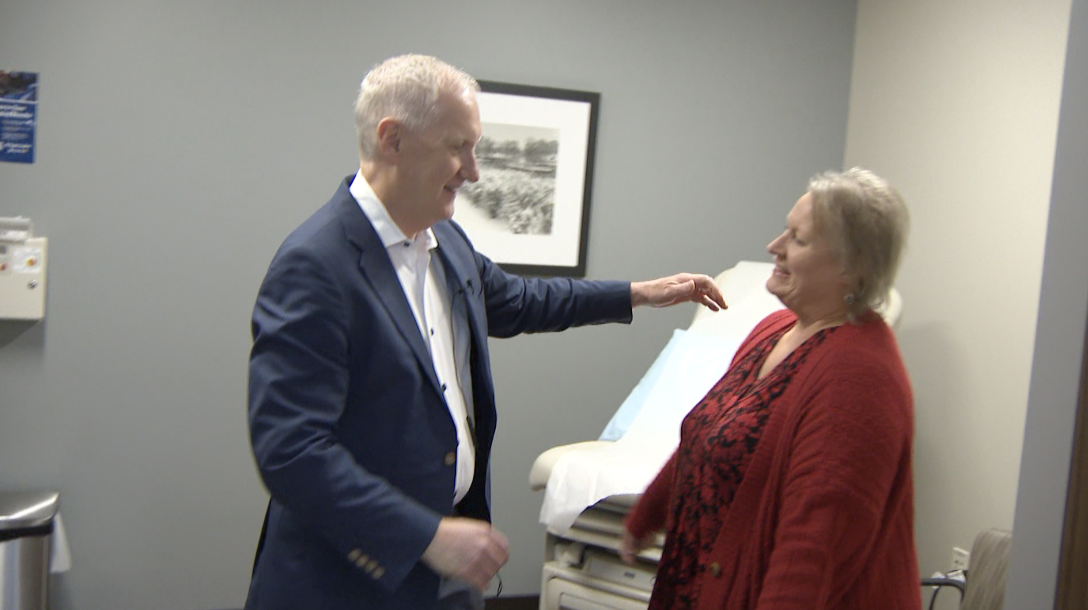
“In September, I had my first PET scan that I had had since right before surgery,” Anderson said. “And the beautiful thing about that is, on the report, it actually said, ‘No evidence of metastatic disease.’”
Although no evidence of disease on imaging and blood testing is deeply encouraging, continued monitoring remains an important part of care for people who have experienced metastatic breast cancer.
Opened in 2016, the Koontz Center marks its 10th anniversary this October. It was established to focus exclusively on the comprehensive care of patients with Stage 4, or metastatic, breast cancer.
As many spread awareness this month for Breast Cancer Awareness Month, for Anderson, the message is simple.
“Lean into treating all of you and keep dancing, keep smiling,” she said.
—

![092126_KSHB_WX_480x360[61].jpg](https://ewscripps.brightspotcdn.com/dims4/default/79e7fad/2147483647/strip/true/crop/480x360+0+0/resize/960x720!/format/webp/quality/90/?url=http%3A%2F%2Fewscripps-brightspot.s3.amazonaws.com%2F6f%2F6d%2Fa3758caf4c0984b0ecf100f620d1%2F092126-kshb-wx-480x36061.jpg)