

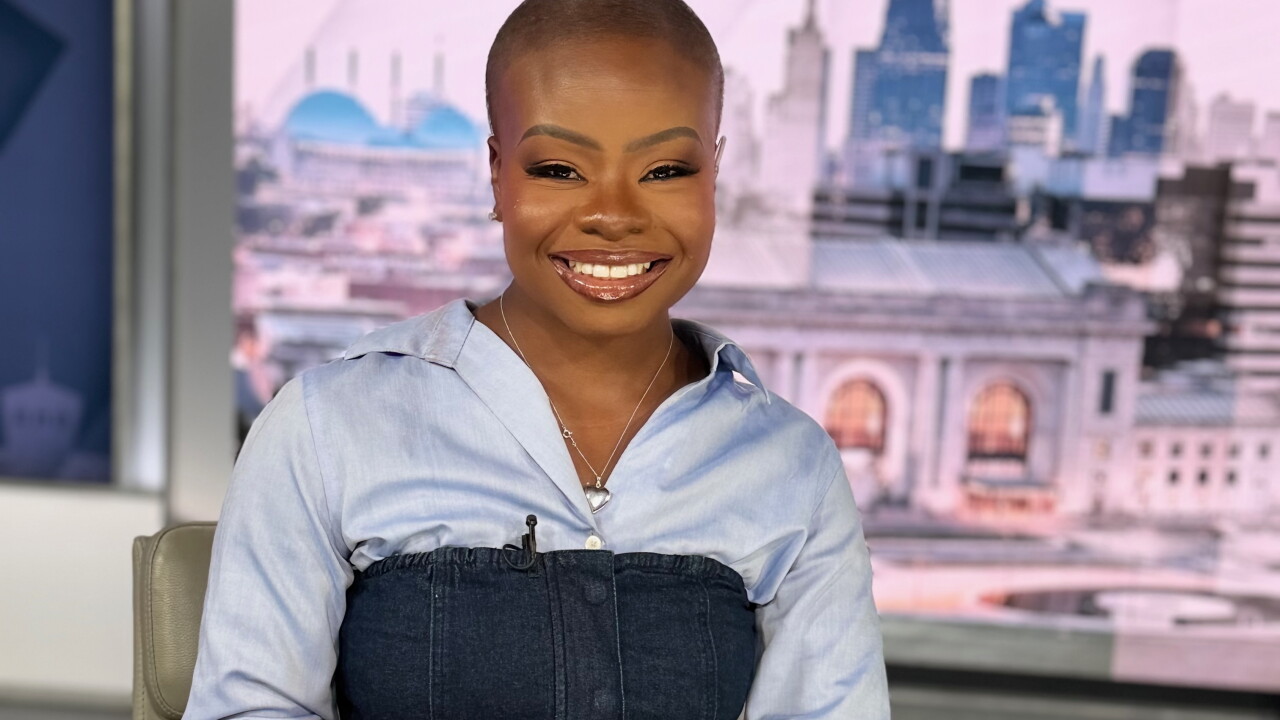


KANSAS CITY, Mo. — KSHB 41 reporter Alyssa Jackson is covering a month-long Breast Cancer Awareness Month series, "Under the Ribbon." She was diagnosed last year at 26 years old. Share your story idea with Alyssa.
—
Catching it early
In September 2025, I had an annual women's exam with my new OBGYN, Dr. Phaedra Lombard, at the Women's Clinic of Johnson County. I knew we would go through the normal motions, including a clinical breast exam and an overview of my health history.
Dr. Lombard got to the breast exam, and she felt over the same spots in my right breast a few times. Since this was our first time meeting each other, I thought she was just being thorough.
She felt a lump.
Disclaimer: I had known for years that I had dense, lumpy breasts. I had clinical breast exams in the past, but none of my previous healthcare providers thought it was concerning enough to order a mammogram.
Dr. Lombard asked about my family history. At the time, my maternal late great-grandmother was the closest family member who experienced breast cancer.
She decided to order a mammogram.
After mammograms, MRIs, ultrasounds, and biopsies, the results confirmed Stage 1 Invasive Ductal Carcinoma. It's the most common form of breast cancer.
I was 26 years old at the time.
I interviewed Dr. Lombard in September. It was the first time I saw her following my diagnosis. She remembers being surprised by the results.
"I always do a breast exam on my patients, especially 25 and up. I do their breast exam. When I found your lump on the right, I just assumed it was a benign fibrous tumor of the breast — a typical tumor of women of reproductive age. I ordered your mammogram and ultrasound and lo and behold, on the opposite side, we found your cancer," Dr. Lombard said.

Alyssa asked, "Do you remember when we had our first phone call after my results? Do you remember what you said to me?"
"I don’t remember, but I can tell you I was so impressed with you," Dr. Lombard laughed. "I was so impressed with how you handled it and, like, 'Okay, let’s get it done. I'm glad it was found.' I have no idea what I said to you, but I'm sure I was very nervous to call you."
When I found out, I was sitting at my desk on a Friday afternoon finishing a story in the newsroom. The online results came through before Dr. Lombard had a chance to share the diagnosis.
The following week, her nurse called before I was scheduled to fill in as anchor to arrange a conversation with Dr. Lombard. After the evening newscasts, Dr. Lombard personally reached out to talk about the diagnosis.
"That was the first conversation I had with a doctor, and you reassured me, 'This is early, and that’s a good sign.' That’s what I needed to hear," I told Dr. Lombard.
Treatment journey
On February 4, 2026, I had a nipple-sparing bilateral mastectomy, a surgery that removes both breasts.
That morning, my partner, supportive family, and outstanding co-workers at KSHB 41 showed up. Reporters Lanita Brooks and Rachel Henderson and former KSHB 41 Anchor Kevin Holmes arrived at the hospital at 5 a.m. to cover me in prayer before the procedure.
E.W. Scripps Co. Regional Vice President and General Manager Kathleen Choal came during the lunch hour. She took my parents and partner out to eat while they waited for the notification that I was out of surgery.
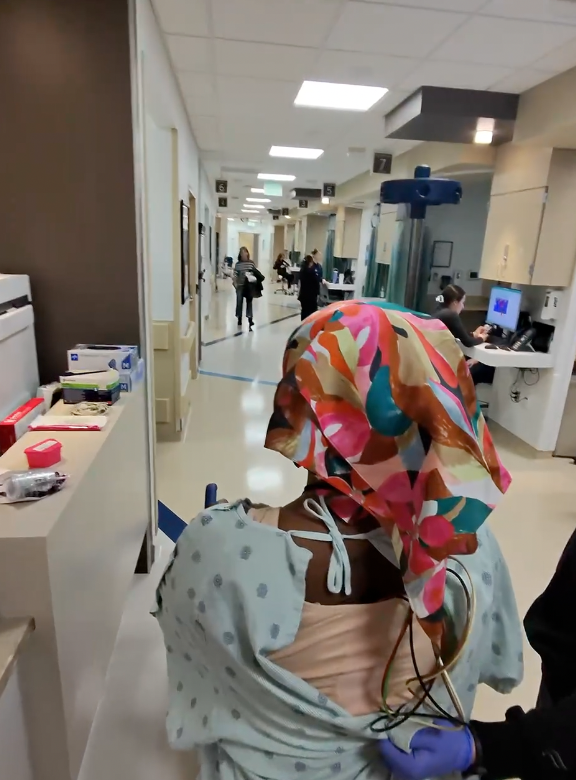
Hours later, KU Breast Surgical Oncologist Dr. Jamie Wagner called my mother and said they had clear margins and removed all the cancer.
I had a 74mm tumor in my left breast — roughly the size of a baseball. However, that was still only the beginning of my journey.
The surgical pathology results revealed the cancer wasn't confined to my breast — there was regional spread to my lymph nodes. My doctors came together and created an aggressive treatment plan.
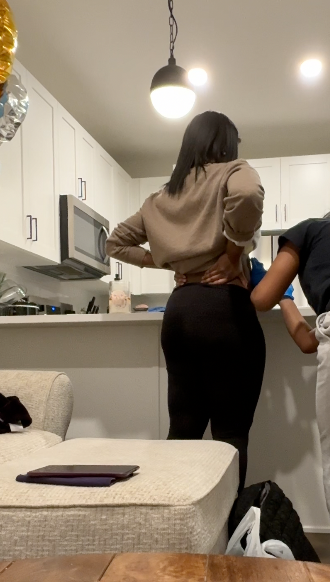
In March, I completed an accelerated cycle of IVF. I froze my eggs to protect my chances of becoming a mother.
The day after a successful, surgical egg retrieval, I started chemo.
The day after chemo, I turned 27 years old.
What is chemo like for a 27-year-old?
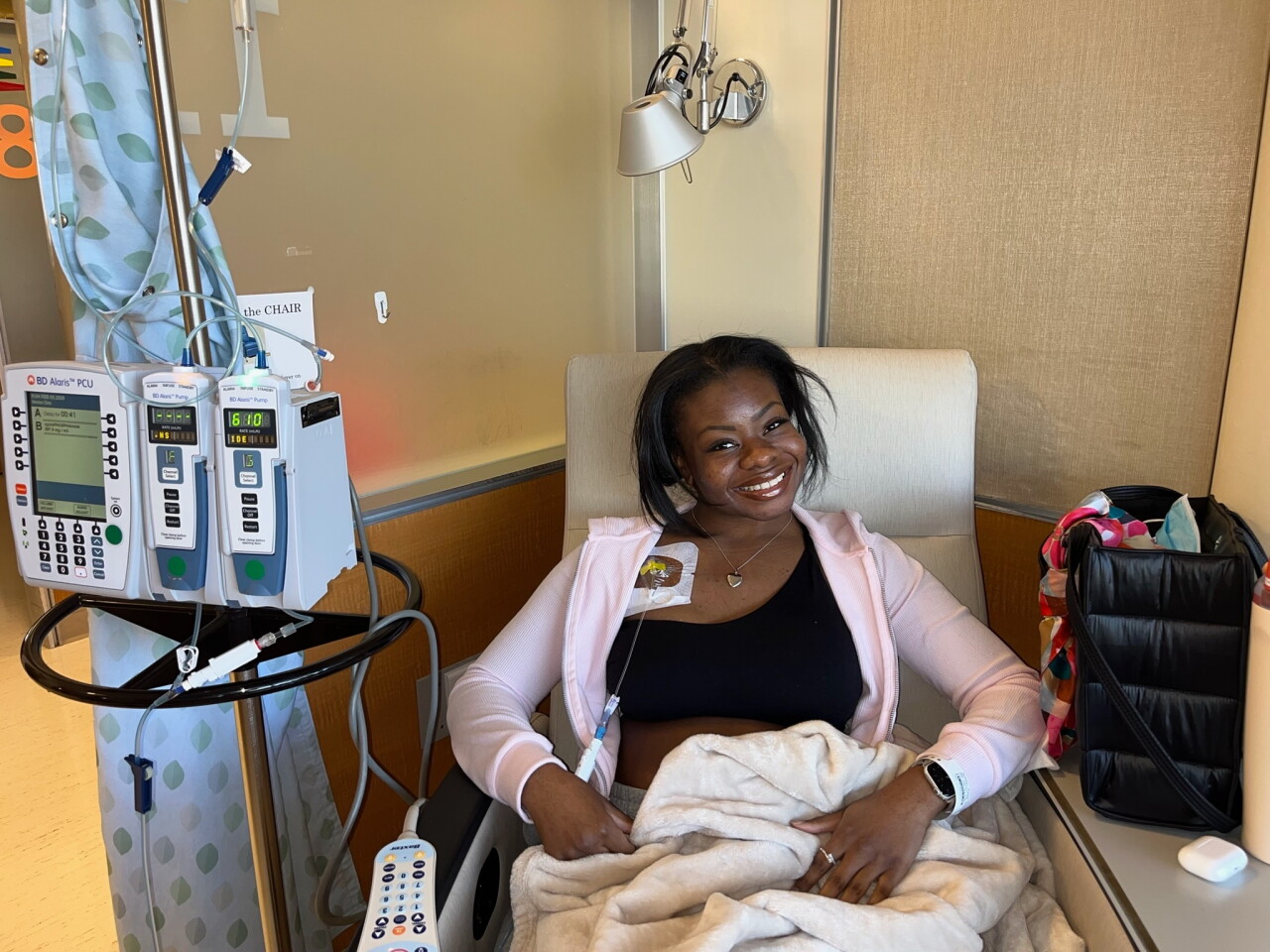
My oncologist, Dr. Anne O'Dea, guided me through 14 rounds of chemotherapy.
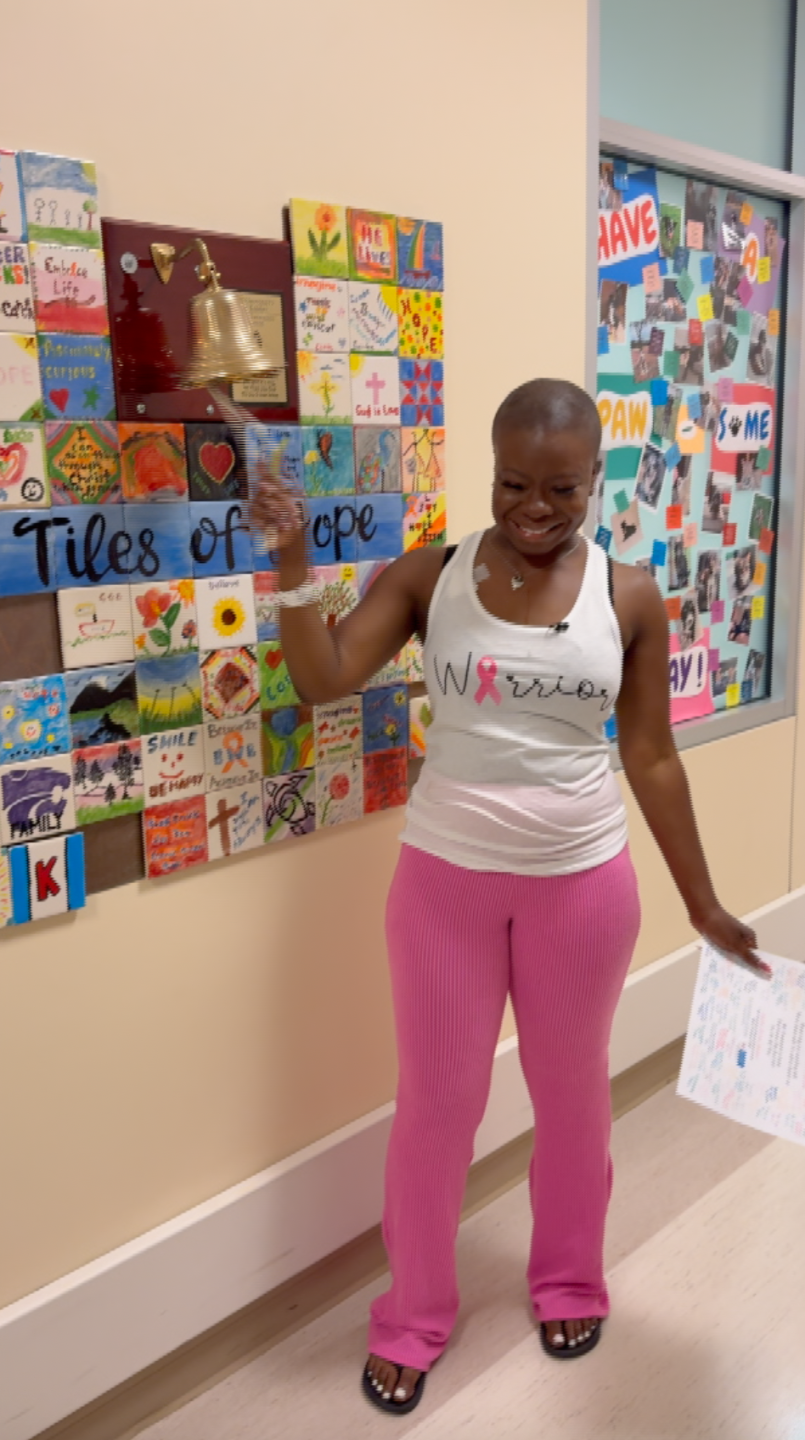
While I rang the bell on Aug. 7, that only signified completion of the chemo. I'm currently in the process of daily radiation.
I'm considered "high risk" for cancer recurrence because of the size of my tumor and spread to my lymph nodes. For the next five years, I will take hormone blocker pills — one of the most important aspects of this treatment to prevent cancer recurrence.
As my oncologist put it, "estrogen is their food supply". Since my breast cancer is receptive to hormones, blocking them for the next several years is critical.
I'll be honest — the first four rounds of chemotherapy were brutal. Many patients know the treatment as the "red devil." It earned its name.
I experienced side effects, including a weakened immune system, appetite changes, mouth sores that made it painful and sometimes impossible to eat, fatigue and persistent nausea.
I started losing my hair within the first couple of weeks. It fell out in clumps — eventually I had to cut it all off.
It wasn't until this summer that I decided I was ready to show my bald look on air.
I don't share any of this to scare you from choosing treatment. I want you to understand what fighting for your life on this journey looks like.
I had some of the most accomplished, respected doctors and oncologists who tailored a plan to my needs. I chose an aggressive plan to prevent recurrence.
26 years old is still an uncommon age for breast cancer. However, Dr. O'dea, has seen younger patients.
She treated a 22-year-old woman for breast cancer.
"To be in my upper 20s or early 30s and see someone who is 22 is jarring and something that really hits home. These women who have their whole life in front of them have to deal with this or confront this," Dr. O'Dea shared. "It makes you feel a sense of urgency to make sure they can get back to their life."
I asked, "Did it shock you at all when you saw my age?"
She replied, "I'm increasingly seeing more women in their 20s and 30s. I don’t know if shocked is the right word. It’s upsetting."
This journey has felt like more of a brisk walk than a sprint.
I spent more than 45 hours in infusion centers this year for treatment.
My advice: "Don't try to conquer it all at once — you can face next week or next month when it gets here. While it is admirable to be strong, keep a circle of people around you who can carry the load when you need a break. And let them."
Dr. O'Dea shared advice to patients who are newly diagnosed.
"The first thing is to know – whether you’re 20 or 70 — this is not a rush. It feels like that as soon as you hear the word cancer. It’s a visceral answer: let’s get it out of our body, let’s cut it out of our body...Even the most rapidly growing breast cancers are growing over weeks and months, so we have time to take a deep breath and assemble the right care team," she said.
She said the patients keep her hopeful, and two young girls she met years ago.
"I had a couple of young women who had young daughters who came to every single appointment. A couple of them expressed interest in asking me what I was doing. What am I doing with my stethoscope? What is that? So I showed them how to use the stethoscope. Two of those daughters are now in medical school."
Watch my full 1-on-1 interview with Dr. O'Dea in the video player below.
During Breast Cancer Awareness Month, you see a lot more pink ribbons. I created this series, “Under the Ribbon,” to educate about the realities of the diagnosis, the red flags you need to be aware of, and the fight that often continues for years.
—
![092126_KSHB_WX_480x360[61].jpg](https://ewscripps.brightspotcdn.com/dims4/default/79e7fad/2147483647/strip/true/crop/480x360+0+0/resize/960x720!/format/webp/quality/90/?url=http%3A%2F%2Fewscripps-brightspot.s3.amazonaws.com%2F6f%2F6d%2Fa3758caf4c0984b0ecf100f620d1%2F092126-kshb-wx-480x36061.jpg)