

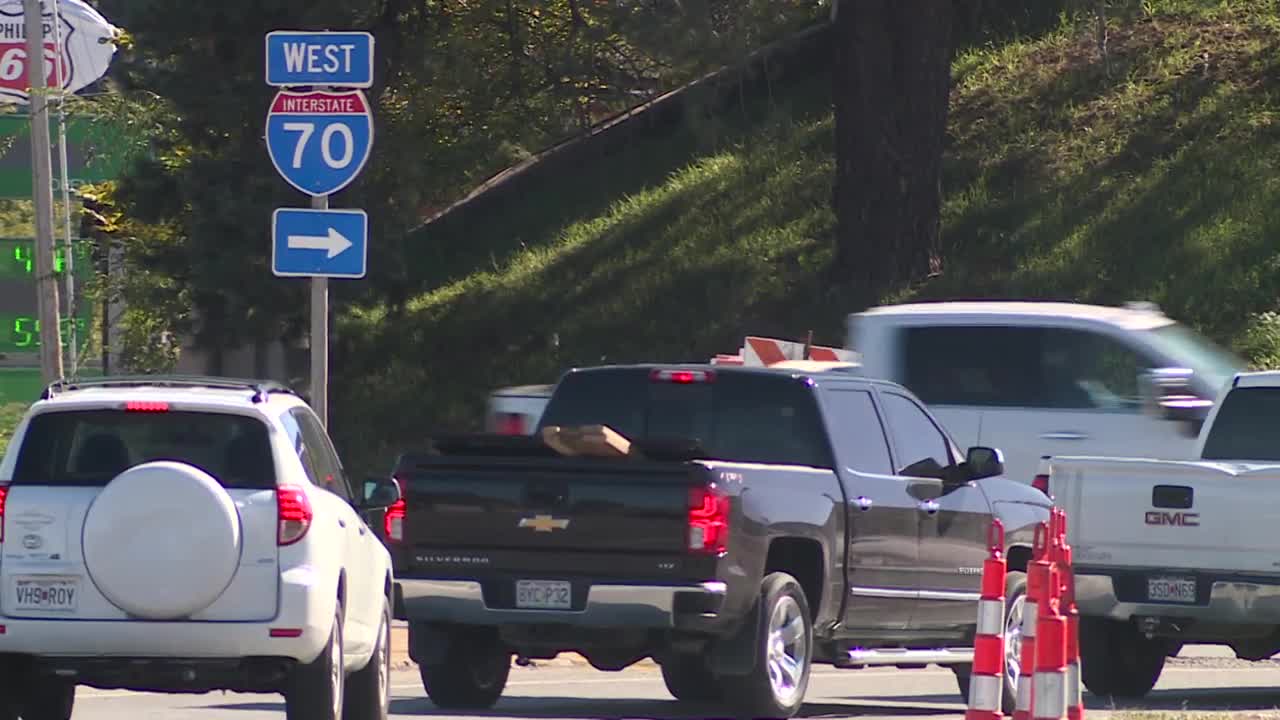


BLUE SPRINGS, Mo. — A major change is coming to one of the Kansas City area's most-traveled stretches of highway, and drivers who depend on it every day aren't exactly thrilled about it.
MoDOT officials presented plans for a full, 11-month closure of I-70 to the Blue Springs City Council on Monday night. The project is expected to begin in early 2027 and will add a fourth eastbound lane and repair 23 bridges between Van Brunt and Prospect.
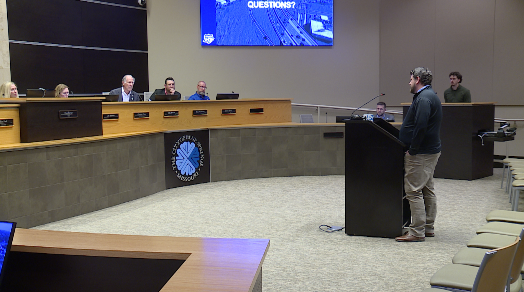
It's the most significant closure of its kind that MoDOT has undertaken in 20 years, and it will directly affect an estimated 105,000 drivers per day.
MoDOT cited a history of congestion and crashes along the corridor as key factors driving the project.
Project Manager James Pflum said the decision to fully close I-70, rather than manage construction through rolling lane closures, came down to time.
"The modeling we did showed 50-minute delays — that's if there are no accidents, and that's for 2 years instead of 11 months. On paper it made a lot of sense to start looking at it that way," Pflum said.
When asked directly whether a full closure is the fastest path to completion, Pflum didn't hesitate.
"We believe it is the quickest way," Pflum said.
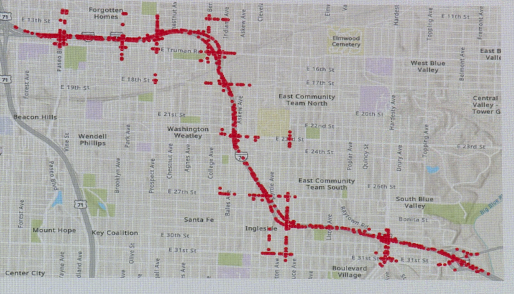
MoDOT's strategy is to shift traffic off I-70 and onto other state highways.
"The intention is to take all that traffic on the state highways and put that on other state highways, and so whether that is going north on 435 to 35 or going south on 435 to 71 up," Pflum explained.
For commuters already bracing for gridlock, those alternate routes are a hard sell.
Charles Robinson, who commutes on I-70 to work downtown, said his usual drive runs about 20 minutes each way, nothing he can't handle. The closure is another story entirely.
"I'm not looking forward to it," Robinson said.
He's worried that surface streets simply weren't built to absorb a highway's worth of diverted traffic.
"You gotta take Truman Road, or 23rd and some of the other streets that you know. Obviously, all the traffic that's from the highway is going to be taking those exits and those roads. I don't know how the lights are going to be, a lot of logjams, a lot of parking lots, so to speak," Robinson said.
Robinson isn't convinced a full shutdown was MoDOT's only option.
"If you go right now, west, it's around 3 o'clock, they're already down to two lanes, and it's backed up. I mean, if they're already doing that, just keep doing that or just skip some of the exits, as you have been doing. What they have been doing seems to be working. You don't ever want to shut anything down. But you have to. There were ways around it. I don't think this is a good idea at all," Robinson said.
His frustration with the decision runs deeper than the inconvenience.
"I feel like the three of us could sit down right now for a week and come up with something," he said. "So I mean professionals that do this every day. I am a little disappointed that this is the best idea they think it would be."
Tracy Holmes, who drives I-70 four times a week, said the closure will hit her schedule hard.
"It changes it quite a bit. It adds a lot of hours to my drive time for work," Holmes said.
She believes local businesses will feel the squeeze just as much as commuters.
"It's gonna be hard for the local businesses to get creative in finding their people," Holmes said.
Holmes said the most practical response is making sure drivers know their options.

"Making more routes available to the drivers, so that they know where they can go. That's about the only thing we can do," Holmes said. "We'll just have to find different ways to get where we're going."
With months still to go before construction begins, Pflum is urging all 105,000 daily drivers to start preparing now — and not to wait until the lanes close.
"Making sure the 105,000 cars a day, those commuters know that we need to find alternative routes. Really giving them 3, 4, 5 months to think about it, process it, and drive alternate routes and really prep for the closure that's coming," Pflum said.
He said that preparation starts with getting comfortable with navigation technology.
"Every community is a little bit different. The routes they take to get into downtown are a little bit different. But part of the messaging is: get familiar with Google, Apple and Waze and get familiar with your navigation apps," Pflum said.
The project is expected to begin in early 2027.
MODOT is holding another chance for the public to share its input on the project on Tuesday, Oct. 6, from 5-7 p.m.
The event will be held at the Gregg/Klice Community Center located at 1600 John "Buck" O'Neil Way in Kansas City, Missouri.
This story was reported on-air by a journalist and has been converted to this platform with the assistance of AI. Our editorial team verifies all reporting on all platforms for fairness and accuracy.
—

![092126_KSHB_WX_480x360[61].jpg](https://ewscripps.brightspotcdn.com/dims4/default/79e7fad/2147483647/strip/true/crop/480x360+0+0/resize/960x720!/format/webp/quality/90/?url=http%3A%2F%2Fewscripps-brightspot.s3.amazonaws.com%2F6f%2F6d%2Fa3758caf4c0984b0ecf100f620d1%2F092126-kshb-wx-480x36061.jpg)