



RAYMORE, Mo. — KSHB 41 reporter Ryan Gamboa covers Miami County in Kansas and Cass County in Missouri. He also covers agricultural topics. Residents in Raymore reached out to Ryan with concerns about local development. The city took action to authorize bonds for those projects and Ryan listened to residents and the councils concerns. The goal of this story was to look at the finance guidelines of these projects. If you have a concern or story, reach out to me. Share your story idea with Ryan.
—
The Raymore City Council authorized Chapter 100 Bonds for two development projects on Monday night totaling about $60 million.
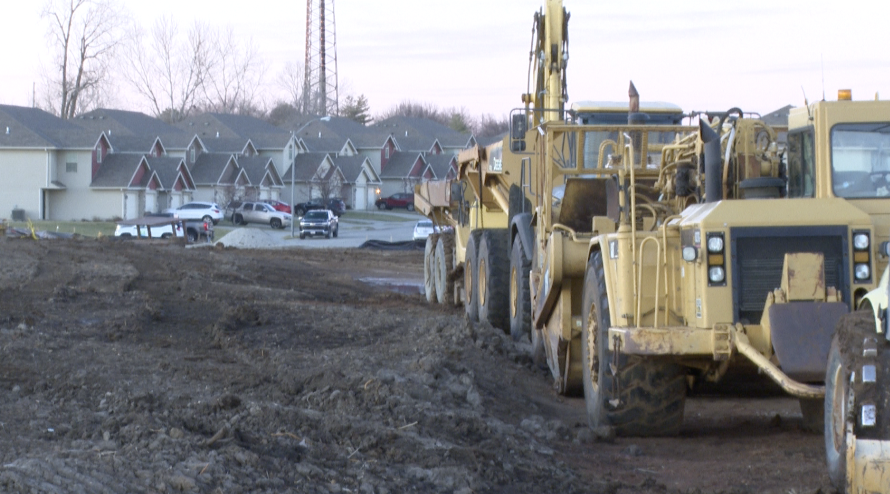
Dirt is already being moved near Dean Avenue and Johnston Drive on a 300-unit multi-family apartment complex and a 13,000 square foot retail center.
Chapter 100, or Industrial Revenue Bonds, are a financing tool any municipality can issue to finance the cost of offices, warehouse, distribution facilities and industrial plants. Bonds can also be used to finance land, buildings, fixtures and machinery.
Cities typically issue revenue bonds through a bond trust and use the proceeds to bring their project to life. The city then leases the facility to a business upon the completion of the project. The lease payments made to the city then pay the bond holders.
The Guidance for Local Government document issued by the Missouri Department of Economic Development shows that under state statute, Chapter 100 Bonds are for industrial projects.
Under § 100.010(6), a Chapter 100 project for industrial development is:
[T]he purchase, construction, extension and improvement of warehouses, distribution facilities, research and development facilities, office industries, agricultural processing industries, service facilities which provide interstate commerce, and industrial plants, including the real estate either within or without the limits of such municipalities, buildings, fixtures, and machinery[.]
KSHB 41 Cass County Beat Reporter Ryan Gamboa has covered the urban sprawl in North Cass County in the past.
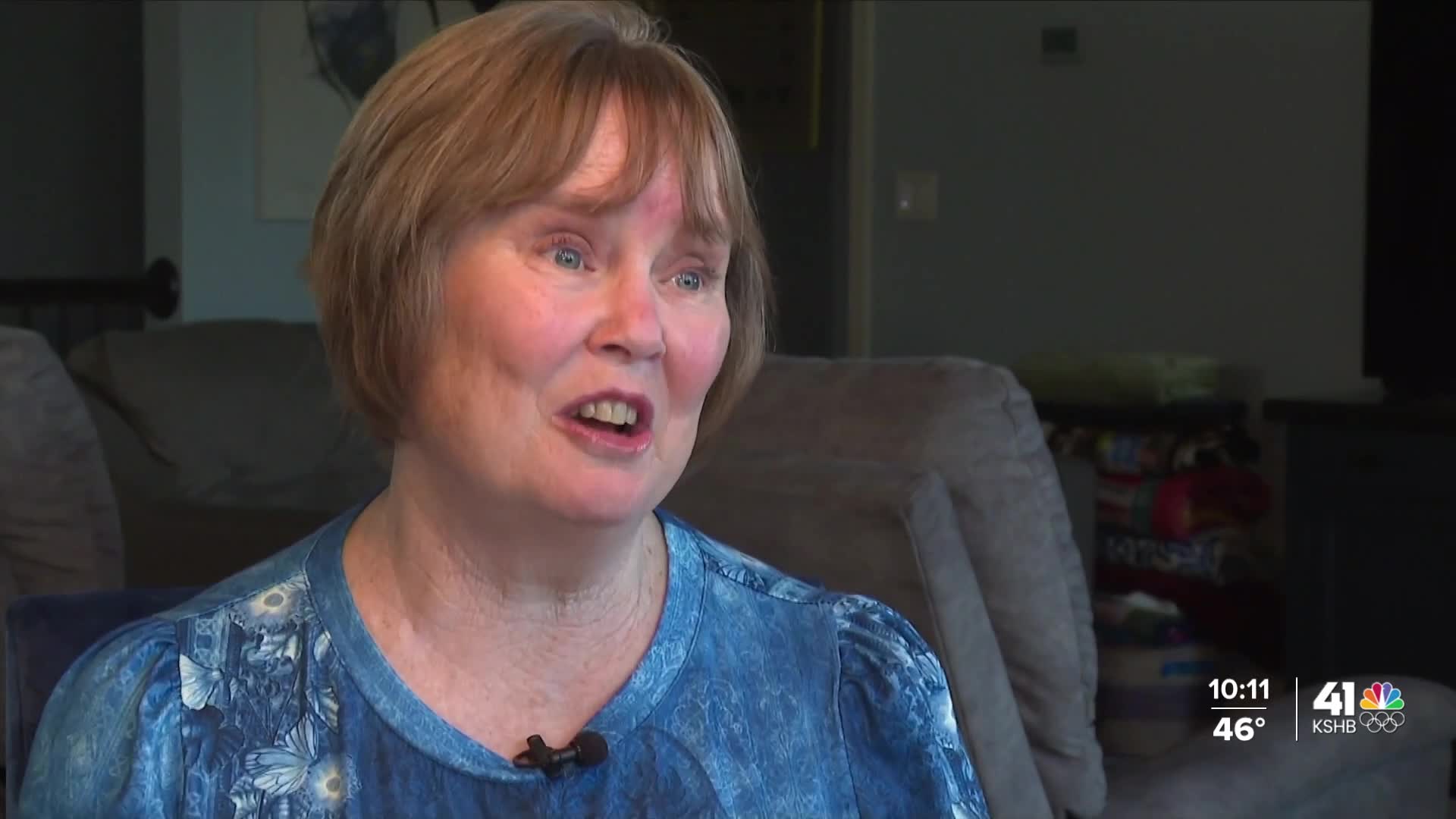
Following a previous report in Raymore, resident Terri Cox contacted Ryan with her concerns.

She expressed her concerns with Monday's bond authorization vote.
"I think it should be a shorter amount of time or a higher percentage paid on those bonds," she said. "I don’t know if its necessary. We’ve had other builders come in and build those homes. I don’t think we paid bonds for those. Why are we doing that for this 300-unit again that the community said they’re tired of and wants to see more single family homes. So, why aren’t we listening to our citizens?"
The decision to bring more development to Raymore is a major focus for the city, but the city says it's at a crossroads with developers.
"We’ve tried for years to try and get development interests down here, and the challenge we’ve had for almost every group that we’ve talked to is, there isn’t enough traffic, there isn’t enough people, there aren’t enough housing units down here," Raymore's Development Services Director David Gress told KSHB 41 back in November.

KSHB 41 News Reporter Ryan Gamboa consistently monitors city council meeting agendas and listens to what's being discussed.
After doing some research into the Chapter 100 funding mechanism, Gamboa identified language outlined in the Department of Economic Development's bond document that says, "Projects consisting of retail businesses, such as retail stores, hotels, amusement parks, and theaters, do not qualify for Chapter 100 financing and are not exempt functions or activities of a political subdivision."
The City of Raymore has marketed one phase of the project as "Timber Trails (Iconic) Chapter 100 - Retail Phase" — one of the two sites will also be home to a hotel.

Missouri state statute says retail and hotels do not qualify for Chapter 100 financing.
Gamboa asked for an interview with the City Manager or the Mayor, to ask some questions. A city representative explained Mayor Kris Turnbow was out of town and the City manager was willing to meet on Tuesday, following Monday's vote.
Gamboa submitted a list of questions for the city to answer prior to the meeting.
The City of Raymore proceeded to answer those questions in front of the city council.

Raymore City Manager Jim Feuerborn stated the City's Bond Counsel would be presenting to the council on behalf of KSHB 41's question submitted earlier in the day.
During Gamboa's meeting with Terri Cox, he presented the state's "Chapter 100 Guidance for Local Governments" document to her to examine, while pointing out the language regarding retail development.
"It seems like to me there’s nothing legal about it," Cox responded.
While the Chapter 100 financing mechanism can be confusing, the city bond counsel says it's within its means to authorize the funding.
It's important to note the bond issuance was passed in 2023 for these two projects, the City Council just had not taken action until now.

"Chapter 100 bonds or Industrial Revenue Bonds are found in both Chapter 100 in Missouri statutes and the Missouri Constitution," explained the city's bond counsel. "It's really the constitution at its core is the governing principle for the state and the city, to give us that 'commercial' as that identifiable project."
Nowhere in the Missouri Department of Economic Developments guidance document is the term "commercial" used. The city is leaning on the Missouri State Constitution, not state statute, to legally authorize this project.
To go further, housing is not identified in the same document as well as a use of financing for these projects.
Monday night's City Council meeting brought many questions from Ward 1 council member Don Baker.
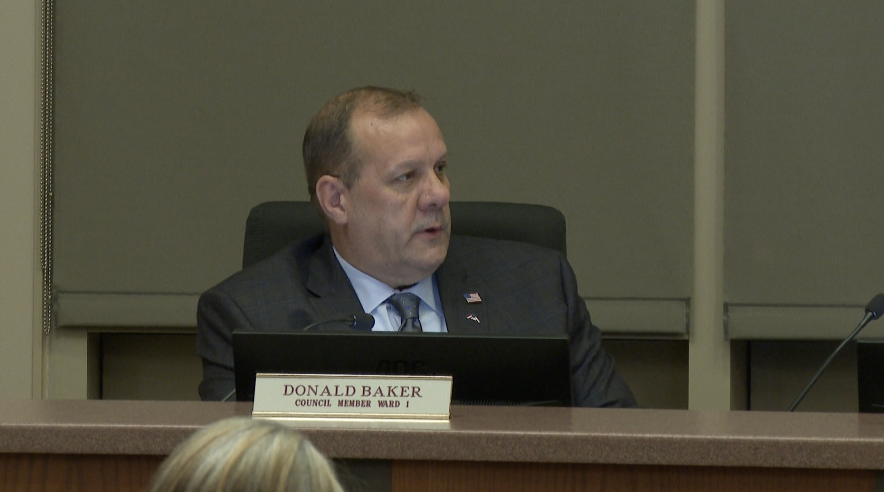
He's concerned about the tax breaks for these developers over the long term and getting behind in tax generation over time.
"A lot of apartments, a lot of Chapter 100's and what are we getting back in return," he stated to his colleagues.

Baker's Ward 1 counterpart, Brian Mills also expressed his concern.
"The previous council may have approved this development, it's not a rubber stamp we have to approve. The financing that the citizens of Raymore have to enter into a finance agreement for multi-family properties," he said. "If it's such a good deal there's other financing mechanisms."

Mayor Pro-tem Sonja Abdelgawad stepped in to address the council stating the city is not financing any of these projects.
Mills quickly reiterated the city is the owner of lease holder of the property until that bond is paid off.
The discourse got out of hand for a brief moment.
Upon order, Councilman Holman later pointed out to Baker he voted for the bonds in 2023.

Baker stated, he did vote for the project but has since changed his mind due to the Chapter 100 action the city has taken since then.
The city has not approved any new bonds, but has authorized more bonds to be administered.
Timber Trails (Iconic) - Retail will be the seventh Chapter 100 project authorized - the housing and retail phases were separate pieces of legislation.

Raymore has approved four multi-family Chapter 100 projects and only two industrial projects.
Since 2018, Raymore has authorized $636.8 million in bonds. Without abatements they would have generated $198.3 million.
The developer's Payment in Lieu of Tax (PILOT) has been $64.02 million, according to data submitted to KSHB 41 by the city.
Residents like Cox are anxious for their town to grow and bring more entertainment and retail options. As a property owner, she wants to see that developers are paying their fair share to maintain the integrity of the city's roads and services.
"Then I'd be more okay with it," she added.

The Raymore City Council voted to authorize the bonds 6-2 on Monday. The project sits in Ward 1 — both Baker and Mills, the representatives for that area were outvoted.
"I've told you over and over, they [Ward 1 residents] don't support this, so therefore I represent the people that vote for me," Baker went on to add.
![020626_KSHB_Image_NXA_Web_Standard Cube[88].jpg](https://ewscripps.brightspotcdn.com/dims4/default/0ead409/2147483647/strip/true/crop/300x225+0+13/resize/960x720!/format/webp/quality/90/?url=http%3A%2F%2Fewscripps-brightspot.s3.amazonaws.com%2F8f%2F6c%2Ffad8bd2346c5a4d4ead793017d4a%2F020626-kshb-image-nxa-web-standard-cube88.jpg)