



OLATHE, Kan. — KSHB 41 reporter Megan Abundis covers Kansas City, Missouri, including neighborhoods in the southern part of the city. She also focuses on issues regarding scams. Share your story idea with Megan.
—
In January, I reported on a Missouri nursery program that keeps incarcerated mothers and their babies together. After that story aired, the Church of the Resurrection in Olathe reached out.
In Kansas, mothers and babies are not kept together, so the church started an effort connecting local families with babies born to incarcerated women.
Katy Nall was one of the first to respond.
"There was a young woman who was just taken into prison, and she was 35 weeks pregnant. They were desperately looking for a home for her baby," Nall said. "We responded right away and said if we can help, we would. We met the mother the next day on Zoom, and she agreed he would be safe and loved in our care."
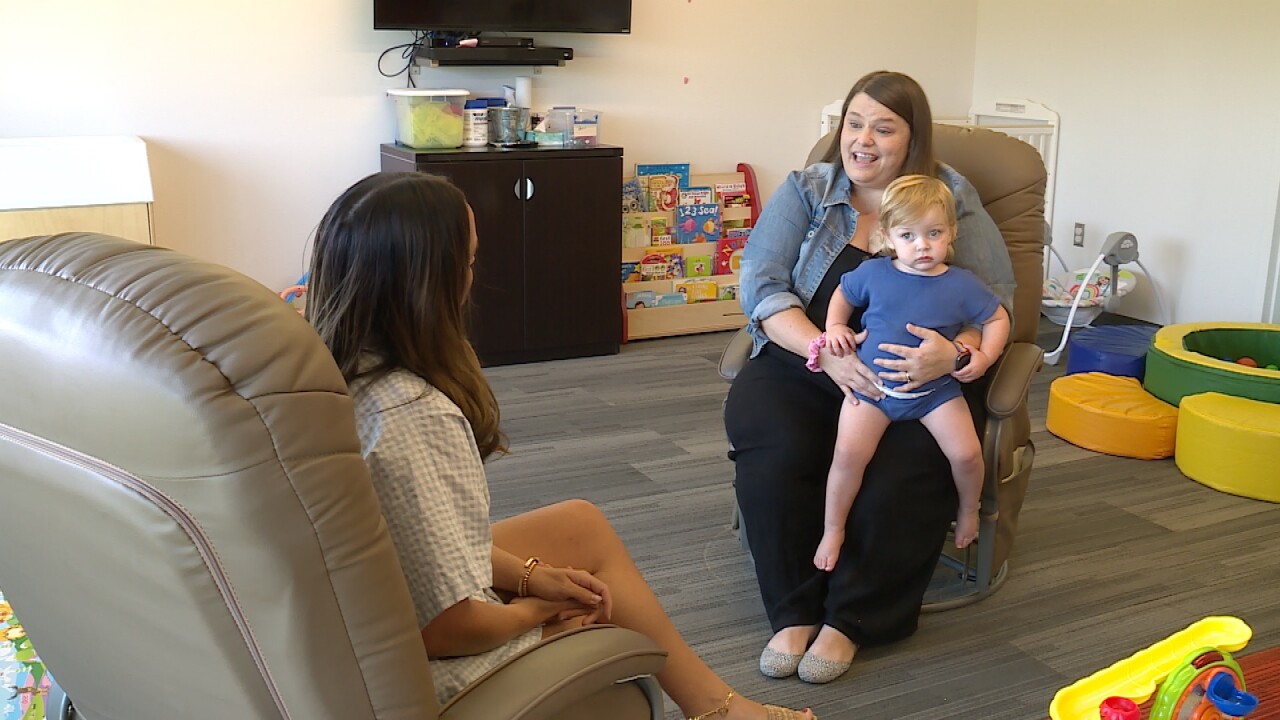
Three weeks later, Nall was at the hospital when Michael was born.
Nall brought Michael to visit his mother, Chaley Lemmon, in prison twice a week. Lemmon is now out of prison — with a stable home and job — and back with Michael.
"She's had him back with legal custody since he was 7 months old," Nall said.
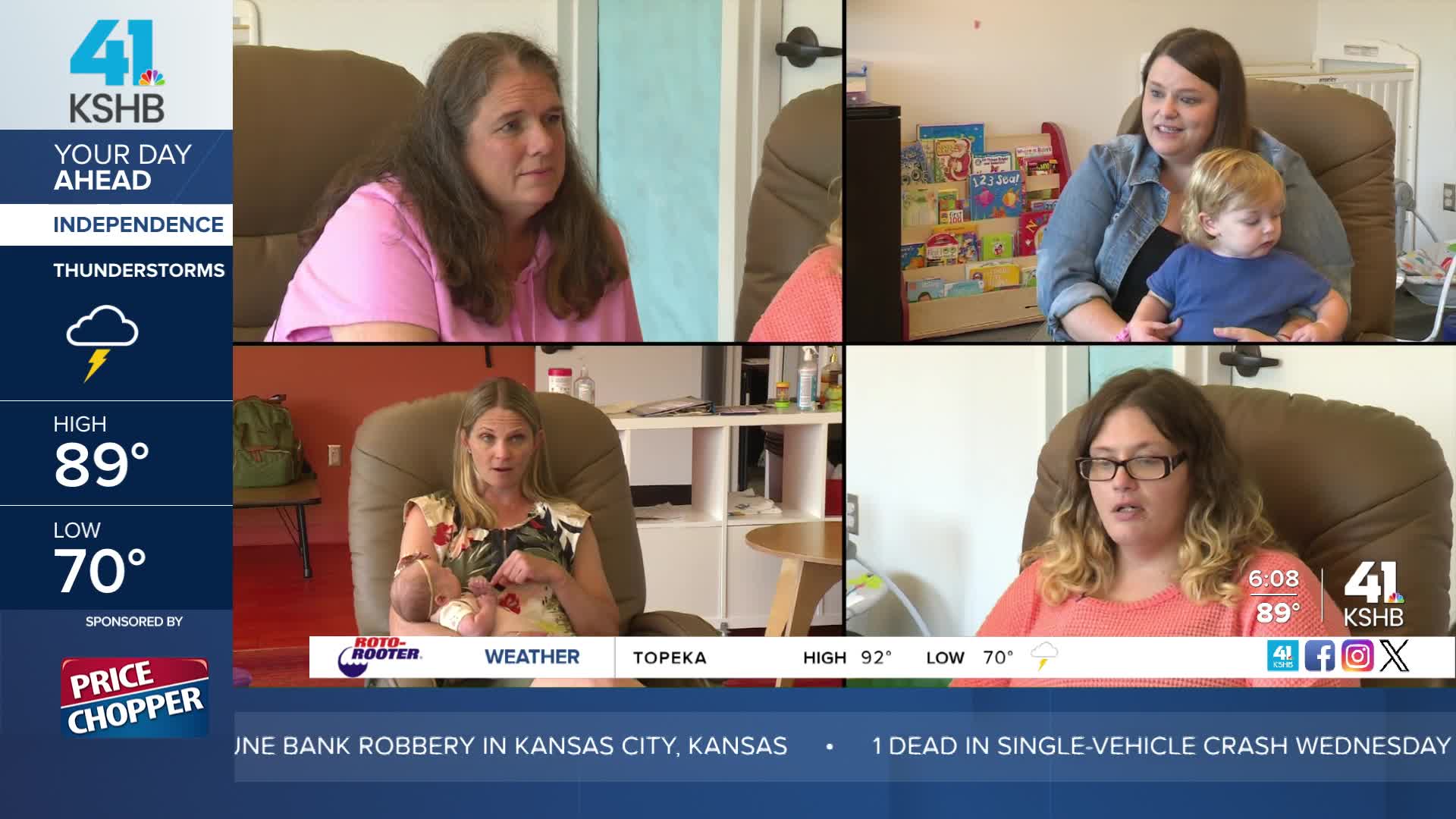
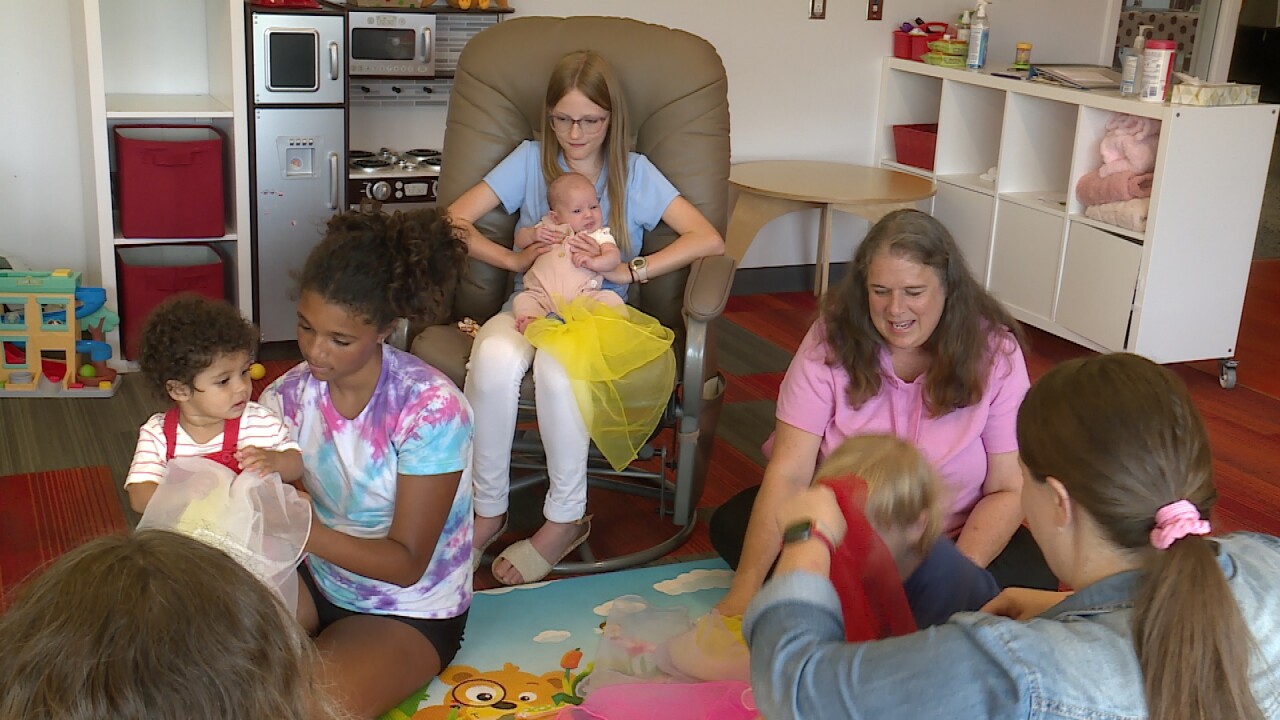
Nall's story is not the only one like it. The group has become a family — a mix of formerly incarcerated mothers, foster moms, siblings and babies.
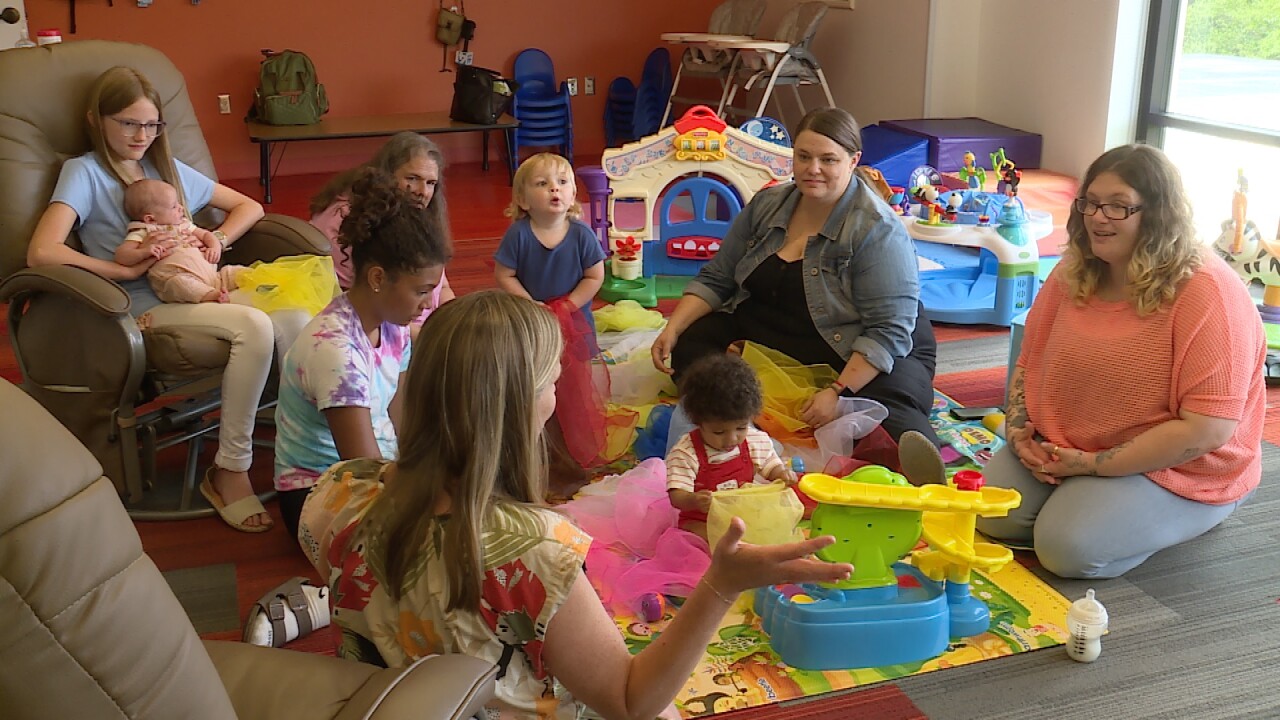
The goal upon mothers' release is immediate reunification, and women at Church of the Resurrection are making that happen.
Foster mom Lynnlea Nelson described what the experience means for everyone involved.
"They are witnessing that these women deserve to be loved just as much as every one of us," Nelson said.
Nelson fostered baby Steven while his mother, Ashley Kingham, was incarcerated. Kingham, a formerly incarcerated woman who struggled with addiction, said she wanted her story heard.
"My story needs to be told," Kingham said. "They need to know there is a better place. Once you get through addiction, it's such a beautiful life."
Nelson said she felt called to help.
The bond between Nelson and Kingham has grown into something lasting.
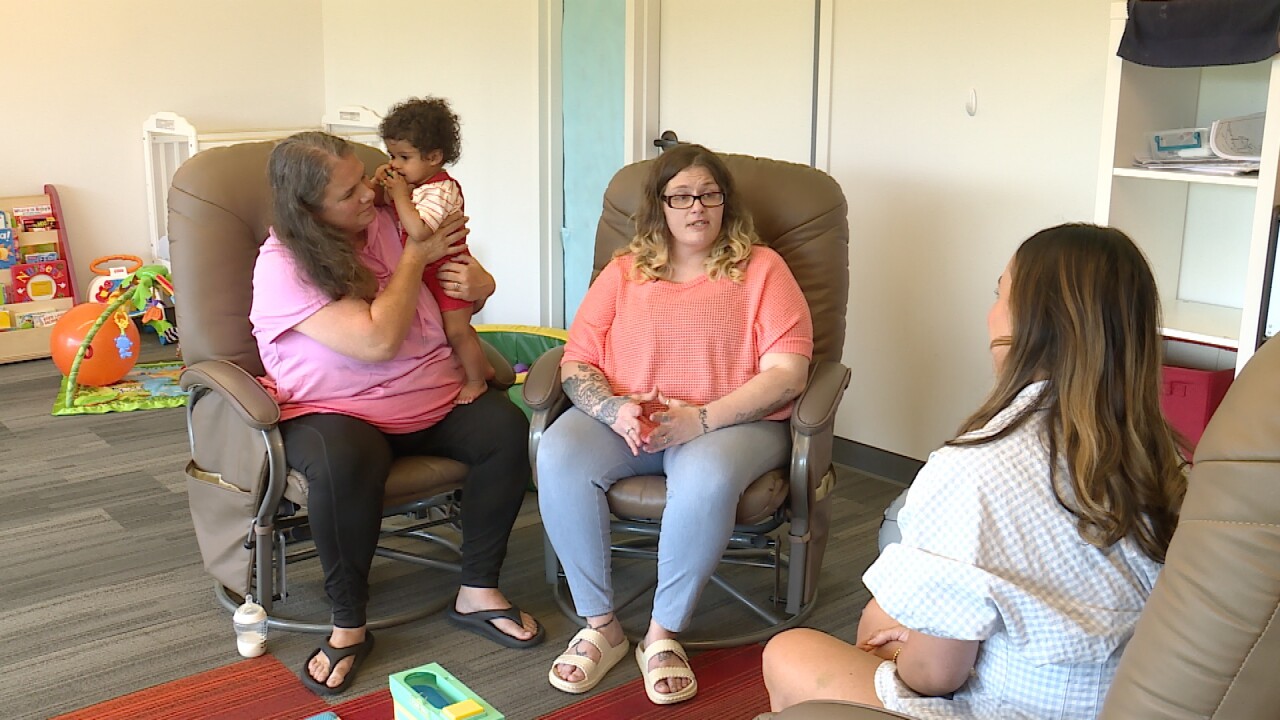
"Really, the bond we have is unbreakable, and we will be a part of each other's life forever and ever," Nelson said. "This experience has blessed me and my family as much as Ashley and Steven. My view on people that are incarcerated is so different."
Kingham reflected on what Nelson did for her family.
"She did a beautiful thing for us," Kingham said.
Kingham also thanked the Topeka Correctional Facility (TCF) social worker who helps connect families.
Nelson pushed back on what she called a common misconception about incarcerated women.
"I think there's a misconception of women in prison, [that] they are just not good humans, and that's not the case at all," Nelson said. "Ashley is a beautiful, amazing woman, and she has so much to offer this world. And she has some messy pieces along the way that were a speed bump, but man, she is killing it as a mom and an employee. She's a person in society. She's incredible."
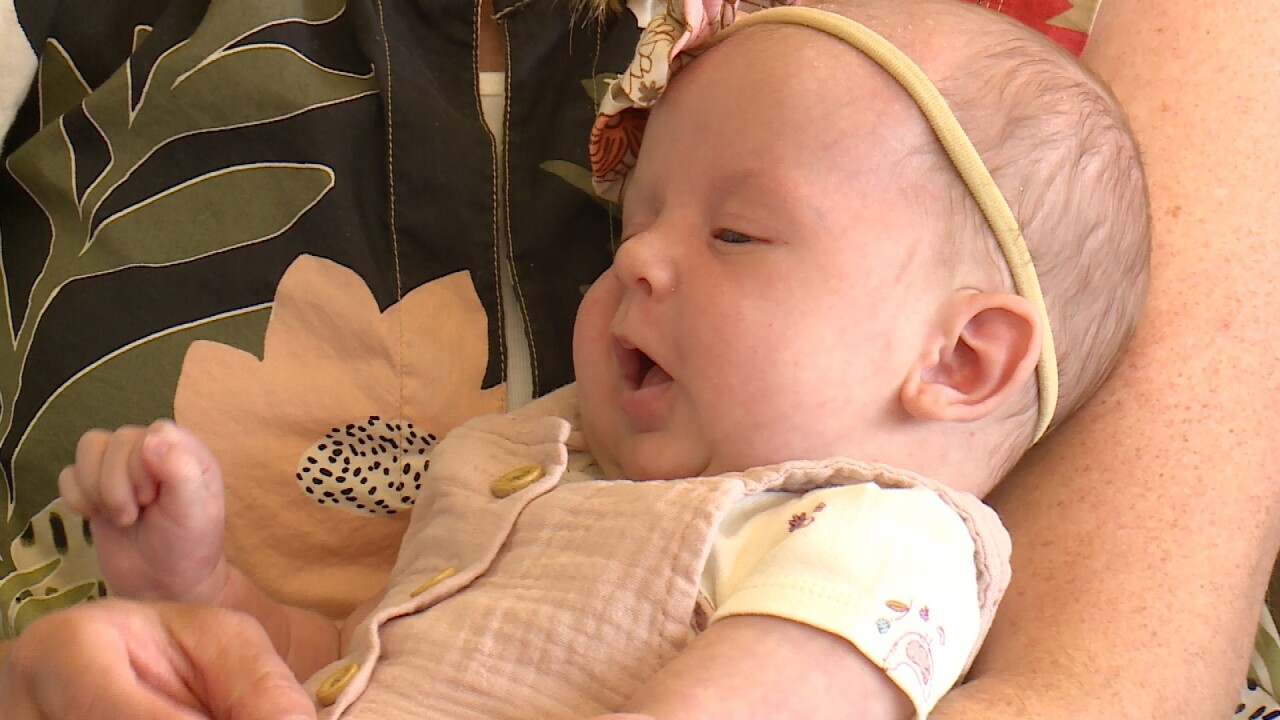
Vicky Herman is fostering baby Krystina Barriger while her mother, Talli Wilson, is incarcerated.
"We're taking care of Krystina while her mom, Talli, is at Topeka Correctional Facility," Herman said. "She's the best baby — so mild-mannered, sweet and sleeps well. It's been a huge commitment but hugely rewarding."
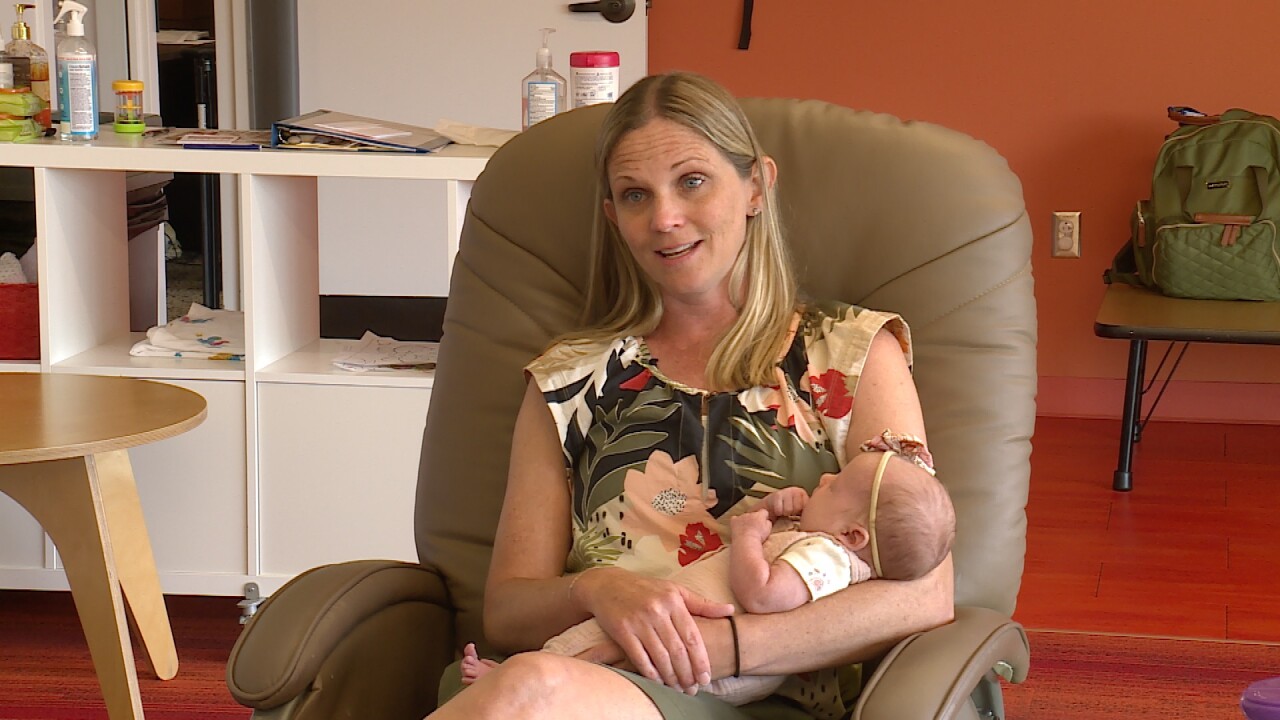
Herman and her husband met Wilson over Zoom before the birth. She was in the hospital with Wilson when Krystina was born.
"We have had Krystina since she was born," Herman said.
Herman said watching Krystina be separated from her mother was difficult.
"I couldn't imagine having my baby and saying goodbye to her. It was so painful," Herman said. "I mean, as excited as we are to care for her, it was really painful to see, being a mom myself."
From prison, Wilson wrote a letter about the Hermans.
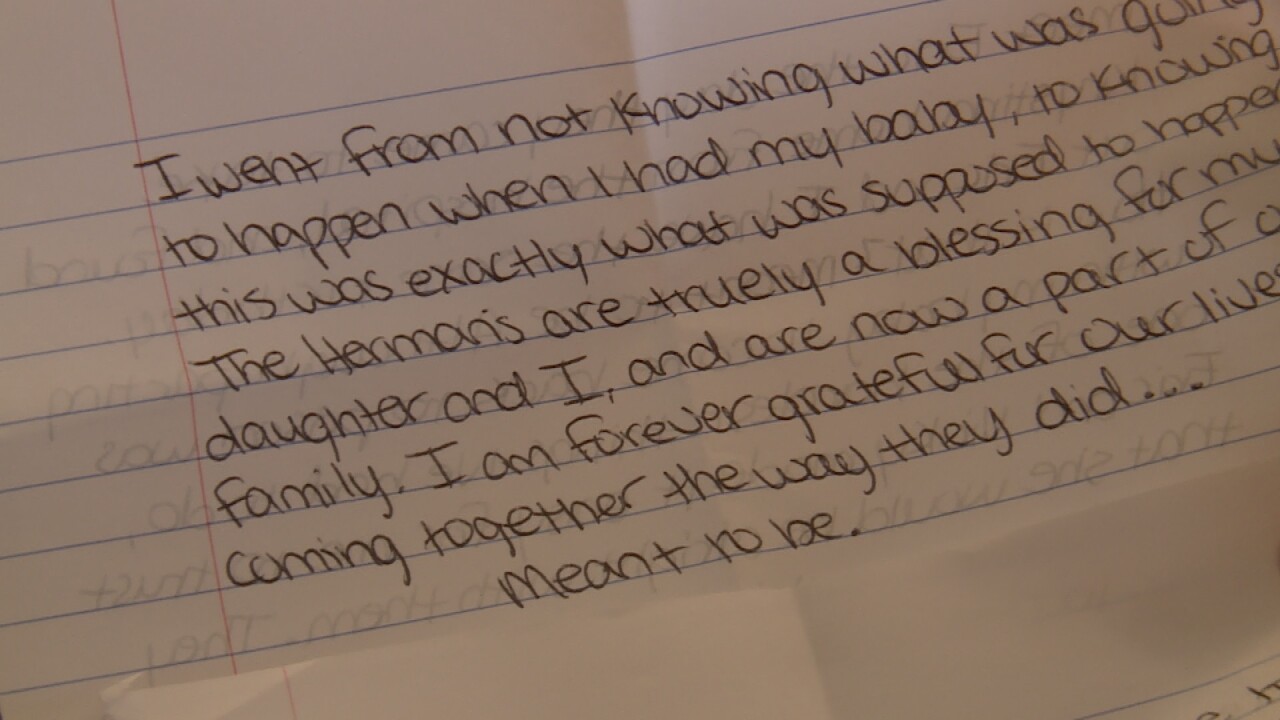
She said they made it easy for her to trust Krystina would be safe, noting they've kept her in the loop to "still feel like a mom."
"I went from not knowing what was going to happen when I had my baby to knowing this is exactly what was supposed to happen," Wilson wrote. "The Hermans are truly a blessing for my daughter and I, and now are a part of our family. I am forever grateful for our lives coming together as they did... meant to be."
Nall said the women in the program deserve to be seen as more than their circumstances.
"These women who are incarcerated, they have a story and a history. And even though they are not able to be with their babies, that doesn't make them bad mothers or bad people," Nall said. "All three of these women love their babies. The time they got them while they were incarcerated was treasured, and [they] checked in on them all the time. They are just like any other mother; they just want to be with their kids."
She also said the effort is open to anyone willing to step up.
"It doesn't take a special person; anybody can do what we've done," Nall said. "You just have to be willing to put someone else first."
The prison in Topeka currently allows six weeks of bonding time so babies and guardians can visit whenever. The Kansas Department of Corrections (KDOC) will soon create its own nursery program, keeping babies and incarcerated moms together.
Nall said she hopes the nursery becomes a reality.
"Any time a baby is separated from their mother, there is trauma for both the baby and the mother," Nall said. "The world doesn't need more traumatized people. So that is a huge hope to have a nursery for Topeka Correctional."
A KDOC spokesperson shared a comprehensive response to my questions about incarcerated mothers in Kansas and their babies.
"The Kansas Department of Corrections (KDOC) is committed to supporting residents both before and after the birth of a child.
"Pregnant residents have access to prenatal health care, pregnancy and parenting classes, and a volunteer doula to prepare them for childbirth and becoming a mother.
"When a resident at the Topeka Correctional Facility gives birth, the resident remains with the baby at the hospital for 24-48 hours before the resident returns to the facility. The baby then leaves the hospital with an approved caretaker.
"The baby and the caregiver may visit the resident at the facility daily for up to six weeks post-birth for mother/infant bonding.
"KDOC provides all needed items, including a refrigerator to store breast milk, for mothers who are pumping milk. Caregivers can take the milk home after the bonding visits, or alternatively, KDOC can ship breast milk through our partnership with the Topeka Doula Project. Mothers may also breastfeed during bonding visits.
"Birth rates for incarcerated mothers at Topeka Correctional Facility were:"Due to the short deadline, we are unable to provide updated numbers for FY2026.
- FY2025: 8
- FY2024: 7
- FY2023: 5
- FY2022: 3
"KDOC is dedicated to continuously improving services for mothers. There are plans underway for constructing a nursery program at TCF so that those residents who are eligible will be able to have their baby stay with them until they are 18 months of age. KDOC is currently designing a temporary nursery to transform an existing space at the facility that is scheduled to open by the end of 2026. A permanent nursery will be included in the new Topeka Correctional Facility medical services building, which is currently in the architectural design phase."
This story was reported on-air by a journalist and has been converted to this platform with the assistance of AI. Our editorial team verifies all reporting on all platforms for fairness and accuracy.
—

![020626_KSHB_Image_NXA_Web_Standard Cube[88].jpg](https://ewscripps.brightspotcdn.com/dims4/default/0ead409/2147483647/strip/true/crop/300x225+0+13/resize/960x720!/format/webp/quality/90/?url=http%3A%2F%2Fewscripps-brightspot.s3.amazonaws.com%2F8f%2F6c%2Ffad8bd2346c5a4d4ead793017d4a%2F020626-kshb-image-nxa-web-standard-cube88.jpg)