

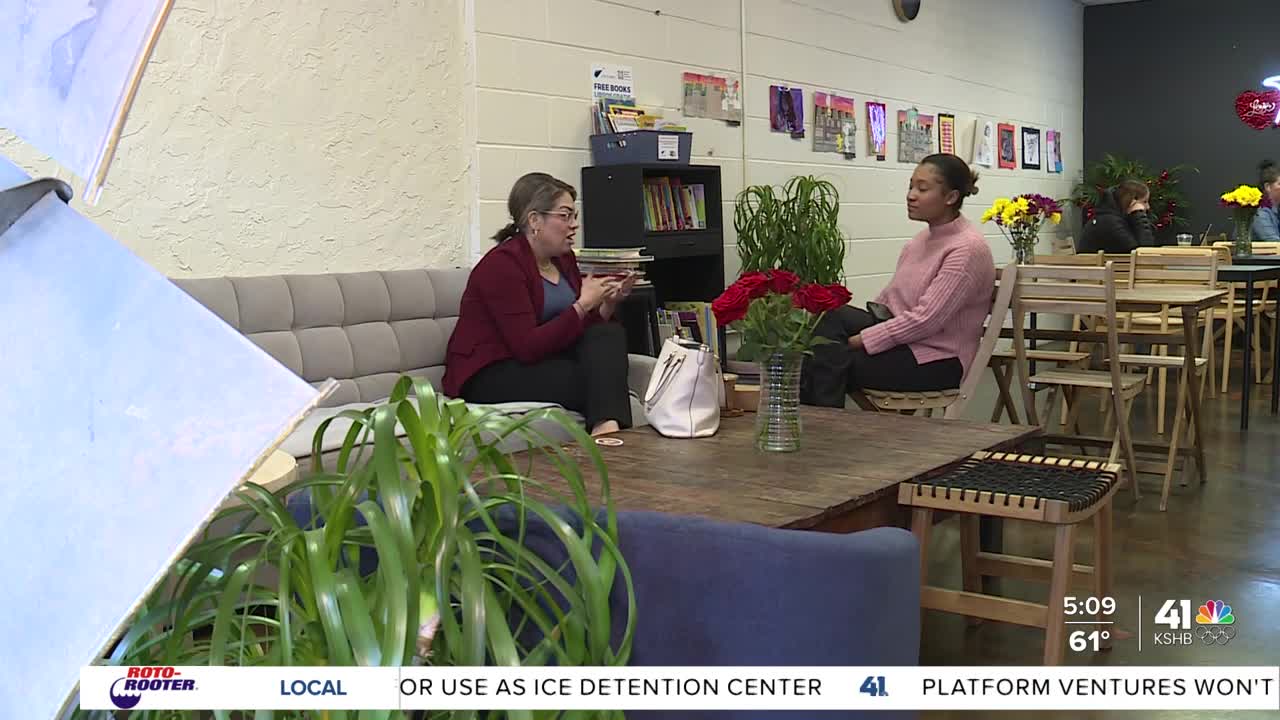



KANSAS CITY, Kan. — KSHB 41 reporter Rachel Henderson covers neighborhoods in Wyandotte and Leavenworth counties. Share your story idea with Rachel.
—
The Unified Government of Wyandotte County and Kansas City, Kansas Planning Commission approved a resolution Monday that would put a temporary ban on any detention facilities, including ICE detention facilities.
The resolution aims to address growing fears within the immigrant community.
Eva Garcia-Meza, a Kansas City, Kansas, resident who spoke in favor of the resolution, understands the immigrant experience firsthand.
Her family immigrated from Mexico in 1985.
"You grow up as an immigrant, and you're never from here,” Garcia-Meza said. “But then you go home, and you're not from there either. You live kind of in this strange place where you don't belong."
Garcia-Meza is one of nearly 30,000 immigrants living in Wyandotte County, according to census data.
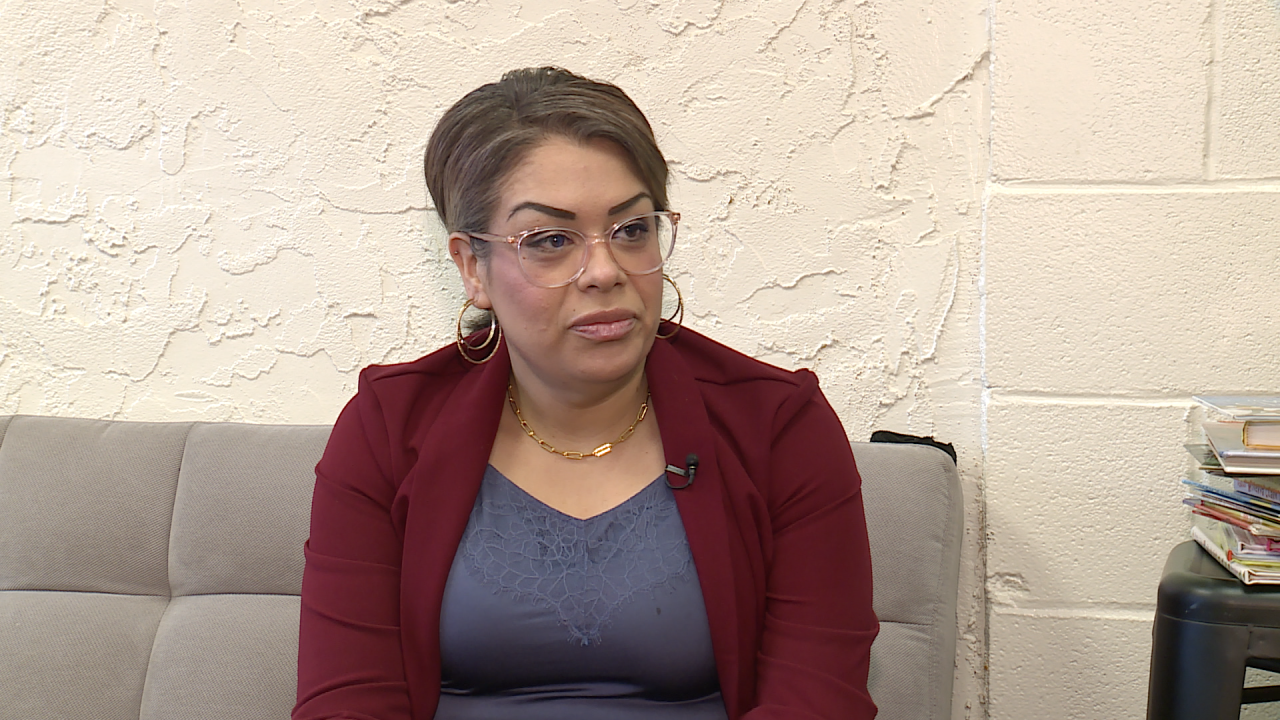
Her family is from Mexico, but KCK feels like home to her.
"I didn't find out I was illegally here until I was getting ready to go to college," Garcia-Meza said.
The process of obtaining legal status required her to leave the United States temporarily.
"I had to leave to Mexico and stay in Mexico until I was called for my interview," Garcia-Meza said. "Now you're leaving your home to go to a completely different place and be there indefinitely because you don't know how long you're going to be there."
Garcia-Meza said she sees the current fear in the immigrant community.
"I see and hear the fear," Garcia-Meza said. "Feelings matter."
She emphasized the importance of community support during difficult times.
"When you are the target of that negativity, even a sense of community, a sense that you matter, a sense that we're not going to let these things happen to you, that is impactful," Garcia-Meza said. "Over everything, you are still a human and worthy of dignity and respect."
Feelings of fear and uncertainty have become increasingly common surrounding the Immigration and Customs Enforcement agency nationwide.
Unified Government Commissioner Christian Ramirez, who represents District 3, proposed the resolution in February, less than a month after expressing his personal concerns about the issue.
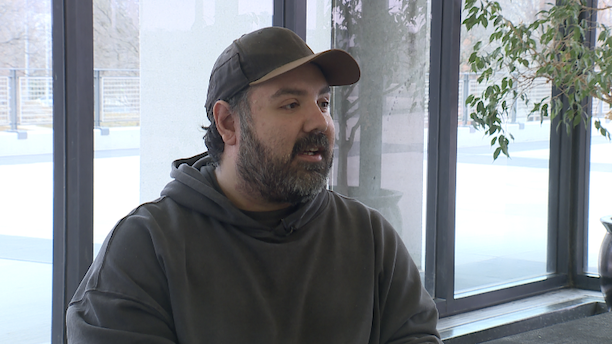
"Personally, it hurts me," Ramirez told KSHB 41’s Rachel Henderson in January.
The resolution is similar to one passed in Kansas City, Missouri.
It would establish a moratorium on applications for a special use permit for penal and correctional institutions for a period of two years.
Garcia-Meza praised the proactive approach, comparing it to Kansas City, Missouri's, ordinance.
"It kind of mimics KCMO's ordinance that they passed, which I thought was great," Garcia-Meza said. "Taking proactive action, especially considering the political climate, I think is important. I think it helps pacify some of that."
Ramirez said his intention in bringing the resolution forward was to ensure adequate time for study.
"My intention in bringing this forward was to ensure we had enough time to study the economic and neighborhood impact this type of facility would have our community," Ramirez wrote in an email Friday. "That is why we are proposing a two-year moratorium to give our staff and our community time to study the effects."
Beto Lugo Martinez, another KCK resident who attended Monday's planning commission meeting, believes the resolution could have broader implications.
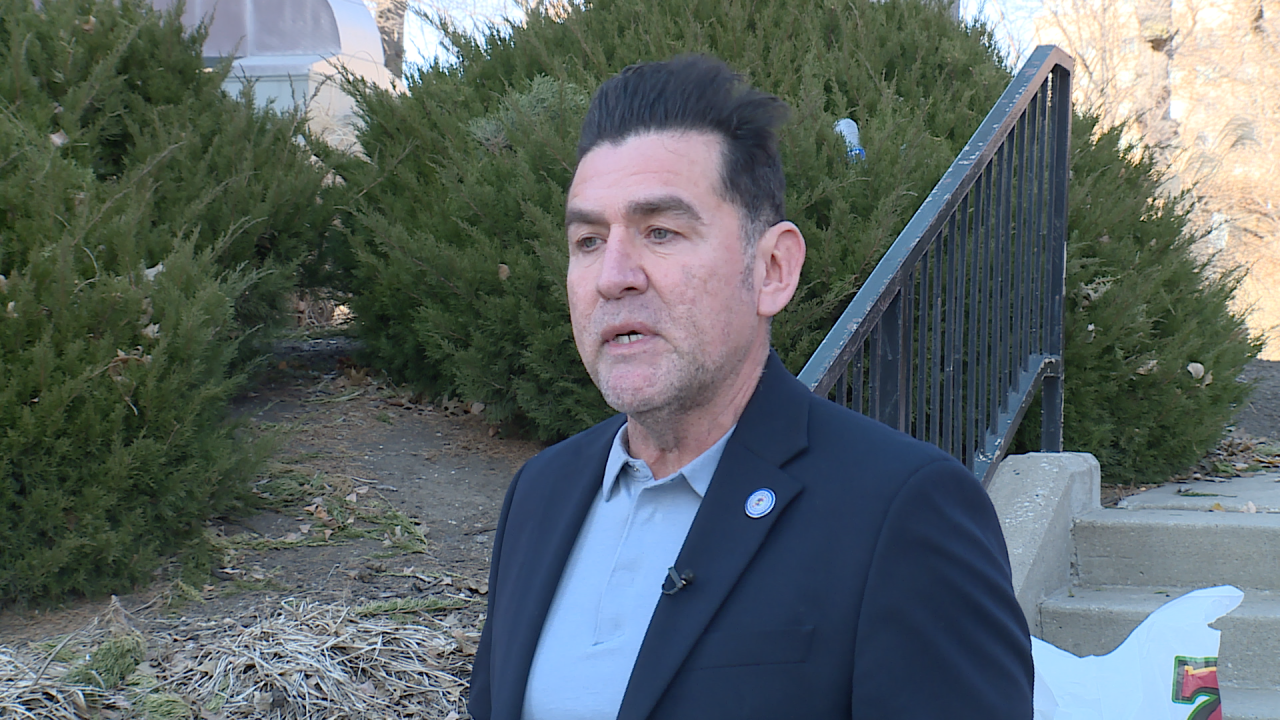
Martinez would prefer a longer moratorium, similar to Kansas City, Missouri's, five-year ban.
His organization, RISE4EJ, wrote a letter in support of a five-year moratorium on non-municipal detention facilities.
"It can set a precedent," Martinez said. "It's not just symbolic, it's literal. We need to protect our community members, and being proactive at this moment gives us that upper hand."
Martinez emphasized that the resolution goes beyond symbolism and referenced a quote from an Auschwitz survivor to illustrate his concerns about community complicity.
"It was not Hitler or Himmler who abducted me, beat me, and shot my family. It was the shoemaker, the milkman, the neighbor — who received a uniform and then believed they were the master race," Martinez said, quoting the survivor.
The planning commission approved the resolution 4-2.
"It's not just about issuing a permit, it's our local autonomy and our local resources that are exhausted at the same time," Martinez said.
Martinez met Henderson on Friday near a plaque honoring KCK’s sister city, Karlovac, Croatia, and it stood out to him.
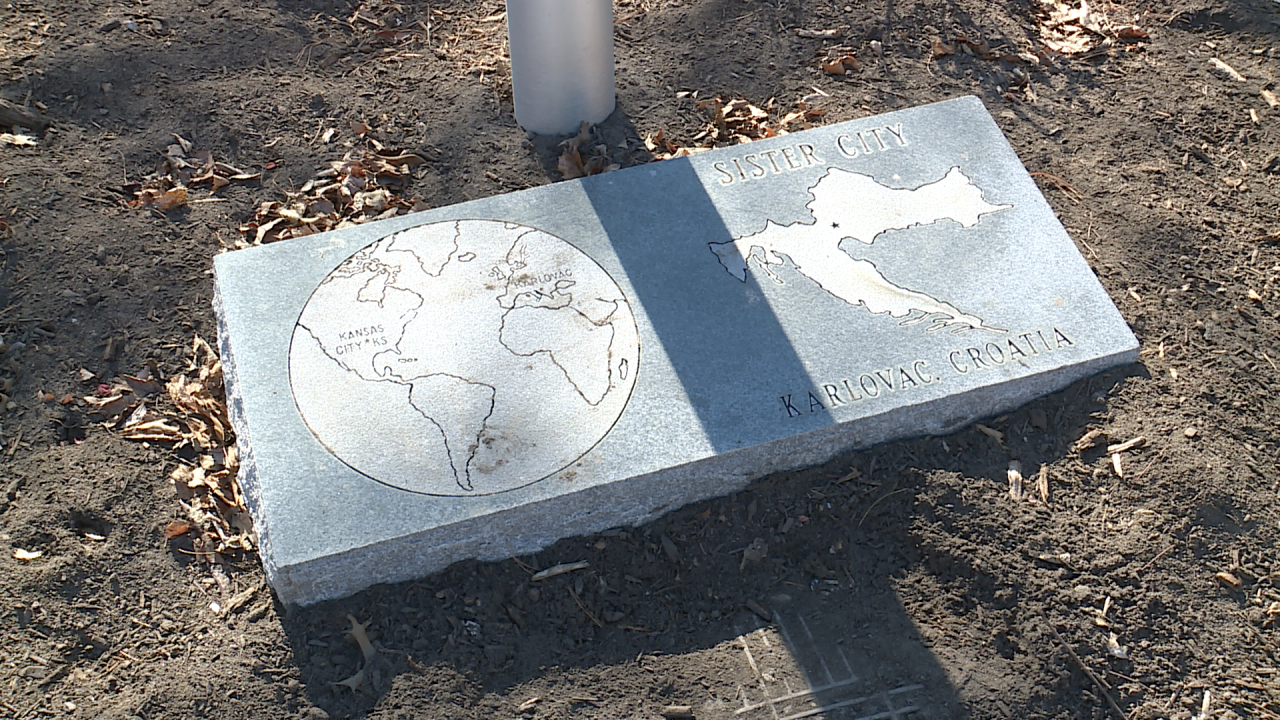
“In the global hemisphere, we have all been impacted,” Martinez said.
Martinez noted that the commission initially considered postponing the vote due to Ramirez's absence.
"For a moment, they decided, 'Well, if he's not here, we don't move forward,'" Martinez said.
Ramirez said he was pleased with the commission's decision.
"I was delighted to see that the Planning Commission passed this ordinance after they listened to the community," Ramirez said. "It's important that we listened and acted on the testimony given by community members."
The commissioner had planned to attend the meeting to speak in favor of the resolution, but was unable to due to a last-minute personal matter.
"I had every intention to be there at the Planning Commission to speak in favor, but unfortunately, I had a personal matter to handle that happened last minute," Ramirez said. "I sincerely apologize to the community for my absence during this important discussion."
Martinez stressed the importance of community unity on the issue.
"Our neighbors, our communities, our decision makers, everyone should be standing in unity," Martinez said. "For it to thrive, we need our immigrant community. Otherwise, we won't be able to move forward."
He also expressed solidarity with similar efforts nationwide.
"We are in solidarity with our allies and colleagues and friends in Minnesota and Chicago, Los Angeles, anywhere," Martinez said. "In the global hemisphere, we have all been impacted."
Ramirez addressed claims that a resolution like this is merely symbolic.
"Some in our community might see this as symbolic, but to others in our community they see this as their local government taking action and taking proactive steps to protect our local economy and preserve our neighborhoods," Ramirez said. "This ordinance does more than make a statement. It modifies our local code by allowing our community to study the effects of these types of facilities."
He noted the limitations of local government authority while highlighting what can be accomplished locally.
"It's also true that local government cannot override federal law," Ramirez said. "What we can do is define how our city operates, how our tax dollars are spent, and what standards apply locally. That is what this ordinance accomplishes."
Ramirez said nationwide efforts have also gotten his attention.
"I have been inspired by actions taken across the country to ensure our communities and neighborhoods are protected and preserved," Ramirez said. "It's important because as the local government we need to ensure any development or facility is in the best interests of the community and reflects those interests and values."
Garcia-Meza said the community support sends an important message to fearful residents.
"As an immigrant and someone that knows people that are scared, that are fearful, that don't want to go out to buy groceries, don't even want to take their children to school, don't even want to go to their place of worship to hear their community say, "We will not proactively bring these kind of facilities into this community will send a good message," Garcia-Meza said.
The full Unified Government commission is set to vote on this resolution on February 26.
It needs at least six "Yes" votes in order to pass.
This story was reported on-air by a journalist and has been converted to this platform with the assistance of AI. Our editorial team verifies all reporting on all platforms for fairness and accuracy.
—

![020626_KSHB_Image_NXA_Web_Standard Cube[88].jpg](https://ewscripps.brightspotcdn.com/dims4/default/0ead409/2147483647/strip/true/crop/300x225+0+13/resize/960x720!/format/webp/quality/90/?url=http%3A%2F%2Fewscripps-brightspot.s3.amazonaws.com%2F8f%2F6c%2Ffad8bd2346c5a4d4ead793017d4a%2F020626-kshb-image-nxa-web-standard-cube88.jpg)