

KANSAS CITY, Mo. — As part of our series on people making a difference, we're highlighting a Prairie Village woman who's sharing a cautionary tale with expecting moms. And it's fitting she's sharing her story of a near-death experience through the American Heart Association now, during Women's History Month, as a way to help other women. KSHB 41 News anchor Caitlin Knute is interested in hearing from you. Send her an e-mail.
—
When it comes to the Petersons, parents Kaley and Nate are quick to tell you their 4-year-old son Mac was the missing piece that completed their family.
"It was everything we’d ever dreamed of and more, literally a tiny little miracle," Kaley said.
However, the biggest miracle surrounding his birth was the near-death experience Kaley faced just days after he was born.
"We were like, 'Okay, we’re getting the hang of this thing. It's been six days, all right, let’s do this,'" Nate recalled. "And the next thing we knew, we were at the hospital shortly, later that afternoon."
Kaley said she went from feeling wonderful to not being able to breathe to not being able to catch her breath.
"I was thinking I’m a first-time mom, maybe this is normal," Kaley said. "This must be hormone-related. It’s probably my body adjusting."

But then, a sign her husband remembered clued them in that something was really wrong.
"Her lips start turning blue, and I’m like, 'I’ve got to call somebody,'" Nate said.
So, the Petersons left their newborn with his grandparents and went back to the hospital.

When they approached the front desk at the Advent Health Emergency Room, Kaley could barely speak to describe her symptoms as the nurse took her vitals.
"To this day, I thank God for the nurse in charge who was behind the desk and heard Kaley’s symptoms and kind of did a [double take] and said, 'Wait, what were those?' And as soon as he (the nurse) repeated them, they put Kaylee in a wheelchair and sprinted," Nate shared in a shaky voice at the memory of how rapidly it unfolded.

They quickly found themselves in a room, surrounded by a team of doctors, trying to determine the issue. It wasn’t until a cardiologist came in that they learned the shocking cause.
"He told us it was basically heart failure, and I think our jaws dropped to the floor," Nate remembered.

"Kaley has something called peripartum cardiomyopathy, which is a fancy way of saying heart failure that developed somewhere in the last portion of her pregnancy up to the six months after delivery," said her cardiologist, Dr. Heath Wilt (now at North Kansas City Hospital). "If this is missed, it can cause serious consequences to mom or baby, including death."
Luckily, her medical team was able to treat Kaley with medication, although sometimes further intervention can be necessary.
Still, it was a tough pill to swallow, especially because this happened in 2021 during COVID, so they weren’t allowed to bring Mac back to the hospital to be with Kaley.

"I burst into tears, and I’m like, 'Will he even know it’s me? It’s been four days, and he’s been handled and well-loved and well-taken care of by others, but will he not know it’s me when I come home?'" Kaley remembered thinking.
On top of the heart issue, they also learned Kaley had an undiagnosed urinary tract infection that had turned septic. So, in a way, discovering the heart condition likely saved her life on a couple fronts.
Still, she and her husband struggled to come to terms, especially with the peripartum cardiomyopathy diagnosis, considering Kaley had been healthy and had a normal pregnancy, labor and delivery.
"A lot of women, especially if it’s a first-time pregnancy, may not know what to expect as far as symptoms," Wilt said. "A lot of the telltale symptoms might just be disguised as kind of a run-of-the-mill pregnancy things like swelling in the ankles, feeling breathless, feeling out of energy. The only problem is, it’s not around the context of a delivery or a pregnancy. So, a lot of times it’s really something that seems out of context or something just doesn’t feel right."
As for risk factors, medical professionals, including the American Heart Association, are still studying the condition to see why it affects certain women and not others.
"There are certain risk factors that we know," Wilt said. "It tends to cluster in certain ethnicities. Why this happens, we don’t know. But, we do know certain factors like having high blood pressure either during pregnancy or before pregnancy, even an entity called preeclampsia, which a lot of mothers have heard about, were experienced during pregnancy. We also know that age during delivery or pregnancy seems to be a factor, so women who are in their mid- or late 30s are also at an increased risk."
As for Kaley, she was in her mid-30s when she had Mac, and she did have some episodes of high blood pressure, but at the time, it wasn’t flagged as a major concern.

"I did have a few times where it was elevated, but it would come right back down," Kaley said.
While they still don’t know why it happened, she and her husband have come to terms with the reality that this condition means it would be too risky for Kaley to have another child.
"There's a very probable cause of going into heart failure again either during pregnancy or postpartum, so we’ve had some really hard conversations as a family," she admitted through tears.

Still, she and Nate are grateful for the little boy at the center of their worlds.
And, they're now sharing their story for the first time after four years, all to help raise awareness.
"It has taken a very long time to kind of wrap my mind around the severity of what happened," Kaley said. "My health is in a good place. My son is in a good place, and when I was asked [by the American Heart Association] if I was comfortable sharing my story for the first time in over four years, I finally felt like the immediate answer was yes."
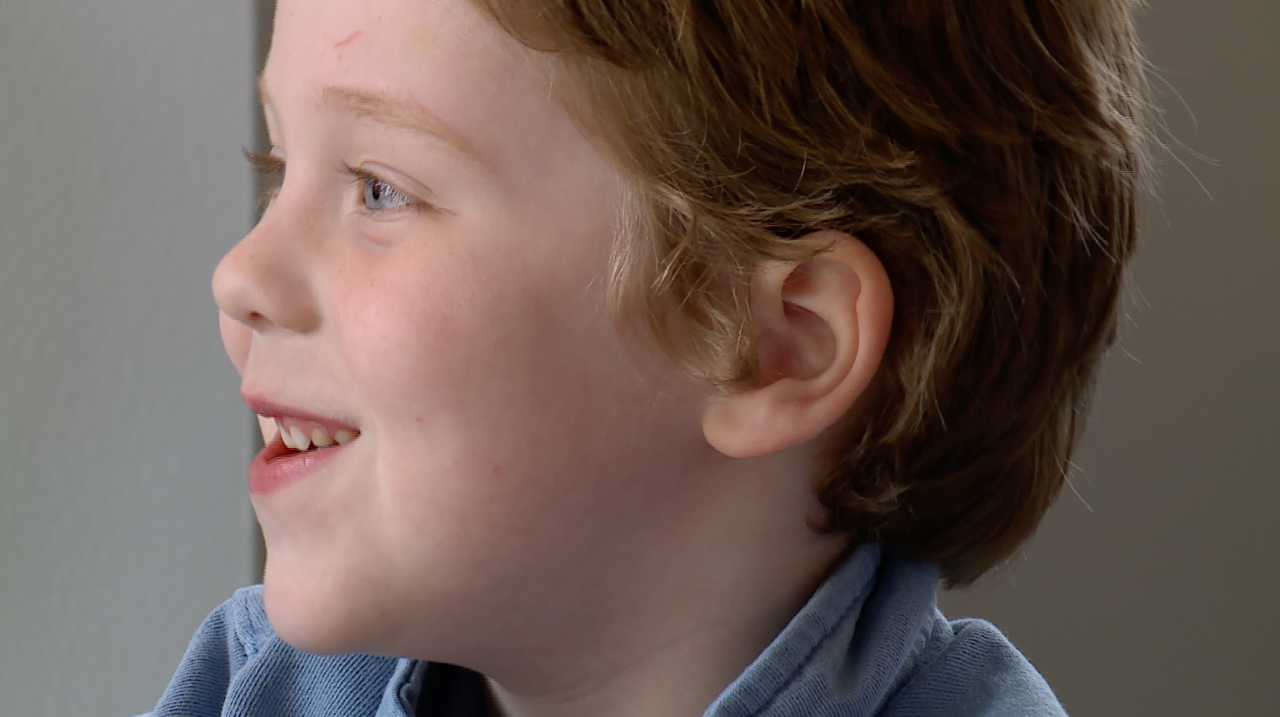
Nate says he's proud of his wife and often gets emotional remembering her journey.
"If she can help one person not go through what we’ve done, I think it’s a win," Nate said.
One of the reasons Kaley was able to leave the hospital after four days was a device called a "life vest," which would track any abnormal heart rhythms and even shock her heart back into rhythm if it stopped.

The Petersons also credit her cardiologist with saving her life.
In fact, the family was so grateful, they've stayed in touch, and even run all their Halloween costumes by Wilt each year to get his approval before choosing a theme.
—