

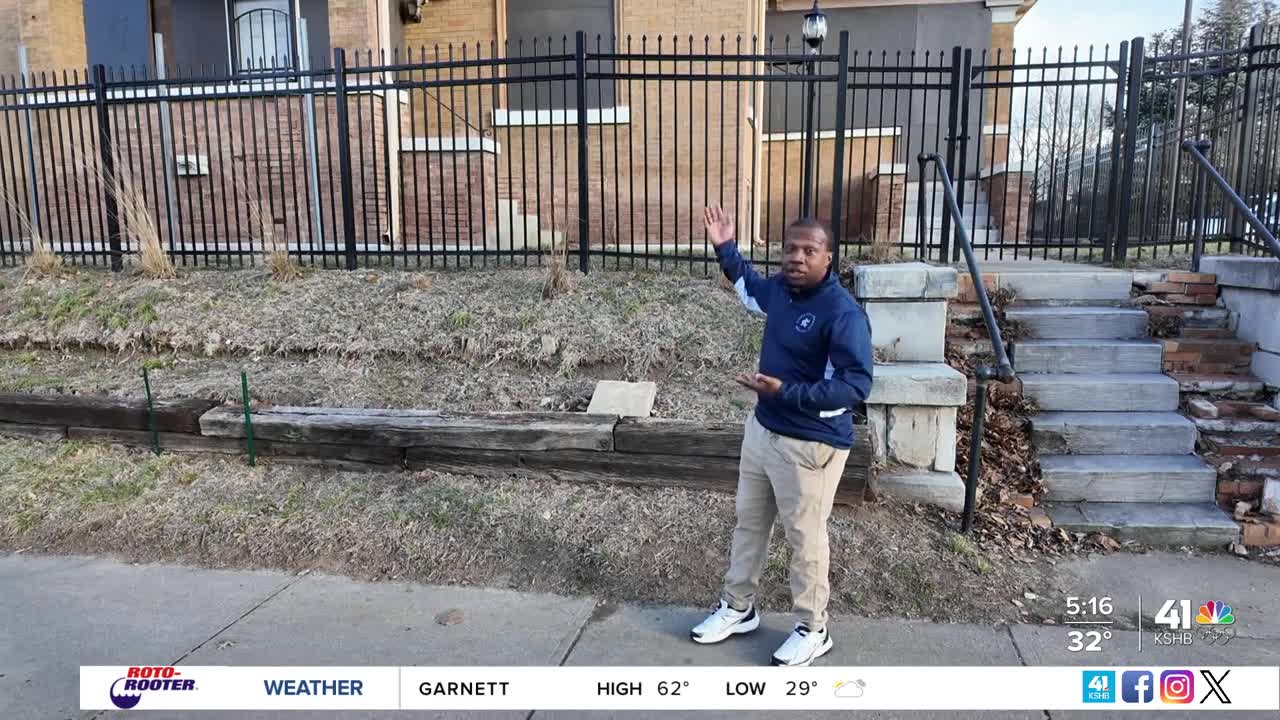



KANSAS CITY, Mo. — A local filmmaker is working to preserve and expand the story of Sarah Rector, Kansas City's first Black millionaire, through an upcoming docudrama, "Aunt Sister: The Legacy of Sarah Rector.”
I met with Jacob Handy, the director, producer, writer and Wyandotte County native, at the Rector Mansion, the house where Sarah Rector once lived.

"I feel like sometimes, there's points in history that are forgotten,” Handy said. “There are people within time who have done amazing and wonderful things.”
The film dives into Rector's adult years, told from the perspective of the living women in her family.
"This story here, Aunt Sister, is told from the perspective of the aunties of the family,” Handy said. “They're at a dinner table, and they're having normal family talks, and they're going back in time.”
Handy says the film will chronologically outline what happened with Sarah Rector as a young girl all the way into the later years in her life.
Rector earned her millions when she was 11-years-old and she discovered oil beneath land in her name.
Originally from Oklahoma, she eventually made her way to Kansas City.
In October 2025, a film called "Sarah's Oil" premiered, telling that story — anchor Kevin Holmes attended a screening here in Kansas City.
"Aunt Sister" aims to go even deeper.
About 95% of the film is narrative, making it something different from a traditional documentary.
"This film is not just gonna be a typical documentary,” Handy said. "Ultimately, it's about learning about your history, learning about who you are, where you're from, and sometimes, these stories can get lost.”
Sarah Rector's actual family is featured in the film.

Handy says their work to preserve Rector’s legacy made a big difference in his personal research for the film.
"This was so easy because the family themselves have already been doing 20-plus years of research," Handy said. "The roles they played were just roles themselves," Handy said.
Handy also spoke about the broader importance of exploring personal and family history.
"I think it's important that we all do a little search in the history of our own families to see is there anybody in our lineage that can help push us forward to say, 'Hey, I came from that.'
"That motivates me and inspires me to go out and do a little bit more than I'm doing today,'' Handy said.
Handy worked with Kansas City's PBS to direct, write and produce the docudrama through the station's Greenlight program.
He says accuracy was a top priority throughout the process.
PBS approached Handy after encountering discrepancies over proper photos and wanted to do due diligence.
Handy submitted a proposal and pitched the docudrama format.
"You have to get everything so accurate," said Sam Jones, a cinematographer and producer on the film.
Jones has known Handy for about six years and has been telling history with him for the last three years.
Jones and his wife own a production company in Kansas City.

The team spent about five months writing and prepping the script. They shot at locations across the region, including the West Bottoms, Vaile Mansion, Shoal Creek, the National Agriculture Hall of Fame and a house near the Satchel Paige baseball field.
"I think what really sticks with me every time I do Black history is the inaccuracies around the information out there," Jones said. "I think a lot of this history hasn't really been told, and a lot of people don't know it. I think it's kind of disappointing, and that's what I love about Jacob and these projects. I feel like we get to tell the accurate truth or something that's pulled straight from family members' stories.”
Jones says Kansas City provides unique visuals for a period piece like this one and sees momentum building for filmmaking in the region.
"A lot of us want to continue to make films here, and it seems like there's a big push, even within our government here in the state to allow that to happen," Jones said. "There's big markets now in Oklahoma and Albuquerque and stuff outside the studio system in LA, and I think Missouri wants to be a part of that too, Kansas City specifically.”
Jones noted that a film tax incentive passed in Missouri a couple of years ago, and says he sees the Kansas City filmmaking scene poised for growth.
"I do actually see the Kansas City scene getting a lot of work,” Jones said. “I think it's about to expand and get more projects through projects and more work and more people paid," Jones said.
For Jones, the story of Sarah Rector resonated deeply.
"Sarah had a huge impact on her community and the development of the culture of the 18th and Vine district," Jones said. "I find it fascinating the adversity that people go through and their impact that they make on their communities. Getting to step into other people's shoes, especially that come from communities that were different than mine is always an amazing and a joyful thing for me.”
Handy hopes the film inspires viewers beyond the screen.
"I want people that view it to go out there and be inspired to go out and do a little bit more for themselves, their families and their communities," Handy said.
The Rector Mansion itself remains a point of community interest.
Handy sees the film as an opportunity to build on that.
"This is a wonderful opportunity for the community to come together and see what we can do to help the family continue to make this into a historic site," Handy said.
"Aunt Sister" is set to premiere on February 26th at 7 p.m. on the local PBS station, its app and on YouTube.
This story was reported on-air by a journalist and has been converted to this platform with the assistance of AI. Our editorial team verifies all reporting on all platforms for fairness and accuracy.
![020626_KSHB_Image_NXA_Web_Standard Cube[88].jpg](https://ewscripps.brightspotcdn.com/dims4/default/0ead409/2147483647/strip/true/crop/300x225+0+13/resize/960x720!/format/webp/quality/90/?url=http%3A%2F%2Fewscripps-brightspot.s3.amazonaws.com%2F8f%2F6c%2Ffad8bd2346c5a4d4ead793017d4a%2F020626-kshb-image-nxa-web-standard-cube88.jpg)