

KANSAS CITY, Mo. — KSHB 41 reporter Tod Palmer covers sports business and eastern Jackson County. Share your story idea with Tod.
—
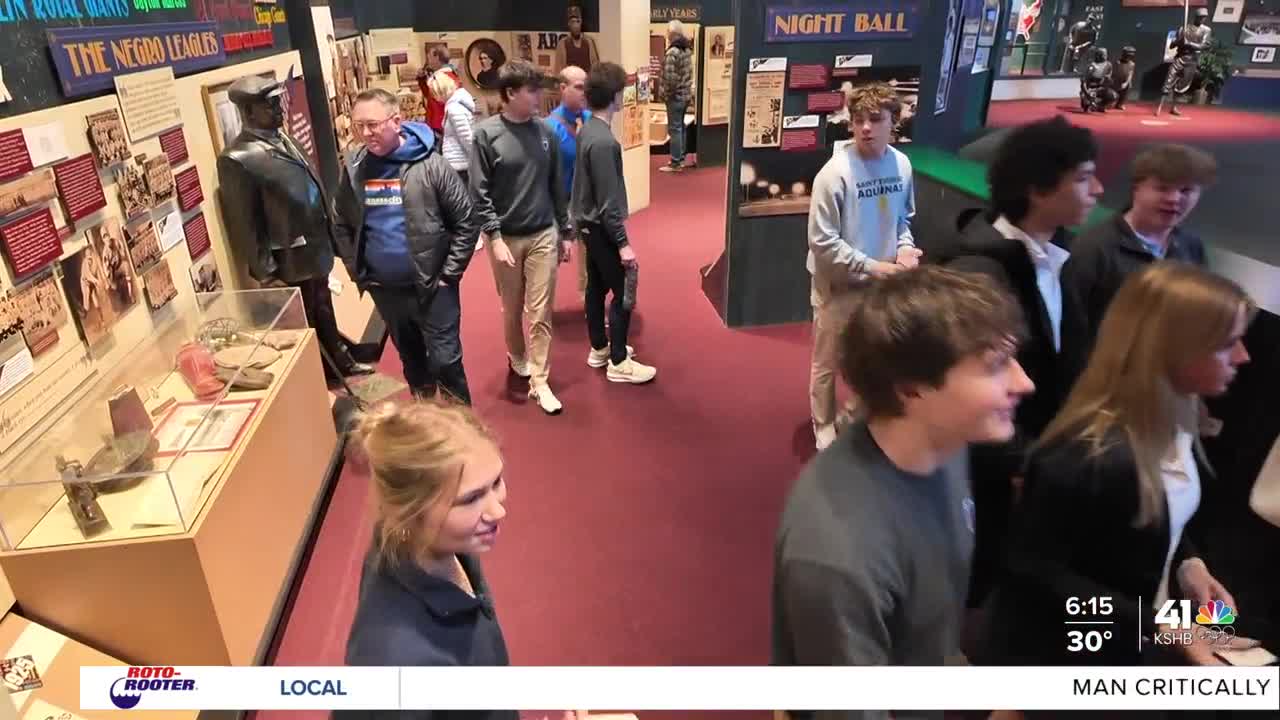
History came to life Tuesday for nearly 150 St. Thomas Aquinas High School juniors, who toured the Museums at 18th & Vine.
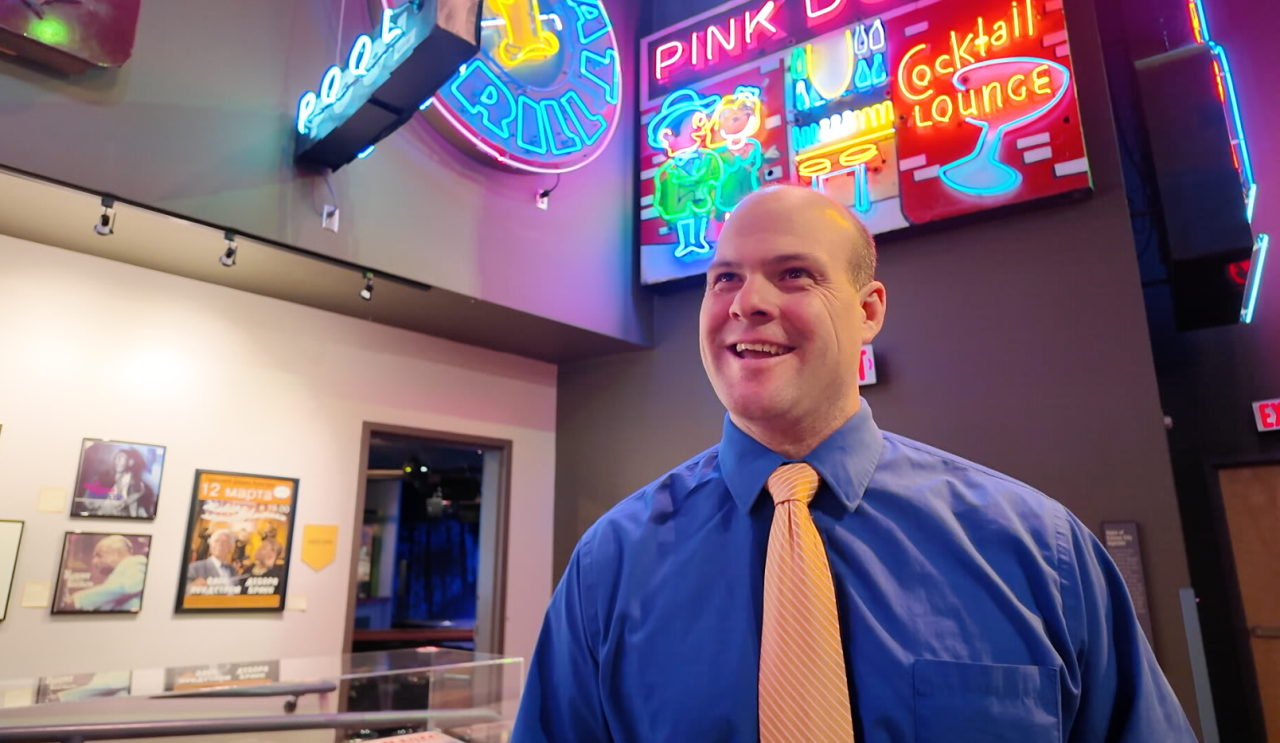
The students split into groups to visit the Negro Leagues Baseball Museum then the American Jazz Museum or vice versa.
The field trip tied into recent lessons about the 1920s and the Jazz Age in the U.S. “and how all of this stuff that we’ve been going over has to do with Kansas City,” Chris Durkin, a St. Thomas Aquinas social studies teacher and tour chaperone, said. “They’re such an integral part of our community and our history.”
RELATED | Royals Foundation sponsors free admission to NLBM in February
The museums, which chronicle Kansas City’s role in the evolution of jazz as well as the history and importance of the Negro Leagues, bring the classroom to life.
“Comparing it from then and now, just seeing similarities and differences even in today’s world and past worlds, I think it’s really fascinating to think about,” Aquinas student Terrence Bryant said.

The Jazz Age, much like the rise of the Negro Leagues, are as much about civil rights as they are culture and entertainment. Their history also provides a connection to a bygone era that can seem abstract for kids in 2026.
“It’s hard nowadays to picture,” Aquinas student Emily Proctor said. “You never really think about how there was a time where it wasn’t normalized to have two different people playing on the same sports team."

As another Black History Month dawns, that sentiment highlights why making history — and making it accessible — matters.
Proctor and fellow Saints junior Reese Hedberg were among the dozens of students visiting the museums for the first time.
“I’d never even heard of it before,” Hedberg said.

But she was impressed by what she discovered at the Negro Leagues Baseball Museum.
“First impression, I thought it was pretty cool, because you walk in and there’s a baseball field and I liked the jerseys in the back,” Hedberg said.
Hedberg led a group of classmates to the theater to watch the museum’s introductory video, grilling classmates about their favorite exhibits as they waited for “They Were All-Stars” to start.
“These two museums are just a small example of the amazing way that history comes to life in Kansas City,” Durkin said.
It’s a history the students said still resonates today.
“It definitely makes me feel more connected and closer to my city,” Aquinas junior Lyla Shumm said.
The lessons from a century ago still seem relevant.
“It matters, because we don’t want to repeat the past,” Hedberg said.
Proctor added, “If we want to grow into the future, we have to also learn from the past.”
Black history and its connection to Kansas City aren’t confined to a club or a field.
“That goes beyond baseball,” Bryant said. “That goes with segregation and the Jim Crow laws. That goes beyond just sports and baseball. It really brings in the culture and history of this country as a whole.”
For the fifth consecutive year, the Royals are footing the bill for admission to the Negro Leagues Baseball Museum throughout February in celebration of Black History Month.
—