


KANSAS CITY, Kan. — KSHB 41 reporter Rachel Henderson covers neighborhoods in Wyandotte and Leavenworth counties. Share your story idea with Rachel.
—
The Unified Government of Wyandotte County dropped its lawsuit against the state of Kansas over oversight of the new Chiefs stadium, just two weeks after filing it.
The UG and the state released a joint statement late Friday evening announcing the agreement.
Under the deal, the Board of Public Utilities (BPU) will retain jurisdiction over all ancillary development surrounding the Chiefs stadium, including local planning and zoning.
The development will also be required to make a payment in lieu of taxes to the BPU.
The UG's local pledge area will remain the same.
The UG called the outcome a clear win for Wyandotte County.
"This is a win for our community, our previous concerns have been addressed, and we look forward to moving forward with all parties in a transparent, more accountable process," a UG said in an email response Monday.
When asked what residents now gain from the deal, the UG pointed to representation in the project.
"A seat at the table. The new framework gives the city and Wyandotte County more agency and representation in the project as well as more access to the economic opportunities the Stadium will bring to our residents," the UG said.
The UG said its team moved swiftly to finalize the agreement.
"Our team worked tirelessly to collaborate and communicate with the state and all parties to resolve this issue and make sure we reached the best possible deal for our residents," the UG said.
The UG declined to share details on how the resolution came together, citing confidentiality requirements for its Executive Committee sessions.
"Due to confidentiality reasons, we are prohibited from providing any details on what was discussed during any Executive Committee session," the UG said.
The BPU, which will play a central role under the new framework, offered a measured response.
"While discussions are ongoing, it would be premature to characterize what the final outcome may mean for BPU and the community we serve. We remain focused on protecting the interests of our existing residential and commercial customers while upholding our responsibility to provide safe, reliable, and efficient utility services," a BPU statement read, which KSHB 41 received Monday.
"BPU remains committed to working collaboratively toward an outcome that reflects the long-term interests of our ratepayers and community," the BPU said.
I reached out to the governor's office with additional questions Monday, but was redirected to the statements.
Residents who had been closely following the issue had mixed reactions.
Alex Sanchez, a Wyandotte County resident running for the Kansas state representative seat in the 35th district, attended the UG's special meeting over the Chiefs stadium. His opponent, Wanda Brownlee Paige, did not respond to my request for comment in time for my deadline.
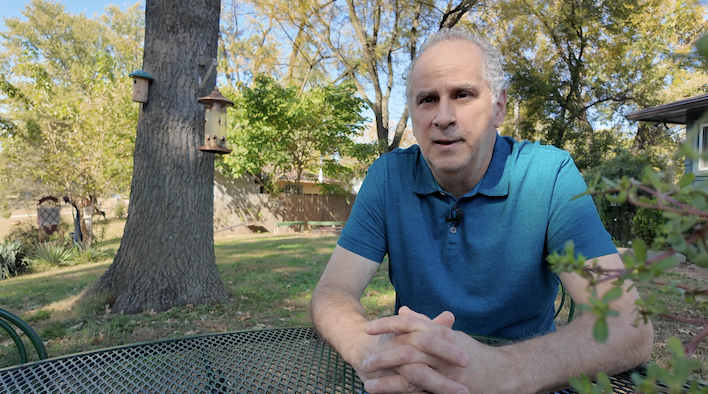
"I was very pleased with the way things had been going. The UG and our mayor, Mayor Watson, they'd been working together fantastically. They're working together as a unified front in standing up for the county," Sanchez said.
Looking back, he says, the outlook for Wyandotte County was bleak.
"Wyandotte County has traditionally been looked over, bypassed, taken advantage of, and this was a really good stance in standing up for the county," Sanchez said.
Sanchez also raised concerns about the financial scope of the project's STAR bonds.
"There's a lot of concern over the dollar size of these STAR bonds. Keep in mind, even though we're talking about $1.8 billion in terms of a STAR bond…the reality is if we're talking six percent interest over a 30-year span for these bonds, that's going to come out to about 10.3, 10.4 billion dollars. So that's the actual cost," Sanchez said.
Not everyone shared Sanchez's optimism. Scott Harding, a Wyandotte County resident and spokesman for the Abolish Kansas Property Taxes group, also showed up to the special meeting.
Harding questioned whether the proper process was followed when the lawsuit was dropped since there was a special meeting leading up to the initial lawsuit over the new ordinance.
"The commissioners had to vote on this to get them to have the lawsuit. What I'm thinking is, how can they drop the lawsuit when they haven't had a special meeting with the commissioners and vote on it?" Harding said.
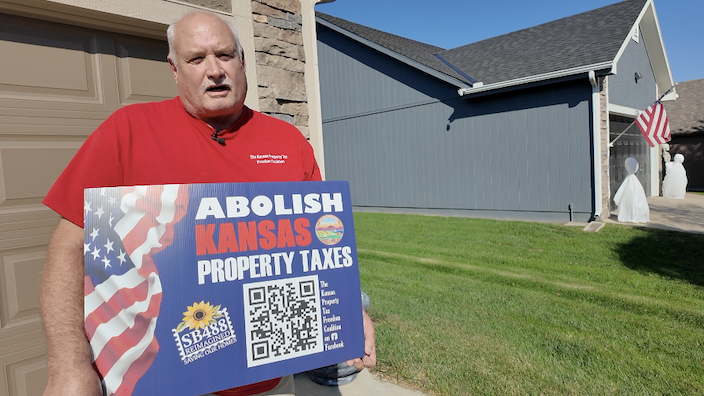
He argued the decision leaves the county without meaningful leverage going forward.
"If they would have kept that lawsuit, they had leverage, but once they get rid of it, they have no leverage at all," Harding said. "I don't think the citizens have a voice through our legal system."
Michael Smith, a political science professor at Emporia State University, said the lawsuit had served a strategic purpose from the start.
"I do think it was about leverage. I think that it's early. No ground has been broken on this project. No land has been acquired, and so I think the Unified Government wants to make sure that their best interest and the best interest of the people that lived there are served as the project unfolds," Smith said.
Smith said he believes there may have been more than one goal driving the legal action.
"It may have been that the publicity and possibly getting the state to make certain agreements in exchange for them dropping their lawsuit was also one of the goals," Smith said.
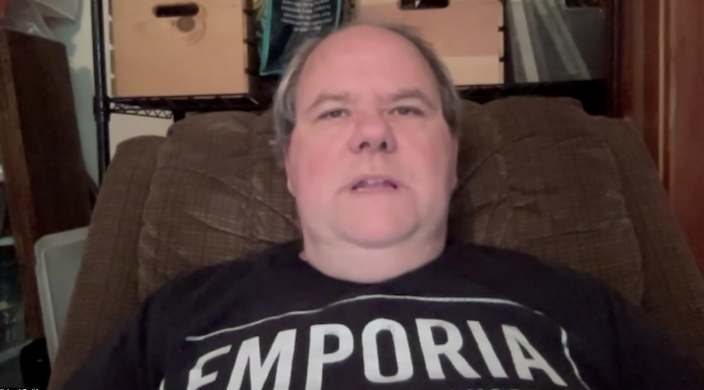
Smith said the pushback reflects a broader shift in how communities respond to large-scale development.
"To me, it just shows that the political climate has changed. That 20 years ago, maybe even five years ago, if there was a big fancy new stadium proposal for the Chiefs, most people would be either really excited about it, or they would be indifferent. But there's just a growing number of people in the communities, or even their elected leaders, saying, 'But what's in it for us? I mean, this is a lot of money,'" Smith said.
Smith said a key financial question still hangs over the project.
"My big question that I would ask if I were a constituent there is, 'Who pays if the revenue generated does not pay these bonds?'" Smith said.
He also pointed to Wyandotte County's financial position as raising the stakes considerably.
"Wyandotte County is really fiscally strapped right now…they are not in a position to have any more of their revenue diverted," Smith said.
The announcement came just days after I spoke with Mayor Watson, who was tight-lipped but optimistic at the time and gave no hints that an agreement was imminent.
This story was reported on-air by a journalist and has been converted to this platform with the assistance of AI. Our editorial team verifies all reporting on all platforms for fairness and accuracy.
—