


LEAVENWORTH, Kan. — KSHB 41 reporter Rachel Henderson covers neighborhoods in Wyandotte and Leavenworth counties. Share your story idea with Rachel.
—
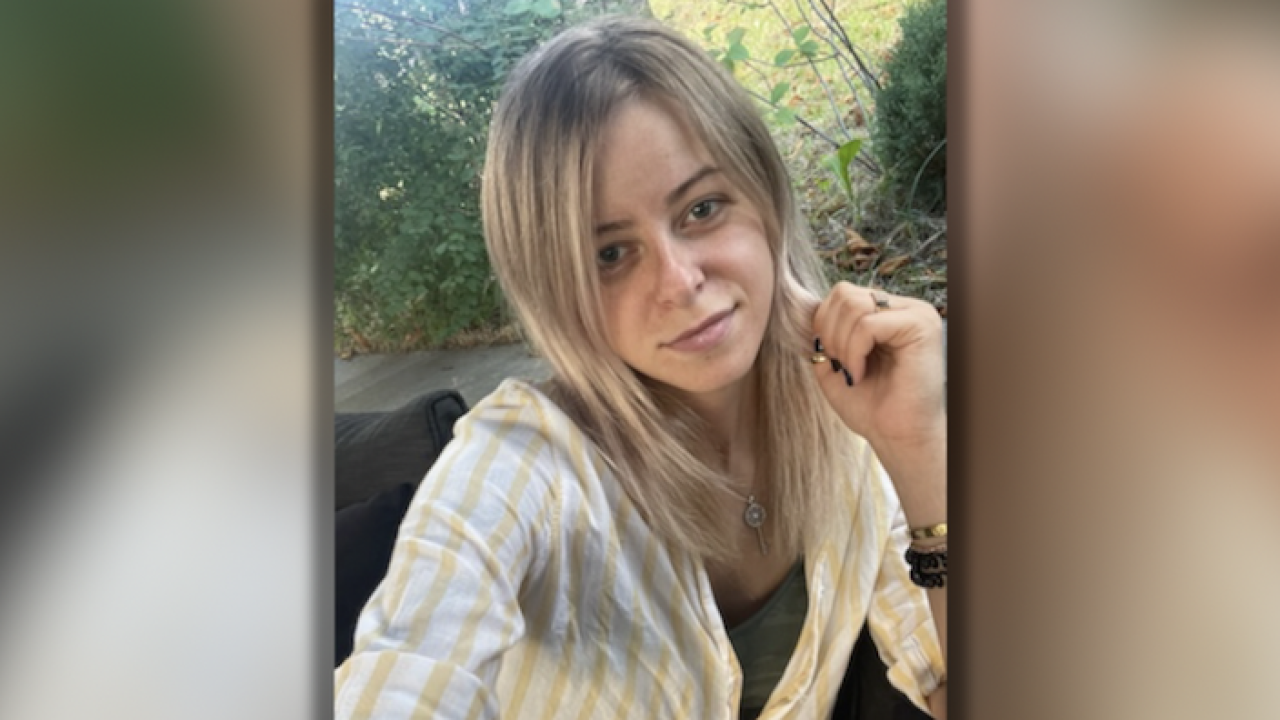
A Belarusian woman held at a CoreCivic-operated U.S. Immigration and Customs Enforcement detention facility has been placed in solitary isolation days before a federal court hearing on her medical care.
Katsiaryna Bartko, 33, is a thyroid cancer survivor whose thyroid and parathyroid glands were surgically removed.
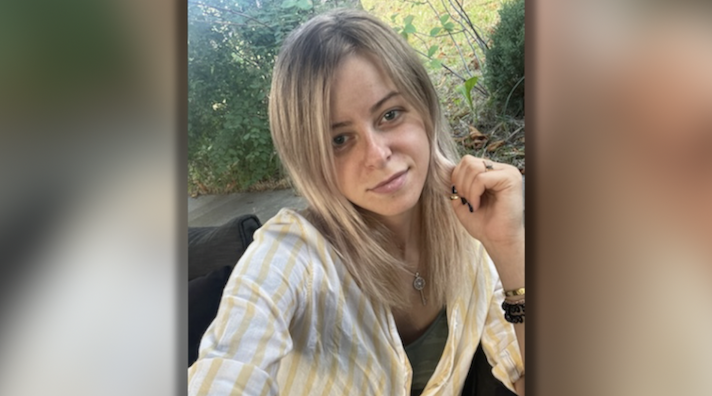
She spent 10 months fighting cancer in a hospital in Belarus before her detention.
Bartko's partner and designated medical information recepient, Dmitry Shyshov, said she has not received adequate medical care since ICE took her into custody.
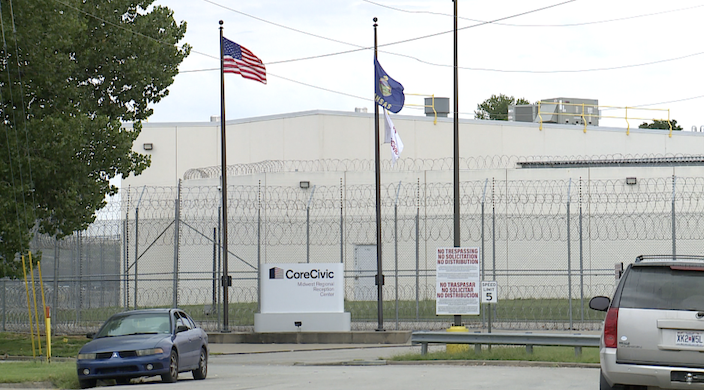
She is currently being held at the CoreCivic-operated Midwest Regional Reception Center, which was awarded a special use permit in March from the city of Leavenworth and began housing detainees shortly after.
CoreCivic sold the controversial facility to the Department of Homeland Security in August for $238 million, but CoreCivic still oversees daily operations.
"She's in a severe emergency condition that may lead to death," Shyshov said. "Her condition is worsening, and it's worsening every week."
Lab results from the facility's own records, released to Shyshov and obtained by KSHB 41 News on Aug. 31, show Bartko's thyroid-stimulating hormone level was 141.83 mIU/L on Aug. 28 — more than 31 times the upper limit of the normal reference range of 0.40–4.50 mIU/L.
Her thyroid hormone remains below range, and records show her calcium level has dropped to 7.9 mg/dL and new anemia has developed.
Her TSH levels have risen sharply since her detention began — 86.76 mIU/L on July 14, 148.77 mIU/L on Aug. 11 and 141.83 mIU/L on Aug. 28.
Shyshov said the physical toll on Bartko is severe.
"Because when the calcium is low, her body cannot maintain the temperature. She's in constant pain because of the spasms in her body," Shyshov said. "She's in constant dizziness, headaches and other stuff because of her low hormone levels. Sometimes she cannot speak properly because it affects her voice."
The voice changes have created a practical barrier. Shyshov said he can't call Bartko because the facility’s voice recognition system doesn't pick up her voice due to throat spasms caused by low calcium levels.
Shyshov said she communicates with him by sending messages on a tablet.
She has never been seen by an endocrinologist while in custody. The facility's own referral paperwork from Aug. 11 shows the appointment listed as "Hold For — Scheduling," with a quantity of zero. The government has said the appointment will occur "in the first half of October."
Shyshov said Bartko has previously been hospitalized while in ICE custody in June in Miramar, Florida.
"She was taken to the hospital three times in four days," Shyshov said.
Placed in isolation; legal documents almost taken
On Monday, Shyshov said Bartko told him she was moved to a solitary isolation room in the facility's medical unit. The facility's own documentation states, "Detainee is housed in medical for med observation. ICE notified and ADO."
Shyshov said Bartko was approached by ICE agents Monday afternoon and told to follow them to the medical unit.
She asked what was happening and reportedly received no answer. Staff then allegedly attempted to take the legal documents she had been preparing for Friday's hearing, saying she was not allowed to keep anything with her in isolation.
Shyshov said Bartko said she told staff not keeping them would violate her right, so they ultimately let her keep them.
"Nobody explained what was going on," Shyshov said.
Shyshov said Bartko asked for immediate medical help and received none. He said a doctor on a phone call told Bartko it was the first time she was hearing of any problems, and that a follow-up call never happened.
Bartko was not given her calcium while in medical observation, despite her documented calcium levels, Shyshov told KSHB 41.
The following day, an assistant health services administrator told Bartko there was no reason to keep her in the isolation unit, and that no medical treatments were planned for her.
Shyshov said Bartko has been missing from the ICE detainee locator.
When Shyshov asked the facility in writing whether Bartko is stable, the complete response was "please contact ICE for any information."
ICE also denied providing him with medical information directly, and a medical clerk told him the same.
"They are absolutely aware of it, but they are still doing nothing regarding her health condition," Shyshov said. "They are all aware of it, they know her medical history. They've been sent lots of the warnings from other doctors, all the medical declarations from outside doctors made their evaluations based on her medical records."
CoreCivic: 'All known medical issues being addressed'
CoreCivic Senior Director of Public Affairs Ryan Gustin provided a statement Thursday in response to questions about Bartko's care.
"The safety, health and well-being of the individuals entrusted to our care is our top priority," Gustin said. "We take seriously our responsibility to adhere to all applicable federal detention standards in our U.S. Immigration and Customs Enforcement (ICE)-contracted facilities, including our Midwest Regional Reception Center (MRRC)."
Gustin said the facility is closely monitored by ICE and undergoes regular review and audit processes, and that an ICE Detention Standards Compliance Officer is on site.
While declining to comment on Bartko's specific medical records, Gustin said "the individual you asked about is being regularly monitored by facility medical staff, with all known medical issues being addressed."
"Our onsite health services team at MRRC, as with every facility where we provide medical care, takes seriously their role and responsibility to provide high-quality healthcare, available 24/7, to the individuals in our care,” he added.
Gustin said medication prescribed to detainees is either managed by facility health services staff or by detainees themselves, depending on the type of medication, and pharmacy nurses review medication orders and promptly inform the ordering physician when renewals are required.
On the question of Bartko's detention status, Gustin said CoreCivic plays a limited role in the immigration system and has no say in an individual's deportation or release.
"Those matters are at the sole discretion of the federal government," Gustin said. "Our responsibility is to care for each person respectfully and humanely while they receive the legal due process that they are entitled to."
Harvard physician: TSH level indicates she hasn't been ingesting thyroid hormone 'for several weeks or longer'
A professor of medicine at Harvard Medical School and co-director of Thyroid Associates at Massachusetts General Hospital has reviewed Bartko's medical records and issued a written opinion.
The physician, identified as Dr. Ross, said Bartko's TSH level of 141.83 "indicates that she has not been ingesting thyroid hormone for several weeks or longer."
"Low thyroid hormone levels can cause many serious health problems in almost all organ systems, including myxedema coma and death,” his letter said.
Ross said "it is therefore critical that she receive a daily dose of levothyroxine." He also addressed Bartko's calcium levels, stating that "patients with calcium levels that fall below 7.8 are referred to emergency rooms for intravenous calcium and stabilization of their medications."
Bartko's calcium was documented at 7.3 mg/dL on June 6, at which point she received IV calcium at an emergency department before being returned to ICE custody. Her most recent calcium level is 7.9 mg/dL.
Ross said hypoparathyroidism "requires management with an endocrinologist or other healthcare provider trained in the management of hypoparathyroidism" and that calcitriol and calcium supplements "are essential life-sustaining medications which cannot be stopped without potentially lethal consequences" for patients like Bartko.
He said low calcium can cause "involuntary muscle spasms, seizures and abnormal heart rhythms, which can lead to sudden death."
The facility's medication administration record showed no record of calcium or calcitriol being administered during June 21 to 30, and the endocrinology referral has remained at "Hold For, quantity 0, unsigned."
Shyshov said he reached out to the Harvard professor directly.
"He said it's very severe, and that she was not treated in the proper way, and her body is failing, can lead to organ failure and death," Shyshov said.
Independent physician: 'Continued detention is medically unsafe'
Dr. Sarah Raza, D.O., of Physicians for Human Rights, conducted an independent review and concluded that "continued detention is medically unsafe," citing risk of "recurrent tetany, seizure, cardiac arrhythmia, respiratory compromise, severe hypothyroidism, myxedema crisis or coma, and death."
The government's own court filing concedes that no outside provider has ever examined Bartko during her detention.
Federal hearing set for Friday; court orders government to bring Bartko to courthouse
U.S. District Judge Daniel D. Crabtree of the District of Kansas has scheduled a hearing for 10 a.m. Friday in Kansas City on Bartko's petition for a temporary restraining order and preliminary injunction, filed under 28 U.S.C. § 2241. The case is captioned Bartko v. Mackey, No. 5:26-cv-03290-DDC (D. Kan.).
The court has directed respondents to arrange Bartko's in-person appearance at the hearing. It will be her first time outside the facility in more than two months.
On Aug. 31, the federal court appointed counsel for Bartko.
The hearing falls exactly three months from the day ICE took custody of Bartko.
Shyshov said he is praying for a just outcome.
"I do pray every single minute for the honorable judge of the court can make a justified decision," Shyshov said.
Background: Arrest, asylum application and disputed immigration record
Bartko was arrested on a misdemeanor charge in May.
The criminal matter was closed June 2 with a disposition of "No Action," meaning no conviction, and the case was later sealed. A certified Miami-Dade court record confirms this.
However, DHS's own Form I-213, filed as supplemental evidence the day before her bond hearing July 22, lists her criminal history as "Case is currently pending" — frozen as of May 6 and not updated to reflect the "No Action" disposition or the sealing of the case. Bond was denied at that hearing.
Bartko filed a complete asylum application with USCIS on Feb. 2, 2023, more than three years before her detention.
The application has never been interviewed, denied or referred. USCIS issued a receipt notice telling her she "may remain in the U.S. until your asylum application is decided."
Despite this, ICE served her with a notice to appear on June 4, charging her solely with failure to maintain F-1 student status — a lapse that court documents argue occurred after the asylum application was already filed and pending.
Shyshov said Bartko has not been convicted of any crime.
"She was not convicted of anything. She is just facing her immigration proceedings, and the only reason for her detention is so she could be present in the face of the immigration judge," Shyshov said.
He said her treatment speaks volumes.
"I'm amazed because first of all, she was never sentenced to death. She was never sentenced to torture, and this is torture what she's feeling right now," Shyshov said.
Shyshov said the countries Bartko fled are ones where medical neglect has been used as a tool of punishment.
"I know a few places where medical indifference and medical neglect has been used as torture — it's actually the countries she was fleeing from. That's what she was fearing the most," Shyshov said.
Shyshov maintains a website documenting Bartko's case, including a timeline of her lab values, facility documents and court filings, at kateredemption.com.
This story was reported on-air by a journalist and has been converted to this platform with the assistance of AI. Our editorial team verifies all reporting on all platforms for fairness and accuracy.
—

![092126_KSHB_WX_480x360[61].jpg](https://ewscripps.brightspotcdn.com/dims4/default/79e7fad/2147483647/strip/true/crop/480x360+0+0/resize/960x720!/format/webp/quality/90/?url=http%3A%2F%2Fewscripps-brightspot.s3.amazonaws.com%2F6f%2F6d%2Fa3758caf4c0984b0ecf100f620d1%2F092126-kshb-wx-480x36061.jpg)