




KSHB 41 reporter Rachel Henderson covers neighborhoods in Wyandotte and Leavenworth counties. Share your story idea with Rachel.
—
A Kansas City, Kansas, neighborhood with a long history of flooding is getting introduced to some potential solutions, 75 years after a historic flood reshaped the community.
In KCK's Argentine neighborhood on Strong Avenue, mural artist Jose Faus is restoring a piece of that history — one brushstroke at a time.
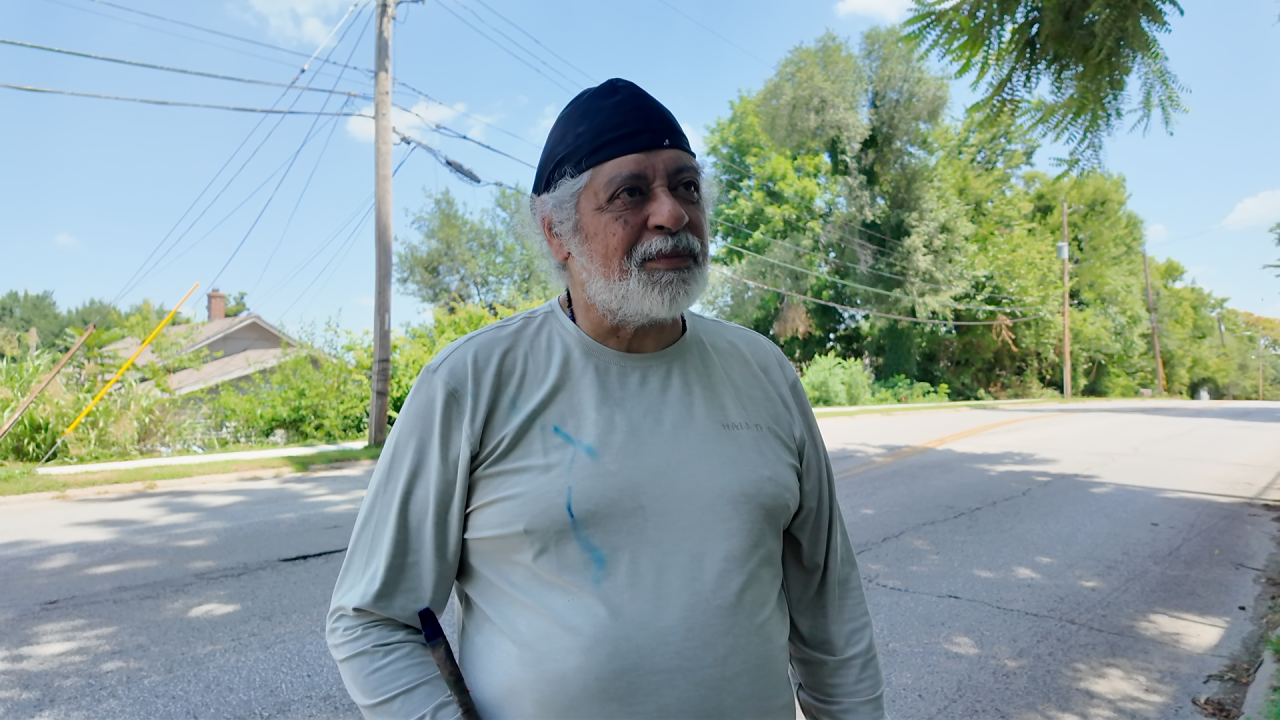
The Argentine Betterment Corporation approached Faus about touching up the 28-year-old mural, which depicts an even older story.
He and a group of other artists originally spent 2.5 months on the project.
"I have always been interested in the history," Faus said. "It's hard to believe it's almost 30 years ago.”
One of the standout portions of the mural depicts the floodwaters that hit Argentine in 1951.

Faus wasn’t around when that happened, but the story stuck with him.
"To see the flood kind of took away a lot,” Faus said. “There was a whole community over there. The only thing that's left is kind of a memory.”
Amanda DeVriese-Sebilla, executive director of the Argentine Betterment Corporation, says flooding is a constant reality for the neighborhood, which sits lower than surrounding areas.
"Flooding is unfortunate, but it does happen," DeVriese-Sebilla said. "We are definitely in a floodplain."
Jeff Miles, director of environmental services for the Unified Government, says 26th and Strong is one of the lowest points in all of Argentine.

Stormwater and wastewater both run through a combined system in the neighborhood before being pumped to the Kaw Point Wastewater Treatment Plant.
"Our community's so old, a lot of our pipes were being used for multipurpose: stormwater and wastewater," Miles said. "Through history, there should have been more efforts, more aggressive efforts, to cause this separation, along with updates to the rest of our utility as well.”
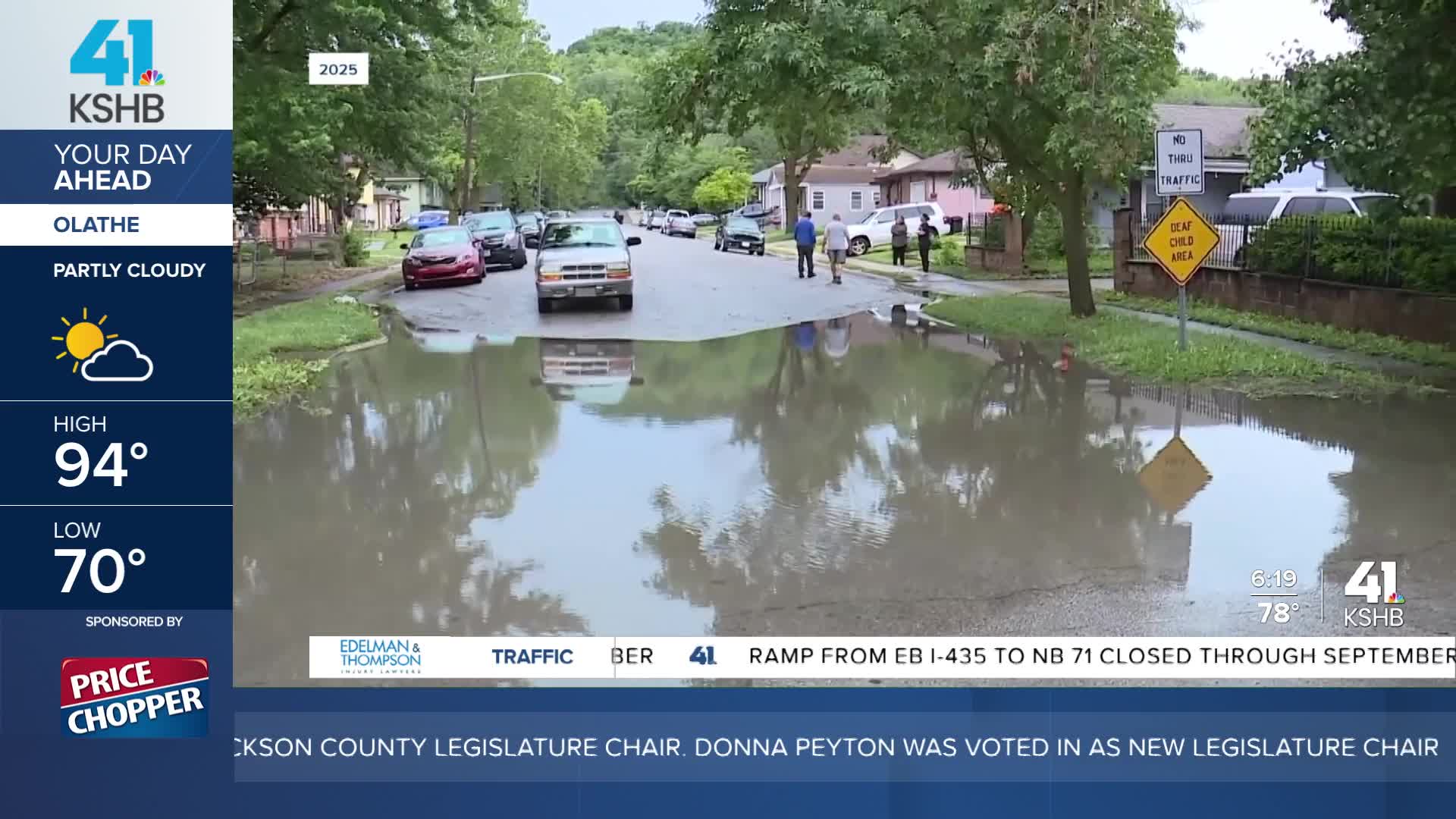
In 2025, two major rain events — one in May and one in July — caused historic flooding in Argentine.
Miles says the May event was preventable.
A levee gate that should have been open to let water run through was closed.
The U.S. Army Corps of Engineers was working on a levee raise project at the time and was in charge of the gate.
Miles says the Unified Government investigated and found the cause.
"We believe our infrastructure performed as designed, and we felt that was something slowing down the flow during that time, and that was during the levee raise," he said. "We worked very closely with the [Army] Corps of Engineers and their contractors, and we did find the reasoning for that. And that contractor worked directly with the residents that were impacted by that."
The Unified Government has since worked closely with the Army Corps of Engineers to prevent a similar situation.
KSHB 41 reached out to the U.S. Army Corps of Engineers for a status on the report conducted after last year's flooding.
The gates are now under the Unified Government's control and are checked frequently, per Miles.
"We've had plenty and plenty of meetings if we're ever in this situation again to double and triple check that with those outside stakeholders," Miles said.
One unexpected solution to the flooding problem has been a reduction in trash.
Argentine was part of Phase 2 of a pilot program from solid waste that provided residents with new rolling trash and recycling carts.

"We're one of the last communities in the Kansas City metro area that has not went to carts," Miles said.
Miles says the difference has been significant.
The neighborhood's pump station, located at 26th and Strong, had previously been overwhelmed by trash and debris going through the system.
"We're just tickled to death how good of a job this community's embraced keeping all the litter out of the system," Miles said. "Every piece of trash we pick up keeps it out of this valuable pump station off to my right, and we're not having to pay for it twice to take it to the landfill.”
DeVriese-Sebilla says the carts have made a visible difference in the neighborhood.
"The bags would literally just blow down the street. It was crazy," DeVriese-Sebilla said. "Having those bins has been such a game changer for us; the dogs can't get into them. That has really cut back on the amount of trash that's blowing around in the neighborhoods and getting in our sewers.”
Still, DeVriese-Sebilla says more needs to be done.

Argentine's combined sewer system — where stormwater and wastewater share the same pipes — remains a major concern.
"If the system can't keep up, that causes that nastiness to back up into people's homes," DeVriese-Sebilla said. "We really need to have our combined sewers separated. We're definitely looking forward to when it's our turn to get the combined sewer updates to be separated because that is definitely part of the impact.”
The Unified Government is currently in the fifth year of a 25-year consent decree with the EPA and the Department of Justice that sets targets and timelines for infrastructure improvements.
Miles says sewer separation will begin upstream and eventually reach Armourdale and Argentine by the 2030s.
"In high-water events, that's where sanitary and stormwater can mix. We still have a combined system down in Argentine that we're working on, long-term stuff," Miles said.
DeVriese-Sebilla says she has faith in the work being done, but acknowledges the neighborhood's challenges are unlikely to disappear entirely.
"I have a lot of faith in the work environmental services is doing," DeVriese-Sebilla said. “Unfortunately, it's never going to be perfect down here because, like I said, we're in the floodplain.”
She says education, budgeting and community involvement are critical in the meantime.
"I think that education is the biggest thing right now, just understanding our role [in] all this and how we can help with prevention," DeVriese-Sebilla said. "We need more funding for our infrastructure.”
DeVriese-Sebilla says the Argentine community has always found a way to persevere — and that spirit hasn't changed.
"Sorry, no one's coming to save us. That's our job. We have to save ourselves," DeVriese-Sebilla said. "They didn't expect anyone to come and give them a hand; they did that themselves.”
This story was reported on-air by a journalist and has been converted to this platform with the assistance of AI. Our editorial team verifies all reporting on all platforms for fairness and accuracy.
—

![020626_KSHB_Image_NXA_Web_Standard Cube[88].jpg](https://ewscripps.brightspotcdn.com/dims4/default/0ead409/2147483647/strip/true/crop/300x225+0+13/resize/960x720!/format/webp/quality/90/?url=http%3A%2F%2Fewscripps-brightspot.s3.amazonaws.com%2F8f%2F6c%2Ffad8bd2346c5a4d4ead793017d4a%2F020626-kshb-image-nxa-web-standard-cube88.jpg)