


LAWRENCE, Kan. — KSHB 41 reporter Rachel Henderson covers neighborhoods in Wyandotte and Leavenworth counties. Share your story idea with Rachel.
—
A KCK officer shot and killed Jesse James West following a mental health call, and that shooting prompted me to examine how other metro-area departments handle behavioral health crises.
What I found in Lawrence was a rapidly growing civilian-led crisis system that now operates around the clock — one that has served more than 1,600 clients and provided 3,590 crisis response episodes in 2025 alone.
WATCH | Lawrence crisis team fills gap left by lack of co-responders with 24/7 access
The Bert Nash Center's mobile response team expanded to full 24/7 coverage on April 1, 2026, after previously operating from 9 a.m. to midnight. Since the Treatment and Recovery Center opened in April 2023, Douglas County has seen a 65% reduction in state hospital admissions.
The full Bert Nash system now serves approximately 2,500 clients a month. According to Crisis Services Senior Director Ryan Sztorch, it is the highest-volume crisis intervention center in Kansas.

At its core, the work is rooted in a simple but critical belief.
"Sometimes people need help and they need treatment more than they have committed a crime," Sztorch said.
I met with Sztorch inside the Bert Nash Treatment and Recovery Center, which houses an urgent care facility and on-site therapists. Lawrence has historically lacked acute psychiatric hospital resources, and Sztorch says the center has changed what this community can offer its residents.
"This is a community without any acute psychiatric hospitals, so the resources here at the crisis intervention center, the treatment and recovery center are resources that have not been a hallmark of this community previously," Sztorch said.
The growth of the Bert Nash Center's crisis programs is rooted in a Kansas law known as the Care and Treatment Act for Mentally Ill Persons.
Under that law, a qualified mental health professional has up to 72 hours to file a petition if someone poses a danger to themselves or others.
That window created a question: what could be done in the 72 hours before a formal petition had to be filed? According to Sztorch, the answer turns out to be quite a lot — and helped fuel the expansion of crisis centers across the state.
"Under that 72-hour model, these crisis intervention centers throughout Kansas have grown. We were one of the first in the state of Kansas," Sztorch said.
Still, the programs are relatively new.
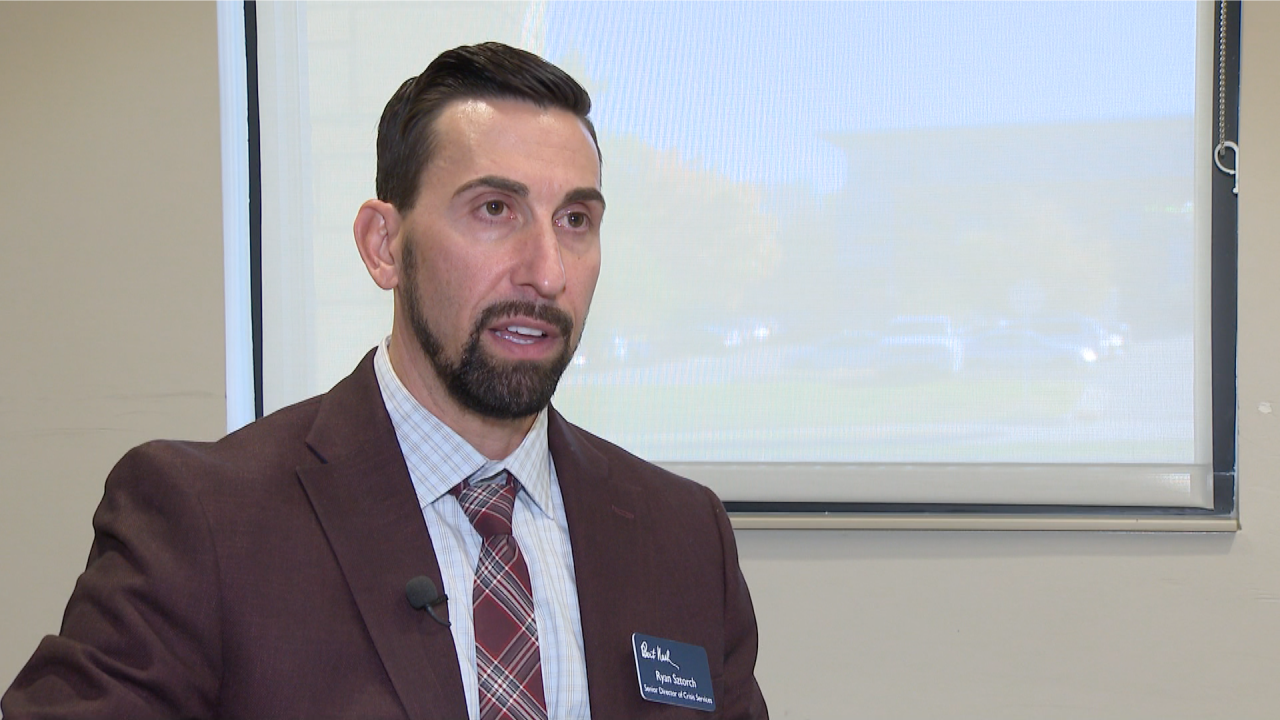
"All of the crisis services programs are infants. The crisis intervention center we're in currently opened in April of '23. And our mobile response team is also about four years old," Sztorch said.
Douglas County currently has no police co-responders. In KCK and other metro-area agencies, officers respond to mental health calls alongside a co-responder — a clinician with a master's degree. In Douglas County, the Bert Nash mobile response team fills that role through a different model: rather than arriving alongside officers, the civilian team typically operates as a civil standby, responding separately from law enforcement.
The average drop-off time for law enforcement at the crisis center is seven to 14 minutes, allowing officers to quickly return to other duties.
A key to the model's success is its integration with the county's emergency communications system.
"In Douglas County, we've integrated with our public safety system. Dispatch, the emergency communication center, is who deploys our mobile response team," Sztorch said.
That integration allows for a tailored response matched to each individual's needs.
"Part of what's worked really well in Douglas County is the integration with the broader behavioral health partners. So if you're a dispatch worker and you get a call, it allows us to uniquely tailor the right service for the right person at the right time," Sztorch said.
A Lawrence Police Department spokesperson described the partnership to KSHB’s Rachel Henderson.
"We all use the same dispatch system so the calls are assigned accordingly. It's part of our coordinated efforts to offer alternative responses that meet the needs of the person requesting an emergency response. For instance, during a mental health crisis, LKPD may respond to secure the scene but then MHRT members would provide care once we determine it is safe for them to do so," Lawrence police said.
The mobile response team works with every law enforcement agency in Douglas County — including the Lawrence Police Department, the Douglas County Sheriff's Department, Baldwin law enforcement, and Eudora police — as well as Lawrence-Douglas County Fire Medical. Law enforcement remains one of the team's largest referral sources.
"We are allowing them to focus on crime and other priorities, and equally true, they are diverting a lot of those behavioral health needs to our folks who have that training and that acumen and that expertise. And that's best for outcomes," Sztorch said.
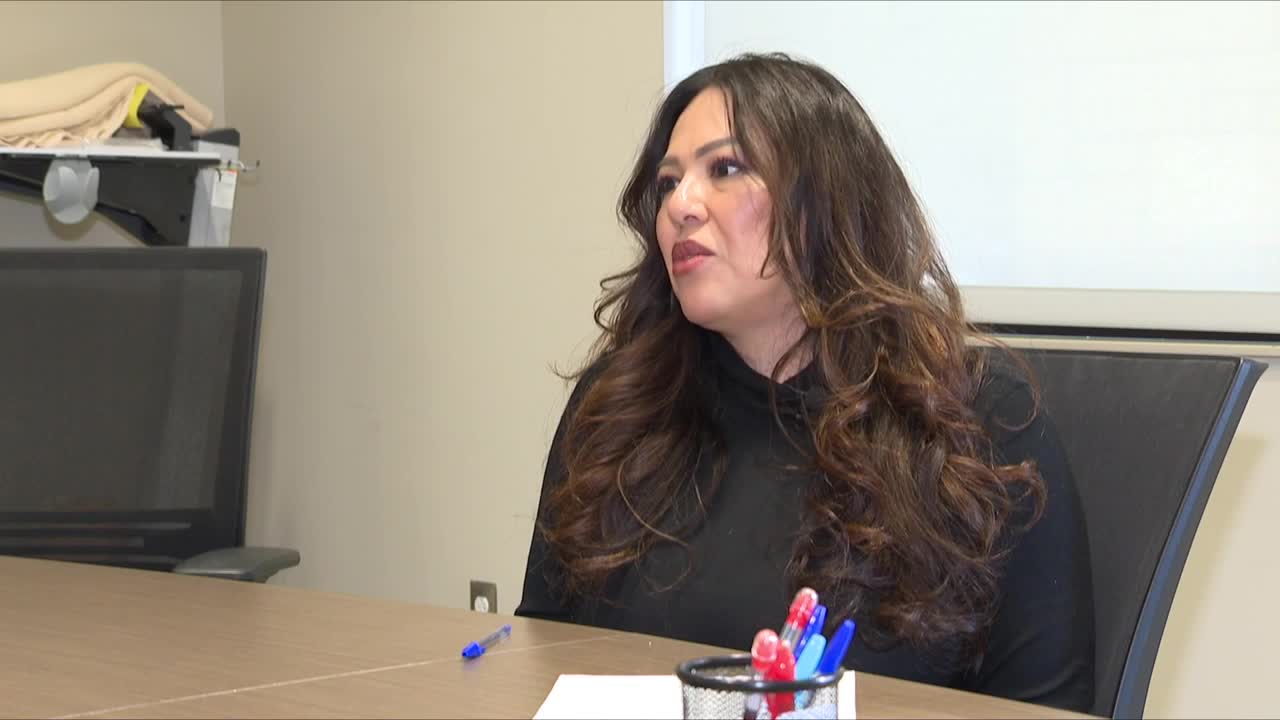
Program manager Selia Moya oversees the mobile response team's day-to-day operations. The team responds to behavioral health and substance use crises across Douglas County, meeting clients where they are.
"We are responding to people where they're located during the time of crisis," Moya said.
The team includes crisis clinicians — qualified mental health professionals who can assess clients and, when necessary, escalate to involuntary holds to keep people safe — as well as bachelor's-level case managers and peer support specialists who bring lived experience in recovery. Every crisis intervention is followed up within 72 hours and again at 14 days.
Moya says the team's approach blends clinical skill with an emphasis on safety.
"Our team is trained to utilize de-escalation skills, motivational interviewing and perform risk assessments for individuals to identify what the presenting problem is," Moya said.
To stay safe while working in the field without police alongside them, the mobile response team carries Motorola police-issued radios.
"We think a lot about safety. Safety is paramount, and for that reason, our mobile response team is very unique,” Moya said.
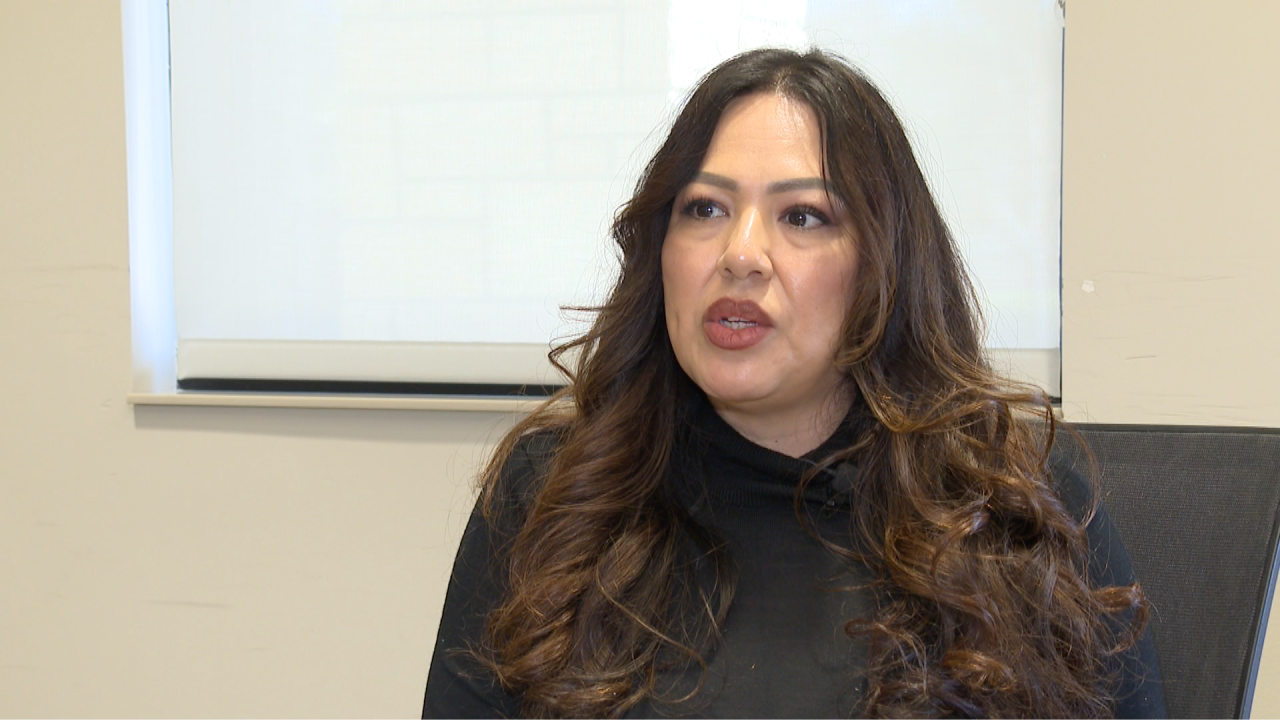
Resolving crises before they escalate has measurable community benefits, both for individuals and local health systems.
"When we resolve situations in the community, we're able to reduce emergency department visits significantly," Moya said.
For Moya, the purpose driving the work is straightforward.
"This work matters because we're meeting people where they're at the right time during their crises," Moya said.
Anyone in Douglas County experiencing a behavioral health crisis can call 911 or the non-emergent line at 785-843-0250. Both connect callers to the mobile response team and other community partners, including fire, medical, a homeless response team, and mobile integrated health services.
Looking ahead, the Bert Nash Center is working to close one of its most pressing service gaps: care for young people. The Judge Jean Shepherd Youth Recovery Center is currently under construction.
KSHB 41’s Lily O’Shea Becker provided an update on the status in February.
While mobile responders regularly encounter youth who could benefit from inpatient support, the current Treatment and Recovery Center cannot admit minors. Youth mobile response referrals have grown significantly — from 54 in 2023 to 65 in 2025 and 127 referrals in 2026.
Sztorch also wants to see co-responder partnerships expand countywide.
"Sometimes that tandem co-response model is better for outcomes, specifically high-risk situations. We'd love to see that grow," Sztorch said.
For now, Sztorch says the trajectory speaks for itself.
"It's fair to say that we are better supporting the needs of Douglas countians today than ever before, collectively with the mobile response team and the crisis intervention center, and on the horizon, the youth recovery center," Sztorch said.
My reporting on mental health crisis response across the Kansas City metro continues. I'll return to KCK next to speak with the police department about how they handle mental health calls.
This story was reported on-air by a journalist and has been converted to this platform with the assistance of AI. Our editorial team verifies all reporting on all platforms for fairness and accuracy.
—