

KANSAS CITY, Kan. — KSHB 41 reporter Rachel Henderson covers neighborhoods in Wyandotte and Leavenworth counties. Share your story idea with Rachel.
—
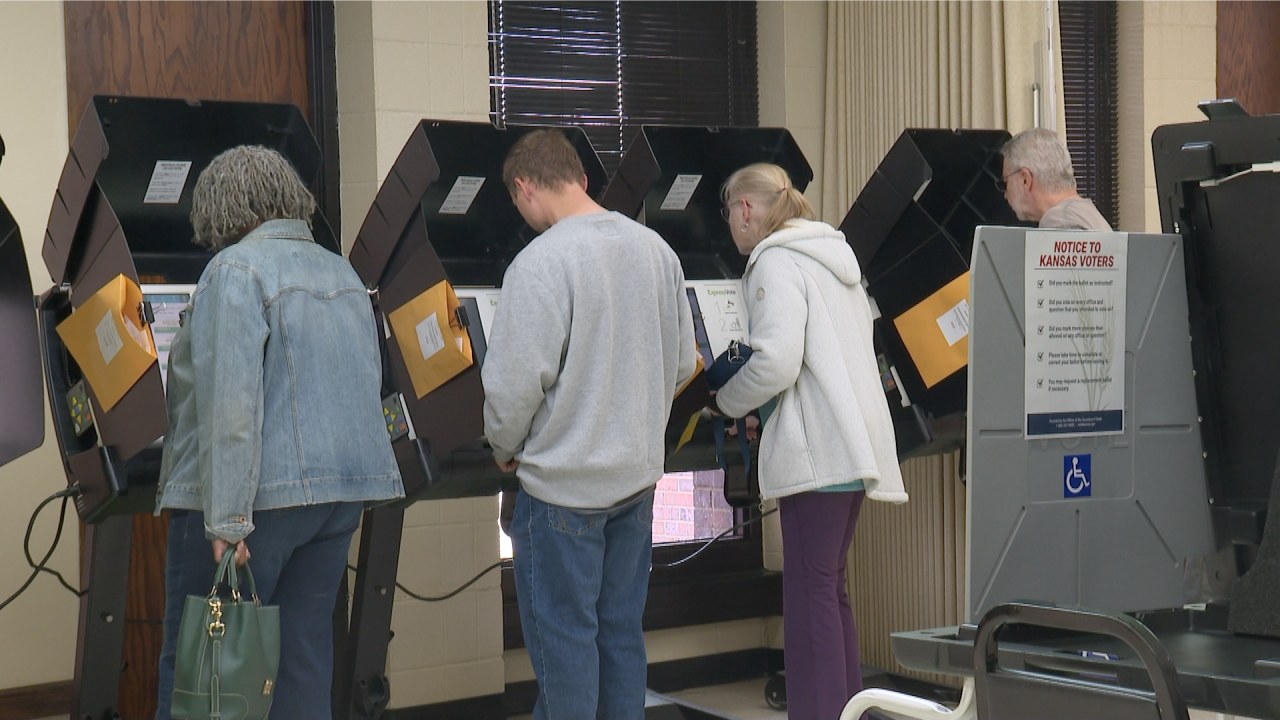
Wyandotte County leaders have put two separate sales tax measures on the November ballot — one addressing homelessness and community health services countywide, and another focused on parks and public infrastructure for Kansas City, Kansas, voters only.
Voters can approve one, both, or neither measure. They are entirely independent of each other.
What's on the ballot
The first is a quarter-cent (0.25%) county-wide sales tax that would generate approximately $12 million per year. The funds would go toward homelessness and community health services — including indigent care, behavioral health, substance abuse services, preventive health care, and the County Health Department. One potential project is Wyandotte County's first homeless shelter, something leaders committed to securing this year in April.
The second measure applies exclusively to Kansas City, Kansas, voters. The three-eighths-cent (0.375%) sales tax targets park capital improvement projects — including parks, community centers and trails — and public infrastructure such as roads, potholes, alleys, bridges and sidewalks. It would generate about $16 million annually, split roughly evenly between parks and public works.
What it costs you
On a $100 purchase, the county measure adds 25 cents and the city measure adds 38 cents. For Kansas City, Kansas, residents, if both pass, that's an additional 63 cents on every $100 purchase.
In everyday terms, the city measure works out to roughly 6 cents on a $15 pizza, 2 cents on a $5 cup of coffee, 5 cents on a $12 bottle of laundry detergent and 8 cents on a $20 shirt.
Kansas has eliminated the state sales tax on food, but city and county sales taxes still apply to groceries. On a $100 grocery purchase, the city measure would add 38 cents and the county measure 25 cents.
The current combined sales tax rate in Kansas City, Kansas, including state and local taxes, is 9.125%. If both measures pass, that rate would rise to 9.75%. Kansas law caps local sales tax at 11.5%, so both measures fall within the state limit, according to the Unified Government.
What voters are saying
William Tate and Barbara Tate both voted yes on the measures, saying they don't want their government to let things slide anymore — including when it comes to infrastructure.
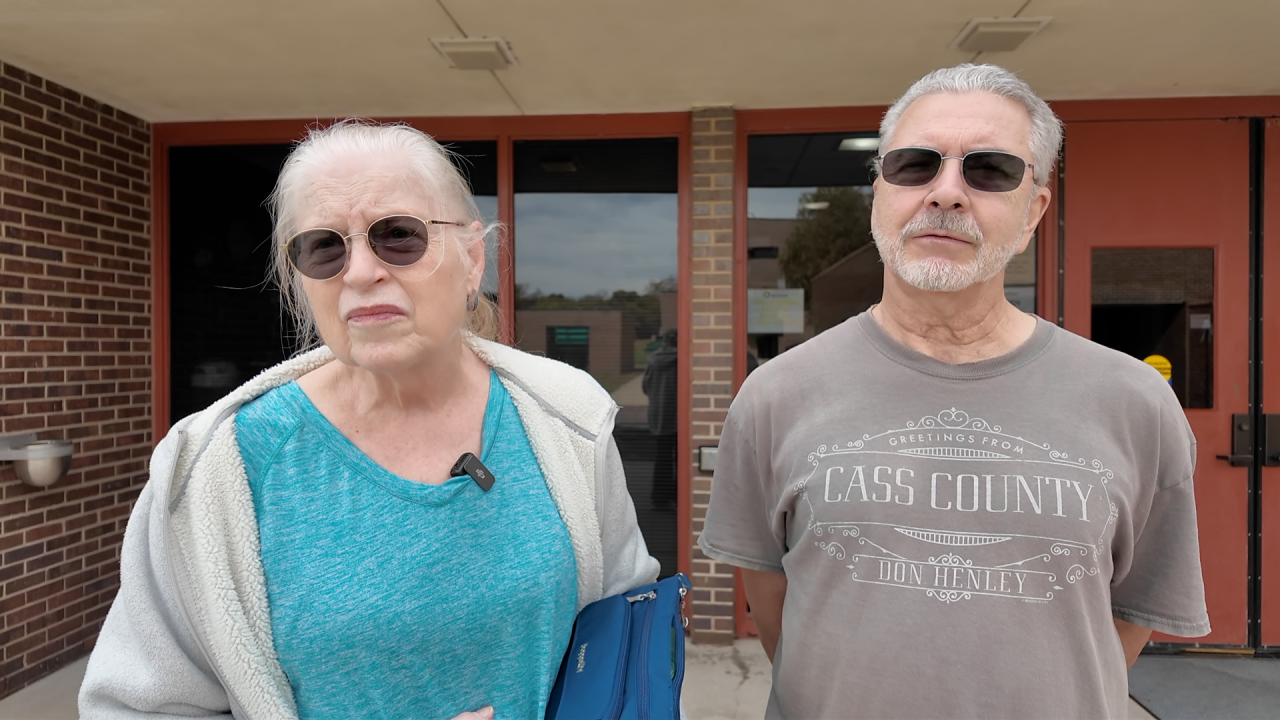
"Things are completely out of balance," William Tate said.
Barbara Tate sees the taxes as a civic obligation.
"I think it's our responsibility as citizens to provide for the general education and welfare of our people," Barbara Tate said.
William acknowledged the added cost but said it is worth it for those who would benefit most.
"Sure, it's a bit more money, but it's an incremental expense. We won't notice, we won't care. But people that need it will care," William said.
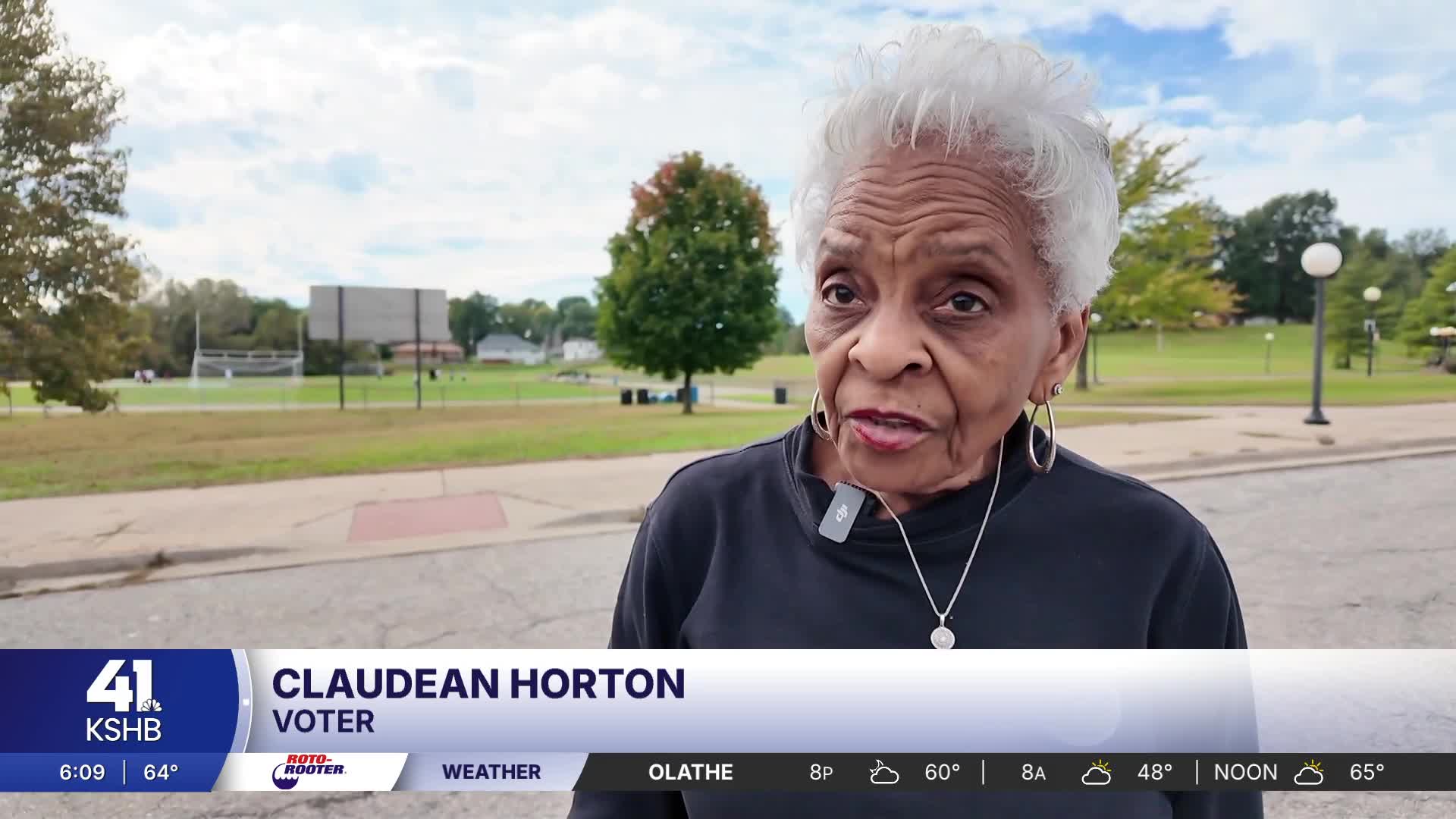
Not every KCK voter agreed. Claudean Horton, a KCK voter, said she believes in the duty of showing up to vote.
"That's the least we can do as citizens of the United States is to vote," Horton said.
But Horton told me she is against the tax increases, especially as a senior.
"Gasoline and everything else, the food and the grocery store, that's just my husband and I. But think about the families that have children, small children," Horton said.
Horton expressed concern about costs rising for people on fixed incomes.
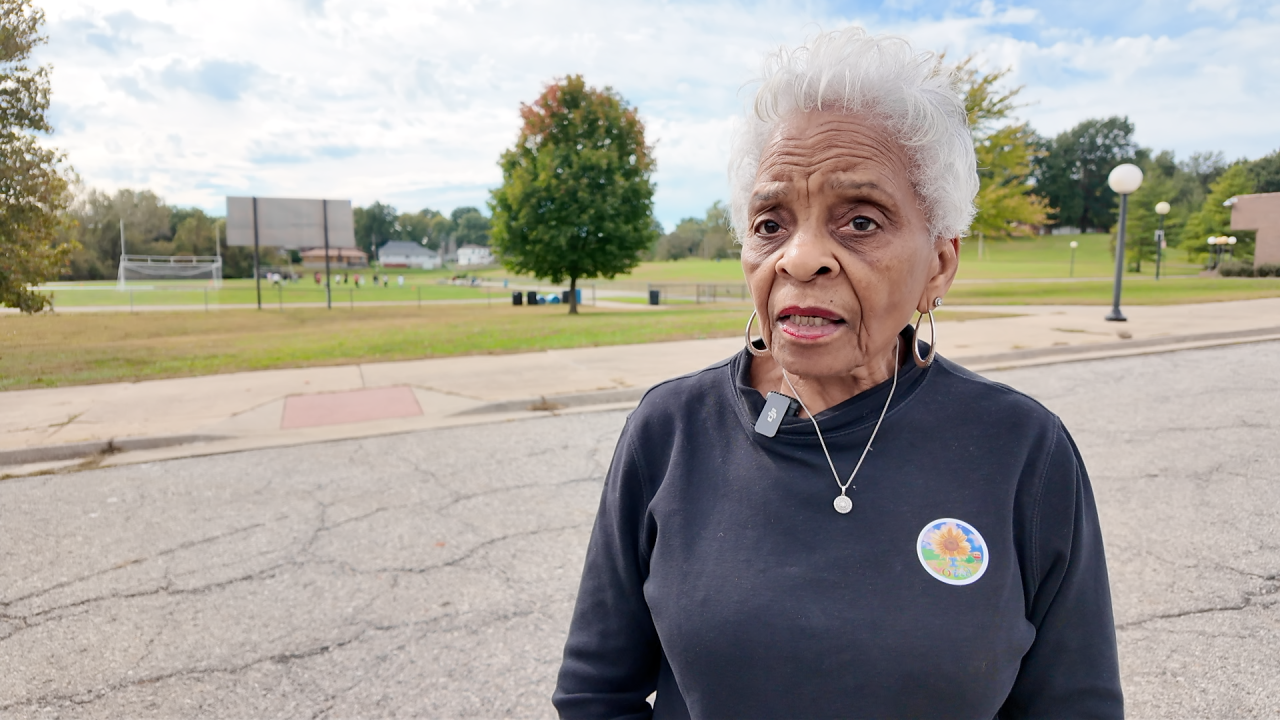
"It used to be limited income. We're on limitless income, and as a result of that, naturally, we want those things not to go excessively high," Horton said.
The UG acknowledges that sales taxes are harder on people with lower incomes. However, the UG notes that some of the revenue would be paid by people who don't live in Wyandotte County, including out-of-state visitors and non-residents who come to the area for work, entertainment or, very soon, a Chiefs game.
Why a sales tax and not a property tax?
According to the UG, a property tax increase would fall entirely on Wyandotte County property owners, while a sales tax spreads the cost across everyone who shops in the county, including non-residents. For a community that draws significant regional retail traffic, the UG says that is a meaningfully different distribution.
The case for the county health care measure
Wyandotte County has roughly 56 primary care physicians per 100,000 residents, according to the UG, which is below the statewide figure of 78 and the national figure of 75. The county also has about 44 dentists per 100,000 residents, compared to 63 statewide and 73 nationally.
A WyCo community health survey found that about 75% of respondents reported that they or someone in their household had been told by a doctor or health professional they had a mental health condition, according to the UG. Wyandotte County also ranks among the top five Kansas counties with the highest overdose deaths per year per 100,000 population.
The UG says Wyandotte County has never had dedicated funding to address homelessness, and that 16% of the county's homeless population are veterans.
If approved, specific projects could include:
- Wyandotte County's first homeless shelter
- Medical, dental, behavioral health and housing services at a homeless service hub
- Inpatient substance use treatment for uninsured residents
- Crisis stabilization services for those experiencing a psychiatric crisis or addiction, particularly for those who are homeless and encounter law enforcement
- Transitional housing for individuals with severe mental illness exiting state institutions into homelessness
The case for the city parks and infrastructure measure
The city owns 7 community centers totaling roughly 92,000 square feet, according to the UG. The oldest opened in 1921. The newest opened in 1988. Six of the 7 were built before 1976. The city's park system includes about 2,678 acres of parkland across 54 parks.
Proposed projects include replacing Parkwood Pool, land acquisition and construction for a future park in Piper, and funding support for a Sunflower Hill Golf Course clubhouse replacement. Additional projects would be determined through community engagement and the public budget approval process.
For streets, the city already runs a six-zone pavement preservation program that has guided annual street work since 2021. The UG says new revenue would go into that existing rotation, making the schedule visible in advance and ensuring every zone comes up on a known cycle.
Why not use existing funds?
Kansas City, Kansas currently has two special-purpose city sales taxes: a quarter-cent for emergency medical services, in place since 2004, and a three-eighths-cent for public safety and neighborhood infrastructure — divided among police, fire and public works — which runs through June 2030.
The UG says those dollars fund roughly 25 patrol officers, 25 firefighters and neighborhood public works, but not parks, community centers, the County Health Department or the county's street and bridge backlog. These new measures, the UG says, address needs the existing taxes were never designed to cover.
Oversight and accountability
The UG says four safeguards are in place to ensure the money is spent appropriately:
- Revenue goes into dedicated funds and can only be spent on the purposes named in the ballot language — it cannot be swept into the general fund.
- Every appropriation must be approved by the Board of Commissioners in a public meeting.
- The Commission reviews revenues and expenditures annually.
- An annual third-party external audit will be conducted by an independent firm, not by the Unified Government.
An annual report card will also be issued so residents can clearly see how the tax dollars were spent. The UG says changing the purpose of the funds would require going back to the voters.
When would it take effect?
If approved, collection would begin April 1, 2027, or as soon after as state law allows. The Kansas Department of Revenue sets the exact start date, not the Unified Government. The city measure ends 10 years after it begins. Continuing it would require another vote of the people. The county health care measure has no fixed end date, though the Commission controls every dollar of appropriation annually and the tax can be repealed.
You can find more frequently asked questions and their answers on the UG's website.
This story was reported on-air by a journalist and has been converted to this platform with the assistance of AI. Our editorial team verifies all reporting on all platforms for fairness and accuracy.
—