




LEAVENWORTH, Kan. — KSHB 41 reporter Rachel Henderson covers neighborhoods in Wyandotte and Leavenworth counties. Share your story idea with Rachel.
—
The Leavenworth City Commission will soon determine whether CoreCivic, a private prison company, can open an ICE detention facility in the city after months of legal battles and community opposition.
There’s one week until the full city commission is set to review CoreCivic’s special use permit application for the first time after the planning commission advanced the item in early February.
The final decision centers around a special use permit that has divided the community and sparked heated debates about immigration enforcement, public safety and economic impact.
"I'm not sure anybody would call the situation that we're in ideal in any sense of the word. It certainly has just been a very difficult situation," said Mayor Pro Tem Rebecca Hollister of the Leavenworth city commission.
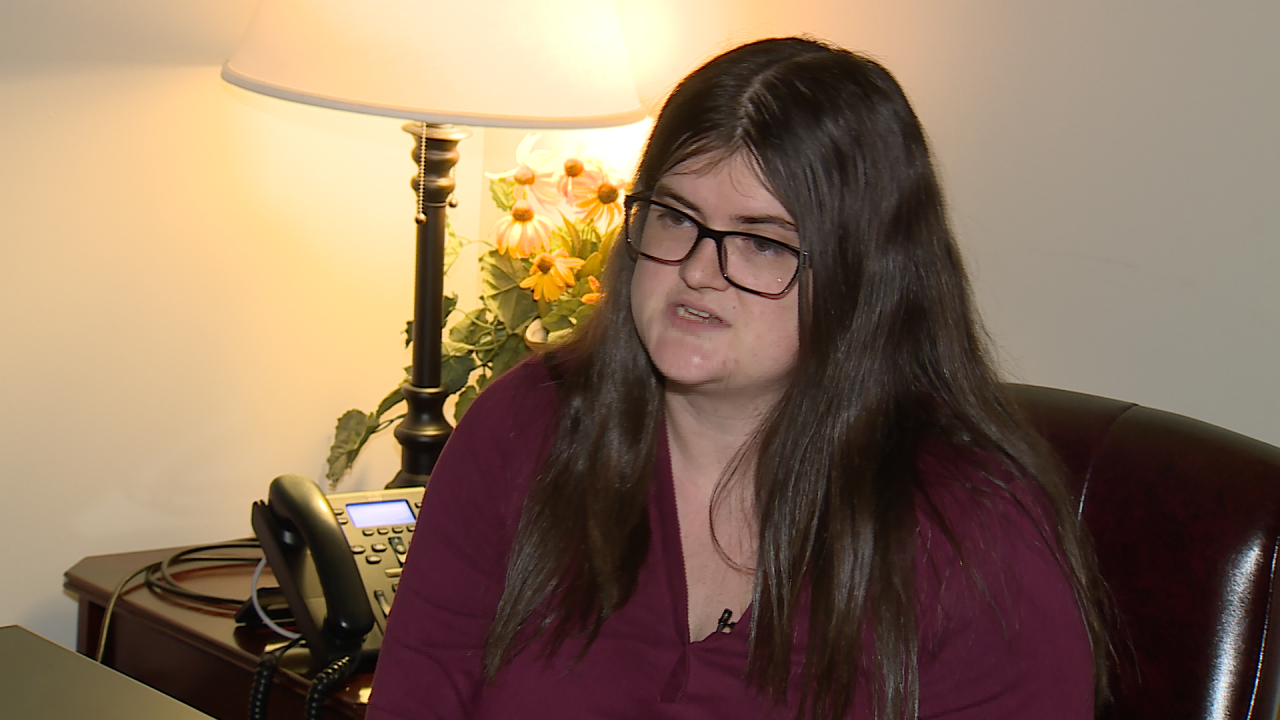
Hollister, who was just elected in November, said she must consider multiple factors in her decision, including the welfare of people in the neighborhood and the city's fiscal responsibility.
"I have to keep my eye on what's going to be best for the Leavenworth community, and I have to do my due diligence as a city commissioner, study the issue," Hollister said.
The controversy began over a year ago when the city required CoreCivic to apply for a special use permit, and the company did.
But CoreCivic later withdrew the permit application and argued that it didn't need one.
This disagreement led to months of legal battles between the city and CoreCivic.
The legal proceedings continued with a court hearing in the Kansas Court of Appeals on February 10, where both parties presented oral arguments.
The court heard arguments from both sides and said they would take the arguments under advisement and issue an opinion when it could.
"It certainly can make it a little hard to swallow just that a lot of people have spent time and legal money going through this whole process," Hollister said.
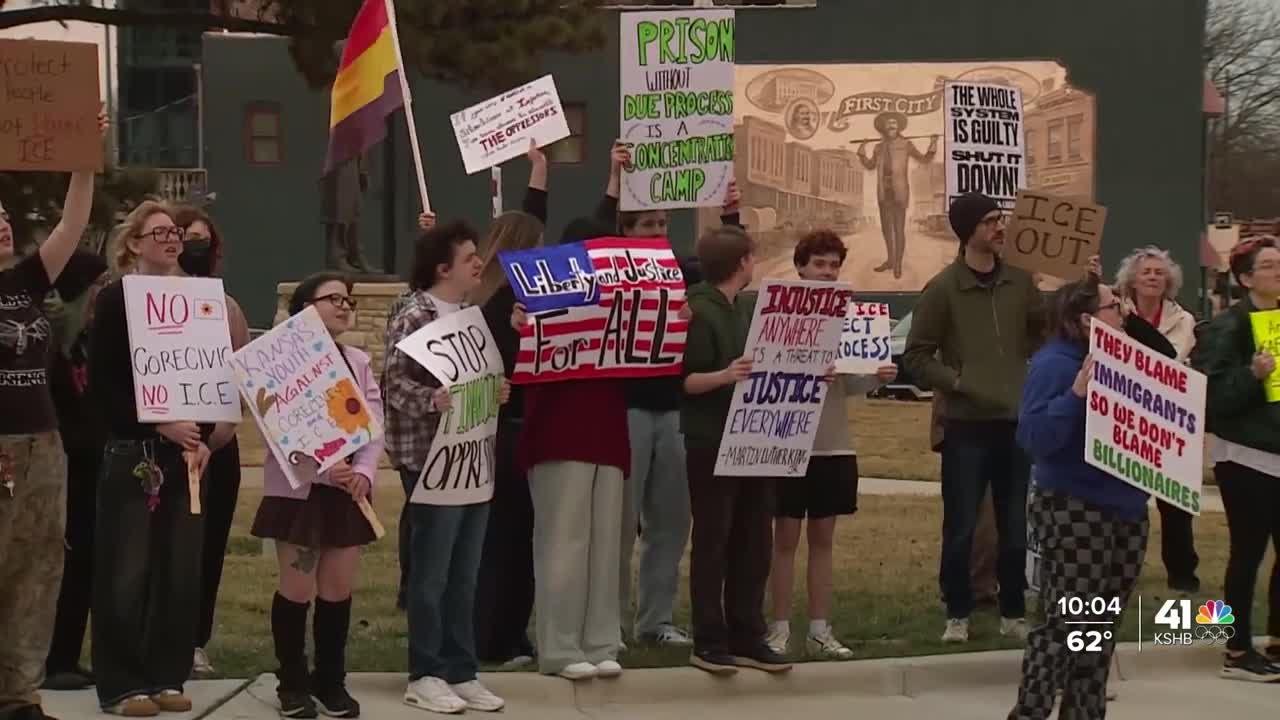
Community members have organized protests against the facility, with demonstrators chanting “Love, not hate, no ICE in our state" at Tuesday's protest.
Tuesday’s protest was one of weekly protests those in opposition plan to have throughout the special use permit process.
"They seem to just pretend this isn't an ICE facility, and they really took the humanity out of this decision and made it a business decision," said Suzanne Sievers, a Leavenworth resident and military family member who attended planning commission meetings.
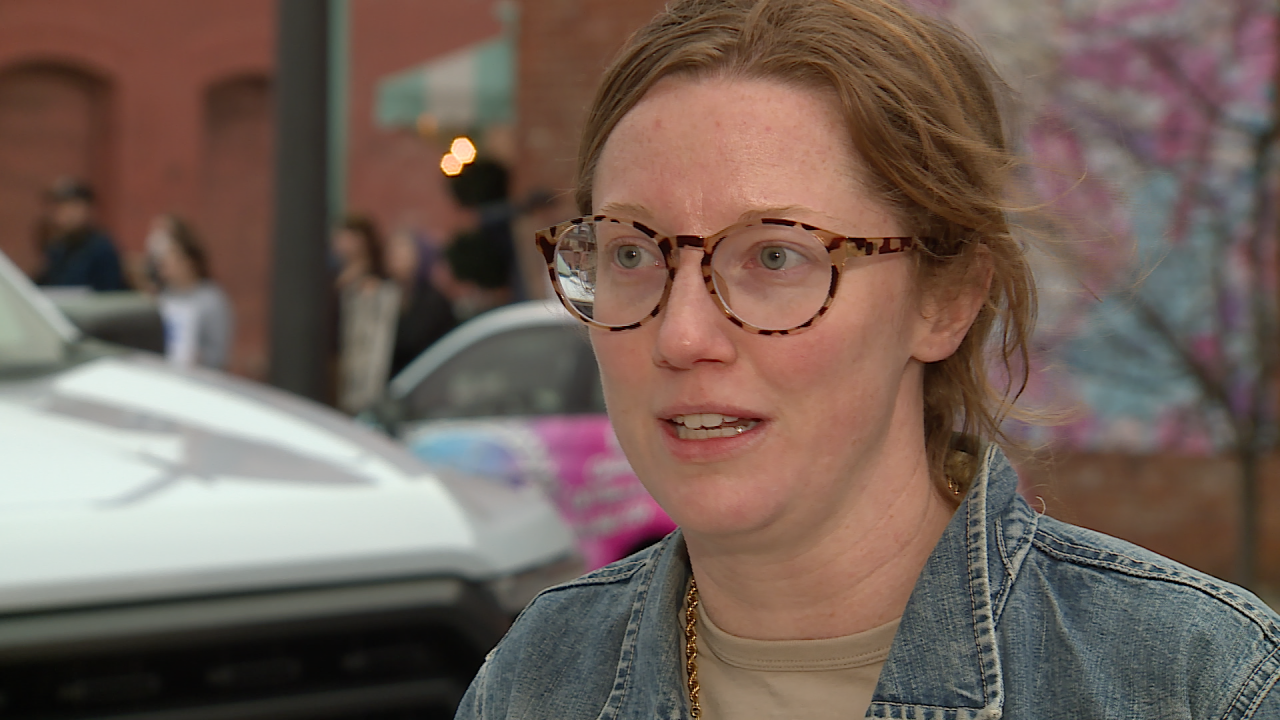
Sievers said she was initially encouraged by the city's pushback against CoreCivic when she moved to town over the summer.
"I was thrilled that the city was standing up,” Sievers said. “It was really exciting to me to hear that they were pushing back.”
The debate has also focused on CoreCivic's track record of safety issues at its former Leavenworth facility.
Brendale Wakeley, a Leavenworth resident, showed up to Tuesday’s protest.
She first spoke with KSHB 41’s Rachel Henderson at a KSHB 41 News Leavenworth’s Let’s Talk event in July.
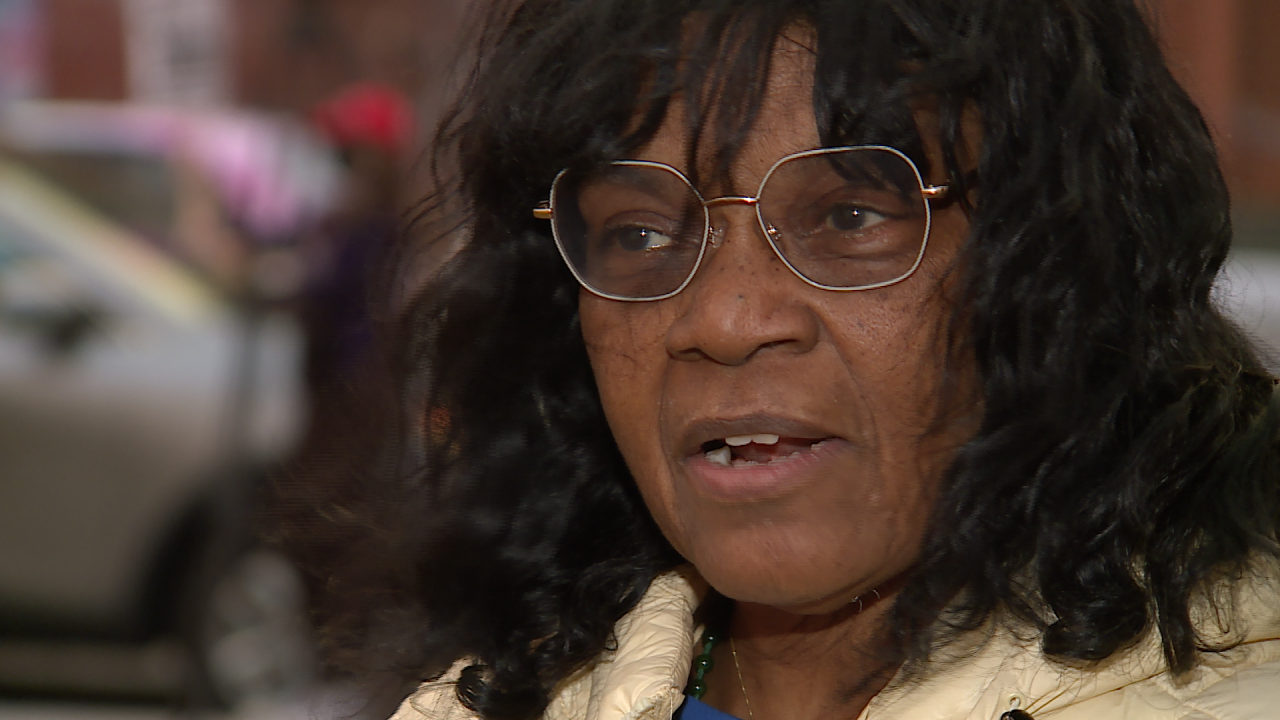
On Tuesday, she said her opinion shifted after seeing certain violent acts ICE agents committed nationwide.
"In the beginning, I was happy they were coming here to promote jobs, but now, my mind has changed totally," Wakeley said. "At the moment, with the situation that's going on in the world today, they are one and the same. I cannot separate one from the other because of the violence."
Religious leaders have also voiced opposition to the facility.
Victoria Parker-Mothershed, pastor of Bethel African Methodist Episcopal Church in Leavenworth, said the detention center conflicts with Leavenworth's historical significance as a place of freedom.
"This has been the historic place for people to seek freedom, and for them to have CoreCivic, they just don't match," said Parker-Mothershed, whose 167-year-old church has been part of Leavenworth since before Kansas became a state.
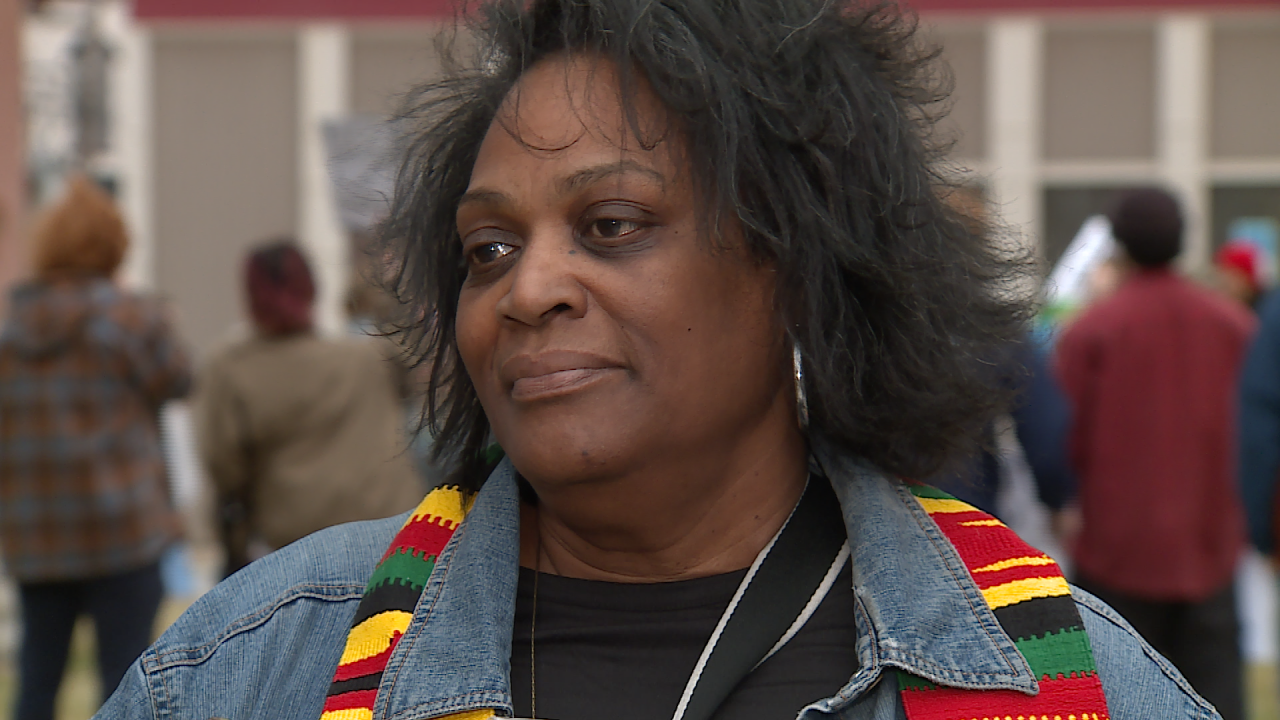
"CoreCivic does not belong in Leavenworth, Kansas,” Parker-Mothershed said.
She says protesting the day civil right activist Reverend Jesse Jackson died was significant for her.
“Today being the day that we get to pick up the mantle,” Parker-Mothershed said.
Hollister acknowledged that national politics have influenced local sentiment about the facility, but emphasized that commissioners must focus on local impacts.
"I do think that a lot of the national politics have sort of crept into the local arena," Hollister said. "People see what's going on in other places nationwide, and they kind of fear that Leavenworth might become like Minneapolis or something like that."
However, she stressed that the commission's role is limited to zoning and land use decisions.
"It's really a land and zoning issue at the end of the day," Hollister said. "We are not here to dictate national policy or dictate what the federal government wants to do. We are here specifically to look at CoreCivic in the context of it operating as a detention facility, regardless of who they contract with, because while it's ICE now, it might not be ICE forever."
Hollister said she toured the empty facility during her campaign and has spoken with the warden, but noted that seeing an empty facility differs significantly from one in operation.
"It was empty, it looked fine," Hollister said. "It's an extremely different situation when you're looking at an empty facility kind of at its best versus when the action is happening, when there are detainees in there."
The commissioner said she has not yet decided how she will vote, partly because the final special use permit application is still being developed.
She indicated that oversight and enforcement mechanisms would be key considerations.
"There are things I would want to add to the final product, specifically in terms of oversight is what I'm looking at, how we can enforce some of the conditions in the permit," Hollister said. "Safety is a huge priority of mine, wanting to making sure make sure people are safe. Visitors and residents alike," she said.
Several residents in favor of the facility have mentioned economic opportunities as their reasoning.
"The economic side is something we're looking at too,” Hollister said. “Making sure we're doing our due diligence as commissioners who are in charge of the budget."
She says she’s has received numerous calls and emails from residents on both sides of the issue.
"We've been getting a lot of calls and emails, which is good,” Hollister said. “It's good for people to express their opinion, for sure. There's just a lot of emotions on all sides, so it's definitely challenging. Even people who want this CoreCivic permit to move forward, they're also frustrated that it's taken so long."
The city process requires two considerations of the special use permit application.
The first consideration is scheduled for Tuesday, February 24, with the final vote set for March 10.
This story was reported on-air by a journalist and has been converted to this platform with the assistance of AI. Our editorial team verifies all reporting on all platforms for fairness and accuracy.
—

![020626_KSHB_Image_NXA_Web_Standard Cube[88].jpg](https://ewscripps.brightspotcdn.com/dims4/default/0ead409/2147483647/strip/true/crop/300x225+0+13/resize/960x720!/format/webp/quality/90/?url=http%3A%2F%2Fewscripps-brightspot.s3.amazonaws.com%2F8f%2F6c%2Ffad8bd2346c5a4d4ead793017d4a%2F020626-kshb-image-nxa-web-standard-cube88.jpg)