



KANSAS CITY, Mo. — KSHB 41 reporter Tod Palmer covers sports business and eastern Jackson County, including Independence. Share your story idea with Tod.
KSHB 41 reporter Isabella Ledonne covers issues in Overland Park and Johnson County and around government accountability. Share your story with Isabella.
—
A key Kansas City, Missouri, City Council committee held ordinances Tuesday related to the Kansas City Royals' proposed downtown stadium at Crown Center.
Council member Jonathan Duncan, in particular, expressed concern about the speed of negotiations, the city's financial stake in the deal and the need for greater public engagement.
Before the Finance, Governance and Public Safety Committee started, Council member Kevin O’Neil announced that the ordinances would not be considered despite appearing on the agenda.
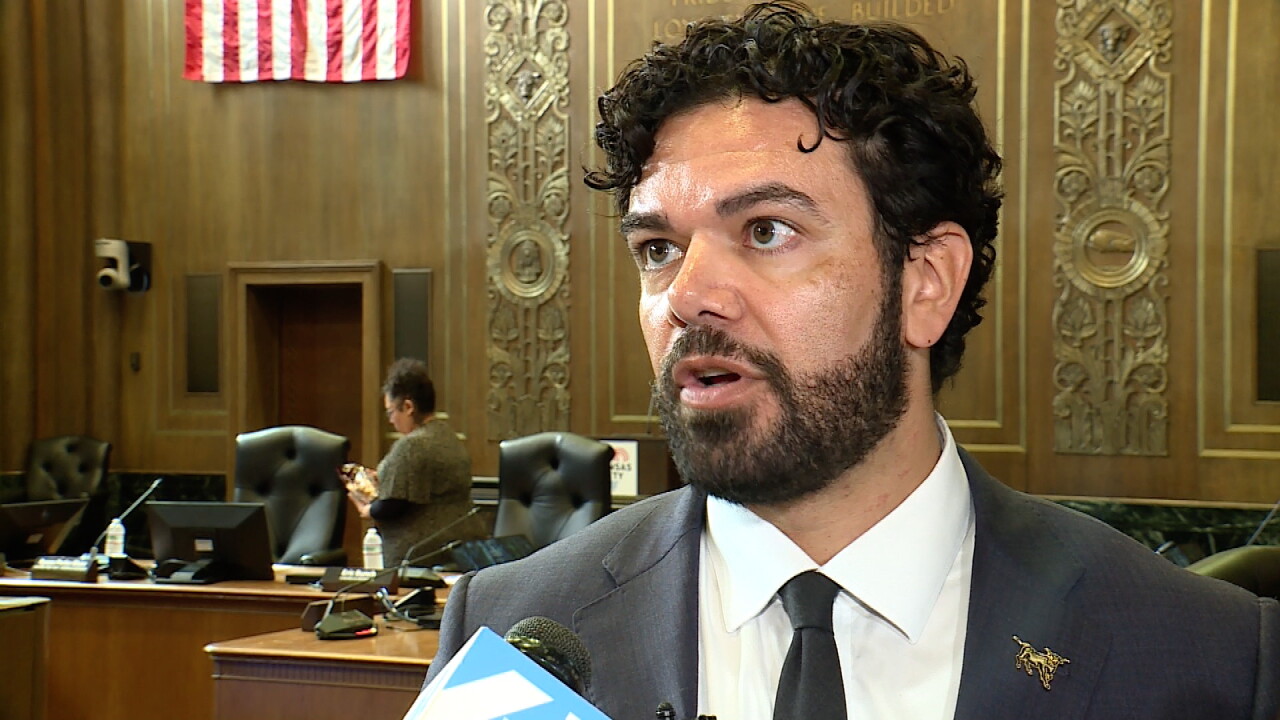
“There's just not enough time," Duncan said. "I'm grateful, actually, that they were held and they didn't try to rush it through today.”
Mayor Quinton Lucas said he requested the hold in the interest of fairness to both elected officials and the public. He agreed that several aspects of the agreement weren’t received in a timely fashion.
As a result, Lucas said that didn’t leave enough time for “a fair opportunity, not just for our review, but for the public's review.”
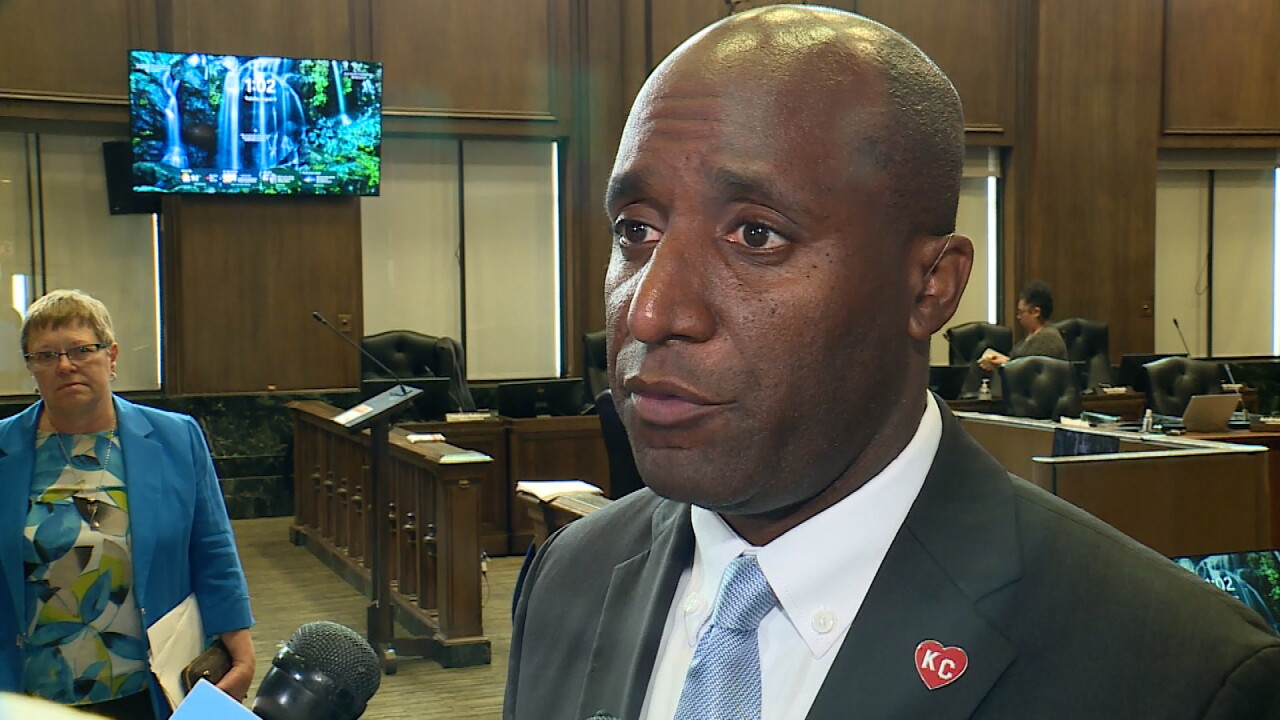
"I don't think that we were prepared to discuss that ordinance today,” Lucas said.
For the many neighbors and workers near Crown Center, where the proposed stadium would go, their biggest concern isn't the team's stadium, but the process it's gone through.
City council delayed any decisions on promising $20 million to the Royals if they build their stadium at Crown Center. According to Duncan, city leaders got the development agreements around 10 p.m. Monday. That was just hours before the scheduled committee meeting.
"What it is resulting in right now is a rushed agreement and a deal that is not good," Duncan said. "It is not a beneficial deal to the people. Right now, I can't say that this is a good deal for the city."
People who live near the proposed stadium keep asking what's in it for them with their tax dollars.
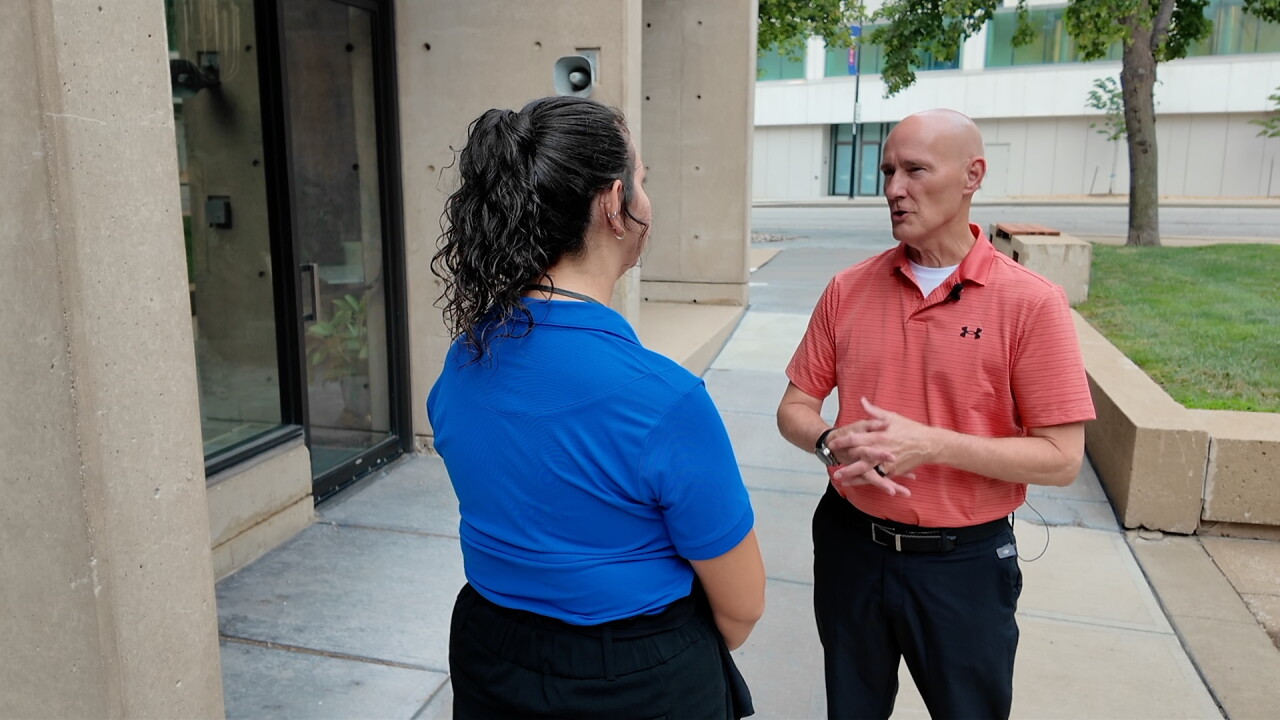
"The process seems a bit chaotic; [I'm] frustrated," said David Byrn, San Francisco Tower Association vice president.
Byrn has other concerns. As a homeowner in the San Francisco Tower, he explained he hasn't gotten any answers about the light, noise and security impacts from a stadium built right across the street.
"When you have a $3 billion project that's literally being built on your front door, it's going to impact every aspect of our lives," Byrn said.
More than 4,500 people signed a petition that any funding decisions for the stadium should be decided by Kansas Citians.
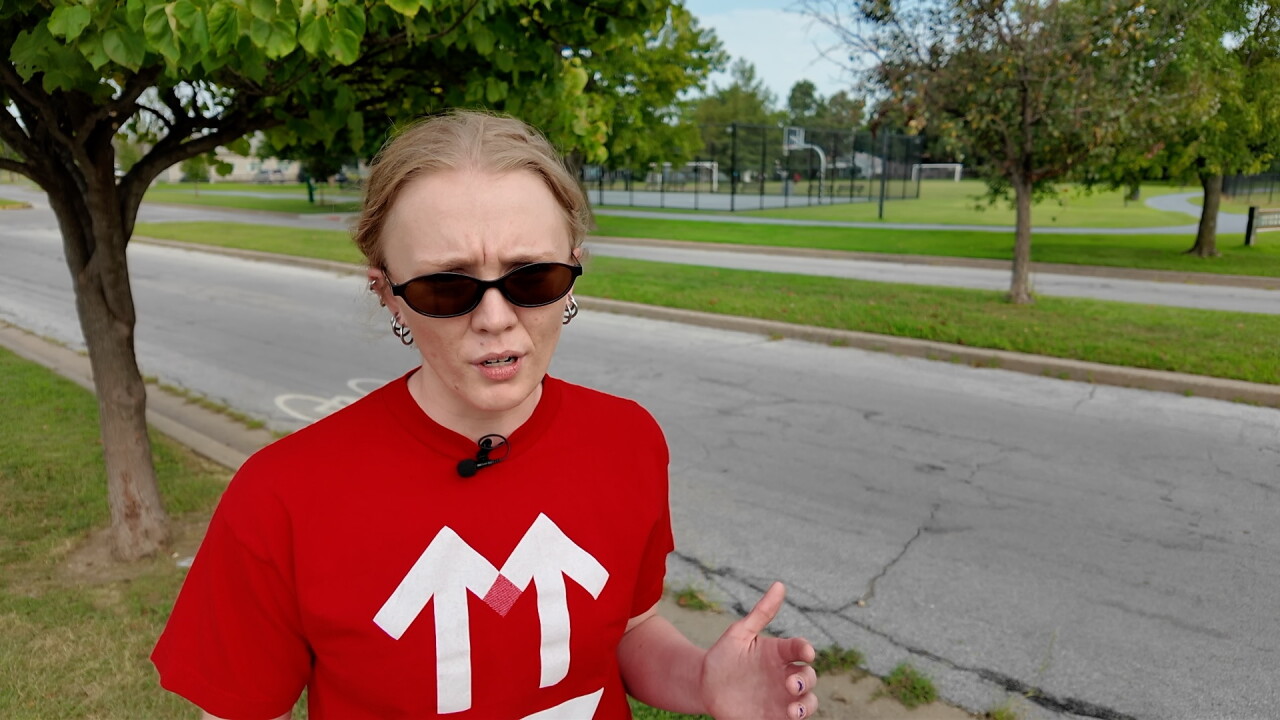
"They should get a vote by the people that are going to be paying for them," said Jaeda Roth, a leader with Missouri Workers Power.
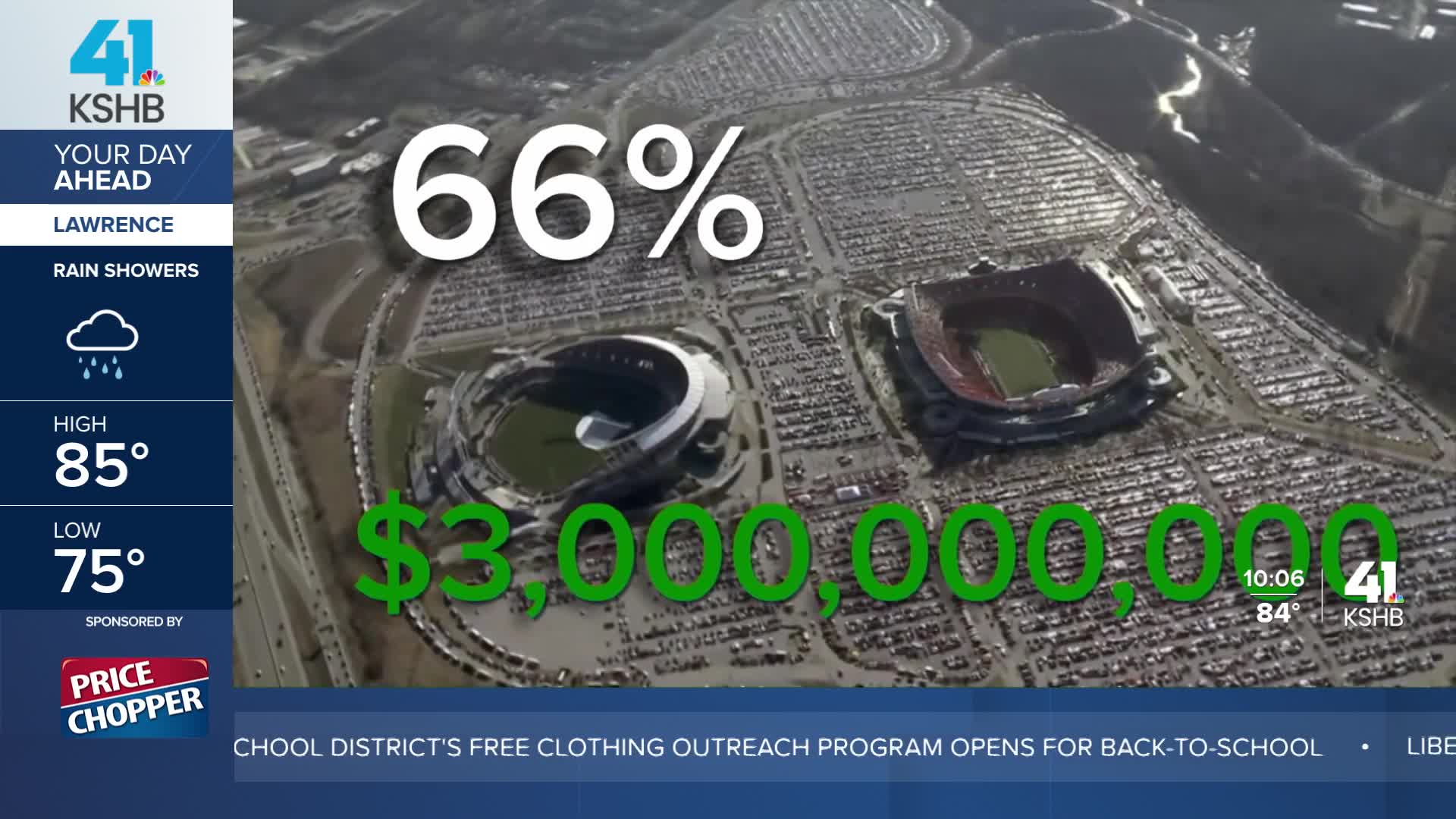
The Royals announced in April they would cover about 66% of the estimated $3 billion cost. But the rest could come from state and local funding.
"I can't afford to live in my own place, so why do I have to pay a millionaire, billionaire's pet project? ... Pretty insane," Roth said.
Special session possible
Council members are supposed to be on vacation next week, but multiple sources, who spoke to KSHB 41 anonymously to protect relationships, believe Lucas will call for a special session Thursday at the upcoming full council meeting.
If that happens as expected, council members will consider the stadium-related ordinances — as well as an $11 million increase to KCATA funding to keep the transit system solvent through April 2027, which was also held in committee for Tuesday, Aug. 18, before they possibly go before the full council on Thursday, Aug. 20.
Council members Andrea Bough and O’Neil joined Lucas in sponsoring a pair of ordinances for the project.
Ordinance No. 260704 would authorize City Manager Mario Vasquez “to execute a lease, non-relocation agreement, development agreement, community impact partnership agreement, and funding agreement with the Kansas City Royals.”
Meanwhile, Ordinance No. 260705 would rezone 68 acres for urban redevelopment, setting the stage for a 10-phase construction plan for a new baseball stadium surrounded by an entertainment district.
Lucas said he met with representatives from the group that sponsored an initiative petition that aims to put the project to a public vote Monday, describing it as “a very fruitful meeting.”
Residents at the San Francisco Tower, which is adjacent to but not included in the proposed development, told KSHB 41 that they also met with the Royals and the Crown Center Redevelopment Corporation — though no agreements regarding core concerns for residents were reached during the 90-minute conversation.
Duncan pushes for ‘equity stakes’
Duncan said in addition to his concerns about fast-tracking the project to avoid a public vote, his central objection is that the agreement does not treat Kansas City as a true financial partner in what he called a generational development opportunity.
"This is not an equity stakes venture that treats the city and our stakeholders as equity stakes partners in future revenues,” Duncan said. “There are some upfront cash payments [from the city], then a TIF redirection with a potential CID.”
He rhetorically asked Royals Vice President Brooks Sherman on a recent call if the team was treating its other equity-stakes partners the same as the city.
“The residents of Kansas City deserve to receive equity out of what will be a generational deal, and that's not what the deal that's being pitched is right now," Duncan said.
He pointed to Battery Park in Atlanta as a model, arguing that revenue the Braves receive from ancillary development around a baseball district outpaces game-day revenue — and that Kansas City deserves to benefit from that now, not in 30 years.
"This deal is not possible without investment from the city,” Duncan said. “This $600 million investment has to happen in order for the state to kick in funds, so the Royals cannot move forward with this development without the city's equity. We deserve an equity position and a return on investment that includes a portion of the profits.”
A question of who benefits
Instead, new tax dollars generated by the project flow to the developers while the city and other taxing jurisdictions receive nothing under the current plan.
“The rest of the taxing jurisdictions have not had a seat at the table during these negotiations,” Duncan said. “The library hasn't had a seat at the table and, most importantly, our schools haven't had a seat at the table.”
The city broadly slashed 2.5% from budgets across multiple departments, according to Duncan, so he bristled at giving tax dollars to wealthy private developers.
“What we're talking about is tax revenue that would be going to our teachers, that would be going to our kids, that would be going to our libraries and would be going to our general revenue, going into a baseball district that is only going to profit John Sherman, Don Hall and their investors," Duncan said.
He also wants to see a strong community benefits agreement that protects local labor during construction and once the ballpark district is operational.
"Whether we're talking about construction, whether we're talking about the service industry workers who are working there, I've worked with both the Building and Trades, AFL-CIO, and SEIU to ensure that those portions are in that agreement," Duncan said.
Lucas said he shares those priorities and has been engaged in separate conversations aimed at strengthening worker protections in the deal.
"I think I share their view on: how do we stand up for workers' wages, how do we make sure benefits to our workers — all of those parts of the agreement are something that are within the agreement,” Lucas said. “I would like us to have an opportunity to discuss that.”
Public vote question
Duncan alleged that the rush to finalize agreements was driven by a desire to get them signed before a citizen-initiated petition could force a public vote.
"All of the City Council received a briefing that stated that we would be in the best legal position to finalize agreements before August 31st,” he said. “The whole point of rushing these agreements is to ensure that these agreements are finalized and signed prior to a vote of the people, to circumvent the will of the people and to prevent this from going to a public vote.”
Organizers submitted a petition to put the Crown Center stadium project and any future stadium venture to a public vote in early June. It was certified later that month.
Duncan said he isn’t against the idea of a Royals stadium at Crown Center, but he believes taxpayers should have a say.
"It's not that I don't believe in downtown baseball,” he said. “It's not that I don't believe in an agreement that actually achieves a great financial position for the city and keeps the Royals in the city. That's what I want. But I think it's very clear that there was a legal petition. There were signatures that were created to put this to a vote.”
Duncan believes voters will support the right plan.
“If we had a plan that kept the Royals in the city, that provided a good economic position for the city — and I'm talking about an equity share of the revenues and the profits of, not only this stadium and this baseball development, but the ancillary development around it — that we can pitch that to the voters and that the voters would pass that overwhelmingly,” he said. “I don't understand what the mayor is afraid of.”
Lucas pushed back on the idea that the city faced a hard deadline tied to the petition effort.
“The city does not have a deadline or a timeline, at least as to how it would act on any ordinances either before us or in the future relating to the baseball stadium that are triggered by any outside petition efforts,” he said.
This story was reported on-air by a journalist and has been converted to this platform with the assistance of AI. Our editorial team verifies all reporting on all platforms for fairness and accuracy.
—

![092126_KSHB_WX_480x360[61].jpg](https://ewscripps.brightspotcdn.com/dims4/default/79e7fad/2147483647/strip/true/crop/480x360+0+0/resize/960x720!/format/webp/quality/90/?url=http%3A%2F%2Fewscripps-brightspot.s3.amazonaws.com%2F6f%2F6d%2Fa3758caf4c0984b0ecf100f620d1%2F092126-kshb-wx-480x36061.jpg)